Category Archives: children’s books

Snowmen and Jello – Christmas

Two Glad Grandboys

While we are waiting for Christmas and preparing our gifts, and thinking about what Santa and our parents are preparing for us, children are lucky if we have some snow around with which to build a snowman or snowlady.

My own grandchildren sometimes have that. But when I was a child, I only had the beloved “Frosty the Snowman” 45 to play on my little record player.

It’s the only record I remember from my youth until I bought such ones as “Like a Rolling Stone,” and I listened to the Frosty tale over and over so that I can still hear the voice — maybe it was Red Foley — in my head. On the other side he sang “Rudolph the Red-Nosed Reindeer.” The image below is not quite like what I owned, but it evokes the memory well enough.

I remain snowless, and don’t mind a bit. Besides, I can watch “The Snowman” on video. Those who lack the technology for watching movies (and I know there must be some of those people still, though they are probably not the ones reading this) could read the wordless book The Snowman.

But the video is so enchanting, with its haunting tune. The first time I borrowed the movie from the library, it was a version with the song, but since then I have only found it with a purely instrumental score. We are all fortunate now, and I am more than pleased to tell you that YouTube has a clip that includes sung lyrics of “Walking in the Air.”

When I turned fifty a friend took me browsing in a quilt shop to pick out a few pieces of fabric as a birthday present from her. Several prints called to mind images from the adventures of the snowman and his little boy, and I took rectangles of them home with a theme brewing.

I sewed by hand several potholders that I call my Snowman Potholders. Of course, they have nothing to do with Christmas, except for their frequent role in pulling pies out of the oven for Christmas dinner.

Waiting….We Orthodox are still waiting until December 25 (or January 7) for the feast and waiting to feast, because we are preparing our hearts, which are tightly bound to our bodies. But in preparing for culinary aspects of the feast I’m considering this festive rainbow jello I made for one Christmas Day:

RAINBOW RIBBON DESSERT


1 (3 oz.) package (each flavor) raspberry, lime, orange, lemon, and strawberry Jell-O

6-1/4 cups water
1-1/4 cups evaporated milk

Dissolve raspberry Jell-O in 1 cup boiling water. Remove 1/2 of Jell-O to a bowl and add 1/4 cup cold water. Place into a 9-inch square pan. Place in refrigerator until slightly firm. To the remaining half of Jell-O, add 1/4 cup evaporated milk. Cool and place over slightly firm layer in pan. Continue procedure with remaining flavors of Jell-O in this order: lime, orange, lemon, and strawberry. Cool each mixture before layering. Chill completely. Cut into squares to serve. Yield: serves 8 to 12. 

I’m trying to figure out how to tweak this colorful recipe into a frozen dessert. It already has the brightness of Tolkien’s wintery image, and I think I might attract my snowmen friends to my holiday table if I just advertise that for dessert we are serving a treat called “Northern Lights.”

(This is the third in my contributions to Pom Pom‘s Childlike Christmas Party.)

Waiting and Weakness – Christmas

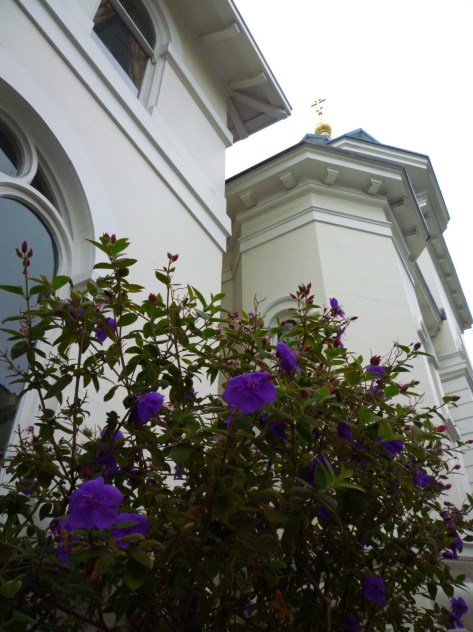
Holy Trinity Cathedral in San Francisco

The greatest pleasure and thrill of Christmas can’t be had without a little waiting, something like children of yore had to do, when their Christmas trees weren’t even ready for viewing until Christmas Day.

That thought is on my mind as I say Hello! to all the friends I see here at Pom Pom’s Childlike Christmas (blog) Party, a party for which we can show up four times over the next month! I had barely noticed the open invitation, with no time even to lay a finger aside of my nose, when she added me to the published guest list — I was signed up! I am happy to attend, Lord willing, by posting a blog each Wednesday.

It seems to me that the way we Eastern Orthodox Christians get into the Christmas spirit can be combined with the theme of children and simple pleasures that Pom Pom describes:

“Yesterday I asked my students, ‘Why the big greed festival over the holidays? Aren’t we fine right now? Don’t we have enough?’ …Here at Pom Pom’s Ponderings, we are going to think about the simple pleasures of the holidays, the childlike wonder that doesn’t involve the ka-ching ka-ching of the cash register….four holiday Wednesdays of posts that attend to the simple childlike thrills of Christmas. ….that babe in a manger and the children He loves and cherishes.”

The modern world likes to jump into Christmas immediately after Halloween or Thanksgiving, but the more traditional way to celebrate involves some Anticipation and Preparation. Children might think of it as Waiting and Getting Ready. Some of us have been in Advent, which we call the Nativity Fast, since November 15th.

I’m not experienced in helping children to forgo the treats that are pressed upon them in every shop and neighbor’s house at this time of year, but even before I found the Church and its traditions I tried to keep the family thinking ahead to a special Holy Day, and not just because of the presents.

We need some weeks to sing “O Come, O Come, Emmanuel!” and for it to register in our minds that God’s people had to wait many generations and thousands of years for the coming of the Savior. A little bit of suffering in the form of doing without the usual quantity of food, or rich foods, (in the Orthodox Church we eat less, and almost vegan, when fasting) can make it more real for us that the world before Christ was suffering under the curse of sin. We feel our own weakness, too, when eating less, and that can soften our hearts.

Why the photo of Holy Trinity Cathedral above? My church and sister churches sponsor Advent retreats every year, usually a day or half a day when we can hear a lecture and attend services together to help us focus on the coming feast in a fruitful way. Last year I went to one at Holy Trinity and took the picture. (By the way, I saw the same flowering plant at a winery last week and still don’t know what it is.)

One children’s book that might contribute to a child’s understanding of time and the processes that are necessary preliminaries to accomplishing a goal, in particular a few points on the timeline of our salvation history, is The Tale of Three Trees, “a traditional folktale retold by Angela Elwell Hunt with illustrations by Tim Jonke.”
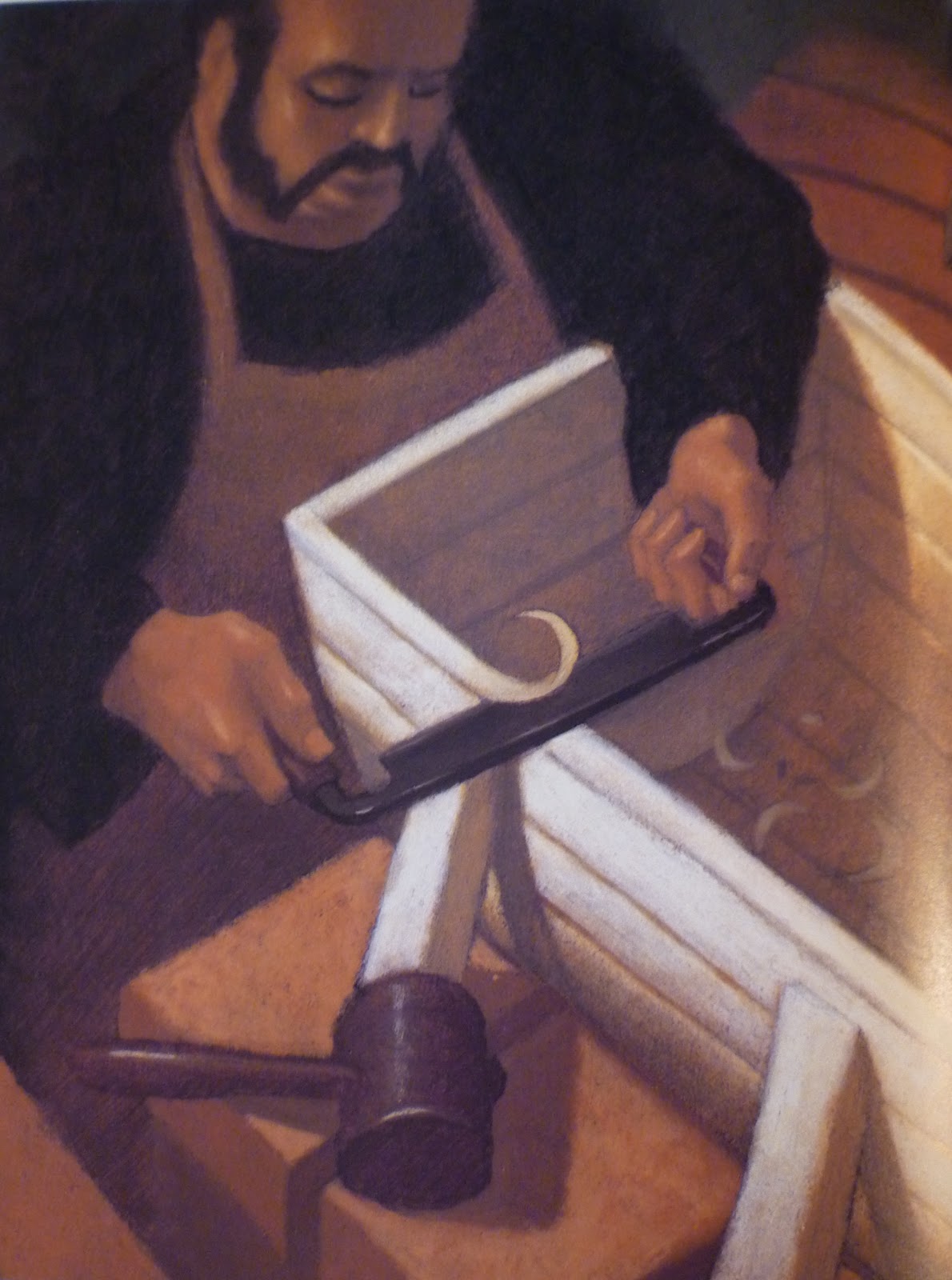
Three small trees stand on a hilltop and dream about what they might do when they are grown. One wants to be a treasure chest, one a sailing ship that carries kings, and one just wants to stay where it is and point to God.

It takes many years for them to get big enough to be cut for lumber and fashioned into items that play a part in the earthly life of our Lord. The first tree is made into a manger — and this first creation of wood that the Christ Child came in contact with establishes the story as one for Christmas.
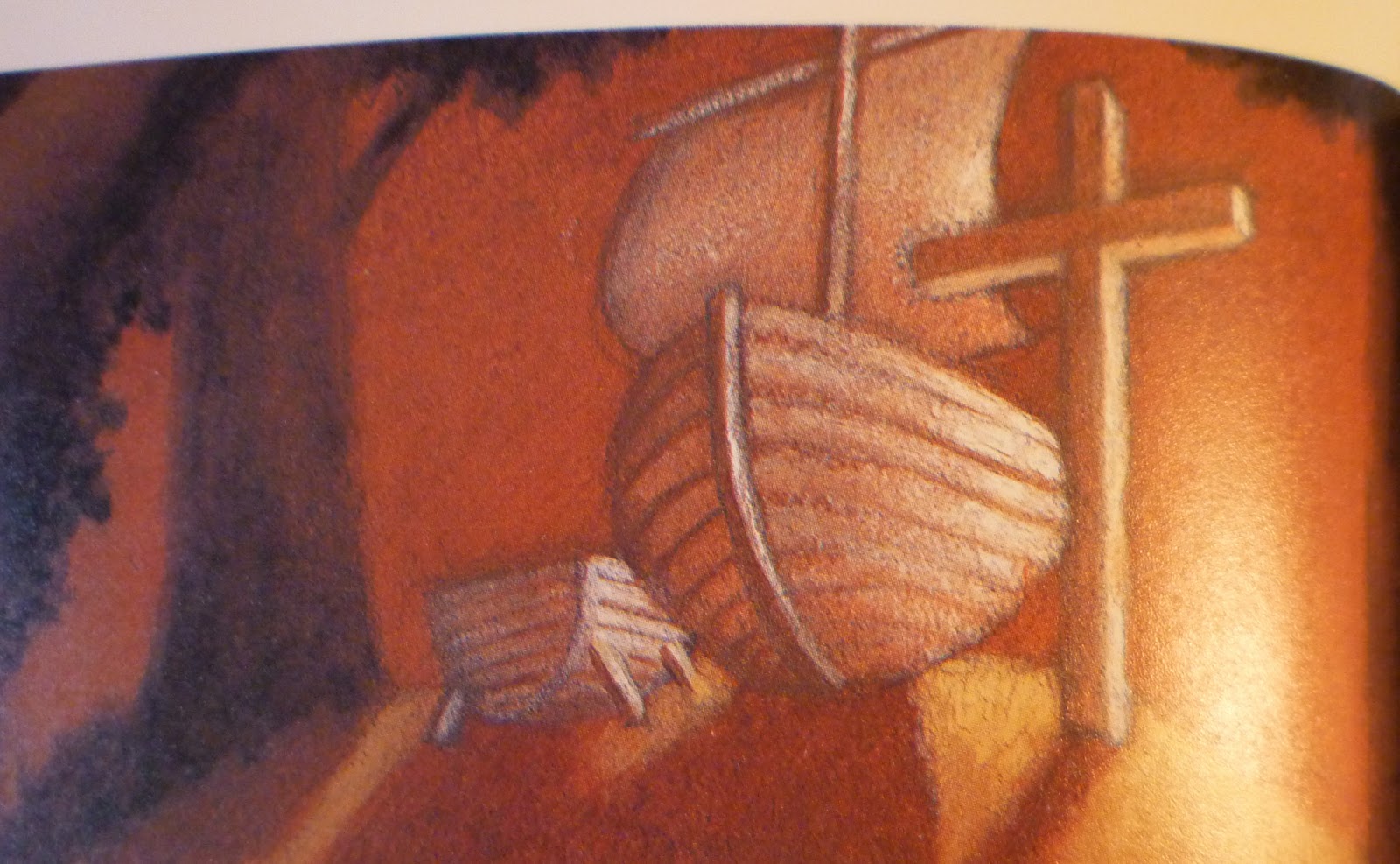
All the trees feel initial disappointment and humiliation, none more so than the one that is made into a rude cross and used for violent purposes: “She felt ugly and harsh and cruel.” But in the end all of the trees realize the blessedness of being used for the glory of God, and the young reader is reminded of the reason a Baby was born at Bethlehem.

Even our Lord Jesus went through a period of preparation, growing up as a man for 30 years before He began His ministry, but He surely wasn’t idle during that time. As we wait for Christmas we can prepare our hearts by prayer and fasting and acts of love.

Those of us with families are blessed to have many possibilities under what might be the Acts of Love category. (They might even include some noise of cash registers, but I won’t say any more about that at this party.) I know I have cookie-baking, doll-clothes-sewing, decorating and menu-planning and making up beds on my list.
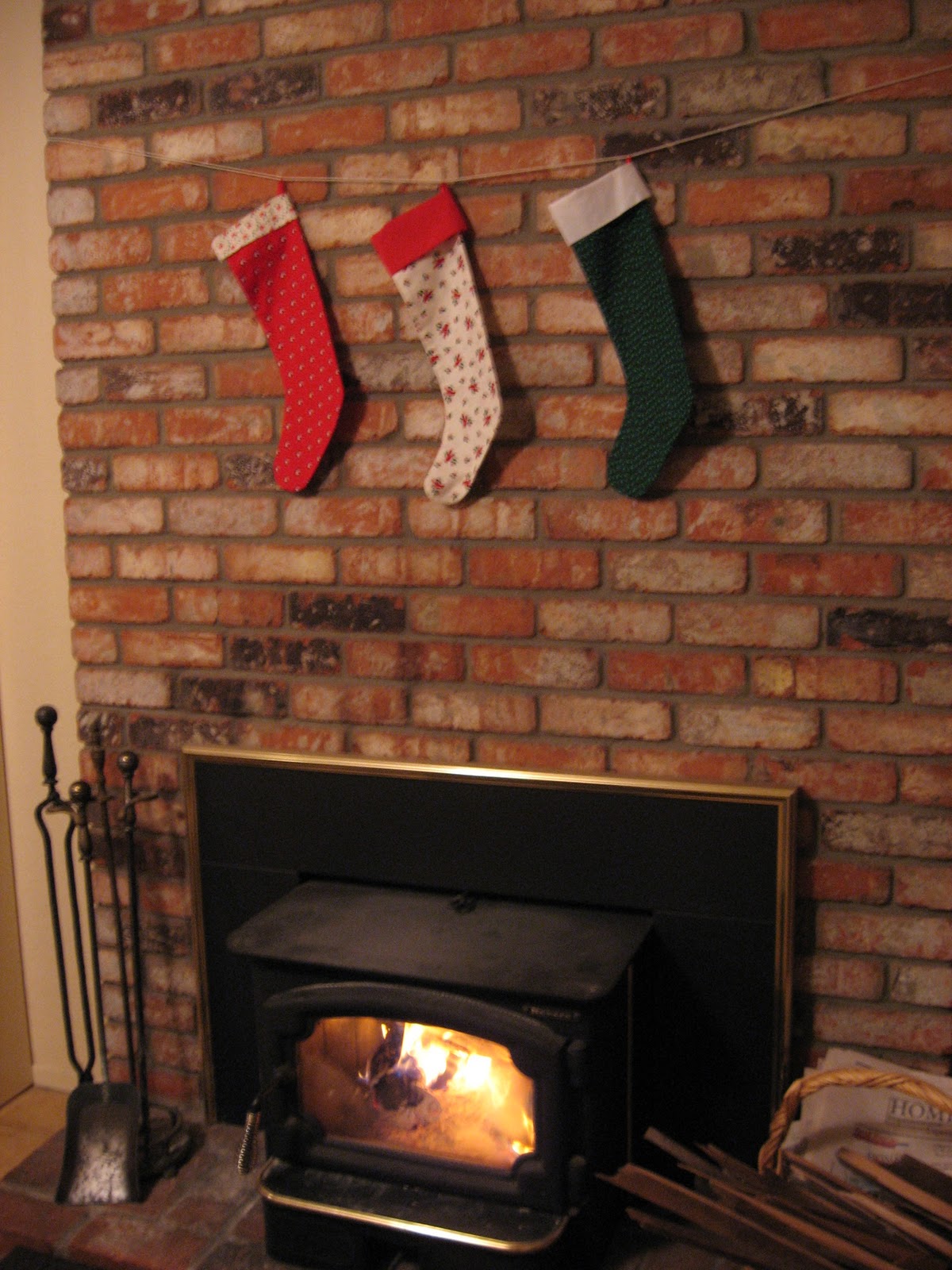
The truth is, I’m not very good at being child-like before Christmas. I feel so many responsibilities that children don’t have to concern themselves with, and I get pretty busy with all the fun type of preparations.

Somehow, though, all of that, when combined with participation in the church traditions and services, adds up to make me feel some of the longing and the weakness that are appropriate right now.

I’ll post on Wednesdays more about some of the simple pleasures that our family has enjoyed over the years, even while remembering that the fullness of joy, the acting like a child, will start on December 25th. And won’t it be wonderful!
Long and Boring Road

Our family loves the books by Byron Barton, like Trains and Machines at Work. Plenty of everyday and exciting things happen in these books, and the stories are told with few enough words that toddlers end up memorizing the text and can “read” the book to themselves or to others.
  
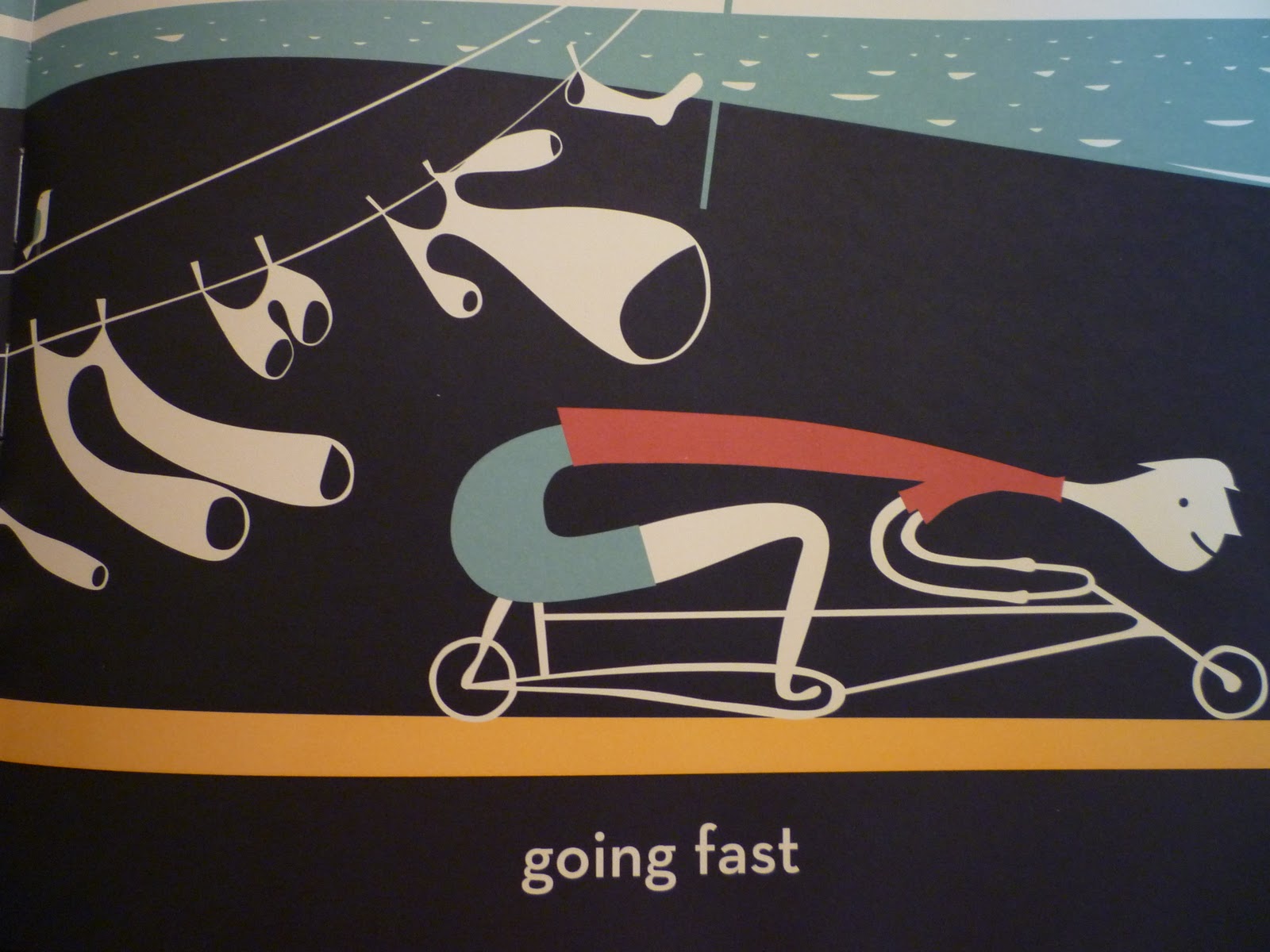
Along a Long Road seems like it is trying to be such a book, but I think it fails miserably. Unfortunately I don’t have a toddler to try it out on. On second thought, I wouldn’t try it out on anyone, because I don’t do that. I have to preview a book and make sure that I like it before I will read it to a child, and I could barely get through this book by Frank Viva.

The picture book features stylistic pictures of the long road, made shiny by some plastic coating, and a very long man riding his long and stretchy bicycle. According to the text he rides and rides, “again and again.”

I haven’t known small children to be very interested in bicycles. They like their trikes, and boys especially seem to love heavy road equipment, trains, and motorcycles. One more reason to pass on this book.

About the only thing both my husband and I liked was the picture of a pregnant woman whom the cycling man passes. I suppose there are plenty of items along the road that one could talk about with a child, but no story to keep the long road from getting tedious.

I quickly got tired of the man and his weirdly shaped vehicle, expressed in only three colors, plus black. The artwork reminds me a little of an odd and favorite book of ours, The Clock, by Esphyr Slobodkina of the abstract expressionist movement. Slobodkina is better known for her picture book Caps for Sale, but long ago I found a beat-up copy of The Clock, which is a captivating story.

Maybe Along a Long Road would be pleasing to a very early reader, or a delayed reader, who might be able to relate to the sign for lottery tickets or a distant view of a carnival, and who would find satisfaction in reading the words “again and again” again and again. Not that I can imagine a child like that. If anyone out there has had another experience with Viva’s arty book, I would like to hear about it, even though I will soon take it back to the library for good. Give me Barton any day.

Limón in the Cazuela

The Cazuela That the Farm Maiden Stirred by Samantha R. Vamos is a delightful Hispanic incarnation of The House that Jack Built. It tells the story of a rice pudding from the farm to the table. The reader is introduced to two new words, first in English, every time he turns the page. From then on, those key words are only written in Spanish.

Before I opened the book, Mr. Glad was enjoying it and noticed that the word for lime was much like our lemon. That made me wonder what the word for lemon is.

New World Spanish-English Dictionary sits on the reference shelf here as a leftover from the days when four of our children in turn studied Spanish. Even though their father and I never did study that language that is so useful, almost essential, in California, we’ve lived here our whole lives and have picked up some vocabulary, sometimes by consulting this word book, as I did on this occasion.

The hen helps by grating the limón

I don’t know why, but my dictionary is wrong about limón. It says that it means lemon, and that if you want to talk about a lime you say lima. I found it hard to believe that this book written by a woman with a Hispanic name, illustrated by a man with a Hispanic name, with the intent of teaching 21 words, would get any wrong.

But I have a friend who is married to a Mexican man and teaches at a bilingual school, and I couldn’t pass up the opportunity to ask my local expert. She wrote, “Okay babe. Limón means lime and limón agria or limón Amarillo can mean lemon. There is a lemon-like fruit called Lima limón. There are not lemons like we have here in the U.S. in Mexico.” That seemed a pretty authoritative word on the subject.

This is a picture book, an Easy Reader, so I must not forget to mention the illustrations, which as you can see from these sample pages I photographed are party-bright, full of the joy and fun of cooking together.

At the back you will find a glossary with pronunciations, in case your Spanish is rusty, and best of all, a recipe for rice pudding. What I would love to do with a young child is read the book, make the pudding together while using the English and Spanish words to talk about the ingredients, and then read the book again while the cazuela simmers.

I would rather one of my grandchildren helped me in the kitchen, while we keep the animals outdoors or in the pages of the book. But an arroz con leche pudding with plenty of crema and some zest of limón would suit me just fine.