Category Archives: church

Listening at the end of Lent

About now I begin to think I really should hold my tongue and start listening harder. Here are some things I’m hearing:

1.  Do not show forth a useless fast.

2.  Can’t you see that the world is on fire, burning! Temptation is everywhere. The devil has set such a fire that even all firefighters in the world could not put it out. It is a spiritual fire. Nothing but prayer is left for us now, prayer that God may take pity on us! You see, when a fire spreads and the firefighters can do nothing about it, people turn to God and pray for a heavy rain. The same happens with the spiritual fire started by the devil; only prayer is needed so that God may help us.

Wherever you may turn, one thing is clear: things are falling apart! It’s not, for example, that we have a house and a window or something else that needs fixing and we can take care of it; it is the entire house that is in shambles––and worse yet, the entire village. We are spinning out of control. Only God can step in and make a difference. He’s got to roll up His sleeves, take a screwdriver and with a slap here and a caress there fix the mess. The world is harboring a blistering wound, full of puss, that needs to be opened and treated; but it’s too soon to open it now. Evil must come to term as it did in Jericho, a long time ago.
––Elder Paisios in With Pain and Love for Contemporary Man

3. A word about how we relate to the saints.

4. “There’s no taking snakes with sugar-tongs.”  -Proverb

5. From yesterday’s Orthodox matins service:

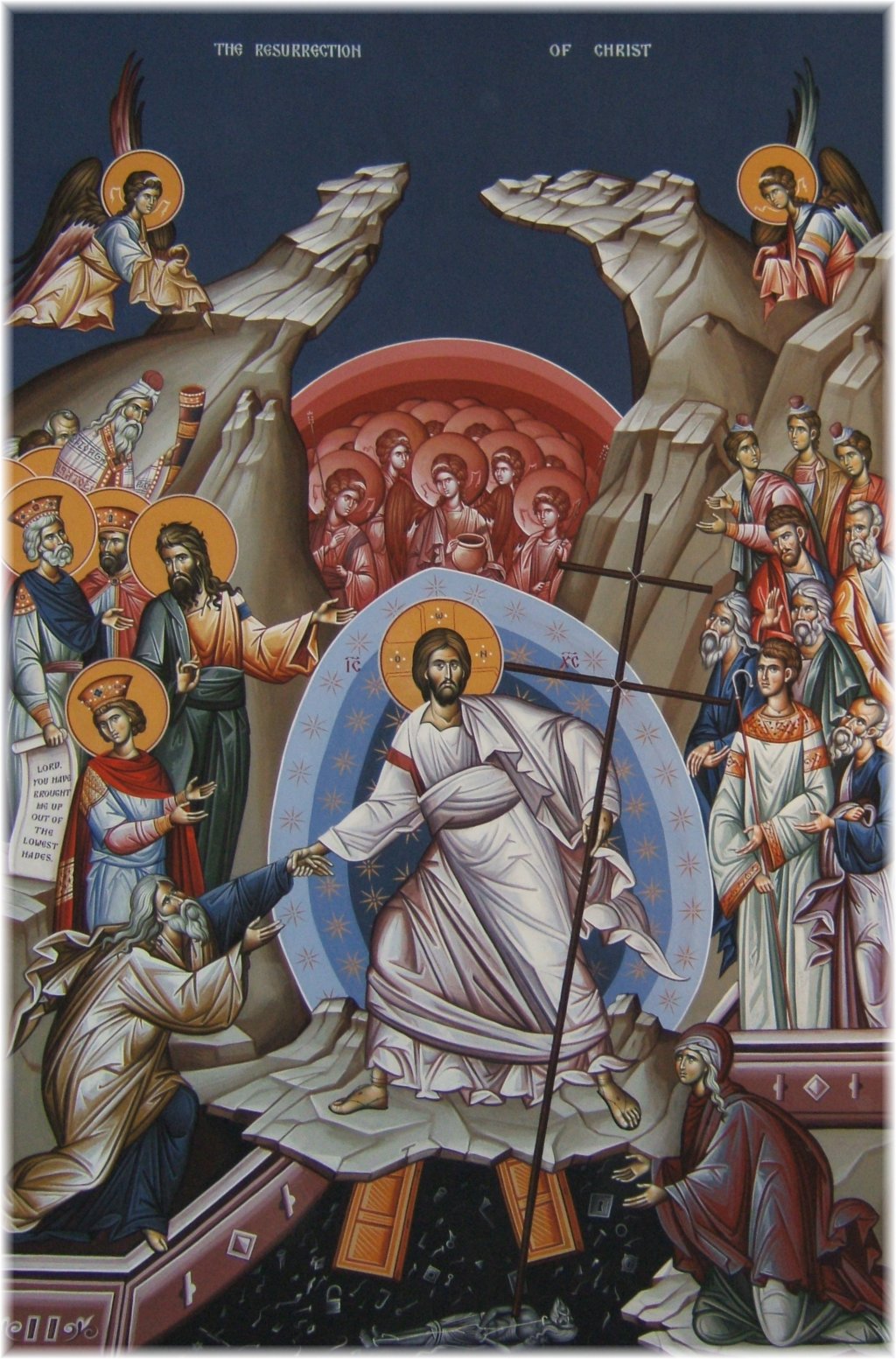
O wise Lazarus, prepare now for thy burial; for tomorrow thou shalt die and leave this life. Look at the tomb in which thou shalt dwell. But Christ will bring thee back to life again, raising thee on the fourth day.

Be glad, O Bethany: for Christ shall come to thee, performing in thee a great and fearful miracle. Binding death with fetters, as God of all He will raise up Lazarus, who was dead and now magnifies the Creator.

Come, let us make ready to meet the Lord, bringing to Him palms of virtue. So shall we receive Him in our souls as in the city of Jerusalem, worshiping Him and singing His praises.

Sinai,_Christ_Pantocrator,_6th_century

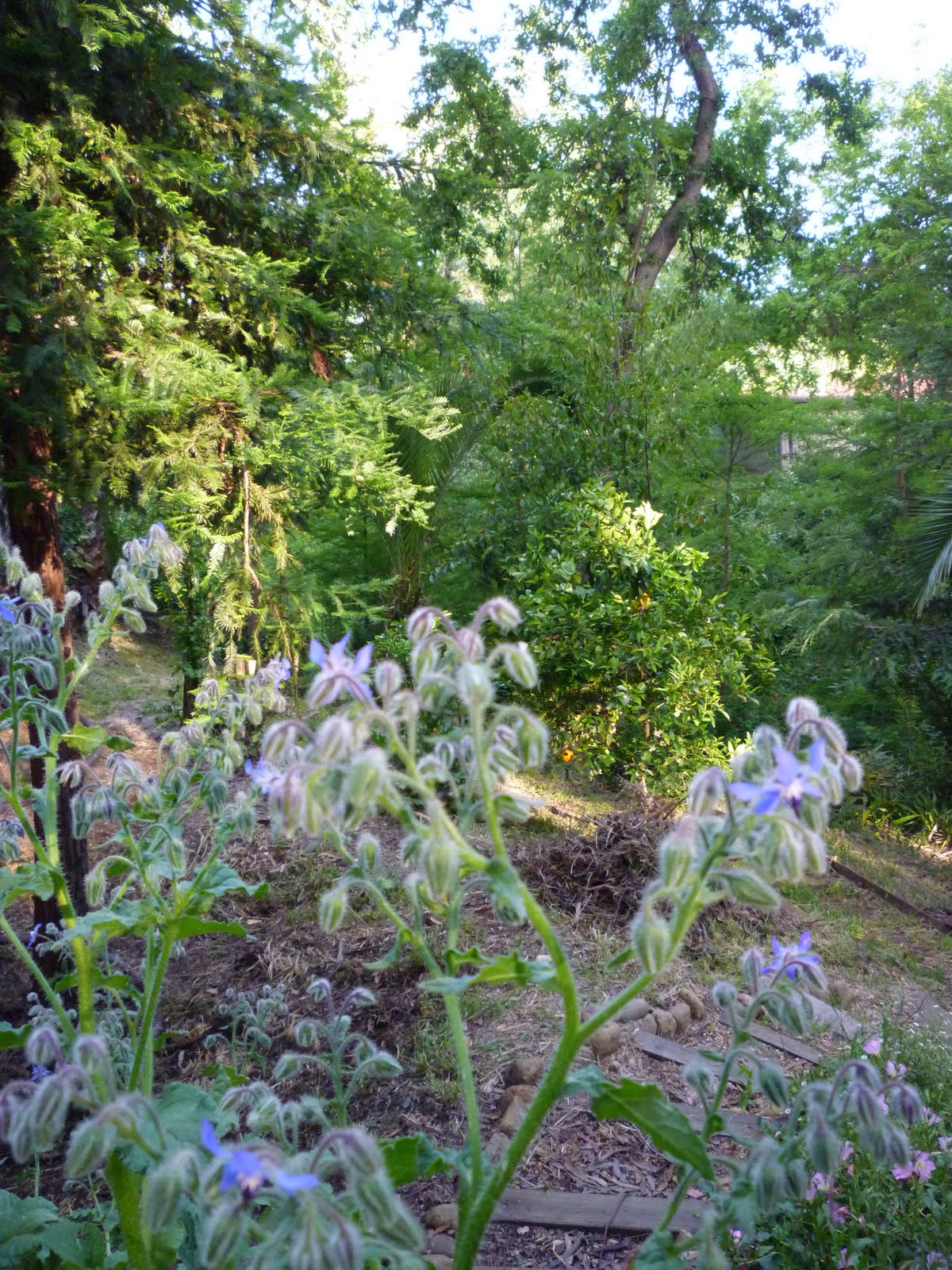
More flowers showing their bright faces

The tulips in “my” barrels at church had faded when I returned after my Maryland trip, but the Iceland poppies and violas are putting themselves forward.

In the fall I planted some of these poppies at church, and some at home. The only yellow one I have at home is very bright. These pale yellow ones at church are as big as saucers.

I love this orange-flowered perennial which I did plant well over a year ago, but I don’t remember now what it is.

This particular year’s spring showing is unique, of course. But if I am diligent about watering these containers it will be like every season’s display in colorfully giving glory to God. It is really a lot of fun to be an assistant gardener to the Creator.

The Hungry Soul – Why I Love This Book

Any self-conscious emotional eater might take notice of a title like The Hungry Soul: Eating and the Perfecting of our Nature. I had the added attraction to the book that came from having heard the author’s warm and thoughtful voice on the Mars Hill Audio Journal as he was being interviewed on an altogether different topic.

Leon R. Kass, currently a professor at the University of Chicago, was appointed to chair the controversial President’s Council on Bioethics at its creation in 2001 and remained on the council until 2007, during which time he wrote Life, Liberty, and the Defense of Dignity: The Challenge for Bioethics. Though he is naturally called a bioethicist, he prefers the term humanist, because it better conveys the breadth of his concerns. Kass is also a medical doctor, but this is not a book about eating disorders any more than it is a cookbook — rather, it is a pondering of “the truth about our human situation.”

At the outset I must submit that there is no way Kass can tell us the whole truth, because he ignores Jesus Christ who is The Truth. Christ reveals the Father to us, being His “express image,” and He was the only fully human person who ever lived on earth, showing us as He did what man can be when he lives in constant communion with His Father as humans were meant to do.

Given this severe omission, one might wonder how I could find such treasures in Kass; I have to admit that this book has to be one of my ten favorites, at least of non-fiction, and the numerous notes and underlinings I’ve made in pencil and in red and blue ball point show how much I am still interacting with the material. Each time I read a section (with a different writing implement at hand) I find morsels of bread on the path leading in the direction the author wants me to go, and also see other lanes he probably isn’t even aware of. As I walk along I eat the tasty bits that have been laid out with care, wanting to race ahead to whatever is at the end of the trail, but resisting that urge for a while so I can savor the food and enjoy the stroll, all the while making note of the forks in the road and the byways I need to explore later on a return trip.

I really think I could come back to The Hungry Soul again and again and find more philosophical paths to explore, but if I wait to share my discoveries I’m afraid the tale will never be told. So I will begin the telling, even though I’m pretty sure I haven’t chewed on these ideas enough to do justice to what the most eminent reviewers hail as “an intellectual feast” and “a profound and brilliant exploration.”

Kass is Jewish and does reveal his belief in a Creator. He wrote this book to demonstrate through the human activity of eating that man has a soul, refuting the claims of corporealists that we are only material beings and that all our thoughts are nothing but electro-chemical events. 

This introductory post is a good place to list the chapter titles or topics that I may draw from in future posts, though just the foreword, preface and introduction are the kind of appetizers from which one could make a full meal.

1. The Primacy of Form
2. The Human Form
3. Host and Cannibal
4. Civilized Eating
5. From Eating to Dining
6. Sanctified Eating

I can’t help but notice how the sights along this philosophical journey are related to other trails and books I’ve encountered, and of course I’ll have to mention those, too, in postings to follow.

As an example of humankind who are the crown of God’s creation, Kass himself is proof of his thesis. The fine mind and heart that are expressed in his writing testify to the fact that men were made in God’s image. And the reasoned and well-written arguments he makes, or even the questions he gently asks, are clear and flowing. It’s a pleasure to follow him when all the paths seem to lead me to God.

Part 2 – Struggle to Stand
Part 3 – How Science Disappoints
Part 4 – From Eating to Dining

Birthday Reflection

St. Nikolai

Yes, it’s my birthday today! Another day to thank God for all His wonderful gifts.

This spring I’ve been enjoying The Prologue of Ohrid by St.Nikolai Velimirovic. I splurged on this two-volume set of readings for every day of the year when our church bookstore offered it at a discount. I was the one who had to write down information about the book for a list of sale items, and that was the first time I’d actually looked inside. Something about the name along with its size had made me disregard it, but in the Preface I learned that the name Ohrid is “solely to distinguish it from the ancient Slavonic Prologue which — regrettably, because of its language — has become inaccessible to the Slavic people of our time.”

I’d heard and read many of St. Nikolai’s Prayers by the Lake, which are heartfelt and inspiring poems, so it is not surprising that his devotionals of three or four pages are also beneficial. They include stories of two or more saints commemorated that day, a Reflection, a Contemplation, a Homily of a few paragraphs, and often a Hymn of Praise. I’m happy to know that the whole thing is also available online, so I won’t need to carry my book across the continent later this month.

Today’s Reflection is a good one for Lent:

Even in His pain on the Cross, the Lord Jesus did not condemn sinners but offered up pardon for their sins to His Father, saying, They know not what they do (Luke 23:34)! Let us not judge anyone so that we will not be judged. For no one is certain that, before his death, he will not commit the same sin by which he condemns his brother. St. Anastasius of Sinai teaches: “Even if you see someone sinning, do not judge him, for you do not know what the end of his life will be like. The thief who was crucified with Christ was a murderer, while Judas was an apostle of Jesus, but the thief entered into the Kingdom, and the apostle went to perdition. Even if you see someone sinning, bear in mind that you do not know his good works. For many have sinned openly and repented in secret; we see their sins, but we do not know their repentance. Therefore, brethren, let us not judge anyone so that we will not be judged.”

St. Anastasius by Rembrandt