This week the discussion of Hidden Art of Homemaking is on chapter 9 – Writing Prose and Poetry. I haven’t kept up with the conversation at Ordo Amoris for a week or more, and for this chapter I’m just re-posting this from August 2009. Don’t be misled by the now-obsolete references to postage rates!
Old-Fashioned Correspondence
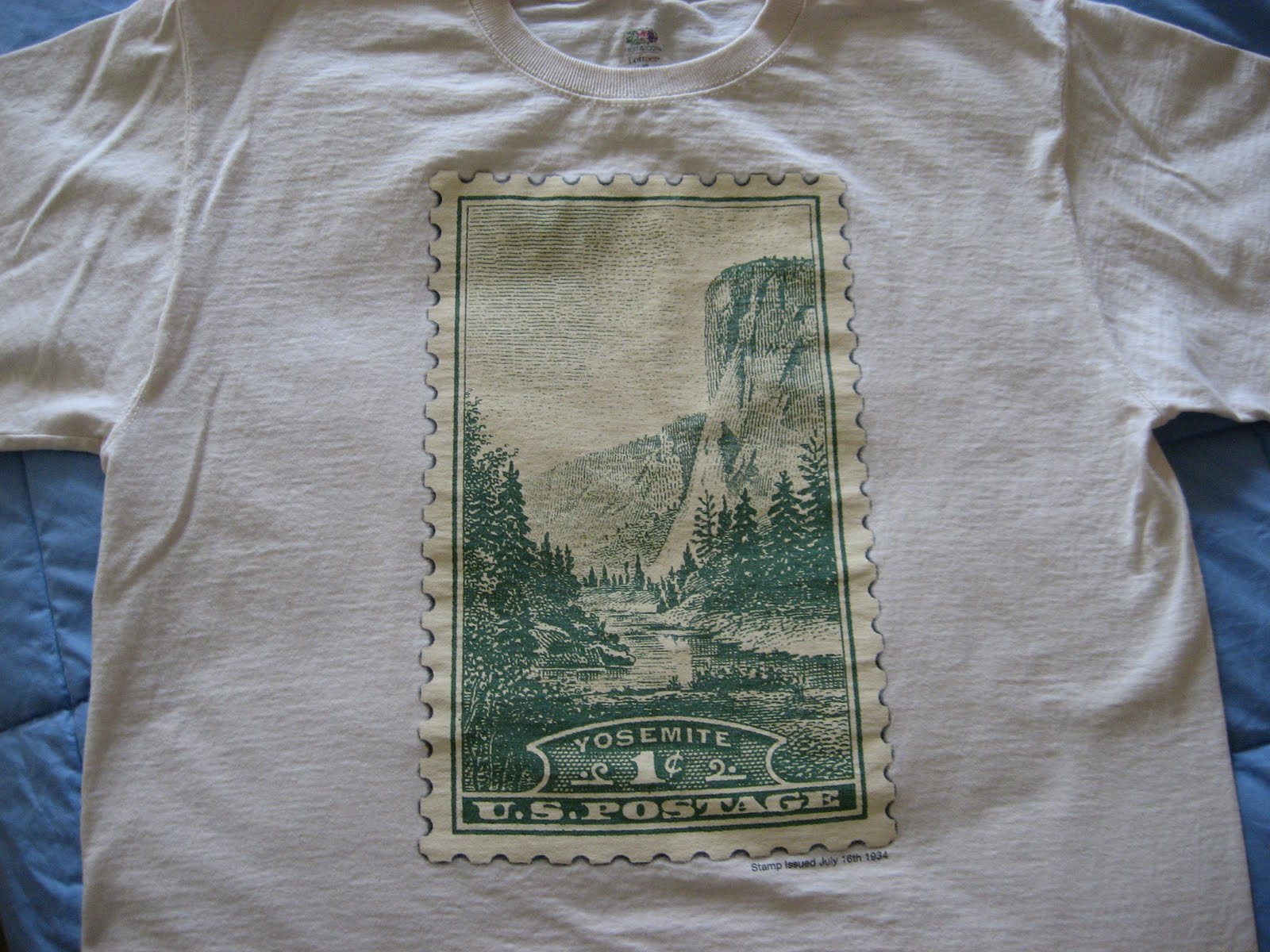
To introduce the postal theme– and for a few moments just forget about the concept of mail that can’t be carried in from the mail box in one’s real hands–I show you this T-shirt we bought in Yosemite last month, at the post office. It was the best clothing deal in the park, and an unusual and historic design: a reproduction of a stamp that was issued in 1936, showing–Yes! my beloved El Capitan! If you have ever beheld that rock I trust you won’t find its frequent appearance here tiresome.
I mostly wanted to tell about postcard-writing, and the shirt isn’t very pertinent to that…though it just occurred to me that one might buy the shirt at the Yosemite post office and then write a postcard sort of message on the fabric before mailing it in its more personalized form. I don’t think I’ll run right back there and pick up a few more, though.

When I was a child, my maternal grandmother would send postcards to me and my siblings from wherever she was traveling. I recall receiving word from Turkey, Norway, Mexico, and Hawaii. She also wrote very entertaining letters from home. As she has been a major role model for me, it’s no wonder that I feel it a natural activity as a human being to share my life in this way with those I love.
It’s easy when on a journey, away from the usual housekeeping duties, to remember friends and family and take the opportunity to let them know I do think of them. A trip just doesn’t satisfy if I haven’t dropped a dozen cards in the letter-box.
This picture was taken at the Grand Canyon. When others in our party were hiking down into the gorge one morning, I walked all over the place looking for a picnic table with a view, from which I might write my cards. That was not to be found, but in a sheltered courtyard I did find a good spot, away from wind and next to a big stone with rain water pooled in a depression on the top. I didn’t notice this rock until I was startled by a raven who swooped down to drink.
Postage “just” went up again. It now costs 28 cents to mail a postcard. On those first envelopes carrying my grandmother’s address in the corner, the stamps on the other corner said “4 cents.” I can’t imagine that a postcard was more than a penny.
One thing I inherited from my father recently was the stamps from his desk drawer. There are some pretty old ones, from when a letter was 25 cents. If they still have stickum on them I use that, and if not, I apply a little Elmer’s glue and save my pennies by using these old stamps.
In California it seems that every town is a tourist town. At least, I find postcards in all the stores. But in some locales, the market has yet to be discovered, and I have to make my own postcards, which I learned to do from Martha Stewart, who gives us this handy template and instructions for using it. I’ve made these one-of-a-kind cards with photos of someone’s backyard, or a lake that is small and unknown, or a town that is seemingly too plain for the professional postcard people.
But why restrict this fun habit to traveling days? I started sending postcards to the grandchildren and friends any old time. A postcard is small enough that I can find time to write a few words while the iron or computer is warming up or perhaps even in the middle of the night when sleep won’t come. I don’t think old-fashioned correspondence of this sort will ever become obsolete or unwelcome.
Not Lazy Summer Days

To be precise, summer only began yesterday, so I shouldn’t be complaining about the lack of hours sitting on a patio with tea, or in the shade reading a book. I will likely yet have time before we get to the fall equinox for solitary early-morning weeding sessions in the garden while towhees splash in the birdbath nearby. But lately I’ve been doing so many fun and good things, I’ve been getting a bit depleted.

A week ago today, I was baking pies. It was a satisfyingly creative job, even if I did have a huge mess afterward.
Initially I wanted to bake an apple pie for the father of my children, for Father’s Day. And at church the ladies were bringing in pies for the agape meal, also in honor of the day. I made three for that contribution, using up some flaked coconut and other goodies in my pantry.
This one above left was named Million Dollar Pie where I found the recipe online, but as I improved it by cutting the sugar in half, I’ll make that Two Million Dollars. It must have tasted like a candy bar, what with the coconut, chocolate chips and walnuts it featured, but none was left over for me to try.
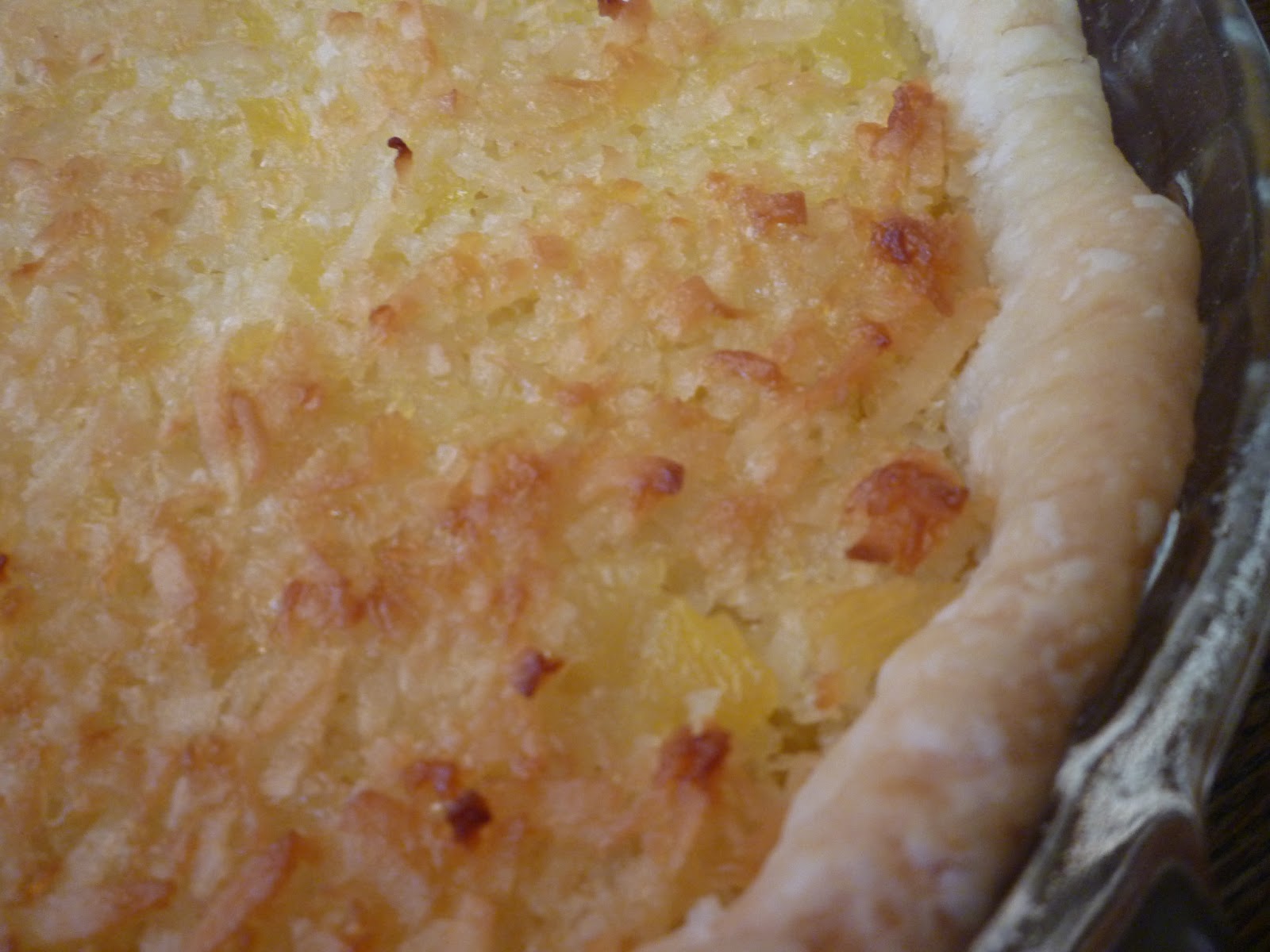 The recipe I found for Coconut Pineapple Pie made two pies from a 14-oz. bag of flaked coconut and a large can of crushed pineapple, with some eggs and butter, etc. in the mix. I did get a taste of that concoction, and I wonder if it might have had more zing if I’d used a name brand of pineapple. Even with its sugar cut in half it was a little too blandly sweet for me, but people liked it.
 My newest favorite kitchen gadget got used that day: silicone pie crust shields. In the past I used aluminum foil to keep my crusts from getting too brown, but foil is not nearly as handy.
The day after Father’s Day grandson “Pat” flew to California all by his lonesome from D.C.’s Ronald Reagan Airport, mostly to spend a while with Pippin’s family, but we grandparents had the happy task of meeting him at the Oakland airport. Oakland is next door to Berkeley, where year by year I as a child visited my own grandparents, so we stopped in that old neighborhood of Indian Rock and Indian Rock Park in the Berkeley Hills.
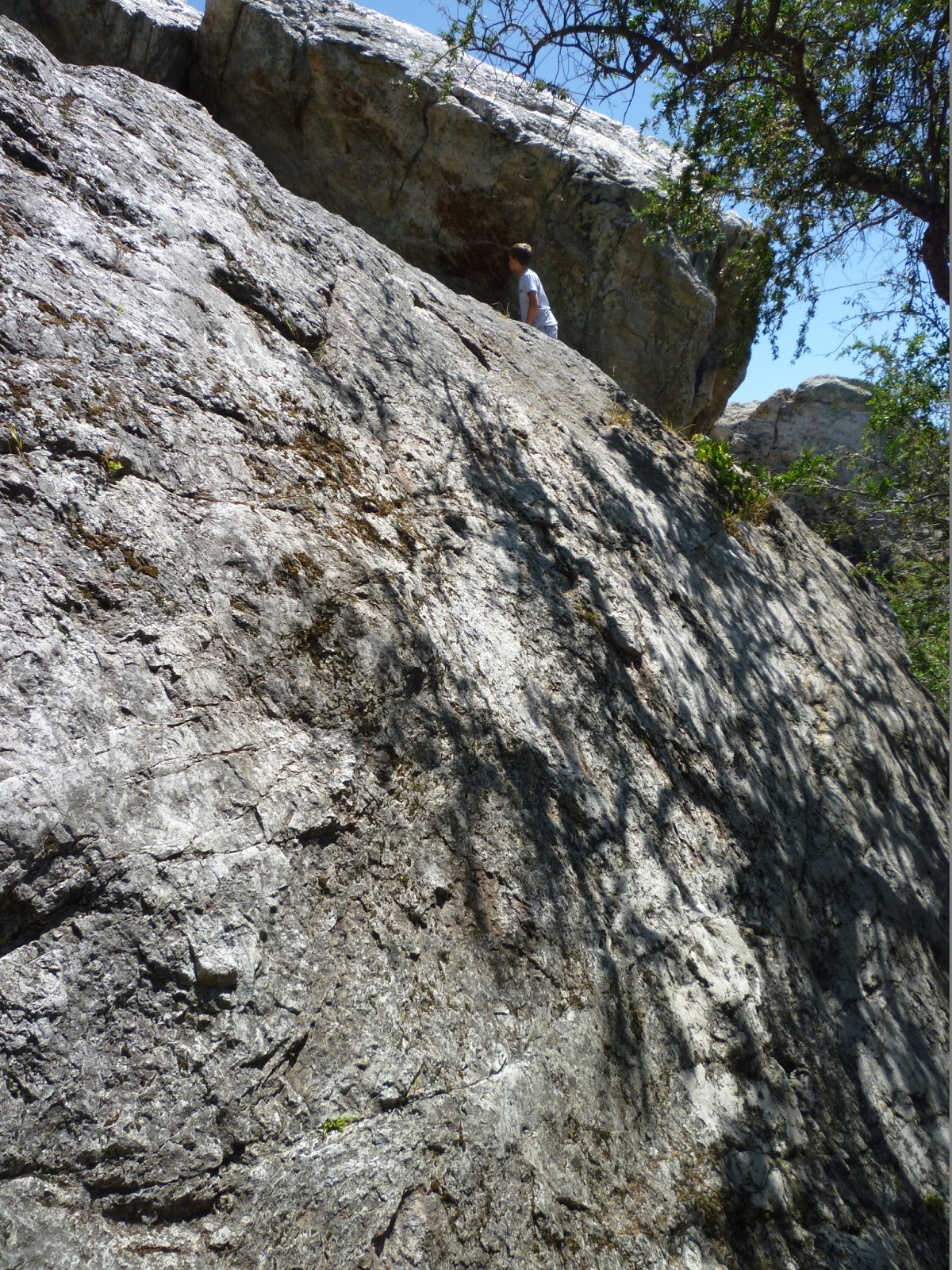 |
| Indian Rock |
My sisters and I used to play here, just down the block from my grandma’s house, and even my father had his picture taken on the Rock when he was a small boy. It’s such a lovely thing that the houses were built all around this cluster of craggy boulders that seem more likely to be found in the Sierra Nevada. Pat climbed “cross country” on them, while we older people used the flights of steps long ago cut in the rock.
 |
| My father in 1927 |
From the top you can see far and wide, both the Bay Bridge and the Golden Gate Bridge, and at the bottom, where the hill slopes into the town of Albany, it’s possible to walk down to Solano Avenue by way of stairs passing between houses. It takes only a few minutes to go this way, descending to shops and in my grandma’s time, her beauty parlor and the ice cream parlor that she let us visit by ourselves. Those were the days when children were safe.

After a couple of days having Pat all to ourselves, I drove him north to have adventures with the Professor and fun little cousins.; we listened to most of The Voyage of the Dawn Treader on the way up, with me interrupting frequently to say, “Would you look at all those sunflowers!” (There were a couple of thousand acres, I think, visible from I-5.) and “Those are tomatoes in that field, and this is alfalfa….” Sadly, we couldn’t get one of those faraway views of Mt. Shasta because of clouds.
 I had a few sweet hours with Scout and Ivy before I wore myself out driving back the very next day. I needed to come home and get ready for multiple house guests, and for events such as the much anticipated Feast of Pentecost.
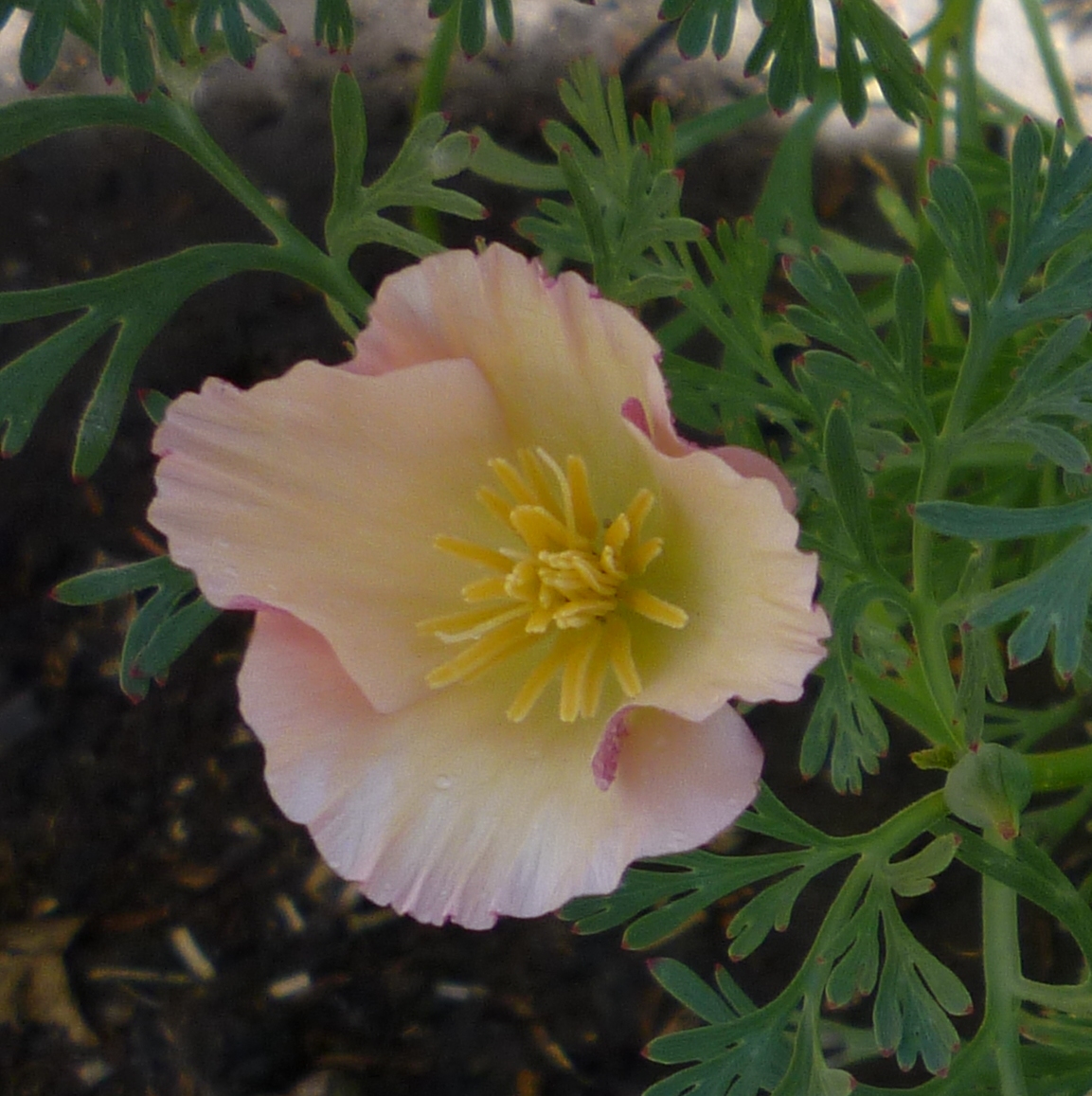
Friday morning when I was back watering the garden I discovered that more of my unusually colored California poppies had bloomed, like this one.
A brief look-around at my flowers didn’t seem to be enough R&R, though, so I asked Mr. Glad to take me to the coast where I could “just sit and stare at the ocean.” He was happy to comply.

The weather wasn’t as summery and calm as the predictors had led us to expect, but the fog hung around only thinly so that we mostly noticed the sunshine. I tied a bandana around my head so that the wind wouldn’t make a total tangle of my hair, and we sat in the lee of a sand dune where I could rake my fingers through the warm sand for an hour.
I don’t know how long I may have to wait to experience even a short string of rejuvenating days, but for now I think my half of a lazy afternoon will do nicely.
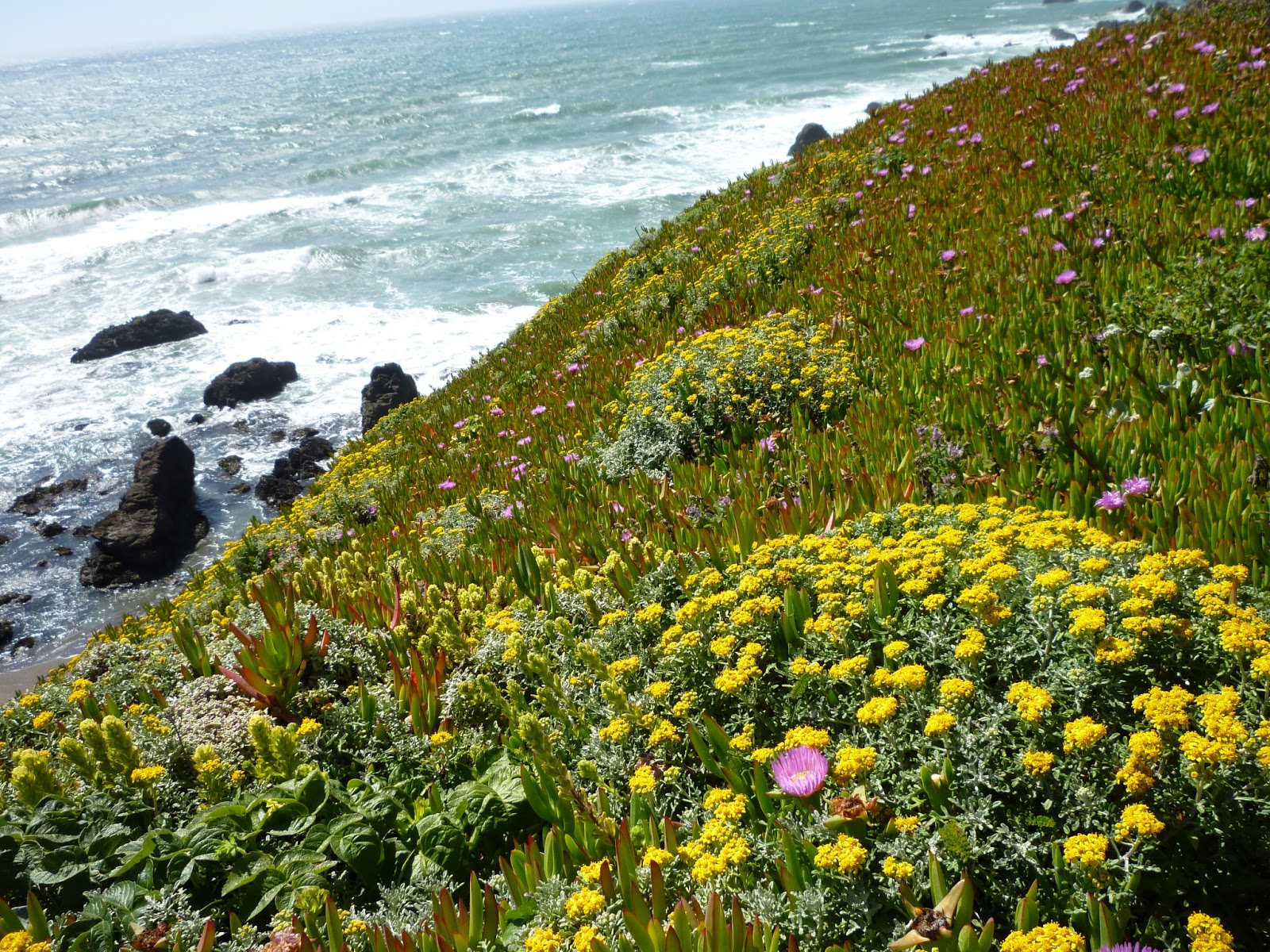
Oregon – long good-bye
 On our last day in Oregon we woke up in a little old room in a lodge by a lake. Lake O’Dell, where Mr. Glad had come a couple of times as a child and where we thought we might row or paddle around on the glassy water in the morning. But I was impatient, knowing we had a long day of driving ahead of us, to just get on with it and get to Pippin’s.

The night before, we had sat on the deck and continued our reading of The Hobbit. Then we retired to our rustic room, likely designed for a fisherman type who doesn’t read in bed or need a nightstand for anything. The fisherman doesn’t have any bottles or jars or pillboxes in the bathroom, either, so it’s o.k. for him that the floor is the only horizontal surface other than a narrow windowsill.
It was kind of sweet, actually. The room smelled just normal, not like disinfectant or stale cigarette smoke or fake deodorizer. Maybe partly because the windows were letting in the fresh air from the forest, into a room that mostly houses just plain folk. We could see the lake through the trees, and hear the birds.
 |
| A well-dressed tree trunk by Lake O’Dell |
Nothing and nobody woke us out of our good sleep, not even a motorboat of fishermen going out on the lake in the wee hours of the morning, as Mr. Glad had predicted. But we did wake and get on our way, south toward our home state. It would take the better part of the day, by way of long straight roads in the high and dry eastern side of Oregon.
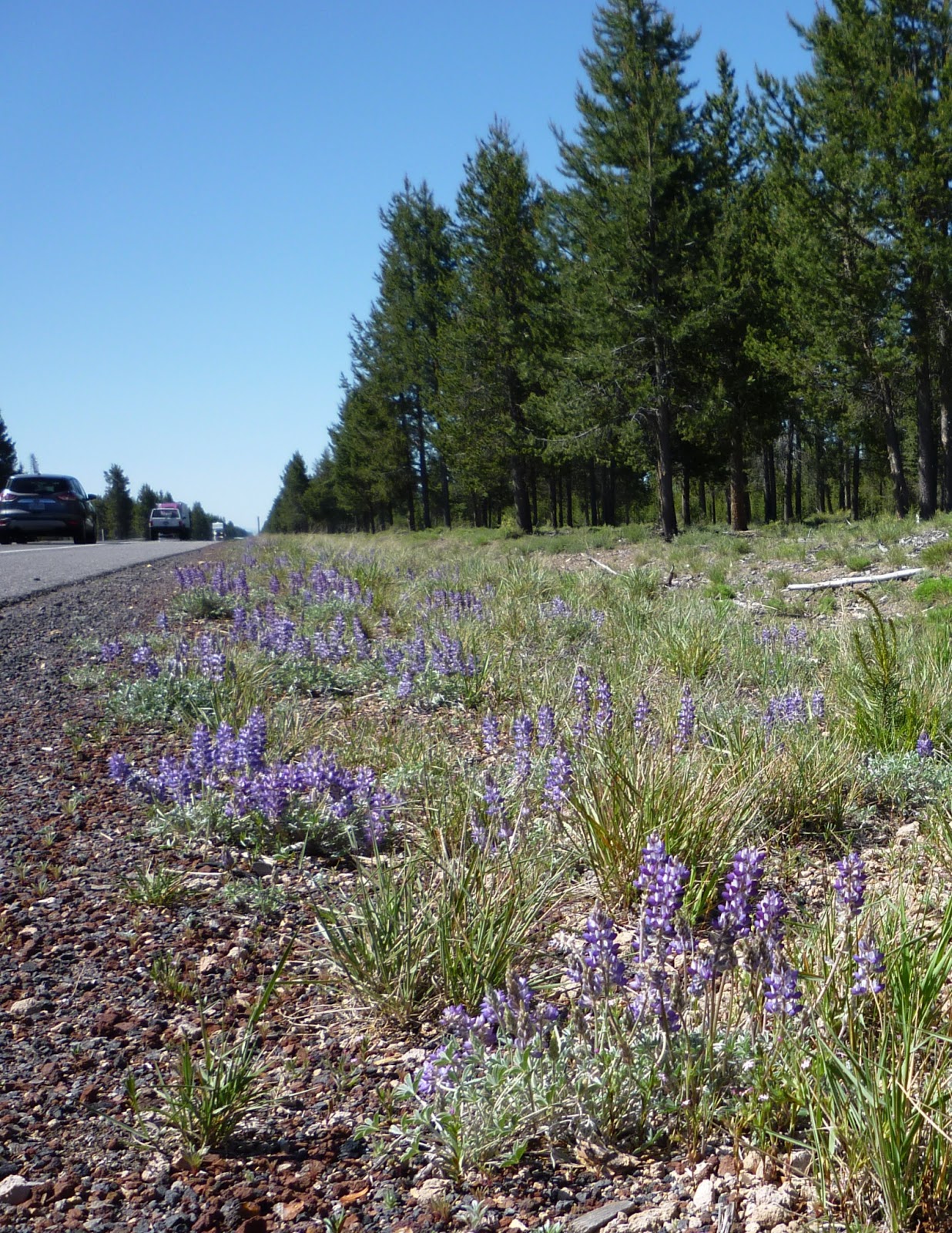
Forest, forest and more forest, with “fields” of short lupines in bloom along both sides of the highway, thickest out in the open between the road and the trees.
 When we were still at least 200 miles away, I got my first glimpse of the top of Mt. Shasta, that volcano that stands by itself over 14, 000 feet high as a dramatic landmark an hour’s drive south of the Oregon-California line. And then I really got excited, like a horse on its way back to the barn, and it struck me how much I love that mountain for telling me “Welcome to California!” and “Welcome home!” while I was yet a long way off.
It’s summer, and summer in the West means the highway department is repairing the roads, so this trip was marked by many many extended stops waiting for the flagman to let us go on.
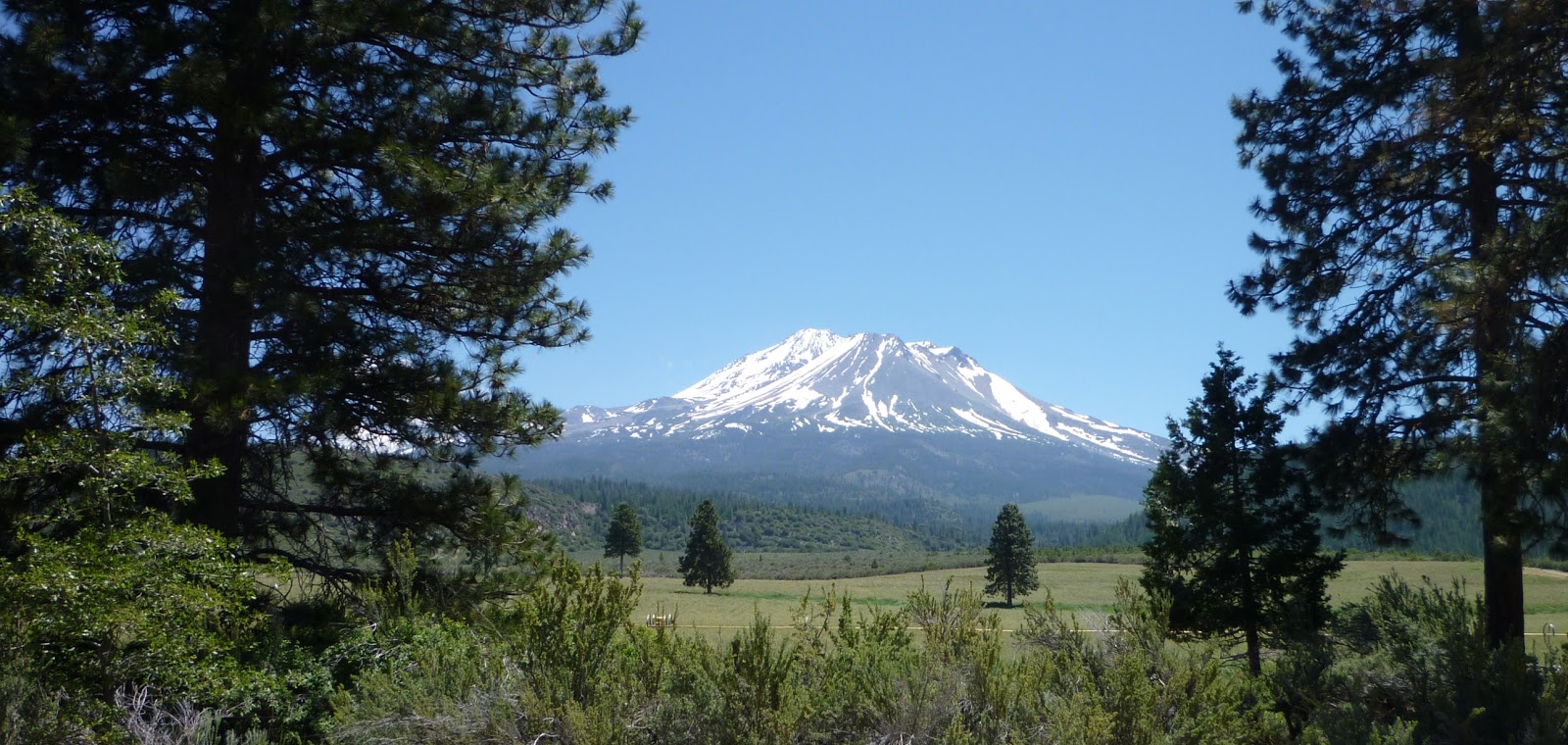
The last of these roadwork episodes was near Weed, California, and I was driving, and could roll down my window and snap this picture of the mountain from a normally impossible spot. “It’s my lucky day!” I said, as once again we were sitting motionless on the blacktop.
But only a few minutes later we were playing with the grandchildren and eating strawberries with our dear ones. The Oregon loop was lovely, but not more so than the feeling of home.

Oregon – Granite Man, Pennyroyal, and Deer Brush
 |
| An hour before the race began |
On the first of June Mr. Glad competed with other members of the family in the Granite Man Triathlon in southern Oregon. It was one of several events and meetings that formed the outline of a little trip around our neighboring state.
My husband was doing the swimming leg, as was the other grandpa of our Oregon grandchildren, and the two of them were the team captains. Our son and three grandsons made up the remainder of the teams, with the younger athletes compensating somewhat for the slowness of their elders. We womenfolk and some out-of-town kin were the support crew and also played with the baby (cute boy even if he isn’t one of my grandchildren).
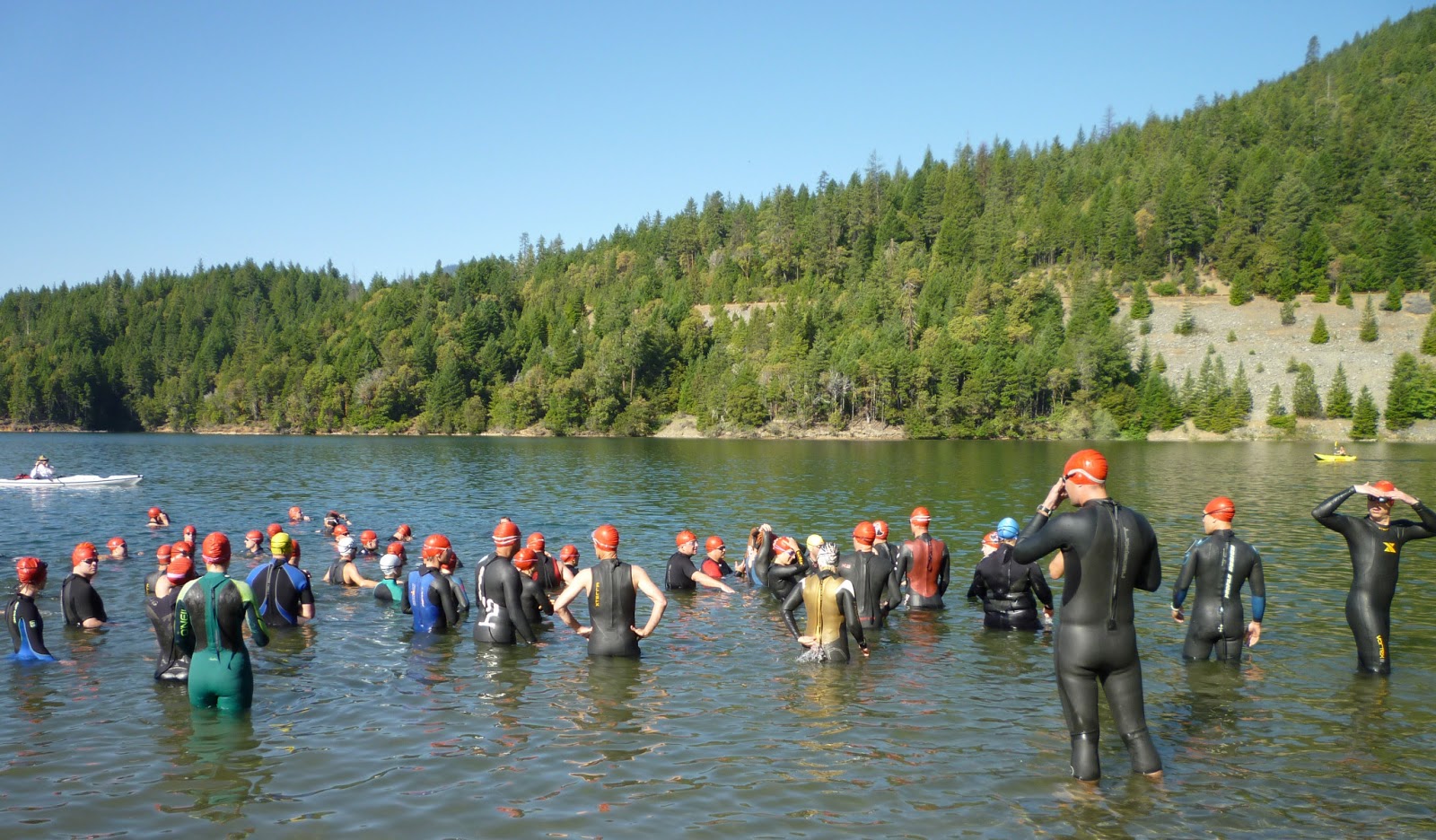 |
| My favorite swimmer left of center with his hands on his hips |
Perfect weather, and a lovely setting, with trees leafing out, flowers beginning to bloom. As we stood around on the grassy slope of Applegate Lake waiting for the race to start with the swimmers’ portion, I had my first botanical experience of the trip. It started with a smell that only gradually broke into my consciousness enough to make me look down and search out what source my feet were tramping on.
 |
| pennyroyal – or not? |
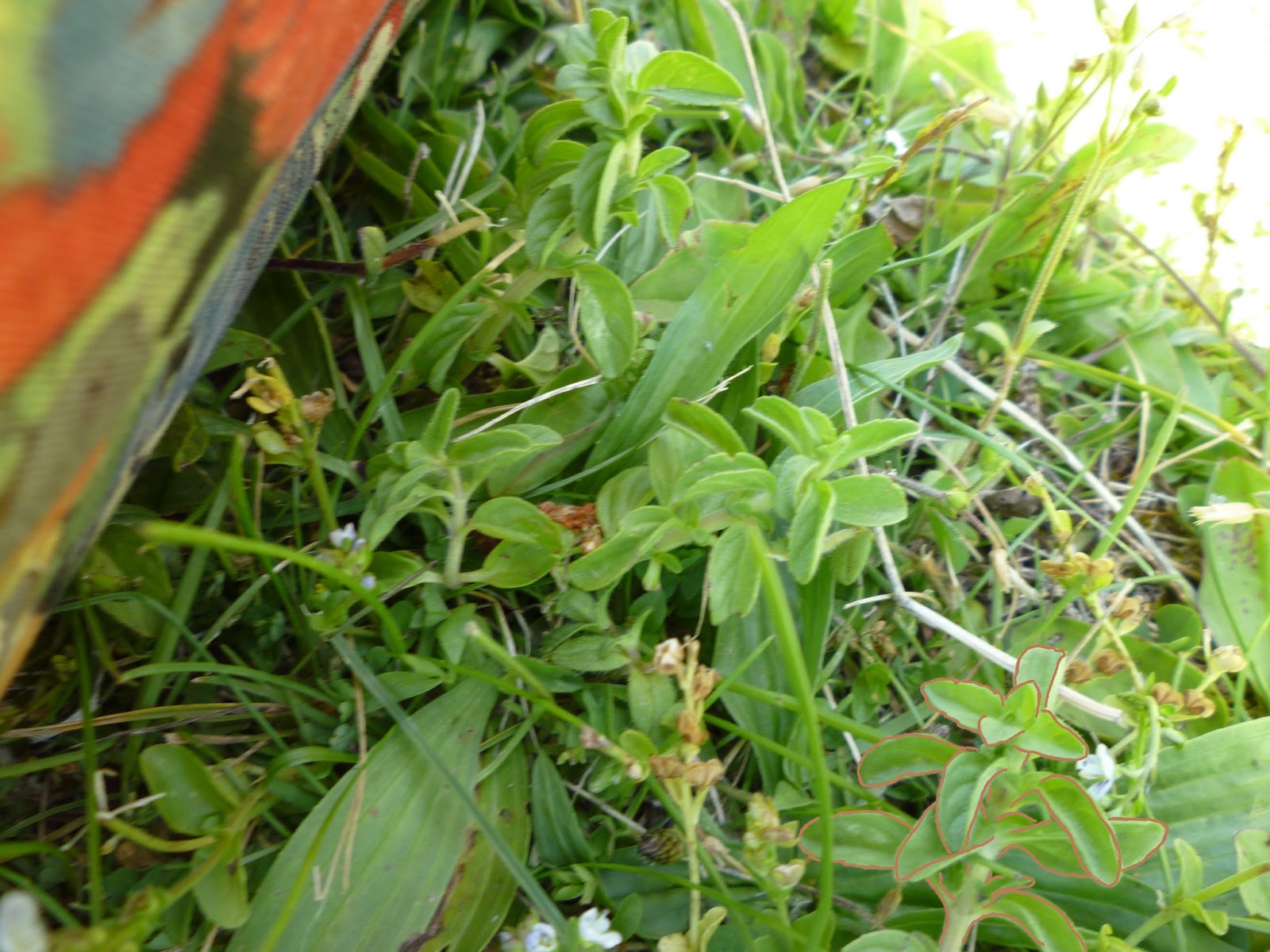
Pennyroyal was my first thought, as I picked off some of what was growing in the wild lawn, and in case you aren’t familiar with it, I outlined one cluster faintly in red, in the photo above, in the lower right corner. Even so, you may have to click on the photo to see it.
But it doesn’t exactly look like pictures of Mentha pulegium, though that pennyroyal is considered mildly invasive in California and Oregon. It doesn’t even look like pictures of the Oregon “field mint” Mentha arvensis, which I looked at in case my sniffer is not able to distinguish between members of the mentha family.
Pennyroyal has what I’d call a sharper aroma than most mints, and this one under my feet had that distinctive smell that I have met many times in my life, often in the mountains. Was I mistaken? Its leaves do look in some ways more like Monardella odoratissima, whose common names include “Mountain Pennyroyal” – but not exactly.
This Applegate Lake variety looks like a cross between it and another mint, as I study it further. And that impression might not be too far from reality, because it turns out that pennyroyal has an ability to hybridize with other mint species, adding to its troublesome weediness. It may crowd out native plants and even threaten Oregon’s commercial peppermint and spearmint crops, as I read in this article.
I learned a new word while reading it: allelopathy: a biological phenomenon by which an organism produces one or more biochemicals that influence the growth, survival, and reproduction of other organisms. I am familiar with this kind of influence from my experiences in gardening, but I didn’t know the name for it. The latest instance is the way nothing much grows under my manzanita bush because of its negative allelopathic qualities. The authors of the article experimented by treating seeds of a rare Oregon plant with a weak extract of pennyroyal root, and found that the germination rate dropped.
 |
| Deer Brush near Applegate Lake, Oregon |
I didn’t know all of this bad stuff when I was lolling about in such a bucolic place; I was only pleased to have found a plant to check on as soon as I got home.
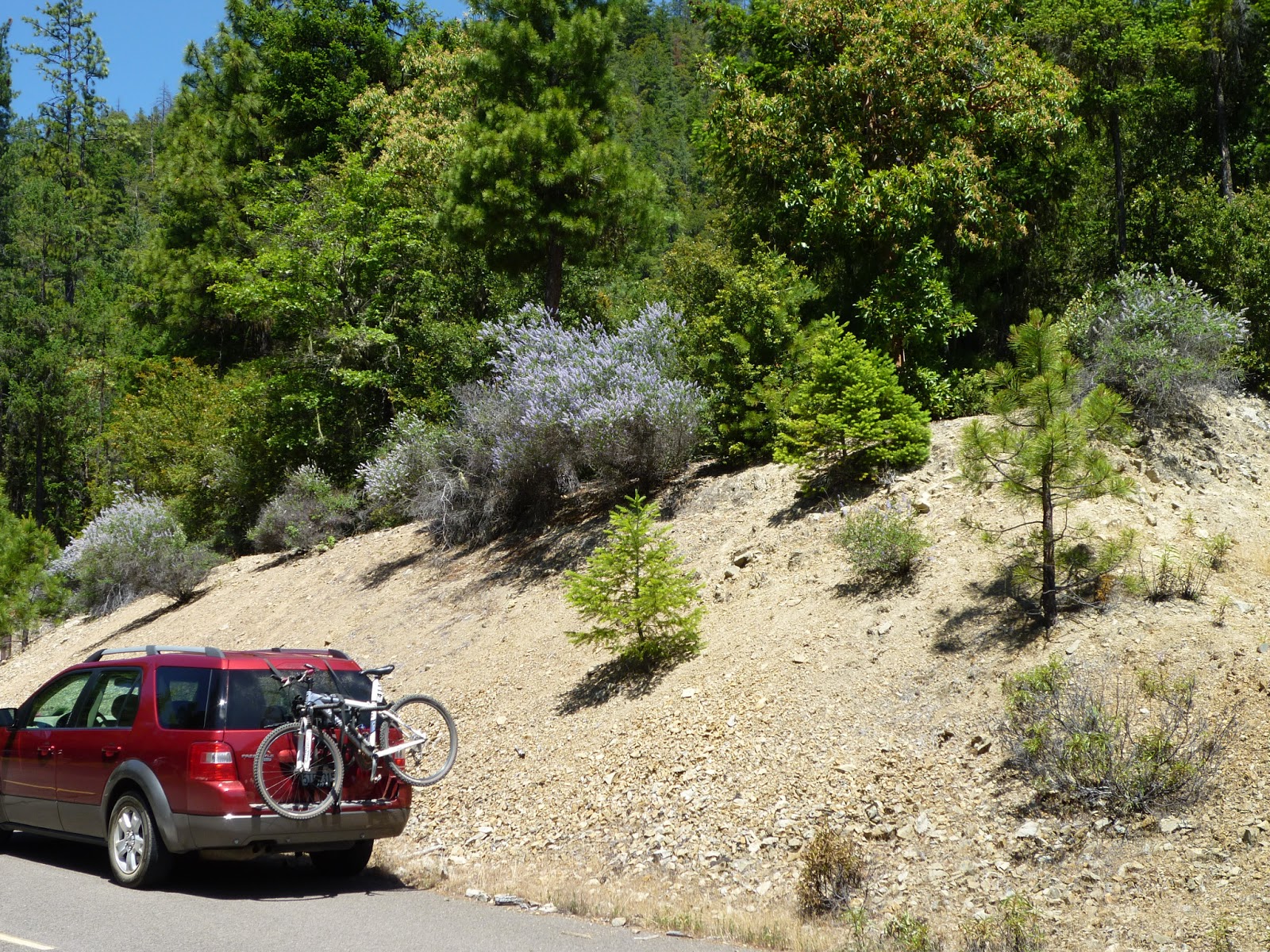
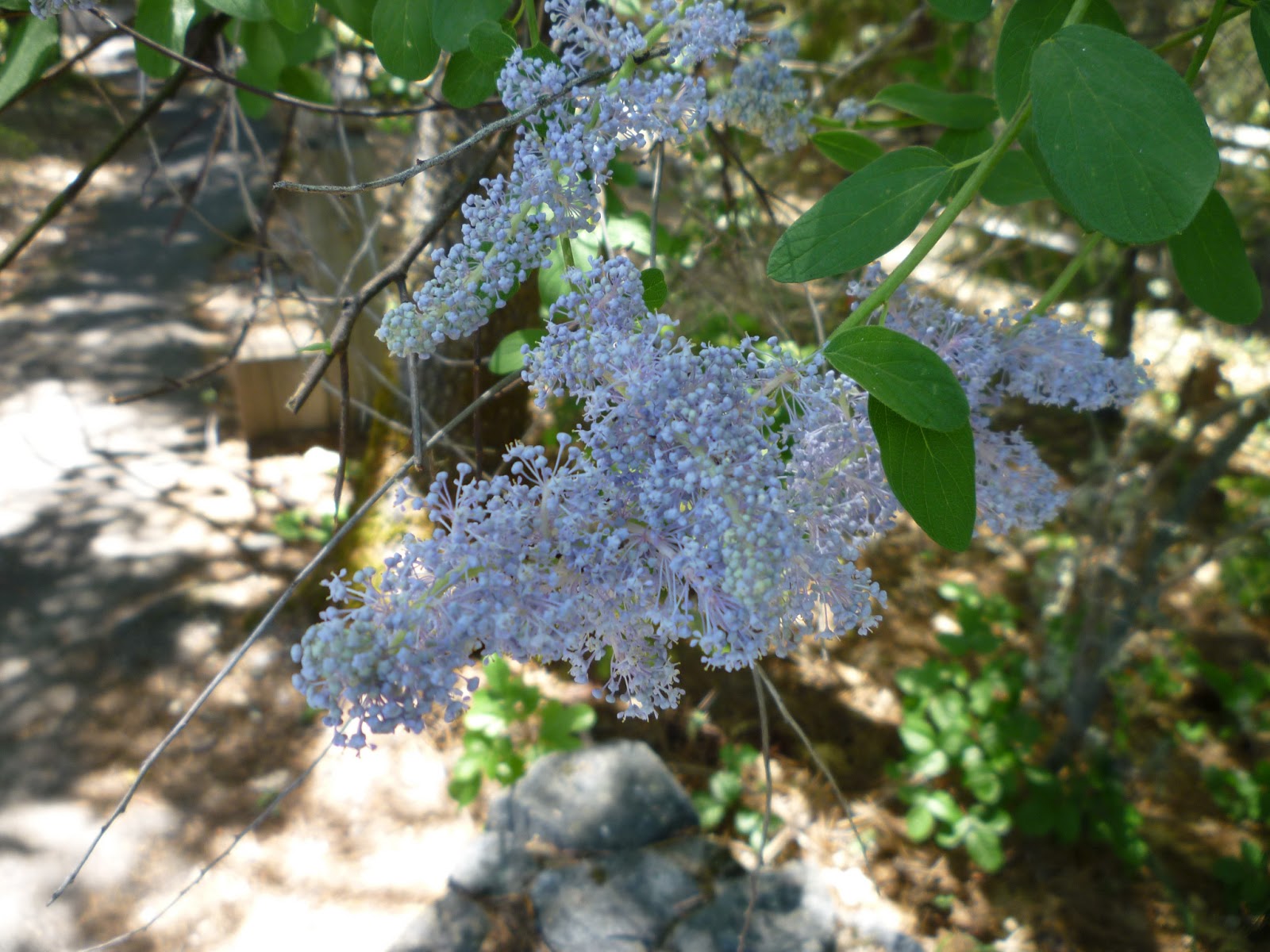
When we went out to the parking lot after all our guys were done (and some were done-in) I found another, a bush covered with honey-scented flowers. I thought it might be a type of Ceanothus, and I was right. But about the common name, I was wrong. I guessed Mountain Lilac, and it is in fact called that by some people, but maybe by mistake…? It’s officially known as Deer Brush.
The flowers come in shades of light blue and white, mostly, and it’s native to the western states. All of its uses are positive: animals eat it, the Indians made baskets from it, and it fixes nitrogen in the soil. Everybody likes this one!
 |
| Ceanothus integerrimus |
 Gladsome Lights