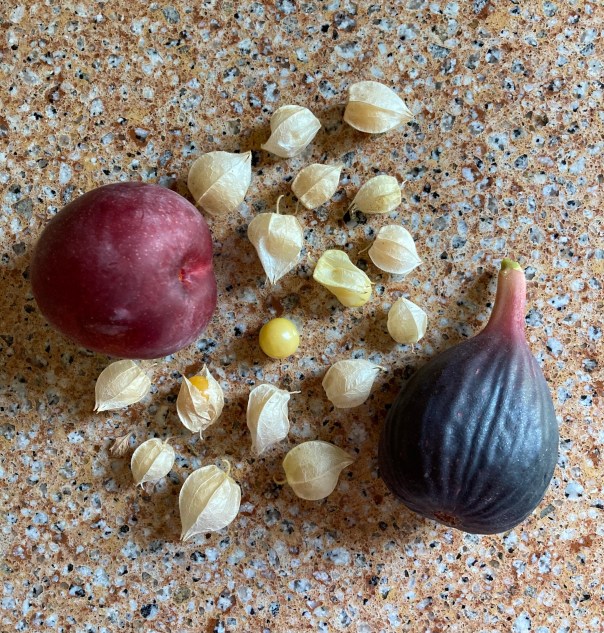
Some of this morning’s harvest.
Some of this morning’s harvest.
So many mornings the sun does not come out until late. But I picked the last of my Elephant Heart plums this week, and the first two figs of the season the week before. Just now I wandered around the garden (noon and sunny) and cut three zucchini.

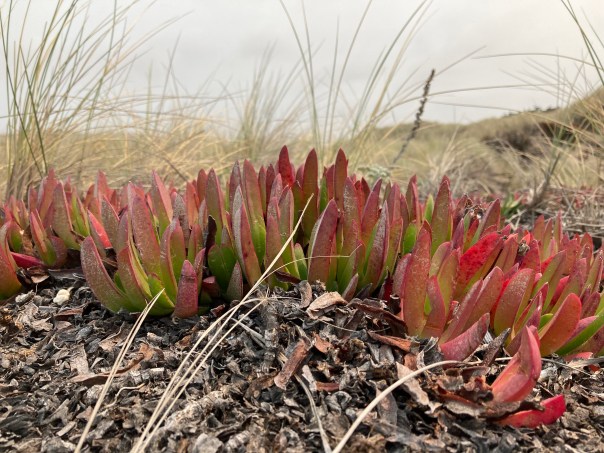
I’m trying to get back to my habit of going to the beach once a week. It’s been foggy on the coast, too, but pleasant enough that I can wear just a thin linen shirt. Last time I saw an unfamiliar bird, a little smaller than the usual sea gulls. There were many parties of a dozen or so, mostly sitting together and looking out to sea. When I got home and researched, I discovered that they are Heermann’s Gulls.

There were also lots of the charming Godwits out there fishing.

 Sea Palm



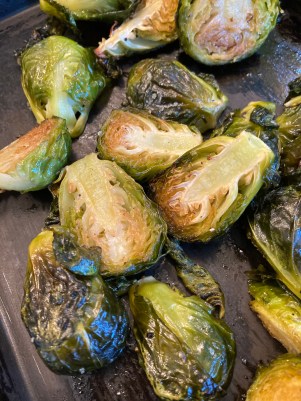
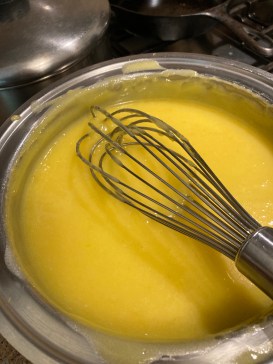
Every person in a large family at church was sick recently, which gave me the opportunity to have fun in the kitchen, making dinner for them one day. Most of the time I am trying, usually in vain, to cook for one, and eat for one. It seems impossible to learn, and not that enjoyable. So I made the most of this occasion to cook big batches of lots of dishes, enough for leftovers. It was the perfect day to make lemon curd, and I roasted both onions and Brussels sprouts, keeping back half for myself.
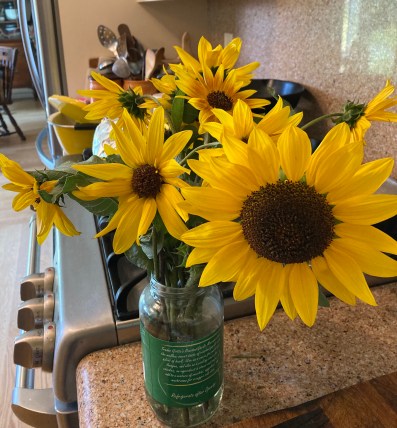
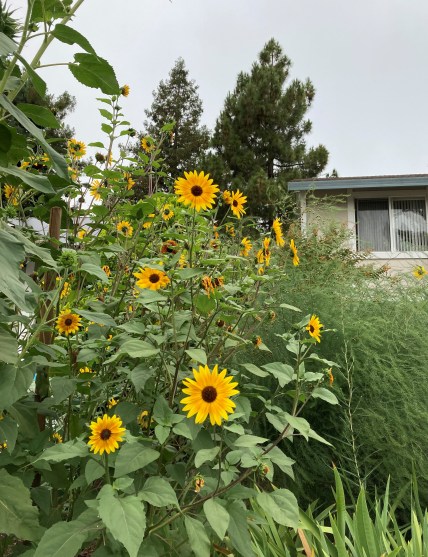
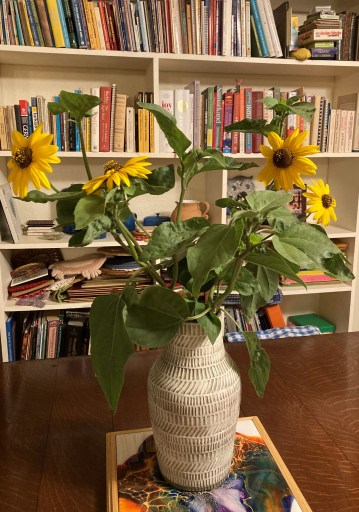
The giant sunflower plants in front are dangerously close to breaking their branches and/or falling over, so I pruned them and cut some of the blooms to add to the dinner box.
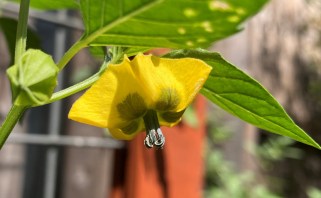
This is the first year I’ve ever grown a tomatillo. My neighbor gave me a seedling that he had started. It is branching out everywhere with yard-long stems, and the husks that will house the fruit, as yet unformed, are tender lime-green lanterns. In this next picture it’s climbing over a tomato vine so there is a confusion of types of leaves.

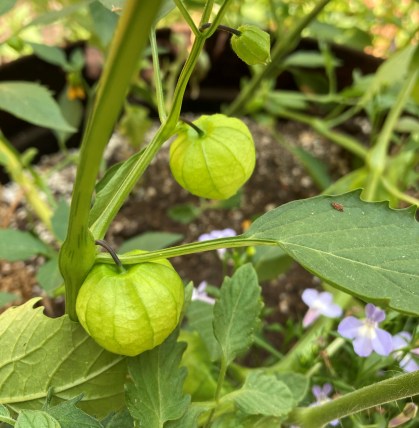
Wikipedia says, “The wild tomatillo and related plants are found everywhere in the Americas except in the far north, with the highest diversity in Mexico. In 2017, scientists reported on their discovery and analysis of a fossil tomatillo found in the Patagonian region of Argentina, dated to 52 million years BP. The finding has pushed back the earliest appearance of the Solanaceae plant family of which the tomatillo is one genus.”
I asked a man from Oaxaca, Mexico what his family does with tomatillos, and he didn’t know of any use but salsa, which is also the only thing I had ever heard. Does any of you have a good recipe for tomatillos, or another use? They don’t look like they’ll be ripe anytime soon, but I should be ready with a plan!
 Hello, my Dear Readers!
Life has been messily, exhaustingly, gloriously busy — and often fun. As a result, my house is messy, my body and mind have been weary, and I have seen many glimpses of the glory of God and His world.
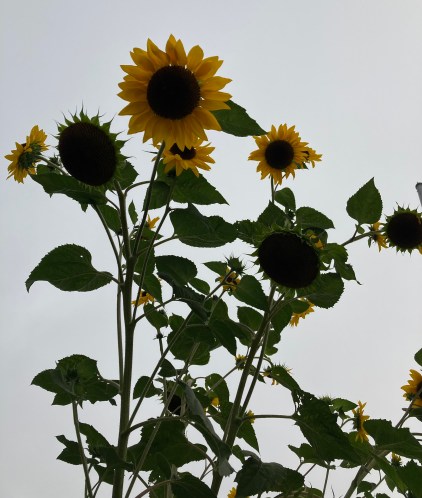
Flowers, flowers, flowers! In my own garden I have sunflowers; in addition to the usual Delta species, I have “Autumn,” which seem very like in branching habit, but with more variety of color and shape of bloom. The tallest plant this year is an “Autumn.”
These shots from the front yard are just before we sheared the teucrium, so it was getting shaggy and with fewer and fewer flowers for the bees. Between the sunflowers and the asparagus let go, it’s a jungle out there for sure. Each successive summer the jungle is thicker, because the asparagus crowns deep under the soil are bigger. They send up more and fatter stalks every spring, which after two or three months of harvest I stop cutting as spears to cook and eat. They turn into ferns, occasionally 5 feet high, and those green bushy parts carry on photosynthesis for months, growing the crowns even bigger.

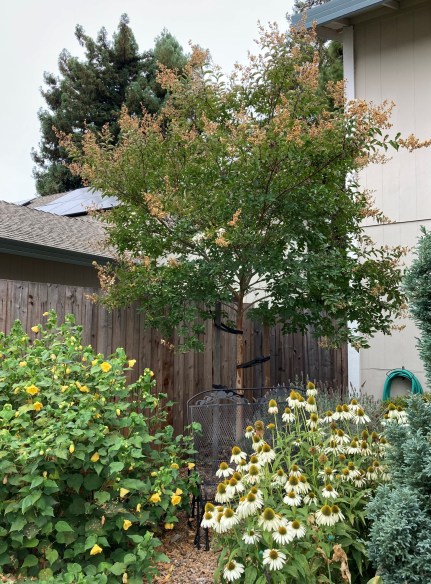
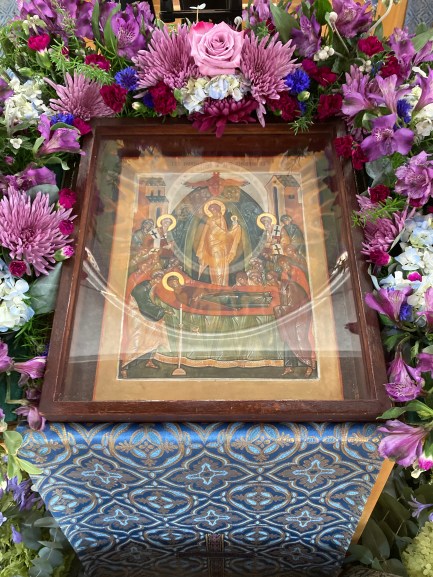
There were plenty of flowers on the Feast of the Dormition yesterday, to celebrate Christ’s mother. We always have flowers, and extra for feasts, but the tradition is to have extra-extra for Mary:
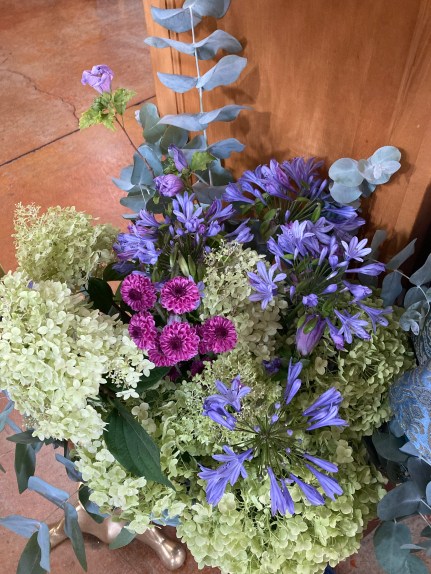

I’ve been to the beach alone and with a friend; I’ve walked in the neighborhood, ferried friends all over two counties, and bought a new phone.
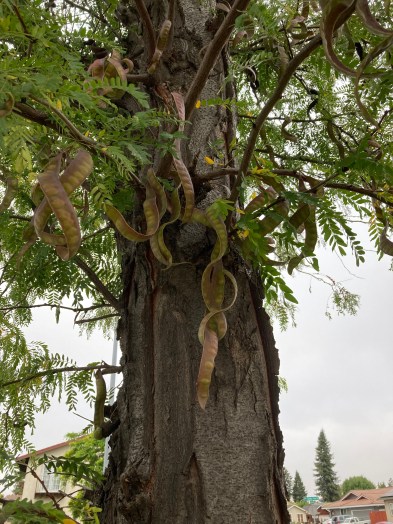
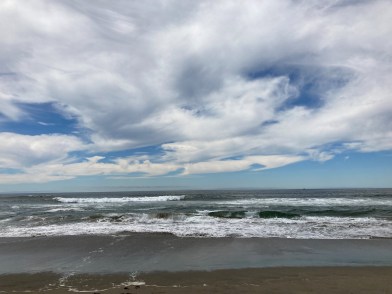
Our book group met yesterday, in a living room this time, because of heat and smoke; the smoke is still not from any wildfire nearby. We had lively discussion, mostly about A Long Walk with Mary, by Brandi Willis Schreiber, which I hadn’t read. The ways that the book had engaged such diverse women made me think I might like to read it myself in the future. We also talked a lot about what to read next, and we could not decide. No one wants a story so light as to be fluff, but they feel an avoidance for anything melancholic or gloomy right now.
One highlight of the book club event for me was afterward, when I got to visit the host’s garden for the second time. What a collection of flowers she has! I took a few pictures in the garden, and then she sent me home with a bouquet’s worth, plus several ripe tomatoes. My own tomato plants are puny and not very productive, and I have few flowers here that are good for cutting, so I was most grateful. She has two unusual and charming forms of zinnias that I would like to grow myself:


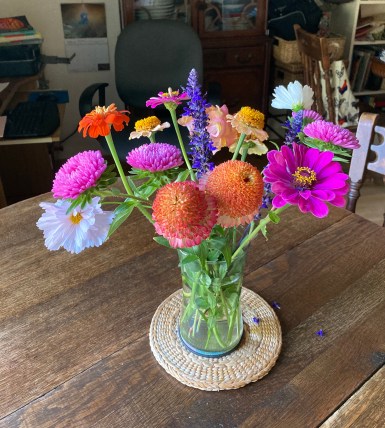
But I do have wisteria, at its most lush right now, making deep shade on the patio. Bees are happy in my garden, shown here on the apple mint that Mrs. Bread gave me, which has grown by leaps and bounds. The tomatoes below are the Atomic Grape variety, which are grape-shaped, but much bigger than any grape you ever saw. They are very tasty.
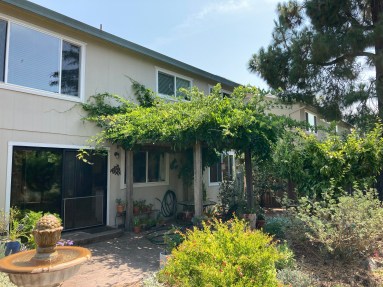


I’ve still been reading a lot. I abandoned a couple of books I’d started, and picked up new ones. Many times I have enough of my wits about me to read a book, but not enough to write about it. So I keep reading…. Lately the weather has been just the right amount of warm that it is the perfect thing to leave the too-cool house and carry my book and my lunch out to the garden. After a while I return to refill my big glass of iced something or other, and back out again to read a while longer. It doesn’t happen every day, but when it does, it’s the perfect summer treat.
God bless you all and your own summer days.
“We kept good hens out in the back, brown and white, and some good layers from my father’s sisters that were black. There is happy our hens. All day they peck for sweet bits in the ground, twice they come for corn, and in the mornings they shout the roof off to have you come and see their eggs. And no trouble to anybody.
“I do like a little hen indeed. A minder of her own business always, and very dainty in her walk and ways….”
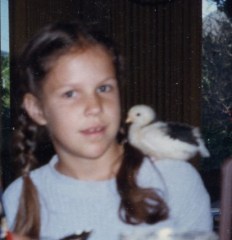 That is a clipping from How Green Was my Valley, by Richard Llewellyn, which I am currently reading/listening to. The narrator is Ralph Cosham, whose rich British voice perfectly accompanies the author’s prose to double the amount of atmosphere evoked. What a wonderful story! I’d never read the book before, and I’m not sure I ever saw the movie. I have probably seen fewer movies than anyone I know.
Many such short passages make me wish that I were reading the novel in print, so that I could underline them, and have an easier time copying them to share. But I’m not, so I won’t. Instead, I hit the replay button from time to time and pause whatever I’m doing to listen more carefully, in love with the sentences and the scenes and the Morgan Family.
 Probably because of all the people I know who during the pandemic especially enjoyed their chickens, or started keeping chickens for the first time, I also began longing to have chickens again. I walked around my property eyeing every nook and cranny, but concluded once again, sadly, that every spot is taken. Any ground not being used by plants or furniture or greenhouse did not qualify on account of being sweltering hot, or too close to the clothesline, where I wouldn’t want chicken dust.
If I had found room I could have taken quick possession of the healthiest year-old hens you ever saw, Rhode Island Reds and Barred Rocks, that one friend had to give away, a flock of ten that he had acquired as day-old chicks during covid. I did get to eat eighteen of their eggs; they were the best I’d ever tasted, and I have tasted lots of home-raised eggs.
Instead, I sent word to friends all over the county (and into the next county), everyone I could think of going back 40 years that I’d ever known to keep livestock. I finally found a good home for those girls. And for myself, I will go back to my dream and plan of raising worms. I do have the perfect spot for them, whom I imagine are the tiniest breed of livestock….
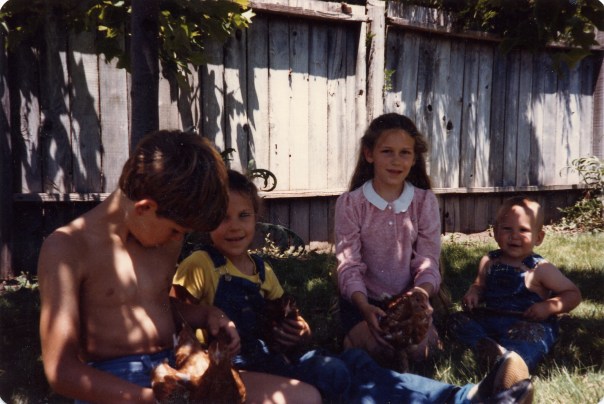
You would think that in thirteen years of keeping chickens I would have a few good photos of them, but it was in the days before digital cameras, and I couldn’t waste film on targets that moved the way chickens are likely to do. But I did locate this one above, the three older children in the 80’s, each holding one of their pullets. It’s almost the opposite of the kind of picture I wish I had, because adolescent chickens are inelegant, and these that you can barely see in the shade are definitely in the gawky stage. But it does show that we enjoyed our hens.
Until yesterday our area of California had been miraculously, blessedly free of wildfire smoke. Smoke from our fires out West was drifting all the way to the East Coast, and plaguing most of my children and many friends on the way — but not coming here. But yesterday it arrived. I don’t know which fire it is from. Once again, I have friends who lost their home, this time in the Dixie Fire 200 miles north of me. I’m sure that the personal connection increases weight that was already on my heart; I’m finding it hard to focus on anything and apply myself. It is some sweet relief to see in my mind’s eye the dainty hens in the Green Valley, when I visit vicariously in the coal mining town in Wales.
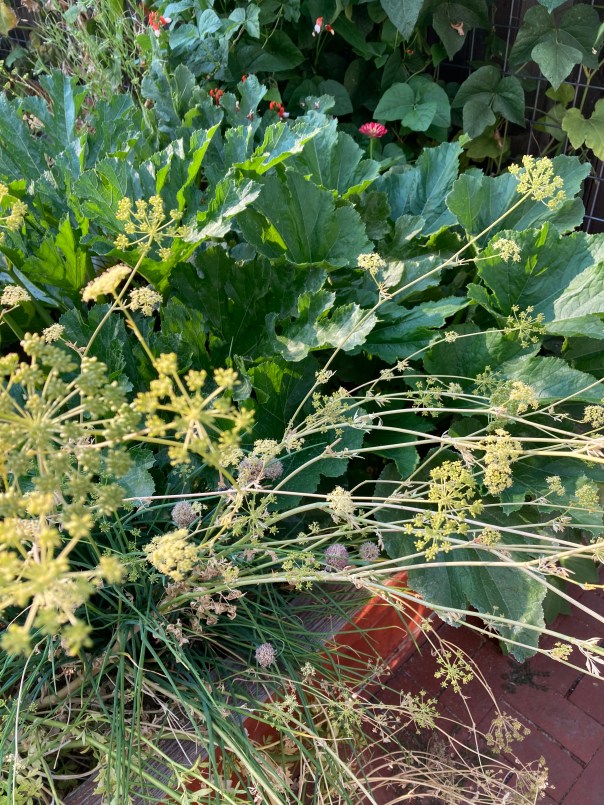
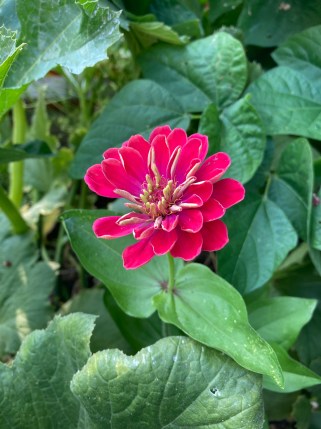
Another heartening little thing that surprised me today was a volunteer zinnia. I still haven’t cleaned up my planter boxes where most of my vegetables usually grow. In one box the parsley, hyssop and chamomile have all grown into a seedy jungle, and in the other a single zinnia plant sprouted in secret under the squashes and Painted Lady beans and grew up spindly toward the light.
May the Lord’s grace light our way and warm our souls.
But for you who fear my name,
the sun of righteousness shall rise with healing in its wings.
You shall go out leaping like calves from the stall.
Malachi 4

