Giacometti said, “The more I work, the more I see things differently, that is, everything gains a grandeur every day, becomes more and more unknown, more and more beautiful. The closer I come, the grander it is, the more remote it is.”
This clip from the book is as good an introduction to Annie Dillard’s book For the Time Being as anything I could write. I’ve been struggling for months now to write a simple review, but I’m not equal to the task. It occurred to me that I could let Dillard speak by transcribing some passages (in boldface) from the book. I hope they are not enough to be copyright-infringing.
There is always a lot of factual knowledge, especially of geography, history, and natural science, in her books. In this one you learn things about Mao Tse-tung, about the Aztecs, the Romans, and grotesque birth defects. Many statistics about natural things and about what percentage of us are dead, and many stories and sayings of Teilhard de Chardin, who I think is a kindred spirit to her: Do you suffer what a French paleontologist called “the distress that makes human wills founder daily under the crushing number of living things and stars?”
Annie Dillard does suffer this way, as many theologians may suffer from contemplating mankind, the universe, and the finite mind’s inability to take it all in, much less neatly organize it and find ultimate meaning. Augustine said to a group of people, “We are talking about God. What wonder is it that you do not understand. If you do understand, then it is not God.”
If the mystery of life makes you uncomfortable, if you like a good reductionist dogma, I don’t think you will enjoy Dillard in most of her writing. Even I tire of her eventually, as she sometimes appears to be a woman who could be described by II Timothy 3:7: “Ever learning, and never able to come to the knowledge of the truth.” She likes to see how everything is connected, and I agree, it all is connected, but we have been given the key to the mystery in Jesus Christ, who reveals the Holy Trinity to us, the Alpha and the Omega, the Beginning and the End.
Several Jewish theologians down the centuries figure in this particular compendium, her favorite being from the Ukraine in the 18th Century:…the Baal Shem Tov delighted in the spark, the God within. This is not pantheism, but pan-entheism: The one transcendent God made the universe, and his presence kindles every speck of it. Each clot of clay conceals a coal. A bird flies the house. A live spark heats a clay pot.
The thousands of wealth have fallen with wonders, said Rabbi Nathan of Nemirov. Do you find this unclear? It certainly sounds like the sort of thing thousands of wealth do.
And Buddhists: They say there is a Buddha in each grain of sand. It is this sort of pop wisdom that makes the greatness of Buddhism seem aggravating.
“God is in the details” might be Annie Dillard’s motto, as she does always bring all these bits and pieces to bear on a quest for the Ultimate. Every event, every piece of matter, can speak of God. But not in its specialness–rather, its ordinariness. However, It is literally sensible to deny that God exists.
These times of ours are ordinary times, a slice of life like any other. Who can bear to hear this, or who will consider it?
The closer we grow to death, the more closely we follow the news. Year after year, without ever reckoning the hours I wasted last week or last year, I read the morning paper. I buy mass psychotherapy in the form of the lie that this is a banner year.
So, we are not the center of the universe, but there is meaning, and it has something to do with a transcendent God, not foggy pop wisdom and not a gnostic sort of dualism. The thing to do is to engage, to plunge into life in all its materiality and chaos, and make yourself useful.
As Martin Buber saw it–writing at his best near the turn of the last century–the world of ordinary days “affords” us that precise association with God that redeems both us and our speck of the world.
[Teilhard] “Purity does not lie in a separation from the universe, but in a deeper penetration of it.”
[In an introduction to an account of birds mating in Galilee] Our lives come free; they’re on the house to all comers…. God decants the universe of time in a stream, and our best hope is, by our own awareness, to step into the stream and serve, empty as flumes, to keep it moving.
The first book I read by Dillard was An American Childhood, the story of her youth in the mid-20th Century, and I’d have to say that God used it to make me consider all the many details of my own childhood and how they combined in a significant story that God was writing. In all her books I have read I am impressed with her vision of the sacredness of matter, even while she can’t figure it all out. She accepts her own embodiment and relishes her sensate being, which of course feels more real than the intangible.
[Teilhard] “If I should lose faith in God, I think that I should continue to believe invincibly in the world.”
[when we who are alive now are dead] the living might well seem foolishly self-important and overexcited.
One reason I have spent a ridiculous number of hours trying to write about Annie Dillard, is that the quality of her writing seems to demand a comparable response. She doesn’t waste a word; there is no fluff, and I know that she has a reason for juxtaposing the paragraphs on sand and death and Chinese warriors just so. Surely I could study this one book like the Bible, and keep getting more out of it.
I would get not just philosophy and theology, but also whatever the evasive thing is that one learns from reading a lot of good writing. In The Writing Life she teaches by example, both by relating her attitude and ruthlessness toward second-best work, and in the way she respects the language and makes the most of its potential.
I still haven’t looked up all the words–at least 25 in 204 pages–that were completely new to me, including einkorn, heiratic, schleppernish, and geomantic. Saltate is one I will remember, as Dillard used it three times, first to describe the action of sand:
Mostly, the continents’ streams and rivers make sand. Streams, especially, and fast rivers bear bouncing rocks that knock the earth, and break themselves into sharp chips of sand. The sand grains leap–saltate–downstream.
Later she uses this word, which can also mean to dance, along with another new one, knap: Jerusalem….we have come saltating to worship here–to knap ourselves round.
I’m not sure I could come up with a good closing paragraph if I gave it another hour’s effort. My apologies for the inferior review that took me so long; I justify it on a principle I’m not sure Annie would agree with: Any job worth doing is worth doing poorly, at first while you practice.
So I will close with another snippet from the book, a thought that I’m confident is connected to everything else I’ve put down here. It’s mostly a quote from John Muir in 1869:
“What can poor mortals say about clouds?” While people describe them, they vanish. “Nevertheless, these fleeting sky mountains are as substantial and significant as the more lasting upheavals of granite beneath them. Both alike are built up and die, and in God’s calendar, difference of duration is nothing.”
[a few more of my thoughts on Dillard here]


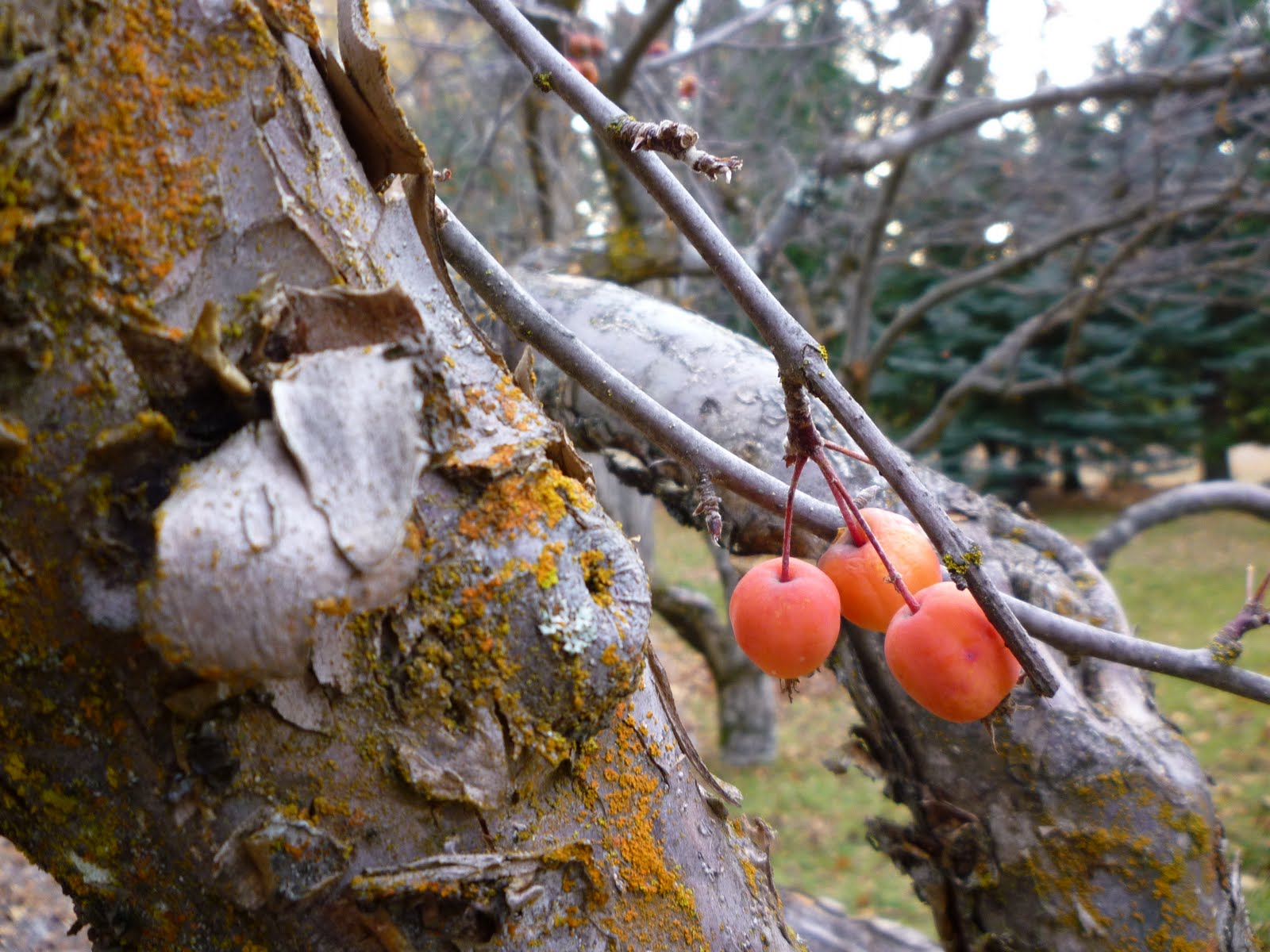
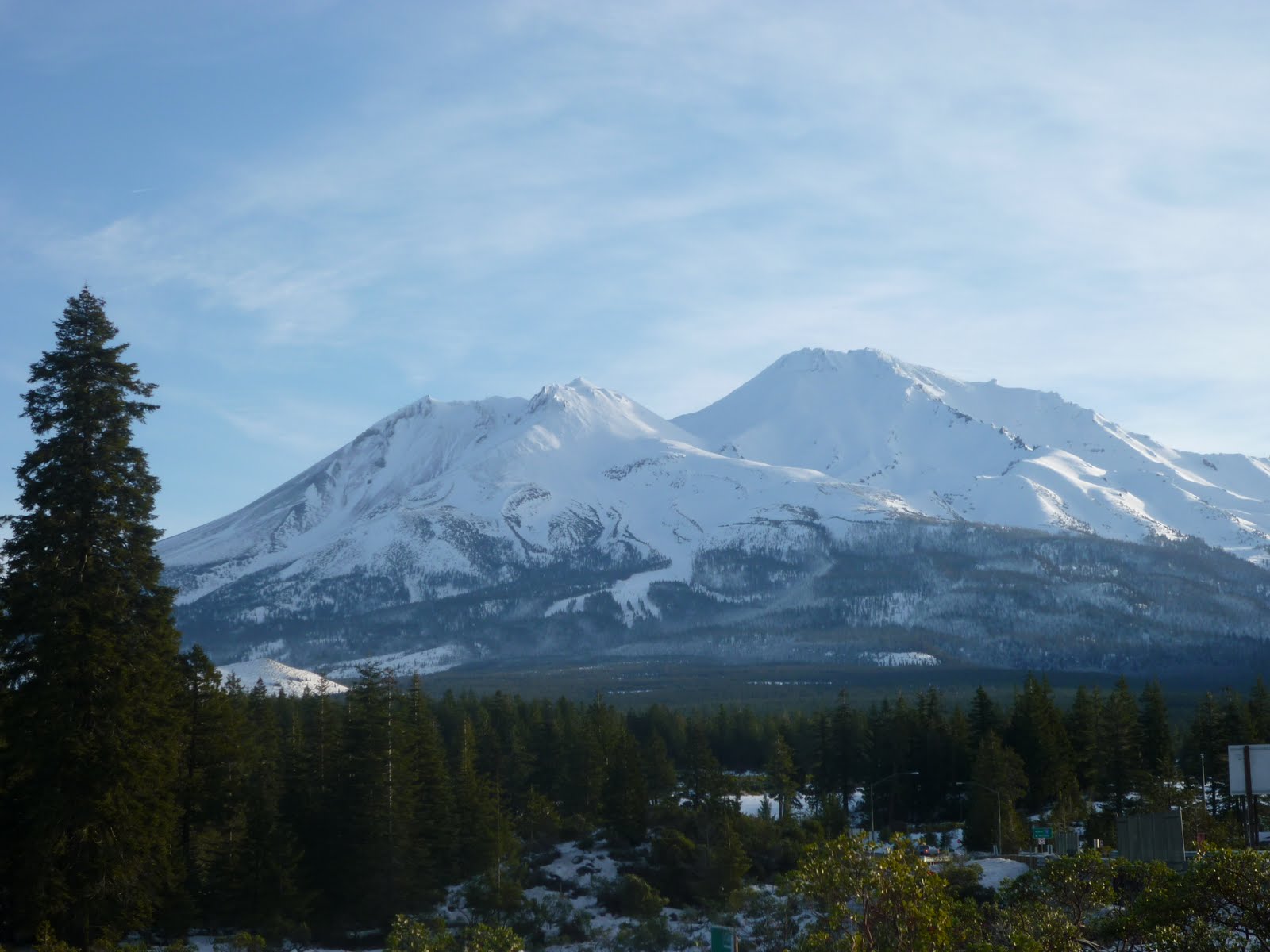 Farther up the state from the volcanic peak by which I saw the cherries, there is this one. We have a whole string of such dramatic mountains running up the western states, and on our travels we can mark our progress by spying them in the distance long before we get close.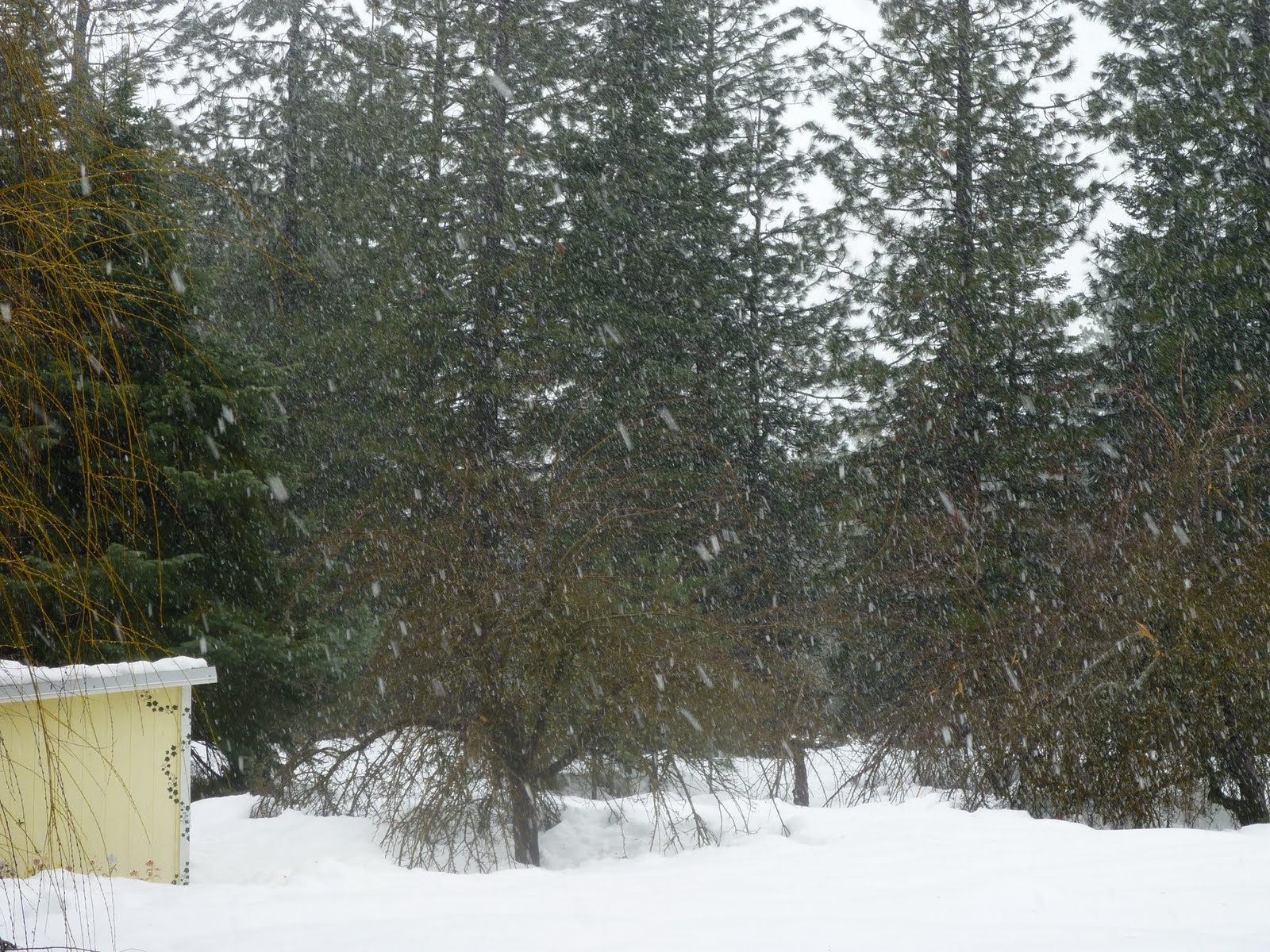


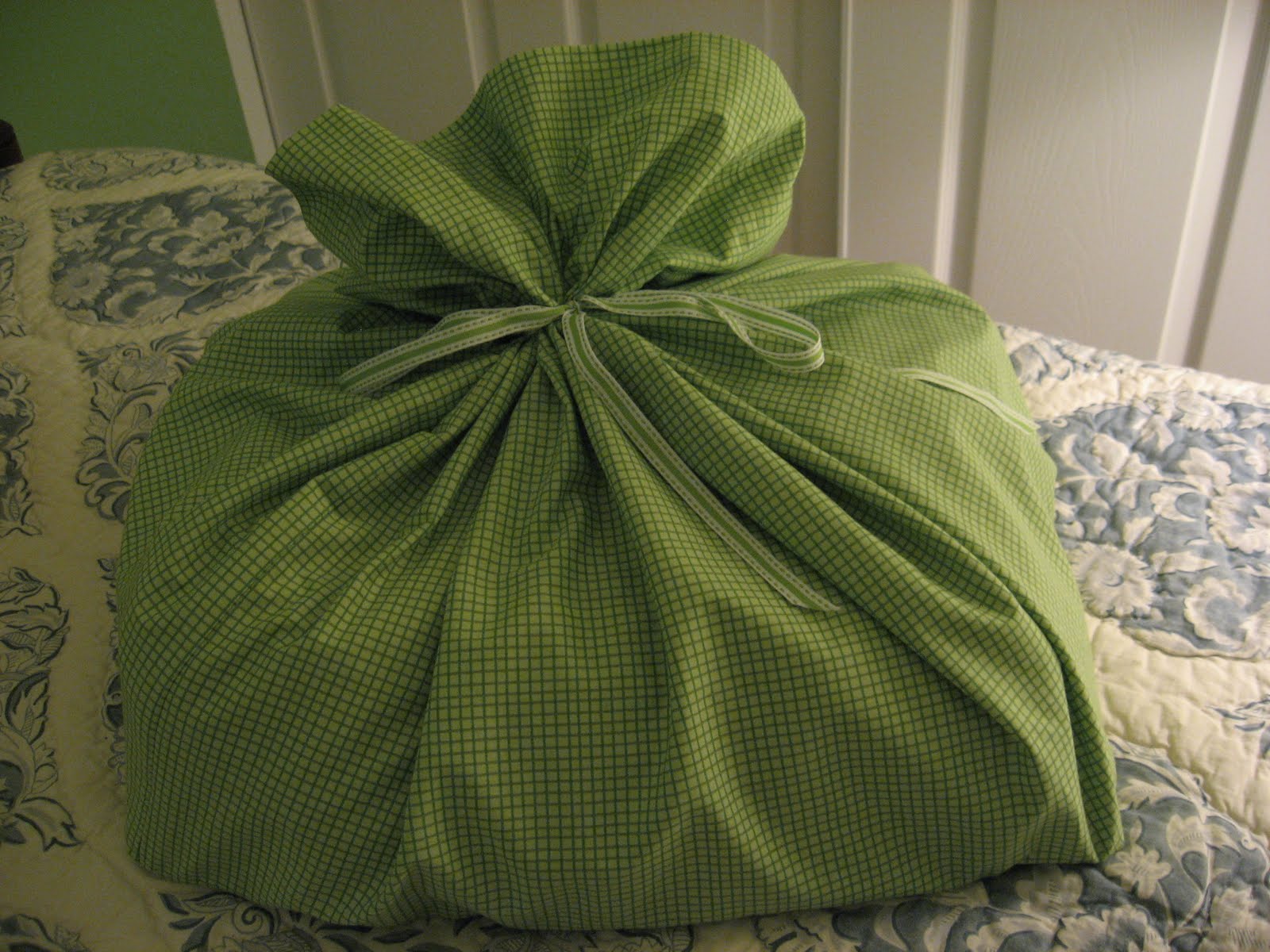
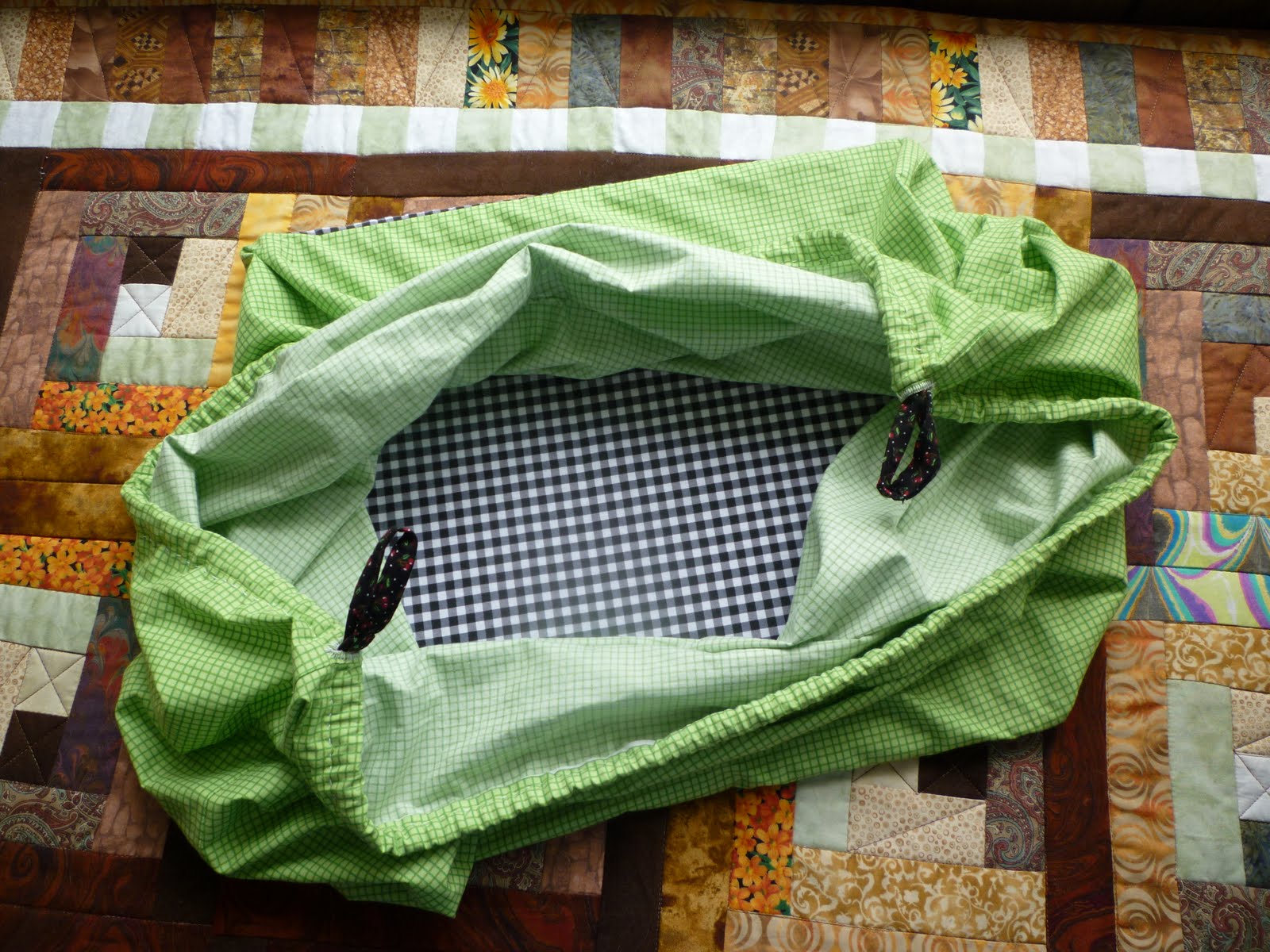 While I was there I finally finished putting a drawstring into this bag that contained the 7th Grandson Quilt. You can see it with just a ribbon around it and the quilt inside, and now with its black string to match the checkered bottom.
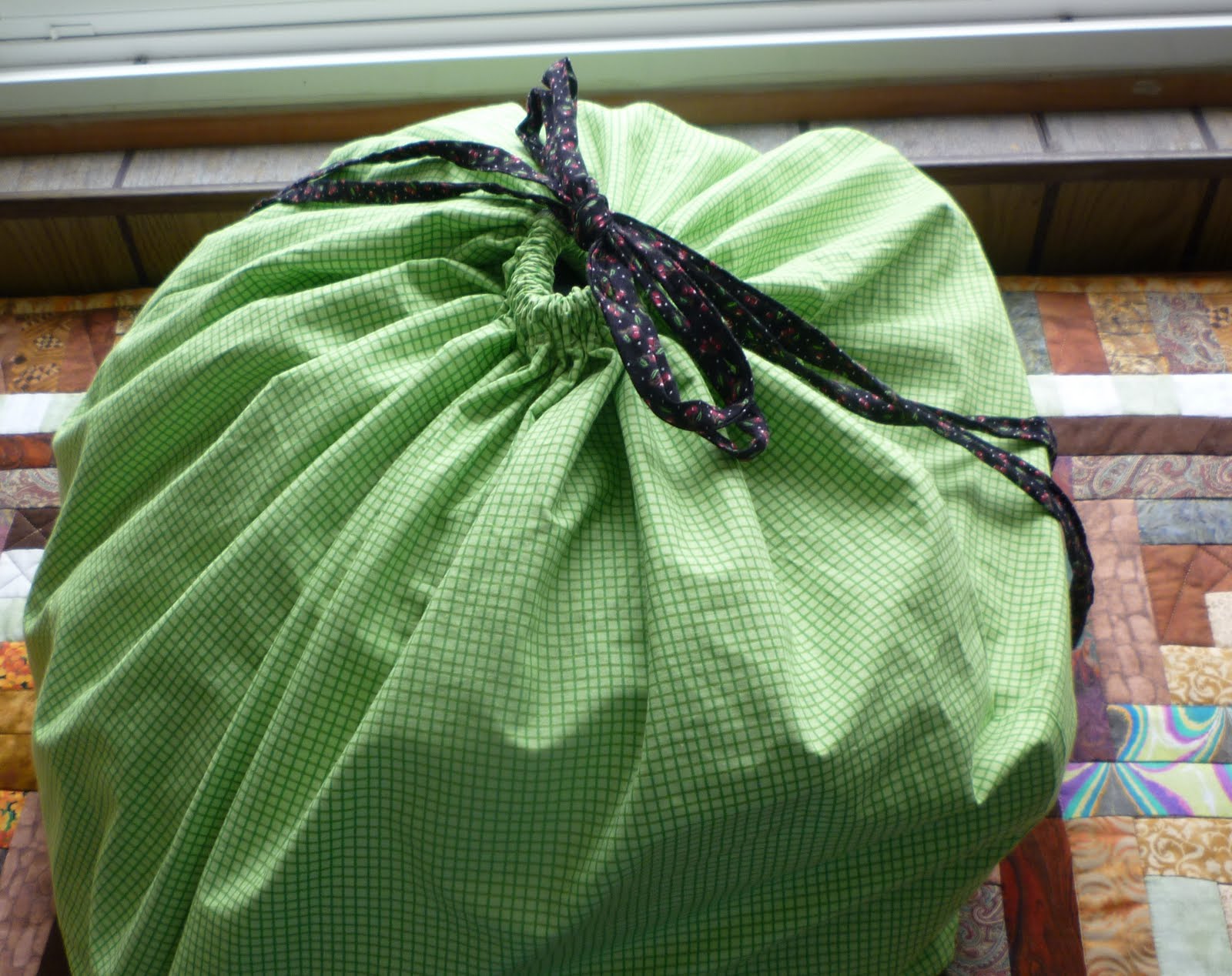 It’s a weirdly shaped bag because I made it from leftover fabric to match and house the quilt, but I thought perhaps someday it could hold an overflow of stuffed animals or some blankets or ???, in which case the drawstring would make it much more handy.
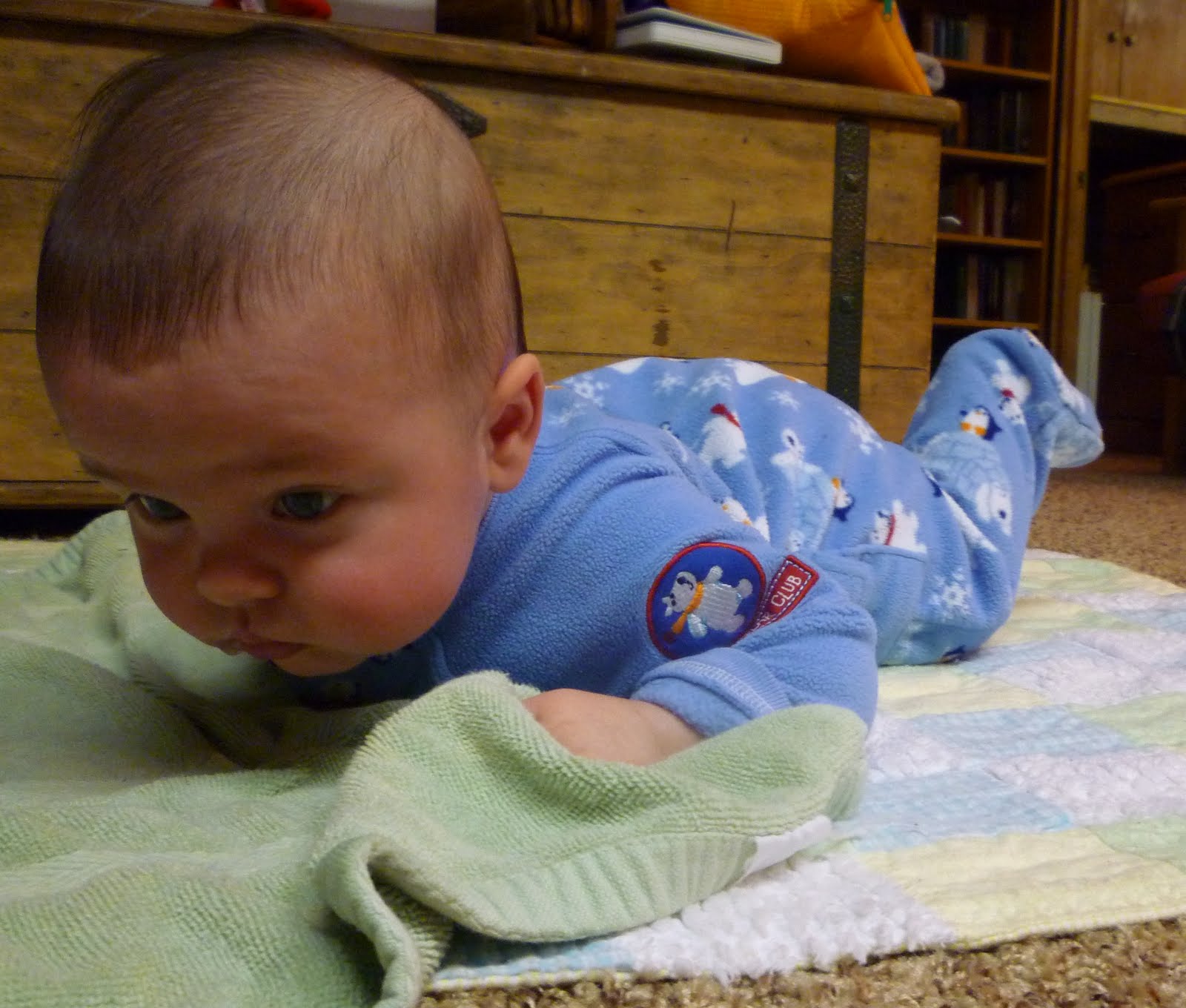 7th Grandson himself, of course, was THE focal point of my stay. He doesn’t like lying on his tummy on the floor, but it’s thought good for the boy to do a little Pilates work there. Children these days spend so much time in car seats and such. I caught his photograph before he became totally irate.



 Gladsome Lights