 “Although in Christ I could be bold and order you to do what you ought to do, yet I prefer to appeal to you on the basis of love. It is as none other than Paul—an old man and now also a prisoner of Christ Jesus— that I appeal to you for my son Onesimus, who became my son while I was in chains. Formerly he was useless to you, but now he has become useful both to you and to me.”
This is a middle portion of the Letter to Philemon that St. Paul wrote to his friend about a runaway slave. It’s an unusually short and focused epistle in the New Testament, dealing mainly with this issue of the freedom of Onesimus, who had been converted while he and the apostle were in prison together.
The article, “Holy Apostle Onesimus as a Model for our Lives,” contrasts the former life of Onesimus as a “worthless slave” to his new life as a brother in Christ, and a valuable servant, as St. Paul describes him so movingly:
“I am sending him—who is my very heart—back to you. I would have liked to keep him with me so that he could take your place in helping me while I am in chains for the gospel. But I did not want to do anything without your consent, so that any favor you do would not seem forced but would be voluntary. Perhaps the reason he was separated from you for a little while was that you might have him back forever— no longer as a slave, but better than a slave, as a dear brother. He is very dear to me but even dearer to you, both as a fellow man and as a brother in the Lord.”
St. Philemon did forgive Onesimus, and sent him back to Paul as requested. Philemon was later made bishop of Gaza, and Onesimus continued to serve the apostles and was also consecrated as bishop.
This article on the Life of Onesimus gives more details about his bishopric and preaching, and ends with his death in this fashion:
“During the reign of the emperor Trajan (89-117), Saint Onesimus was arrested and brought to trial before the eparch Tertillus. He held the saint in prison for eighteen days, and then sent him to prison in the city of Puteoli. After a certain while, the eparch sent for the prisoner and, convincing himself that Saint Onesimus maintained his faith in Christ, had him stoned, after which they beheaded the saint with a sword. A certain illustrious woman took the body of the martyr and placed it in a silver coffin. This took place in the year 109.”
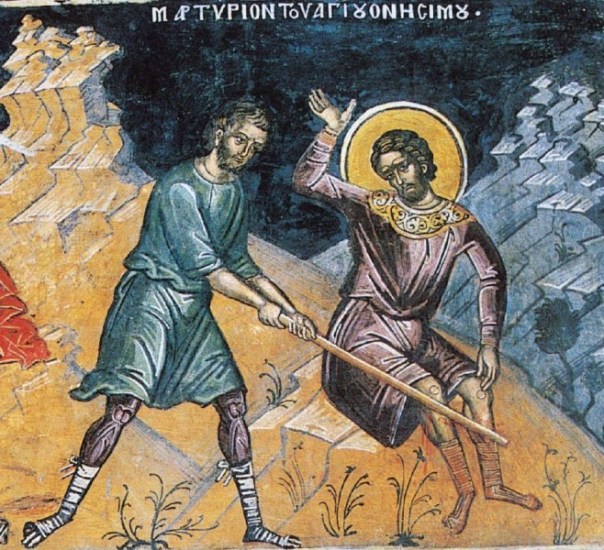
At this season of the year the Orthodox Church remembers both St. Philemon and St. Onesimus, which is why I was prompted to revisit this story, which I find I love more than ever. It prompts the author of the first article linked above to this thought:
“Let us pray that God shows us true spiritual fathers, even in our days,
who can help people be reborn, so as to acquire perfect love,
and from useless servants to become useful and free.”
-Fr. George Papavarnavas
 St. Polycarp was born in the first century and was burned at the stake in the second. Because of an early and well known document,
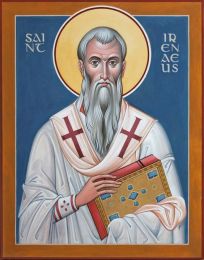 “I can even describe the place where the blessed Polycarp used to sit and discourse — his going out, too, and his coming in — his general mode of life and personal appearance, together with the discourses which he delivered to the people; also how he would speak of his familiar intercourse with John, and with the rest of those who had seen the Lord; and how he would call their words to remembrance. Whatsoever things he had heard from them respecting the Lord, both with regard to His miracles and His teaching, Polycarp having thus received from the eye-witnesses of the Word of life, would recount them all in harmony with the Scriptures. These things, through God’s mercy which was upon me, I then listened to attentively, and treasured them up not on paper, but in my heart; and I am continually, by God’s grace, revolving these things accurately in my mind.”
 Probably I saw a recipe online that inspired this creation, which was prompted by great quantities of Swiss chard growing in my garden a year ago. I never wrote down amounts of ingredients, but at the request of a commenter yesterday, I can tell you how I made the dish.
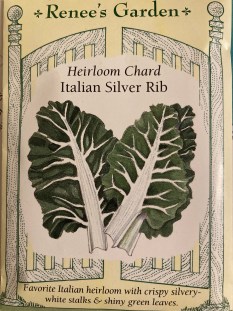 occasionally to distribute the garlic, until the chard is tender. Uncover at the end if it is soupy, to let some of the liquid cook off. Drain and rinse one or two cans of cannellini beans and add them, generous grindings of black pepper — and bits of dried tomato if you like. Adjust for salt.


 One day I spent experimenting with red dye to color eggs for Pascha. As some of you know, because I asked you directly for advice, I offered to take on the project this year for our Orthodox parish, which gives out about 200 red eggs on Pascha night. I wanted to try different dyes, colors of eggs and methods ahead of time so that during Holy Week I would have my plan firmly in mind, and the best dye on hand. I have yet to write up all that I learned so far, but I accomplished my goal that day, and also ended up with quite a few eggs, in various shades of red and pink, to eat in the next week.

