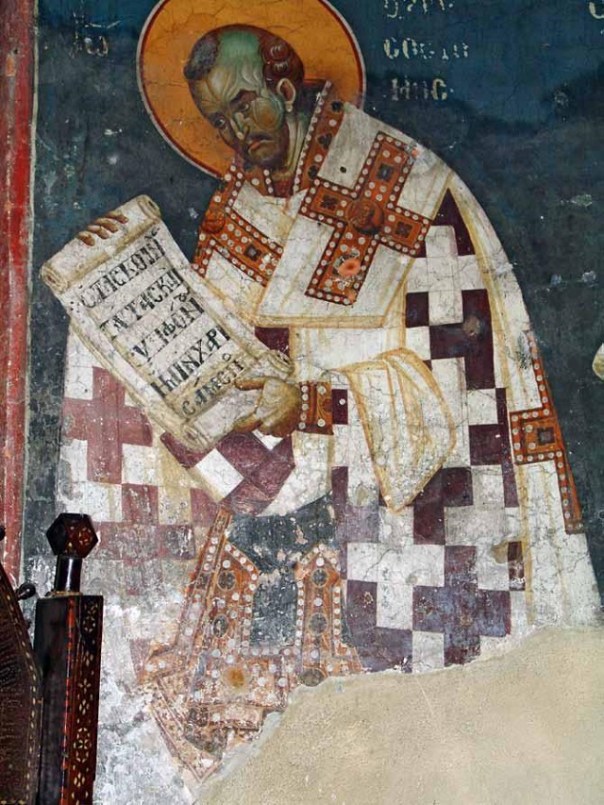
 We Orthodox commemorate St. John Chrysostom on three separate dates, none of which is the day that he died, September 14, 407, in modern day Turkey. While in exile he was being moved to modern day Georgia when his health finally gave out. That date in September is the Feast of the Elevation of the Cross, so to avoid conflict his feast day was changed. One of the dates on which he is remembered is today, the date in 438 on which his relics were transferred from the site of his death in Comana to the city of Constantinople.
In the 19th century Archbishop Dmitry preached a homily on this occasion, from which I clipped this portion:
“The virtuous life thanks to which St. John won respect even in exile again aroused his adversaries’ hatred. They petitioned the empress for a decree by which the exiled Chrysostom was sent to a new exile—to the Pitiunt Fortress near Colchis, on the coast of the Black Sea.
“The officials received a special order to treat their prisoner more strictly and to bring him to his destination in a certain number of days despite the difficult roads. The famous pastor of Constantinople had to walk for three months, now in the unbearable heat of the sun, now in pouring rain, without rest or change of clothes.
“Such a journey completely exhausted St. John Chrysostom’s already weak health. Feeling approaching death on the way, he begged his escorts to stop, changed his wet and soiled clothes to white, communed the Holy Mysteries and departed from this world, which was unworthy of him, with the words: “Glory to God for all things!” With the words he loved and often repeated in his life and spoke about during his sufferings: “These words are a deadly blow for satan, but for the one who utters them in every trouble and misfortune they serve as an abundant source of hope and consolation. Once you pronounce them, every cloud of sorrow dissipates.”
-Archbishop Dimitry (Muretov), from a book of his sermons published in 1889
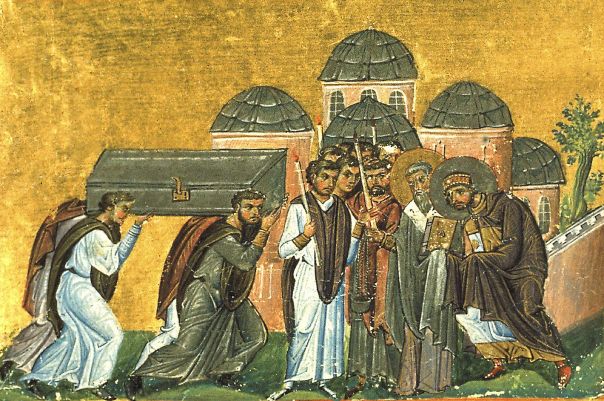
St. John Chrysostom is also celebrated on November 13 and January 30.
You can read more of his story here: oca

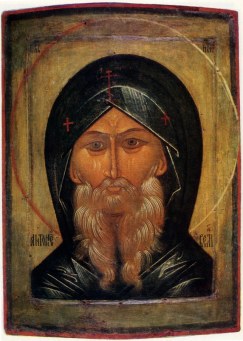
 “The Life of the famed ascetic Saint Anthony the Great was written by Saint Athanasius of Alexandria. This is the first biography of a saint who was not a martyr, and is considered to be one of the finest of Saint Athanasius’ writings. Saint John Chrysostom recommends that this Life be read by every Christian.”
 Gladsome Lights