Monthly Archives: June 2021

He will roll in their nets and sleep.

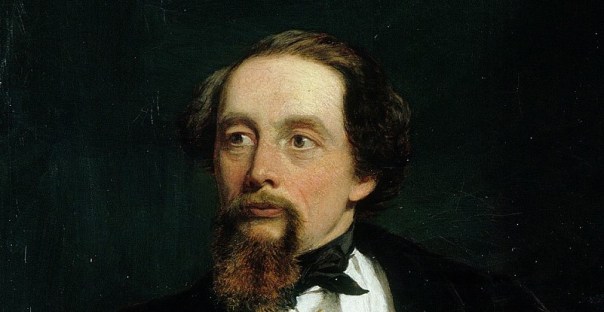
“His soul will never starve for exploits or excitements who is wise enough to be made a fool of. He will make himself happy in the traps that have been laid for him; he will roll in their nets and sleep. All doors will fly open to him who has a mildness more defiant than mere courage… [He] will always be ‘taken in.’ To be taken in everywhere is to see the inside of everything. It is the hospitality of circumstance. With torches and trumpets, like a guest, the greenhorn is taken in by Life. And the sceptic is cast out by it.”

G.K. Chesterton, in Charles Dickens

Charles Dickens

God cannot be absent from anywhere.

Fr. Tryphon is abbot of All Merciful Savior Monastery on Vashon Island, WA.  He writes a blog at The Morning Offering.

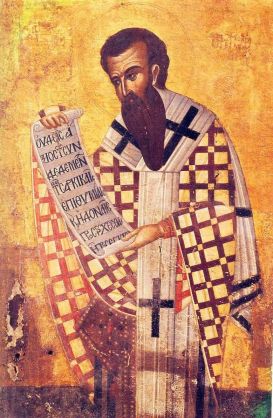
St. Gregory of Nyssa

“According to Saint Gregory of Nyssa, heaven and hell are not about location, but about relationship. God is everywhere, and He did not create a heaven for some, and a hell for others. If we love God, His fire will be a comforting warmth, but if we choose not to have a relationship with Him, His fire will be as hell fire. We choose how we will experience the presence of God in the afterlife, and since God can not be absent from anywhere, those who have chosen to ignore Him, will, nevertheless, be in His presence for all of eternity. Paradise and Hell do not exist from God’s point of view, but from man’s point of view. It is all about man’s choice and condition, for heaven and hell are not two different locations, but two different experiences of the same place.

“Everyone will spend eternity in God’s presence, but how we experience the Divine Presence will depend upon the condition of our soul. Those who have been transformed by the action and work of the Holy Spirit, will experience God as light and bliss. Those who have rejected God’s love will experience it as pain and suffering. For the unbeliever and the unrepentant, their sins will not allow them to enjoy the Presence of God.

“Love in Christ,
Abbot Tryphon”

We are not describing the Holy Spirit.

In the Orthodox Church, when we celebrate a feast commemorating an event in our salvation history, such as Pentecost, also known as Holy Trinity Sunday, it is followed directly by another feast honoring a person who figures heavily in the previous day’s event. In the present case, tomorrow is Holy Spirit Day. It seems a good time to post these thoughts from Metropolitan Anthony:

When we say that God is spirit, we say simply that he is not matter as we know it, that he is something quite different. In that sense it is a negative description that belongs already without the word, to that form of theology which is negative theology, apophatic theology, a theology of paradoxes, a theology that uses words to point toward the ineffable — that which can neither be described nor put into words and yet which must be indicated somehow in speech.

One could avoid speech. In Siberia there were pagan tribes that had deliberately rejected every human word for God. And when in conversation they wanted to indicate God they raised their hand towards heaven. This is possible in a civilization of direct communication by speech. It is no longer possible in a civilization of books. But whatever words we use we have got to be aware of the fact that we are not describing, we are not defining what God is, because the very thing we know about God is that he is beyond defining, beyond describing. So that when we say of God that he is a Spirit, when we speak of the Holy Spirit in particular, we do not mean to give a concrete definition or any description of what he is. We point towards the fact that he is beyond our conceptual knowledge, beyond every formulation, that is is what we don’t know, and this is what we mean to say by saying that he is a spirit as contrasted with us.

–Metropolitan Anthony Bloom, excerpt from “Our Life in God,” from Essential Writings

Pentecost icon (fresco)
To think about the nature of lies.

“A lie seeks to make true something that has no true existence. It is an ‘alternate,’ make-believe universe to the one in which we live. Our desire for alternatives (and our fear of reality) are among the many motivations behind lies. It is revealing, however, to think about the nature of lies (which also reveals the nature of the truth). It is, at the very least, a matter of existence.”

“That which is true, is that which truly exists. As such, it is always its own strongest argument. If it truly exists, it will continue whether I believe in it or not. The truth does not require ideology. This carries the corollary of a lack of anxiety. If the truth abides, whether I believe it or not, then I am not bound to ‘make it so’ through the efforts of a culture war. It is, rather, for me to live it, to give thanks for it, and enjoy its fruit in the world.”

-Father Stephen Freeman, in this article: “‘Make It So!’ vs. ‘Let It Be!'”