Monthly Archives: September 2022

Meeting the black night’s face.

This week so far I have seen patches of the starry sky through the window from my bed, and through narrow gaps in the tree canopy as I walked along the gravel road coming back from a campfire.

Those glimpses are lovely, but not as powerful as what I experienced a few years ago when I was alone here in the High Sierra, standing on the deck at night, looking up: I was aware of the stars as somehow sentient beings that were intently and personably crowding and pressing down on me. The poem below expresses the thrill of such a meeting as I had, with added feelings that I didn’t experience.

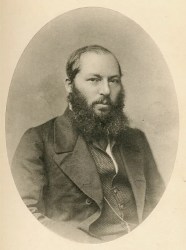
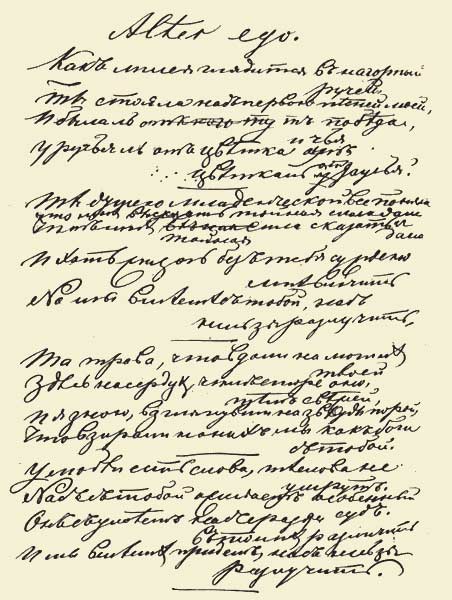
The composer Tchaikovsky, in a letter to the Grand Duke Konstantin Konstantinovich, wrote: “I place some of his poems up there with the very highest that there is in art. In this respect there is one which I am determined to illustrate musically some day.” This is the poem he copied in:

UPON A HAYSTACK ON A SOUTHERN NIGHT

Upon a haystack in lands of South,
I lay, while facing skies of night,
The choir of stars, alive and couth,
Was trembling, spread at every side.

The earth, mute as a dream half-hidden,
Was fast receding into space,
And I, as if the first in Eden,
Alone met the black night’s face.

Did I race to the depth profound,
Or did the stars race straight to me?
In mighty hands, it seemed me how,
I hanged above abysmal sea.

With heart, so sinking and bewildered,
I measured with my look a depth,
Into which, every moment sighted,
I sink, and nobody helps.

-Afanasy Afanasevich Fet, (1820-1892)

One odd thing is, the way Luis Sundkvist translated the letter from Russian, the second line of the poem reads, “I lay with my face towards the ground…”  How this happened I can’t imagine, because of course the poem makes no sense like that.

Golgol and Tolstoy also thought Fet’s poetry was stellar. The writer and publisher Nikolay Nekrasov wrote: “Not a single poet since Pushkin has managed to give such delight to those who understand poetry and readily open their soul to it, as Fet does.” 

The surname of Fet was assigned by authorities to Afanasy because of some question in Russia about the legitimacy of his birth; his parents’ marriage had been registered in Germany. In his later years he wrote to his wife, “You cannot even imagine how I hate the name Fet. I implore you never to mention it… If someone would ask me to give one single name to all the trials and tribulations of my life, I’d say without hesitation, this name is ‘Fet'”. Later still he was able to get back the name of his father, Shenshin, but as his poems were all published under the name Fet, so he is known. Evidently not much of his work has been translated into English, which makes this one even more special.
Another poem by Fet.

The morning quality in the mountains.

2018

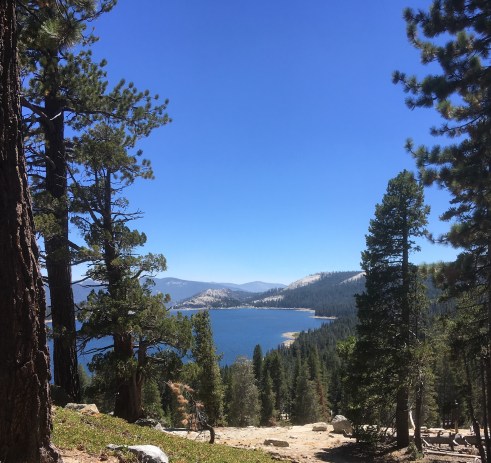
Yesterday I drove all day to get up to my family’s cabin in the high mountains. The journey was as easy as it could have been, and I arrived late afternoon instead of at dusk. But to say “easy” when talking about what I did — maybe I should have said it was less difficult than it might have been.

To maneuver a heavy machine at high speed through mazes of highways and byways, trying not to collide with any other machines carrying their tender human cargo, requires a huge amount of mental work, most of which seems to be unconscious, because I don’t feel it at the time. And the body, while sitting relatively immobile in a position some of the joints and sinews don’t appreciate, must still be poised to respond moment by moment to what information the eyes strain to get through the dirty windshield.

As soon as I walked through the door of the cabin I felt the extreme weariness of the effort, combined with the altitude that by itself makes everyone sleepy (8200 feet). I went to bed early and slept like a log of Lodgepole Pine.

This morning it’s blue skies I’m seeing as I sit on the deck, along with a blue dragonfly, a blue jay, and an occasional hummingbird. Chipmunks are chirping, and down below chain saws are roaring as men work to thin out some of the trees among the group of cabins, to lessen fire danger. The air is warm and soft, and will probably be about 30 degrees cooler than in the Central Valley that I drove through to get here.

I love just being in this mountain refuge, but since I started coming alone I usually have unrealistic goals for how I will use what seems from the lowlands like an extravagant amount of free time. This year I feel rather that Less is More; other than wanting to read and write in a more focused way for a few days, I don’t expect great feats. Of course I want to pay attention. Just now, as the sun and the saws draw the conifer essence into the air, I notice it becoming more aromatic. Now we’re talking easy!

Lodgepole Pine and Red Fir

The morning quality of yes.

YES

I love the word
And hear its long struggle with no
Even in the bird’s throat and budging crocus.
Some winter’s night
I see it flood the faces
Of my friends, ripen their laughter
And plant early flowers in
Their conversation.

You will understand when I say
It is for me a morning word
Though it is older than the sea
And hisses in a way
That may have given
An example
To the serpent itself.
It is this ageless incipience
Whose influence is found
In the first and last pages of books,
In the grim skin of the affirmative battler
And in the voices of women
That constitutes the morning quality
Of yes.

We have all
Thought what it must be like
Never to grow old,
The dreams of our elders have mythic endurance
Though their hearts are stilled
But the only agelessness
Is yes.
I am always beginning to appreciate
The agony from which it is born.
Clues from here and there
Suggest such agony is hard to bear
But it is the shaping God
Of the word that we
Sometimes hear, and struggle to be.

-Brendan Kennelly


Who more can crave?

A HYMN TO GOD THE FATHER

Hear me, O God!
A broken heart
Is my best part.
Use still thy rod,
That I may prove
Therein thy Love.

If thou hadst not
Been stern to me,
But left me free,
I had forgot
Myself and thee.

For sin’s so sweet,
As minds ill-bent
Rarely repent,
Until they meet
Their punishment.

Who more can crave
Than thou hast done?
That gav’st a Son,
To free a slave,
First made of nought;
With all since bought.

Sin, Death, and Hell
His glorious name
Quite overcame,
Yet I rebel
And slight the same.

But I’ll come in
Before my loss
Me farther toss,
As sure to win
Under His cross.

-Ben Jonson (1572 – 1637)