Monthly Archives: July 2025

Moses of old prefigured it.

Thy precious Cross, O Christ God,
which Moses of old prefigured in his own person
when he overthrew Amalek and put him to flight;
which David commanded to be worshipped,
calling it Thy footstool:
this same Cross we sinners worship today with unworthy lips.
We praise Thee Who wast pleased to be nailed upon it,
and we cry to Thee:

“With the thief, make us worthy of Thy Kingdom, O Lord!”
Thy Cross, O Lord,
is life and resurrection for Thy people.
And we who put our trust in it
praise Thee, our God crucified in the flesh.
Have mercy on us!

Here is a good article by Patrick Henry Reardon about the Biblical passage referred to above, in which Moses interceded for the army of Israel as it did battle with the Amalekites: “The Best Intercessor in the Bible.”

“Moses conquered the Devil, wrote Gregory the Theologian,
‘by stretching out his hands upon the hill,
in order that the Cross, thus symbolized and prefigured,
might prevail.'”

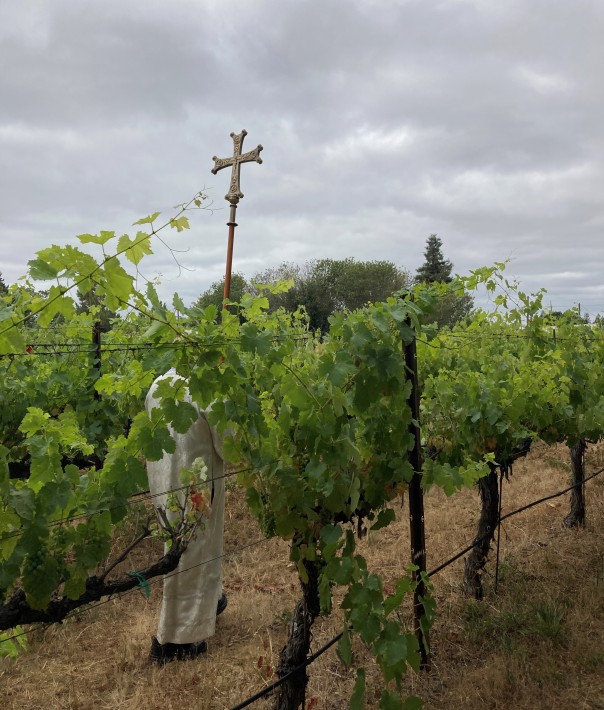
Illarion Mikhailovich Pryanishnikov, Cross Procession

Pearls of trivia from medieval Iran.

EPIGRAM ON SULTAN MAHMOUD

’Tis said our monarch’s liberal mind
Is like the ocean unconfined.
Happy are they who prove it so;
’Tis not for me that fact to know:
I’ve plunged within its waves, ’tis true,
But not a single pearl could view.

-Ferdowsi (Abu ʾl-Qasim Ferdowsi Tusi) (935 – 1020) Iran

This poem made me curious about the particular sultan Ferdowsi was referring to, so I poked around. The poet lived in Medieval Iran, and from this detailed Wikipedia list of the Monarchs of Iran, it must have been Mahmoud of Ghazni he was writing about. I learned from another site more about the backstory of this cleverly insulting verse, how it is an example of the relationship challenges between artists and their patrons going back centuries:

“In addition to his military prowess, Mahmud was also a patron of learning and the arts, and Ghazni became a cultural center second only to Baghdad. The great Persian poet Ferdowsi presented his epic poem the Shanameh (Book of Kings) to Mahmud in 1010 CE. Although the Shahnameh is recognized as the greatest and most influential work of Persian literature, Mahmud was not so impressed, and instead of paying Ferdowsi the promised one gold dinar per couplet, instead only gave him a silver dirham per couplet. Despite this unfortunate incident, Mahmud is nonetheless considered a great patron of the arts.” 

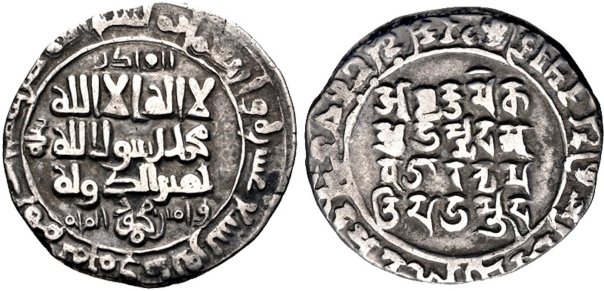
Below are examples of the bilingual coins used during Mahmud’s reign, with Arabic on one side and Sanskrit on the other:


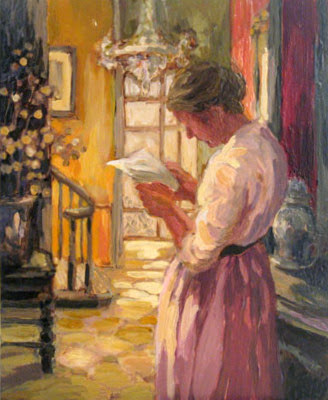
About letter-writing.

by Mary Ferris Kelly

I am always trying to write more letters. So I was very pleased when our sisterhood at church organized a pen-pal match-up, for anyone who wanted to exchange letters once a month with another woman in the group. I got matched up with Gwen, and she and I were thrilled about that; we somehow rarely get a chance to talk or be together outside of church services, so letter writing is perfect for us. We have been writing back and forth now for a year, though we may have fallen off a bit lately.

Because of all this, I loved reading what Donald Hall had to say to an interviewer on the subject. I am sad that people like him seem to be a “dying breed.” Do you think there is any hope of a revival of letter-writing? Even people without smart phones often use a computer to write emails instead of paper-and-ink letters.

Last Christmas I gave all my younger grandchildren ten stamped postcards each. They were of various designs, from my huge collection of postcards that remain from when I often wrote them to the (now older) grandchildren, and was for a time sending postcards all over the world as a member of Postcrossing. I included in the Christmas packages a list of their cousins’ and my addresses, and told them that postcards are fun because you only need to write a few words to fill up the page; it’s an easy way to let people know that you think of them.

Postcard from Ogden Nash

This post would not be complete without mentioning my friend Di, who has neither a computer nor a smart phone, and writes me a letter at least twice a year. She is one of the best letter-writers I have ever known, and I should write a whole post just featuring excerpts from her witty missives to me. I doubt a letter from Donald Hall could please me as much as hers do.

INTERVIEWER:

Another subject. You’re notorious for answering letters. Is your heavy correspondence related to your art? Doesn’t it get in the way?

DONALD HALL:

Sometimes I wonder, Do I write a letter because it’s easier than writing a poem? I don’t think so. Letters take less time than parties or lunches. How do people in New York get anything done? My letters are my society. I carry on a dense correspondence with poets of my generation and younger. Letters are my café, my club, my city. I am fond of my neighbors up here, but for the most part they keep as busy as I do. We meet in church, we meet at the store, we gossip a little. We don’t stand around in a living room and chat—like the parties I used to go to in Ann Arbor. I write letters instead, and mostly I write about the work of writing.

http://www.theparisreview.org/interviews/2163/the-art-of-poetry-no-43-donald-hall


Deep in a Vale

DEEP IN A VALE

Deep in a vale where rocks on every side
Shut out the winds, and scarcely let the sun
Between them dart his rays down one by one,
Where all was still and cool in summer-tide,
And softly, with her whispering waves that sighed,
A little river, that had scarce begun
Her silver course, made bold to fleet and run
Down leafy falls to woodlands dense and wide,
There stood a tiny plain, just large enow
To give small mountain-folk right room to dance,
With oaks and limes and maples ringed around;
Hither I came, and viewed its turf askance,
Its solitude with beauty seemed a-glow,—
My Love had walked there and ’twas holy ground!

-Gustaf Rosenhane (1619–1684) Sweden
        Translated by Edmund Gosse
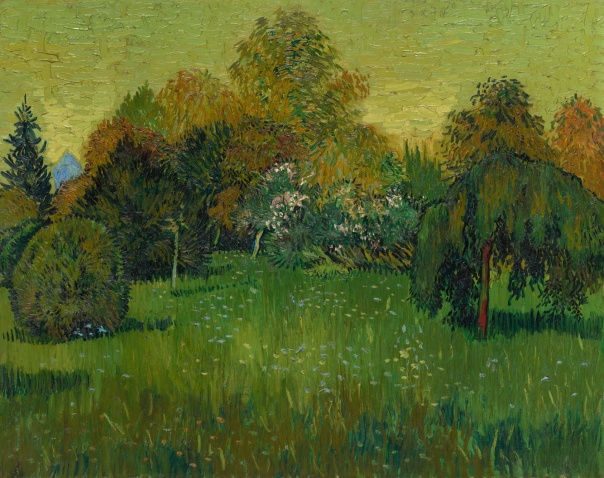
Van Gogh, The Poet’s Garden