It felt very coastal this morning with high fog and chill breeze. Along the front walk where I have allowed a volunteer sunflower to grow in the middle of the germander, one flower was close enough for me to notice the cluster of bees.

How did they happen to all bed down for the night on that one flower? Were they even alive? A half-hour later on my way to the car to drive to church I stopped by again; one or two had left, and the others had shifted position, but were quite motionless. About noon, not one remained. [Update: the next morning they were back, and after watching them off and on for an hour, I think they are not bees, but hoverflies. I’ve mistaken them for bees before.] [UPDATE No. 2: I was right the first time. They are bees. They fold their wings over each other, but flies leave theirs splayed out. I think I’ve learned this more than once, on a site such as Beekeeping Like a Girl. And other differences…]

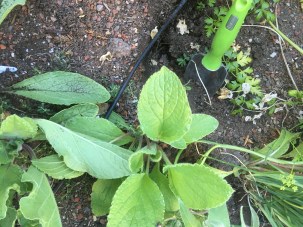 Today was the day we celebrated St. Joanna, and it was also the meeting of our parish women’s book group — in my garden! The weather was as perfect as could be for that. Our group of six included several gardeners who didn’t sit down until we’d discussed borage and the borage flowers hanging into the pathway. The bees draw your attention to them! I quickly dug up a few of the many little borage volunteers for a couple of women to take home later.
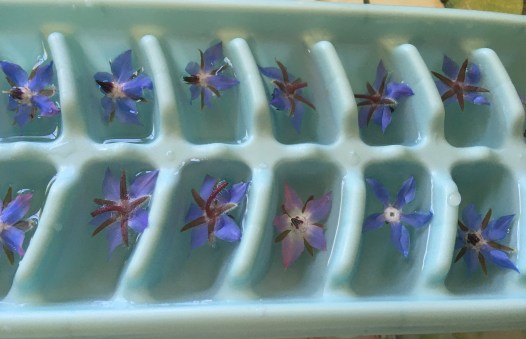
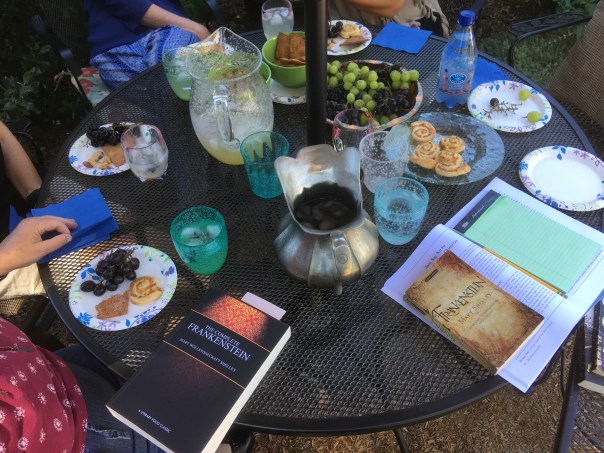
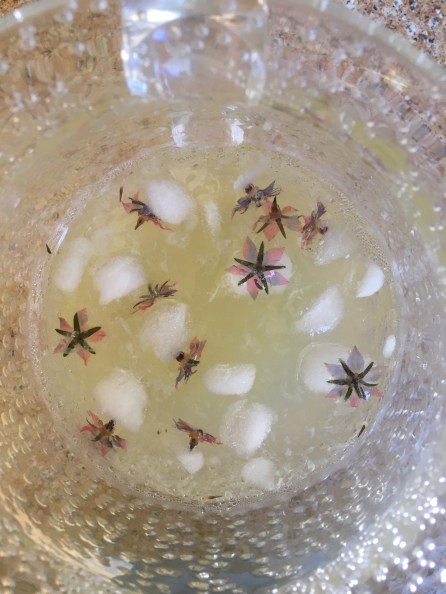
It just so happened I had made two trays of borage ice cubes and it was time for me to add them to the lemonade so we could start talking about Frankenstein.
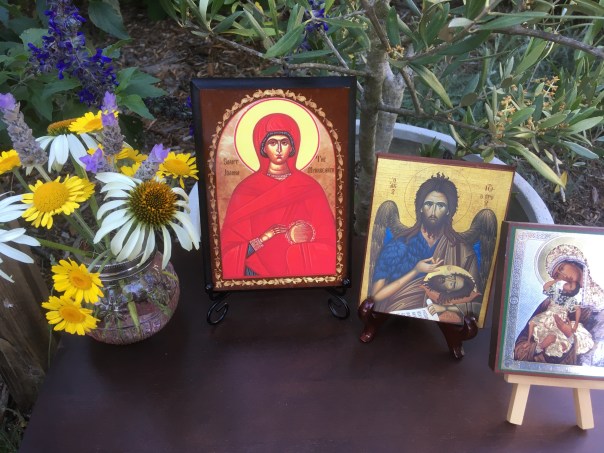
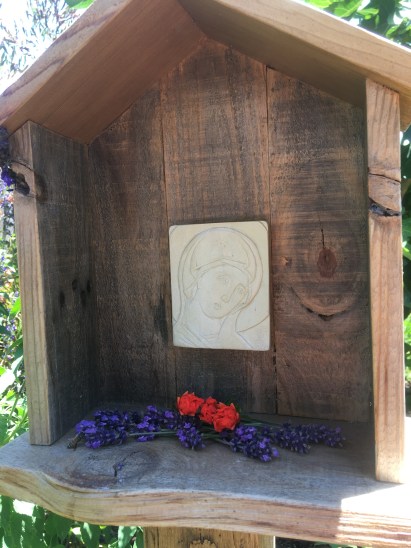
The table where we sat is near my garden icon stand with the stone icon of Christ’s mother; for the day’s commemoration I nestled a TV tray under the olive tree to hold a few more icons. You can read here why I included St. John the Baptist among them.
Early in our talk about Frankenstein I showed the group this adaptation of the novel that had been given to me, and it got passed around the table so that everyone could take a look at the illustrations.

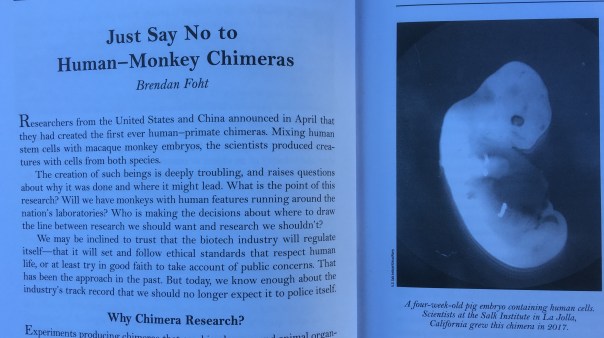
We had a lively discussion about elements of the story, and also concerning ethical questions about the uses of science that are still pertinent in our day. I read only a few lines to the group from this article in the current issue of The New Atlantis about recent questionable experiments.
Various of the readers in our group knew more than I about the historical and philosophical context in which Frankenstein was written, which made it a pleasure to be with them and muse about much more than what had impressed me personally. I think we all were glad to have read the book, especially those who before had only known the movies, but no one exactly loved it.
It didn’t have a satisfying ending, in that, as our moderator said, she had hoped for redemption and there was none. We all agreed it was too long and repetitive. Several women said they definitely wanted to read something “lighter” next time. What constitutes a light novel? Here are the (not necessarily light) possibilities we had brought with us. As we went around the table making our suggestions, it seemed to me that the enthusiasm mounted with each one.
- A Long Walk with Mary by Brandi Schreiber
- My Cousin Rachel by Daphne De Maurier
- The Giver by Lois Lowry
- Shades of Milk and Honey
- The Guernsey Literary and Potato Peel Pie Society
- The Scent of Water by Elizabeth Goudge
 My Cousin Rachel and The Giver were deemed too heavy. Milk and Honey didn’t engender any discussion, and I was personally torn between Potato Peel Society and Scent. Several had already read Potato Peel so they were leaning toward Scent; I was the only one who had read it, and I told them what I loved about Goudge’s books generally. A Long Walk with Mary seemed like a good one to read during our Orthodox Dormition Fast.
So, we voted in a very informal way, and decided that in six weeks we will meet again and discuss two books: The Scent of Water and A Long Walk with Mary.
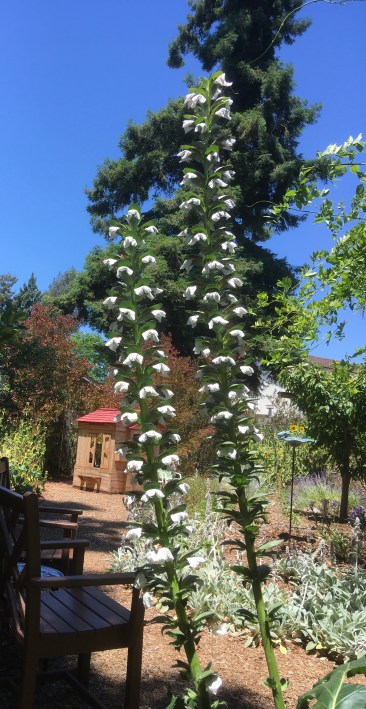
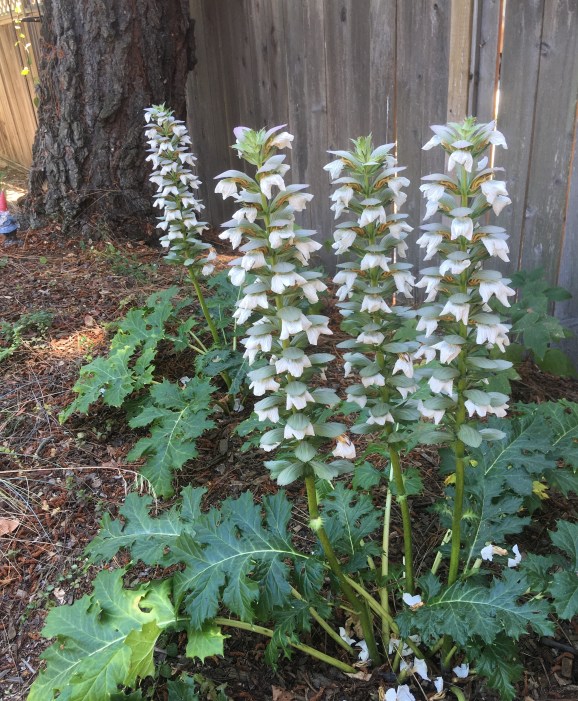
Before everyone went home, we toured the other side of my garden, and I told them about acanthus and why I used to not like it, but now I do. The acanthus is more beautiful than ever, its spires taller, and in their prime right now. My 24 lavender bushes are at the height of bloom, too. We got to hear from our sheep farmer lady how she made lavender simple syrup to use in cool summer drinks.
How sweet it was to have these friends to be with me for my name day. After they were gone, there was still lemonade left in the pitcher, and floating among the melting ice cubes, the lemon-bleached borage blossoms.
 I think of
  If I had a vade mecum, it would take care of a good deal of book angst. Well, perhaps I do, if you count the pocket-sized one I sometimes carry in my purse. You might like to go read Deb’s list, with definitions, for yourself. But for me, it’s time to move on to other less mind-y work. Please tell me if you have, or ever did have, a vade mecum. My friend Di told me recently that when she was in high school, hers was Sartre’s Being and Consciousness. I had planned to use that bit of trivia in a future post but in case I don’t get there…