I wasn’t able to participate with my church in the Fort Ross pilgrimage this year, but I thought I’d re-publish my article about the yearly event that I shared five years ago. I hope you all had a blessed Independence Day!
Fort Ross State Historic Park has been a favorite destination of our family for decades. It is a restored fort from the early 1800′s, when California was not yet a state in the Union, and for a while the Russians had an outpost in Northern California for fishing and trapping and growing food. You can see lots more photos and read about the history of Fort Ross online.
I loved the place from our first discovery of it when the children were small. A historic association holds yearly re-enactment days that are great fun, but just visiting on our own was relaxing and renewing, at least in the summer, when the sun would break through the fog and you could smell the ocean and the baking grasses at the same time, and imagine the people of long ago.
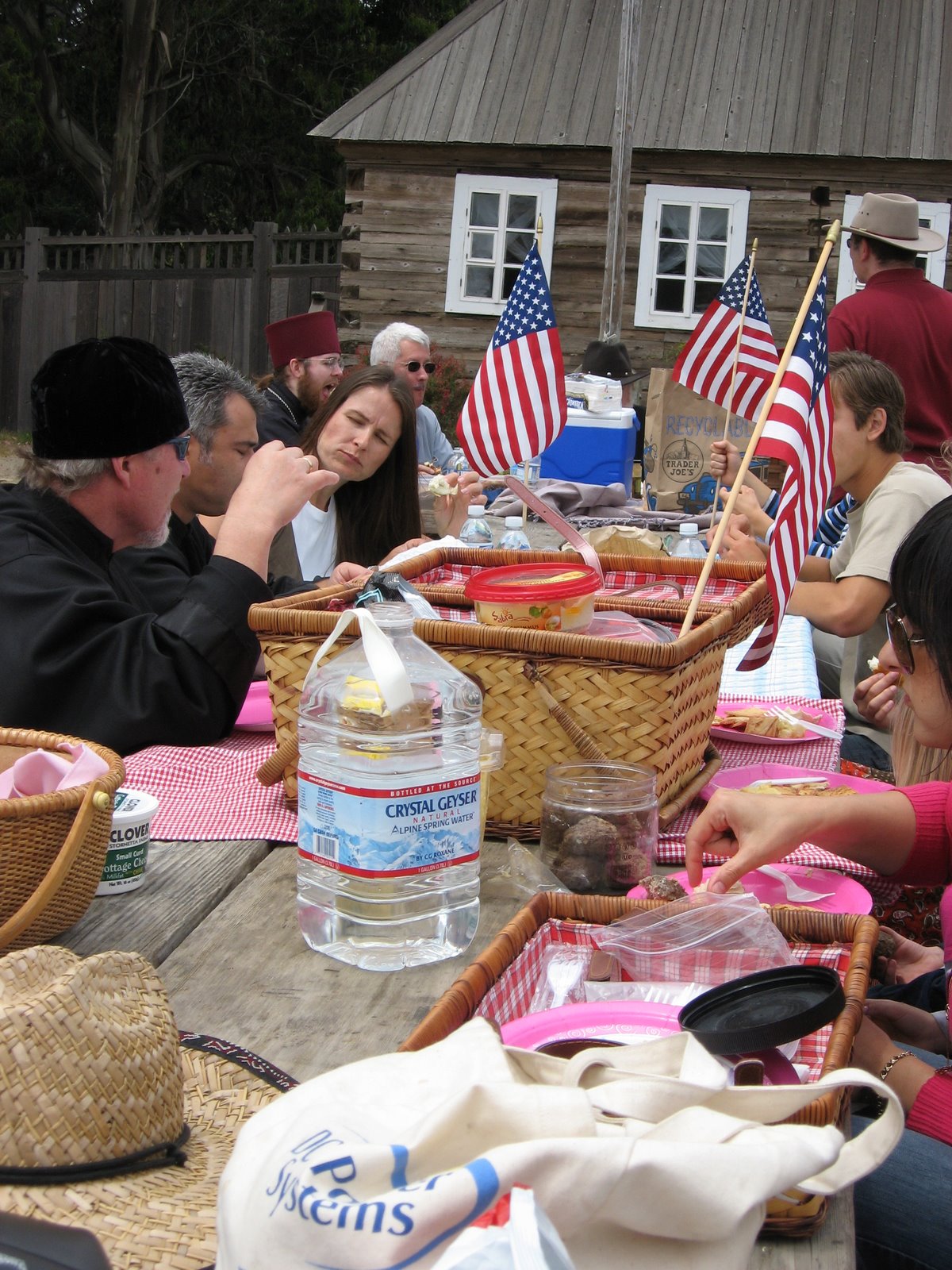
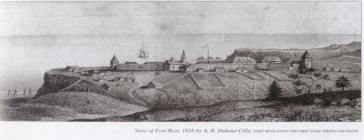 After I joined the Orthodox Church, I was delighted to learn that our diocese has permission to use the chapel at the fort twice a year, including on the 4th of July. We worship in the morning and have a picnic afterward when the sun usually comes out. There is plenty of time to get back home in the evening for Vespers and maybe fireworks later on. I’ve made the pilgrimage three times now, and my pictures here are collected from all the visits.

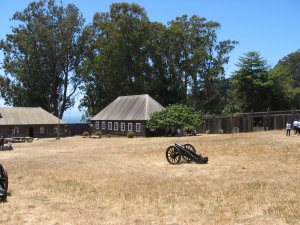
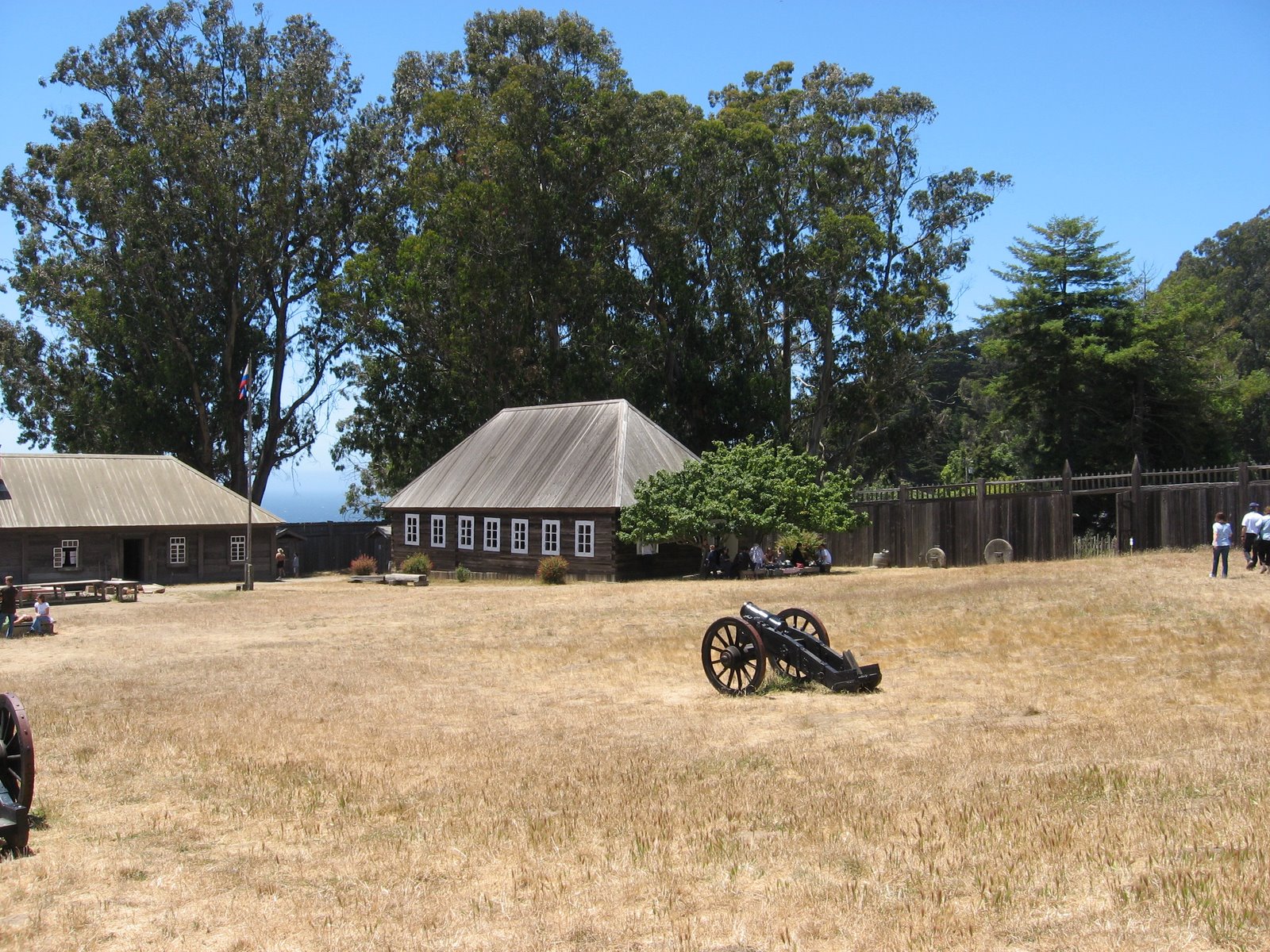
It’s a short walk from the parking lot to the actual fort enclosure. The photo at right is looking across the field from the chapel.
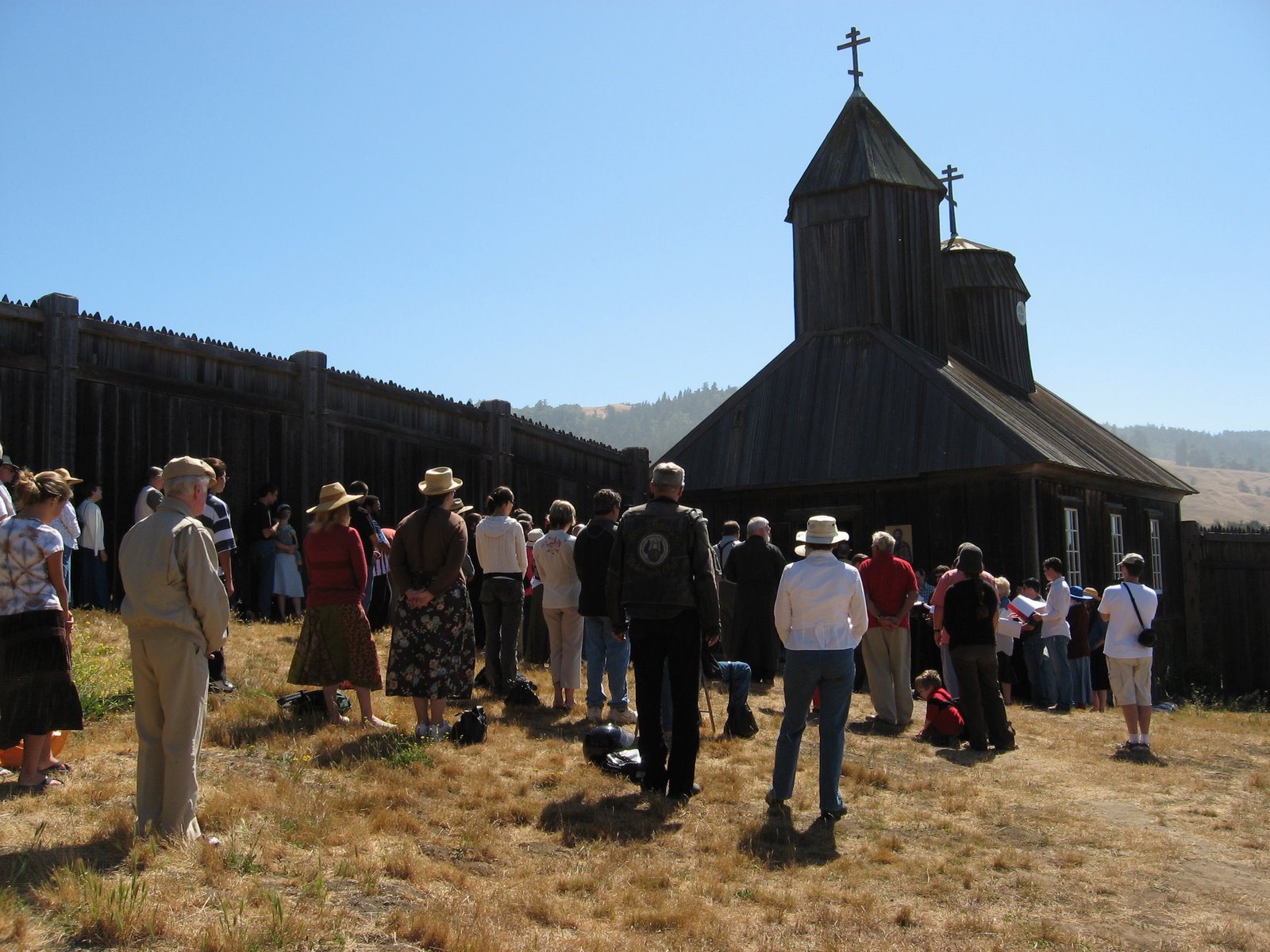
 The church building as restored is small, and sometimes we let the whole of it serve as the altar, with the congregation and the choir standing outside and the priests and deacons coming in and out frequently as they pray and serve Communion.
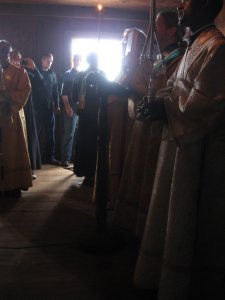 This year we all squeezed into the chapel, which is very intimate. I couldn’t get a good picture because of that window, but I am posting a bad one just to give an idea of the atmosphere. Very thin idea, indeed, as there is only the one visual dimension, and no conveyance at all to the other senses.
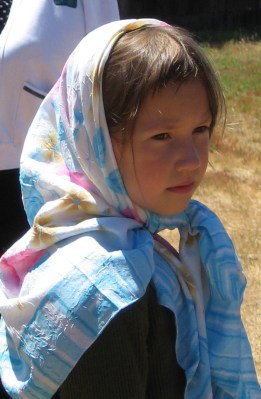
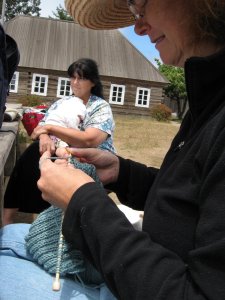
After the liturgy, the clergy and many others made the trek to the cemetery to sing a short service for the ones buried there. Others of us waited within the walls of the fort for their return.
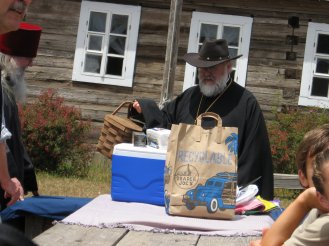 The bishop brought a picnic lunch, too.
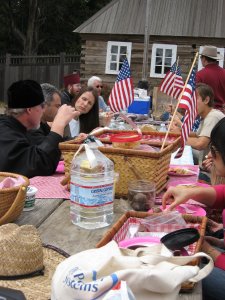
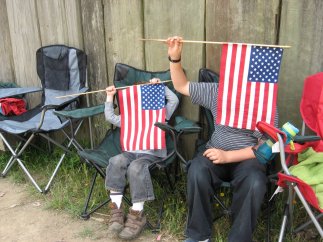
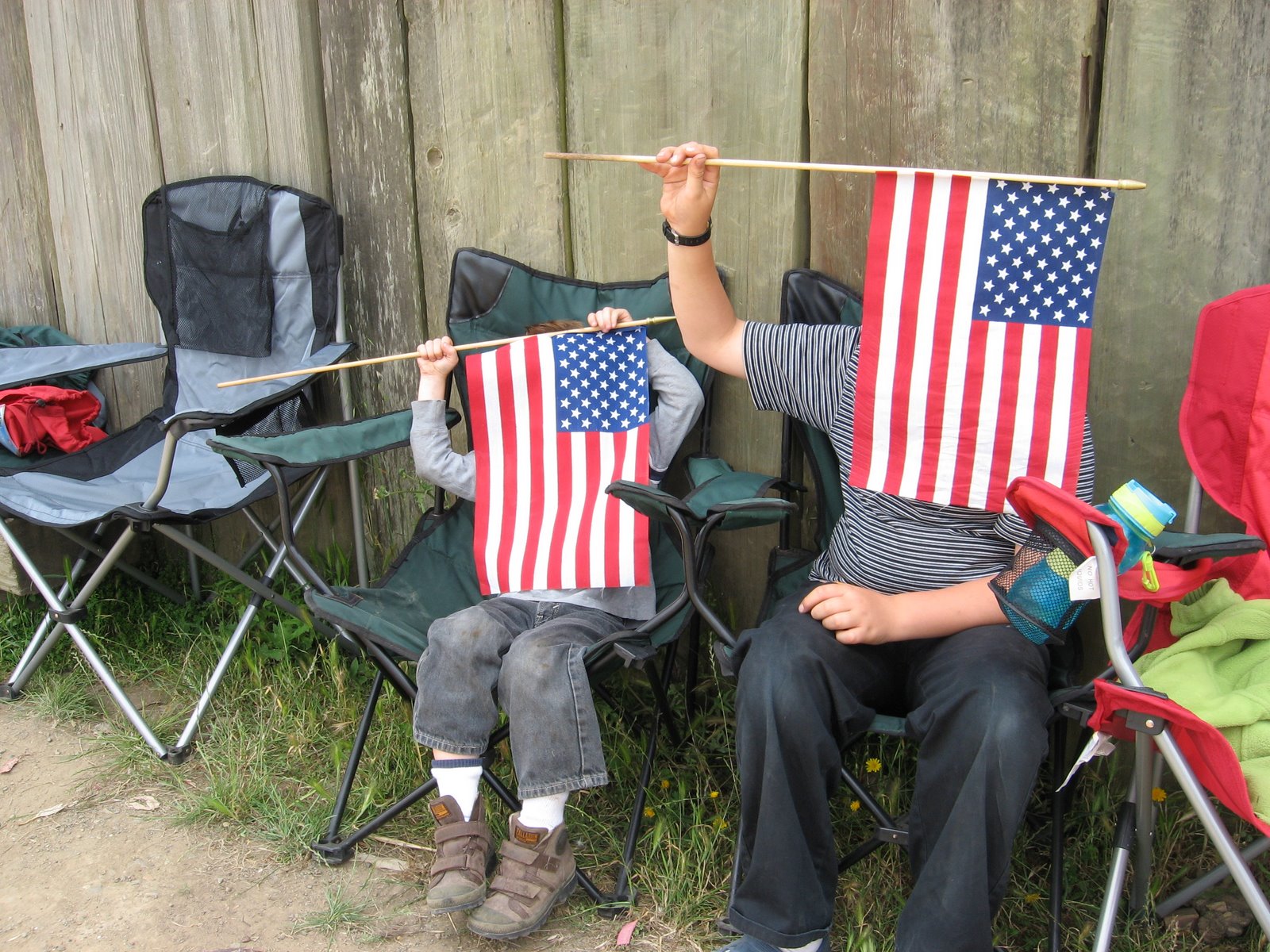
We waved plenty of flags to show our thankful allegiance to the nation whose birthday we were celebrating, at a fort now owned by Americans.
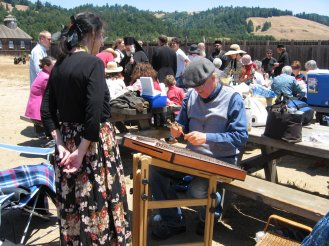 One year N. brought his hammered dulcimer and treated us to music at the picnic.
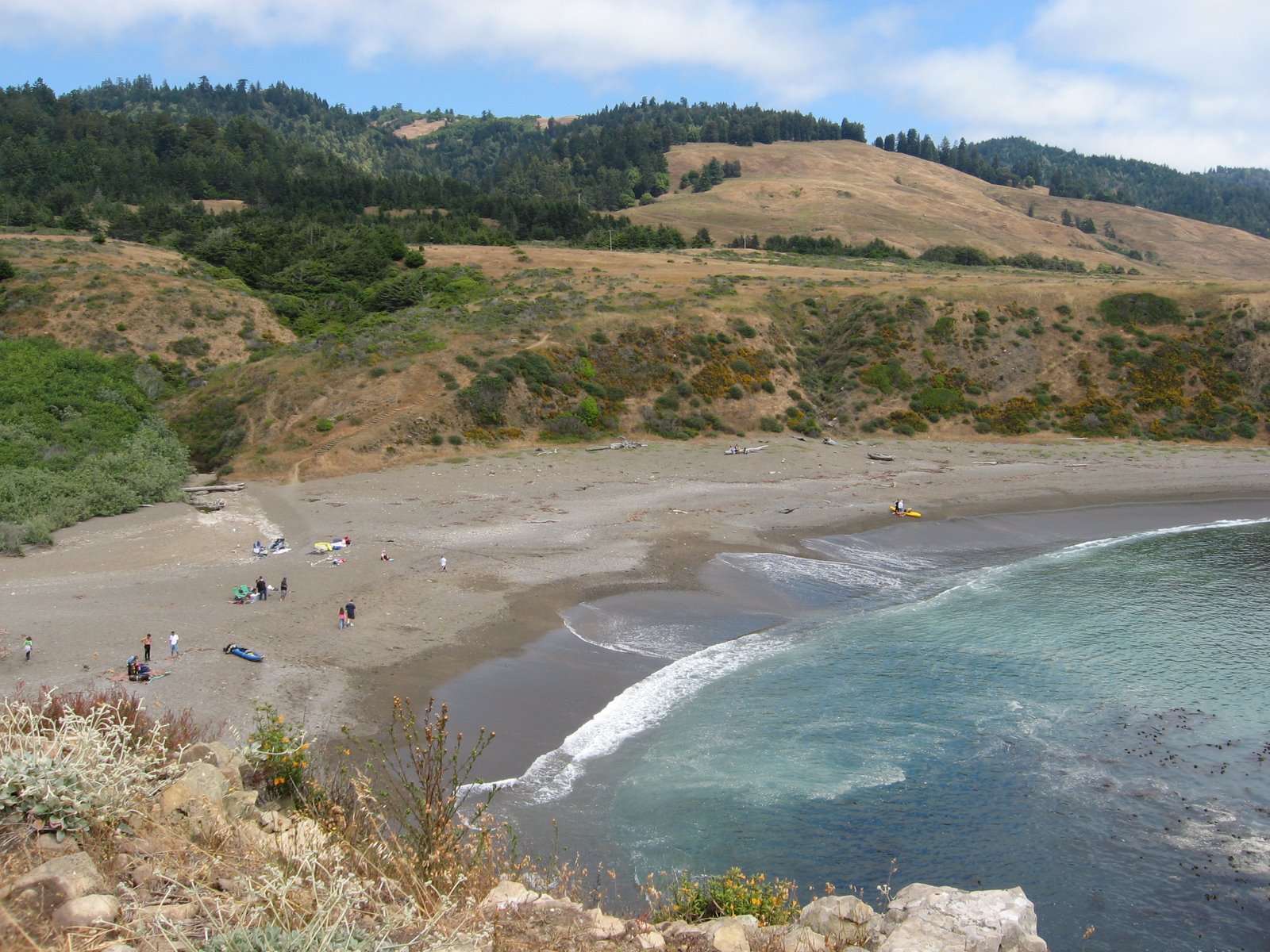
 After lunch, K. and I took a walk down to the lovely cove below the fort.
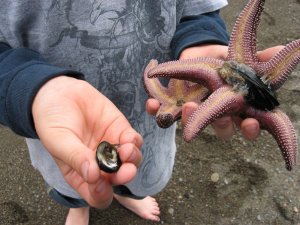
One young parishoner and his mother had found treasures in nearby tidepools.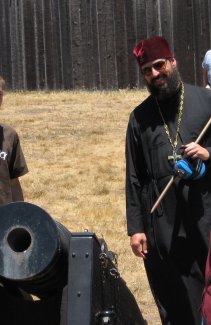
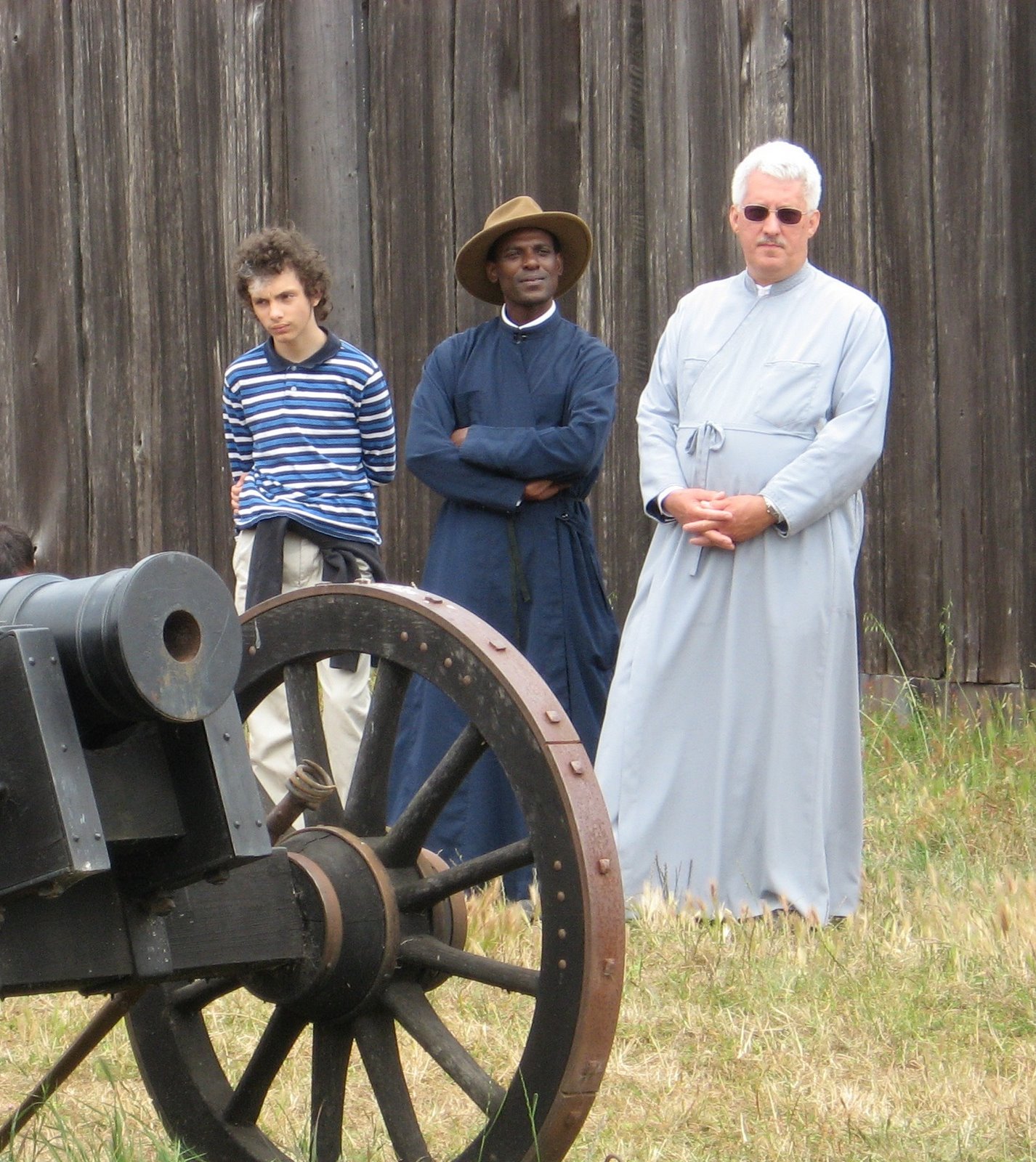
When we got back, the history talk by the park ranger was still going on. It leads up to instruction in loading and firing the cannons.
My favorite priest is getting ready to load the cannon.
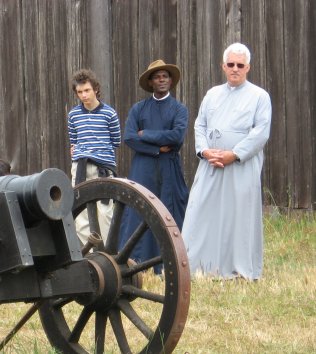 A blue study of guys waiting for the explosion.
 Bang! Poof! No cannonball was shot–only gunpowder.
The majority of California’s state parks are likely to be closed because of the deep debt our state is in. If that happens, our Fort Ross pilgrimages may become a fragrant memory, and something to hope for in the more distant future.
Update: Since I wrote that last gloomy paragraph, grassroots efforts of many people have improved the likelihood that the park will endure and continue to be one of my favorite destinations — and maybe as a pilgrim in 2015.

 me of a book I read when my own children were small, by Andrew Murray, Raising Your Children for Christ. From the blurb on the paperback cover I expected lots of practical advice such as methods of discipline and teaching, but 90% of the book was a month’s worth of devotionals emphasizing the parents’ faith and prayer. Of course, that is very practical – definitely not theoretical! And so is Lisa’s admonition.
 found to be invasive, but controllable in my own home garden.
 odd and amusing ways. Some are written to forbid urination in various places and the English versions of the warnings can come out saying, “Urination is inhuman,” or “It is forbidden to urinate here. The penalty is bang.”







 Gladsome Lights