 St. Polycarp was born in the first century and was burned at the stake in the second. Because of an early and well known document, The Martyrdom of Polycarp, thought to be the oldest authentic account of an early Christian martyr’s death, he is one of the most famous who have refused to deny Christ in the face of extreme threats.
His life is connected to several other notable saints, earlier and later, starting with St. John the Apostle and Evangelist, whom he knew and talked with; St. Ignatius, who met him and afterward sent a long letter of exhortation to him; and St. Irenaeus of Lyons, who was baptized by Bishop Polycarp when a youth and was sent by him as a missionary to Gaul.
The Letter of St. Ignatius to St. Polycarp resonates with life and the vibrant faith of the writer and the churches of Christ in those early centuries. An excerpt:
“Stand firm, as does an anvil which is beaten. It is the part of a noble athlete to be wounded, and yet to conquer. And especially, we ought to bear all things for the sake of God, that He also may bear with us. Be ever becoming more zealous than what you are. Weigh carefully the times. Look for Him, who is above all time, eternal and invisible, yet who became visible for our sakes; impalpable and impassible, yet who became passible on our account, and who in every kind of way suffered for our sakes.”
The author of “The Martyrdom of Polycarp” is unknown, but it was sent to the church in Philomelium, Asia Minor, from the church in Smyrna. Here is one paragraph from the letter:
“And as the flame blazed forth in great fury, we, to whom it was given to witness it, beheld a great miracle, and have been preserved that we might report to others what then took place. For the fire, shaping itself into the form of an arch, like the sail of a ship when filled with the wind, encompassed as by a circle the body of the martyr. And he appeared within not like flesh which is burnt, but as bread that is baked, or as gold and silver glowing in a furnace. Moreover, we perceived such a sweet odour, as if frankincense or some such precious spices had been smoking there.”

In a letter to his friend Florinus, after the death of Polycarp, St. Irenaeus writes fondly of his elder in the faith:
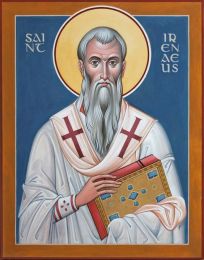 “I can even describe the place where the blessed Polycarp used to sit and discourse — his going out, too, and his coming in — his general mode of life and personal appearance, together with the discourses which he delivered to the people; also how he would speak of his familiar intercourse with John, and with the rest of those who had seen the Lord; and how he would call their words to remembrance. Whatsoever things he had heard from them respecting the Lord, both with regard to His miracles and His teaching, Polycarp having thus received from the eye-witnesses of the Word of life, would recount them all in harmony with the Scriptures. These things, through God’s mercy which was upon me, I then listened to attentively, and treasured them up not on paper, but in my heart; and I am continually, by God’s grace, revolving these things accurately in my mind.”
On this day on which we commemorate St. Polycarp, I will be listening to a sonata composed in his honor by Heinrich Biber (1644-1704): “Sancti Polycarpi”, and “revolving these things” I’ve been learning about these men in my own mind — their struggle to stand firm, as St Ignatius exhorted, and to “Weigh carefully the times. Look for Him, who is above all time….” Thank you, Lord, for the ever encouraging testimony of your saints, and on this day, especially that of Saint Polycarp of Smyrna. +

 His feast day is today, so I read a little by and about this servant of God who was born in Babylon, was called to be prophet at a young age, and died around 520 B.C.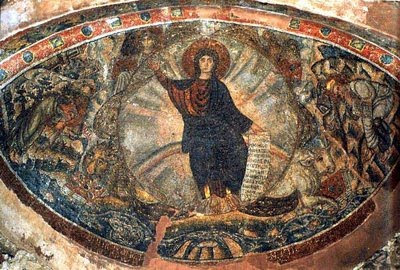
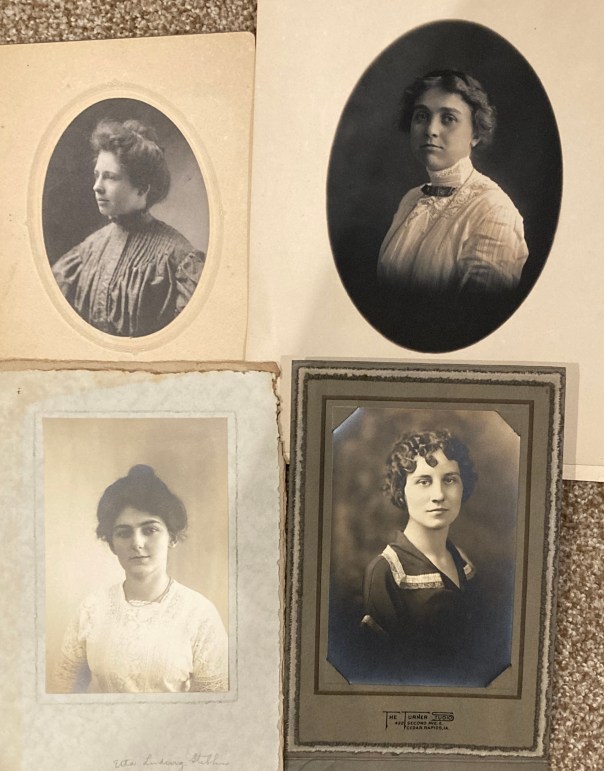
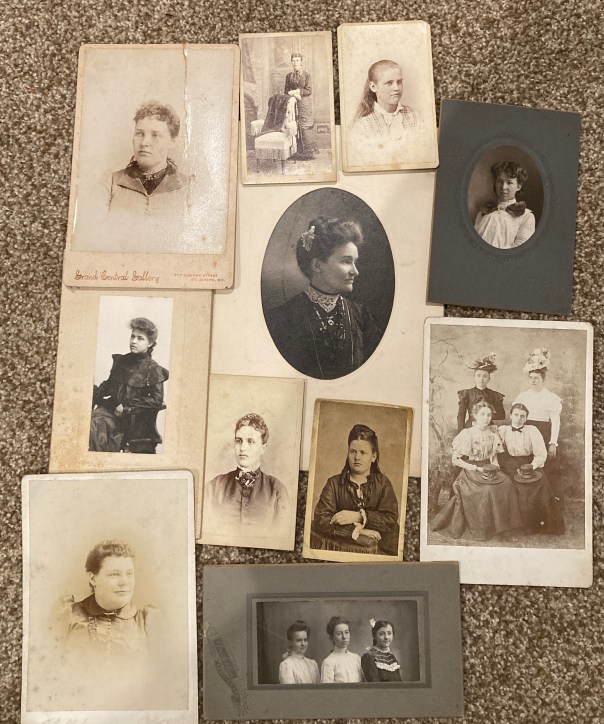
 Last year I spent quite a few hours sorting through photos of several generations of ancestors, my late husband’s family and mine, plus those of our own immediate family, children and grandchildren. I barely made a dent in the collections!
 Gladsome Lights