On Remembrance Day in Britain, many people join in two minutes of silence to memorialize the dead. When Malcolm Guite did that, it prompted this response:
“There was something extraordinarily powerful about that deep silence from a ‘live’ radio, a sense that, alone in my kitchen, I was sharing the silence with millions. I stood for the two minutes, and then, suddenly, swiftly, almost involuntarily, wrote this sonnet.”
SILENCE
November pierces with its bleak remembrance Of all the bitterness and waste of war. Our silence tries but fails to make a semblance Of that lost peace they thought worth fighting for. Our silence seethes instead with wraiths and whispers, And all the restless rumour of new wars, The shells are falling all around our vespers, No moment is unscarred, there is no pause, In every instant bloodied innocence Falls to the weary earth, and whilst we stand Quiescence ends again in acquiescence, And Abel’s blood still cries in every land. One silence only might redeem that blood — Only the silence of a dying God.
-Malcolm Guite
Please hear Fr. Guite read his sonnet here: “Silence”
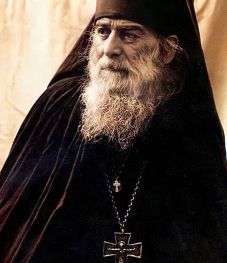
St. Gabriel Fool-for-Christ of the Republic of Georgia fell asleep in death on this day in 1995. That is a modern saint! I was advised last year to “get to know” St. Gabriel, and one way I’ve learned about him was through the several videos about his life, which include a multitude of stories from people who knew him well.
Gabriel served in the Soviet army as a youth, and later was tonsured a monk. He became famous in Georgia when on May 1, 1965 he set fire to a giant poster of Lenin at a Worker’s Day parade. That prompted his arrest, confinement in a mental hospital, and torture for seven months.
This movie about St. Gabriel is a very good one, which I never get tired of watching: “I Am Waiting for You at Samtavro;” it gives many details about his life and has the English translation dubbed in. His sister, his doctor, priests and monastics and others share about the love and miracles they experienced through his life and intercession before and after his repose. In the last ten years he has been recognized as a saint by the Georgian Church and then more widely throughout the world. From the movie narration:
“The saint and god-pleaser Gabriel is not only a great intercessor before God, but at the same time he is a role model for us on earth. His whole life was composed of great and brotherly love and it continues after his blessed repose. Being in the light of the Holy Trinity, Elder Gabriel is with us in an invisible, and sometimes visible way. He strengthens people in the faith and guides everyone, showing them the right path, cheering them up, and instilling hope.”
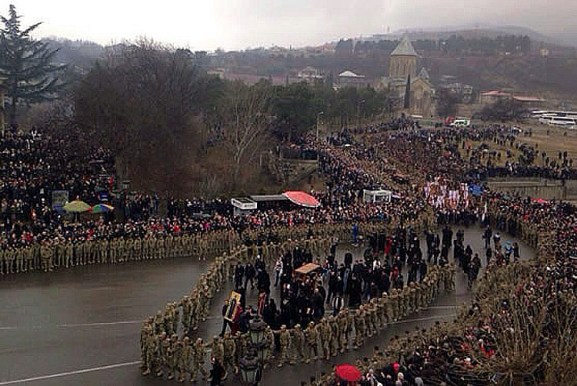
On the uncovering of the relics of Elder Gabriel of Georgia; photo by Zetalion.
Only recently did I learn of the existence of Sumela Monastery, a place which briefly in this century became particularly associated with the Feast of the Dormition (falling asleep in death) of Christ’s Mother, which we commemorate this month. This recent connection started in 2010:
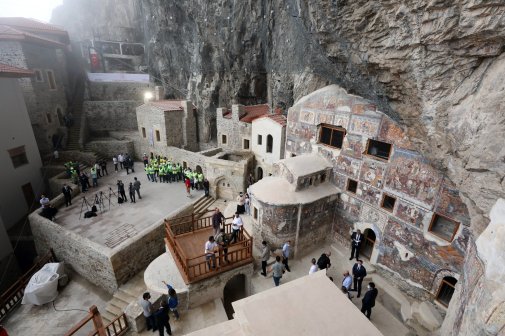
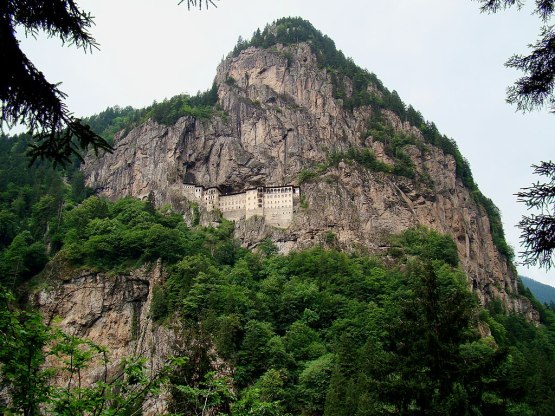
“Orthodox Christians from around the world attended a rare Liturgy at an ancient monastery in Turkey… at the Sumela monastery in Trabzon province, north-eastern Turkey. At least 1,500 pilgrims, including people from Greece and Russia, traveled to the Byzantine-era monastery. The service was the first Greek Orthodox Liturgy to be held at the shrine since 1923, after the Turkish government allowed pilgrims to worship there once a year in a gesture toward religious minorities, in line with Turkey’s aspiration to join the EU.
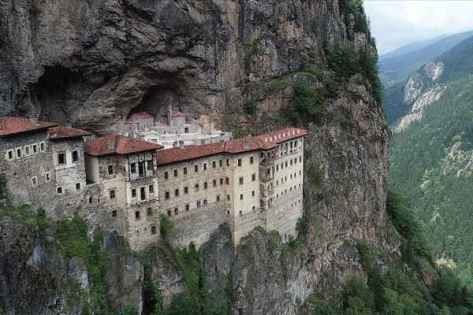
“Those attending were elated, with one worshipper saying it was a great moment as they could now pray on the land where their great-grandfathers had come from. In 1923, the Turkish authorities had banned religious services at the monastery, built on the side of a mountain, and turned it into a museum, after it was abandoned when a population swap between Turkey and Greece saw most local Orthodox move to Greece.”
The Patriarch of Constantinople was allowed to celebrate Divine Liturgy every year on the Feast of the Dormition from 2010 until 2015, but starting in 2016 reconstruction work has prevented this.
I watched several videos about the monastery and the one I really liked was this one: “What is the Sumela Monastery?” because the personable guide had taken time to learn something about the history of the place, and he respectfully refrained from blathering ignorantly, unlike some other visitors who put up videos on YouTube.
The monastery was founded by two monks in the fourth century, and through the following centuries repeatedly fell into ruin and was restored; in the 13th century it had grown into its present form.
Occasionally when I happen upon pictures or stories of ancient sites like this, built into steep cliffs, I become entranced with the otherworldliness of them and the drama of their settings. I’m glad I can visit them by means of these pictures and videos.
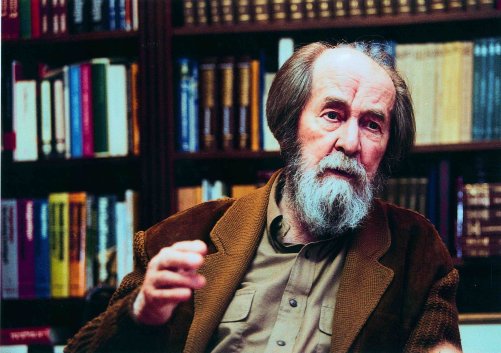
To commemorate the death of Aleksandr Solzhenitsyn, August 3, 2008, this year I give you a link to his essay, “Live Not by Lies,” with an introduction to it, and excerpt from it. The website of the Aleksandr Solzhenitsyn Center has a wealth of the author’s writings and speeches, a list of events and publications related to his legacy, his biography, and more. They have put up a new page dedicated to excerpts of his writings over the course of almost forty years on the topic of Ukraine, beginning with, “Russia and the Ukraine are united in my blood, my heart, my thoughts.” First the introduction to the essay:
On the day Solzhenitsyn was arrested, February, 12, 1974, he released the text of “Live Not by Lies.” The next day, he was exiled to the West, where he received a hero’s welcome. This moment marks the peak of his fame. Solzhenitsyn equates “lies” with ideology, the illusion that human nature and society can be reshaped to predetermined specifications. And his last word before leaving his homeland urges Soviet citizens as individuals to refrain from cooperating with the regime’s lies. Even the most timid can take this least demanding step toward spiritual independence. If many march together on this path of passive resistance, the whole inhuman system will totter and collapse.
— by Edward E. Ericson, Jr. and Daniel J. Mahoney, The Solzhenitsyn Reader
Here is one short excerpt from the essay:
“Our way must be: Never knowingly support lies! Having understood where the lies begin (and many see this line differently)—step back from that gangrenous edge! Let us not glue back the flaking scales of the Ideology, not gather back its crumbling bones, nor patch together its decomposing garb, and we will be amazed how swiftly and helplessly the lies will fall away, and that which is destined to be naked will be exposed as such to the world.”

 St. Gabriel Fool-for-Christ of the Republic of Georgia fell asleep in death on this day in 1995. That is a modern saint! I was advised last year to “get to know” St. Gabriel, and one way I’ve learned about him was through the several videos about his life, which include a multitude of stories from people who knew him well.