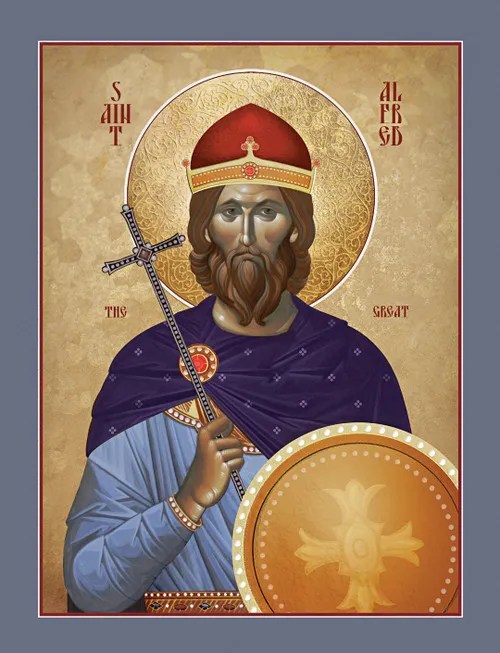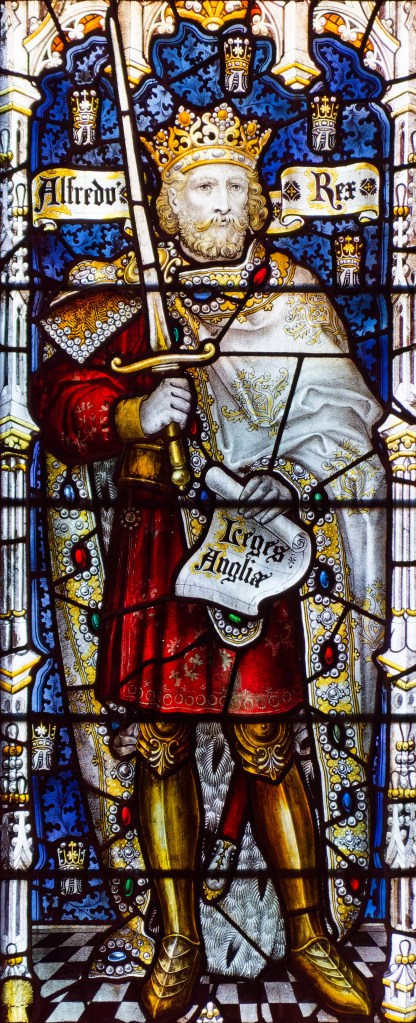
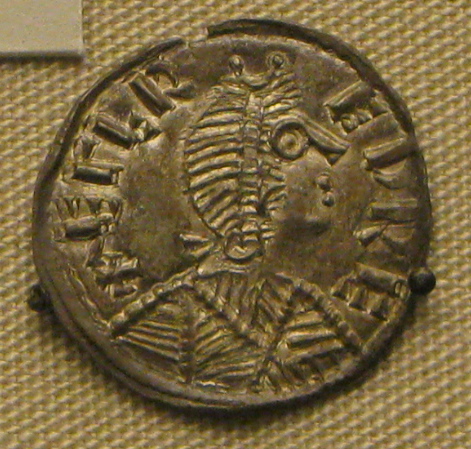
King Alfred the Great of England, whom many of us also know as Saint Alfred, did not have an easy life. In this quote from him about prosperity vs. tribulations, he must be writing from what he has seen and known, but of course not everyone responds to sufferings in the profitable way that he speaks of:
“For in prosperity a man is often puffed up with pride, whereas tribulations chasten and humble him through suffering and sorrow. In the midst of prosperity the mind is elated, and in prosperity a man forgets himself; in hardship he is forced to reflect on himself, even though he be unwilling. In prosperity a man often destroys the good he has done; amidst difficulties he often repairs what he long since did in the way of wickedness.”
Many of you likely know more about King Alfred than I have retained over the years, though for a long time I have been fascinated with his accomplishments. He lived from 849-899 and is famous for restructuring the military to better battle the Vikings who were constantly raiding; for reforming the legal code to align with traditional Christian laws; for promoting education; and for reviving the monasteries.
“By appointing pious, learned, and trustworthy bishops and abbots, Albert initiated a spiritual revival among the monasteries. He also emphasized translation of books he deemed ‘most necessary for all men to know.’ He himself contributed to the spiritual revival through his translations that included translation into English of Gregory the Great’s Pastoral Care , Boethius’ Consolation of Philosophy, St. Augustine’s Soliloquies, and the first fifty psalms of the Psalter.” Source
Not long ago I started reading this newish book by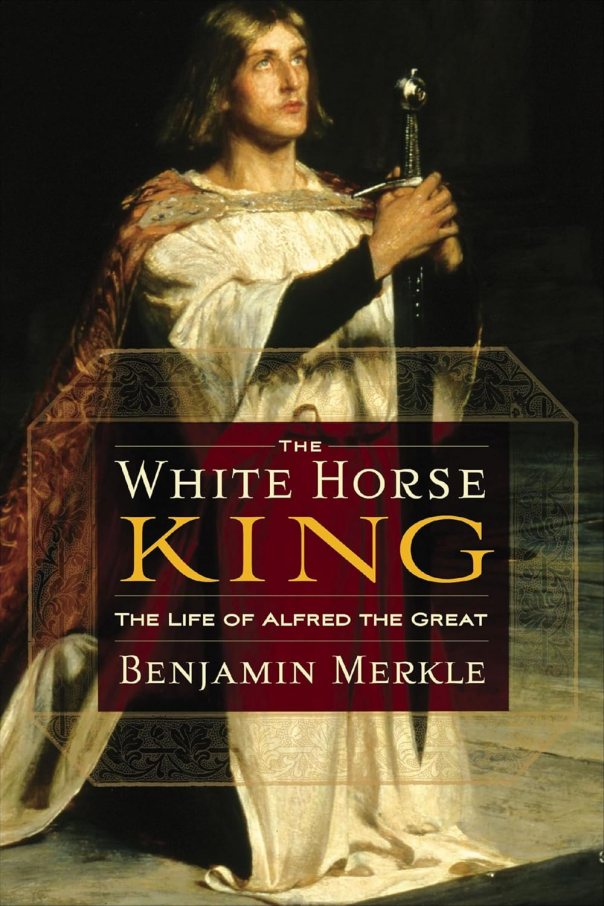 Benjamin Merkle, The White Horse King, which is a short introduction to him, really, but I haven’t finished it. Even so, today being his feast day, it seems good to remember the king here in a small way, with these quotes. As to Alfred’s comments above, it seems to me that he did not himself fall into the temptation that he says prosperity brings, but was an example of being “instant in season and out of season,” (II Timothy 4:2) in his labors for the improvement and well-being of his kingdom. I will end with the following exemplary prayer written by the saint, for whom I thank God.
“Lord, Almighty God, Maker and Ruler of all creation, I pray Thee by Thy great mercy, and by the sign of the Holy Cross, and by Saint Mary’s maidenhood, and by Saint Michael’s obedience, and by the love of all Thy Saints and their merits, that Thou guide me better than I have wrought unto Thee;
and guide me to Thy will, and to my soul’s good, better than I myself may know; and establish my mind in Thy will and to my soul’s good;
and strengthen me against the Devil’s temptations; and remove from me foul lusts and all unrighteousness; and shield me against mine adversaries, seen and unseen; and teach me Thy will to work; that I may love Thee fervently above all things, with clean mind and with clean body.
For Thou art my Creator, and my Redeemer, my Helper, my Comfort, my Trust, and my Hope. To Thee be praise and glory now and forever and ever, unto world without any end. Amen.”