Category Archives: Lent

Forgiveness Sunday – Schmemann


Forgiveness Sunday

Protopresbyter Alexander Schmemann

In the Orthodox Church, the last Sunday before Great Lent – the day on which, at Vespers, Lent is liturgically announced and inaugurated – is called Forgiveness Sunday. On the morning of that Sunday, at the Divine Liturgy, we hear the words of Christ:

“If you forgive men their trespasses, your heavenly Father will also forgive you, but if you forgive not men their trespasses, neither will your Father forgive your trespasses…” (Mark 6:14-15)

Then after Vespers – after hearing the announcement of Lent in the Great Prokeimenon: “Turn not away Thy face from Thy child for I am afflicted! Hear me speedily! Draw near unto my soul and deliver it!”, after making our entrance into Lenten worship, with its special memories, with the prayer of St. Ephraim the Syrian, with its prostrations – we ask forgiveness from each other, we perform the rite of forgiveness and reconciliation. And as we approach each other with words of reconciliation, the choir intones the Paschal hymns, filling the church with the anticipation of Paschal joy.

What is the meaning of this rite? Why is it that the Church wants us to begin Lenten season with forgiveness and reconciliation? These questions are in order because for too many people Lent means primarily, and almost exclusively, a change of diet, the compliance with ecclesiastical regulations concerning fasting. They understand fasting as an end in itself, as a “good deed” required by God and carrying in itself its merit and its reward. But, the Church spares no effort in revealing to us that fasting is but a means, one among many, towards a higher goal: the spiritual renewal of man, his return to God, true repentance and, therefore, true reconciliation. The Church spares no effort in warning us against a hypocritical and pharisaic fasting, against the reduction of religion to mere external obligations. As a Lenten hymn says:

In vain do you rejoice in no eating, O soul!

For you abstain from food,

But from passions you are not purified.

If you persevere in sin, you will perform a useless fast.

Now, forgiveness stands at the very center of Christian faith and of Christian life because Christianity itself is, above all, the religion of forgiveness. God forgives us, and His forgiveness is in Christ, His Son, Whom He sends to us, so that by sharing in His humanity we may share in His love and be truly reconciled with God. Indeed, Christianity has no other content but love. And it is primarily the renewal of that love, a return to it, a growth in it, that we seek in Great Lent, in fasting and prayer, in the entire spirit and the entire effort of that season. Thus, truly forgiveness is both the beginning of and the proper condition for the Lenten season.

One may ask, however: Why should I perform this rite when I have no “enemies”? Why should I ask forgiveness from people who have done nothing to me and whom I hardly know? To ask these questions is to misunderstand the Orthodox teaching concerning forgiveness. It is true that open enmity, personal hatred, real animosity may be absent from our life, though if we experience them, it may be easier for us to repent, for these feelings openly contradict Divine commandments. But the Church reveals to us that there are much subtler ways of offending Divine Love. These are indifference, selfishness, lack of interest in other people, of any real concern for them — in short, that wall which we usually erect around ourselves, thinking that by being “polite” and “friendly” we fulfill God’s commandments. The rite of forgiveness is so important precisely because it makes us realize – be it only for one minute – that our entire relationship to other men is wrong, makes us experience that encounter of one child of God with another, of one person created by God with another, makes us feel that mutual “recognition” which is so terribly lacking in our cold and dehumanized world.

On that unique evening, listening to the joyful Paschal hymns we are called to make a spiritual discovery: to taste of another mode of life and relationship with people, of life whose essence is love. We can discover that always and everywhere Christ, the Divine Love Himself, stands in the midst of us, transforming our mutual alienation into brotherhood. As l advance towards the other, as the other comes to me – we begin to realize that it is Christ Who brings us together by His love for both of us.

And because we make this discovery – and because this discovery is that of the Kingdom of God itself: the Kingdom of Peace and Love, of reconciliation with God and, in Him, with all that exists – we hear the hymns of that Feast which once a year, “opens to us the doors of Paradise.” We know why we shall fast and pray, what we shall seek during the long Lenten pilgrimage. Forgiveness Sunday: the day on which we acquire the power to make our fasting – true fasting; our effort – true effort; our reconciliation with God – true reconciliation.
Rise and go and do the next thing.

I was reminded by another blogger this week of how we need to ask God, not to remove our burdens, but to give us grace to bear them, and to bear them to Him, so that He can use them in our lives to bring us fully into His Heavenly Kingdom.

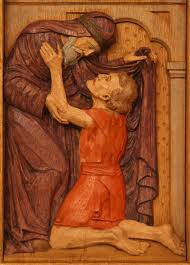
In the Orthodox Church this Sunday of the Prodigal Son is one of our markers letting us know that Lent is approaching, and I’ve been thinking again about what I can learn from the story about this grace I need.

The parable for this week is about a journey, and every journey consists of putting one foot in front of the other, or “doing the next thing.” We are all familiar with this sort of activity when we are ill, and need to take our medicine, follow the prescriptions of our doctors, according to schedule. And don’t stop taking the medicine until you are all well!

The extra effort we put forth during Lent is not to show our zeal but to acquire humility which puts us in the place to receive grace. Paul Evdokimov writes about just one of the many “treatments to be taken” in the Church:

The sacrament of confession is metanoia or transformation more than penitentia. Confession is understood as a ‘clinic,’ that is, a place of healing. That prayer before confession says: ‘You have come to the physician, may you not return without being healed.’ … St. John Chrysostom describes this quite precisely: ‘Time is of no matter. We do not ask if the wound has been treated often but if the treatment has been successful. The state of the wounded one indicates when the disease has been removed.”

“In patience you possess your souls,” the Lord has told us. (Luke 21:19) That is what I have to learn, to say, “I will arise and go to my Father,” as the prodigal did, today, tomorrow, and the next day and the next, until I am completely healed. And I don’t expect to see the day on this earth that I won’t need to stay with the program.

Here are the thoughts I had on this parable a few years ago:

He Came to Himself

One thing that impressed me about the story was the distance factor. The son was in a far country, when he realized what he needed to do. He was hungry and wasted, but he still needed to rise and go, to travel a long way, which must have been a struggle.

All of humanity is represented by the prodigal son, and most of us are still on the journey. Some of us have begun to repent and are a bit farther on our way, but we are all clothed in our flesh, struggling with our sins, anticipating the day when we sit in the Kingdom and feast with our Father, enjoying the restoration of our full inheritance.

In the story, the son receives everything he had thrown away and lost. For now, we have the earnest of the Holy Spirit, and the grace of God to help us continue. Every day I need to decide to take the next step on the way. But I know more than the son in the parable, who hoped for a corner of the pig shed. “…for he that cometh to God must believe that he is, and that he is a rewarder of them that diligently seek him.” (Hebrews 11:6)

I’m afraid I often act a bit nonchalant, as though I am at the gate or even in my Father’s arms already. My initial coming to myself has to be followed up by a constant facing-up to the toil of the road. Maybe I have been sitting on the grassy shoulder wishing the trip weren’t so long, wondering if maybe someone will arrive and carry me the rest of the way.

St. Herman of Alaska reminds me: “The true Christian is a warrior making his way through the regiments of the invisible enemy to his heavenly homeland.”

I go nuts with sweet and sour.


The sourdough experiment continued, through Ash Wednesday and Valentine’s Day. It felt a little hectic and chaotic (and nostalgic) to make cookies, pancakes, and bread, and eat candy, all in one week’s time. The chaotic part came from me being the only cleaner-upper of the kitchen. I always cook as though I have at least two of those following behind.

On Monday I put another sourdough sponge to ferment. This time I used the one made with pineapple juice, that took so long to get going. I had added a little buttermilk after a week or so and that seemed to give it a boost. At this point I added some flour and water and instant mashed potato flakes.

The next day was Shrove Tuesday or Pancake Tuesday, and for the first time ever I intentionally made pancakes for the day. I have never been in a church other than the Orthodox Church that had a liturgical calendar, and we don’t have Ash Wednesday. But Mr. Glad is Anglican now and I did it for the sake of that church’s tradition, even though there isn’t any need to use up all the eggs and butter in this era when Anglicans normally go on eating as they did before. All the while, the sponge sat nearby and got more sour and yeasty with those wild and local yeasts.

Wednesday morning I went to my first Ash Wednesday service with my husband. I didn’t take the ashes on my forehead, because I am not starting Lent yet, and when that time comes it will last just long enough.

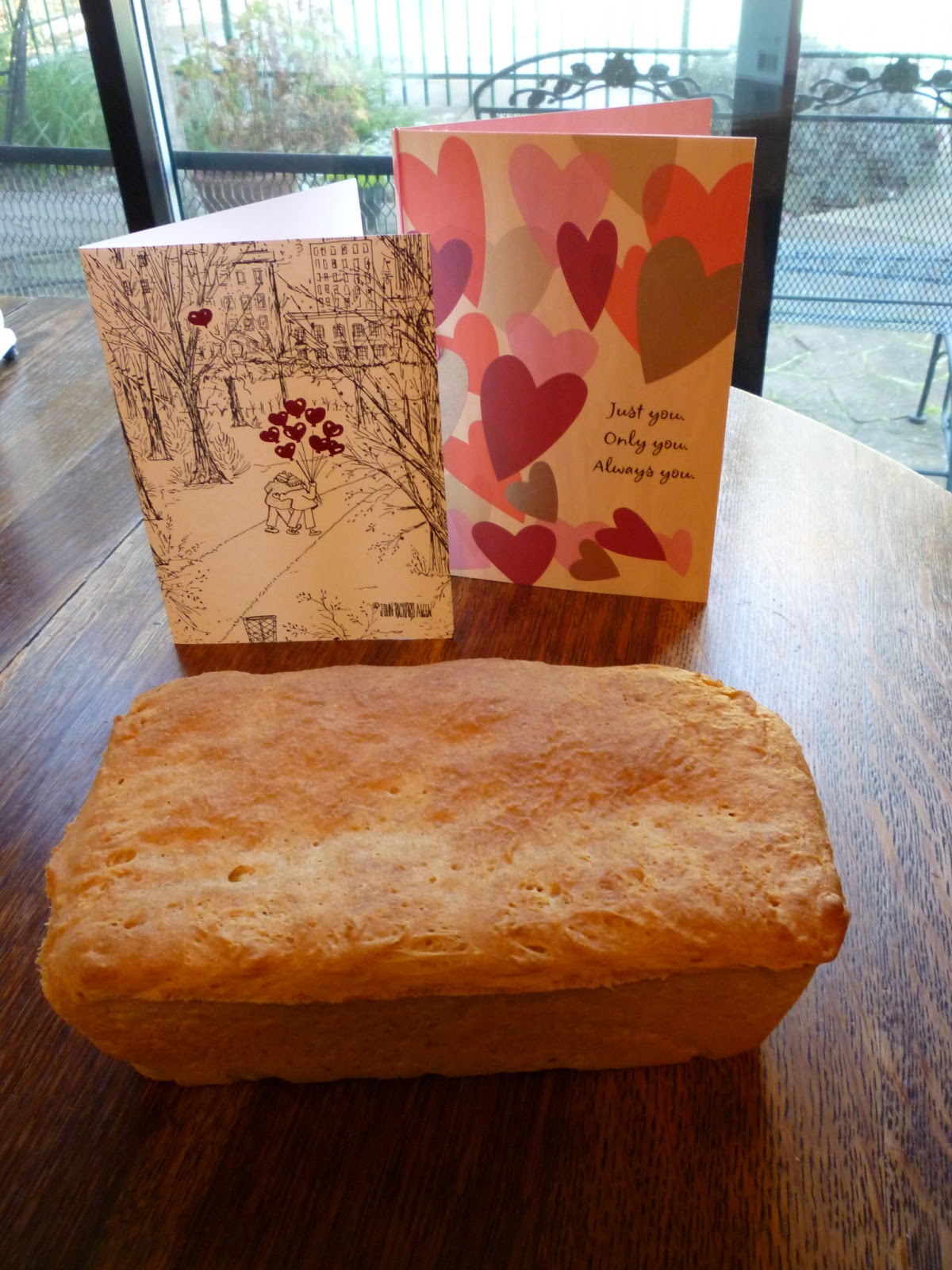
In the evening I put together shortbread dough so that on Valentine’s Day I could cut out heart sweets for my honey. I used the Hearst Castle Shortbread recipe from 101 Cookbooks. Have you seen Hearst Castle? I went there and other places with my 8th Grade class on our Spring outing and don’t remember a thing.

All day I had thought about whether any minute I should finish up the bread dough and put it into pans to rise…I planned to make this batch without adding any commercial yeast, the way I used to do at the beginning of my sourdough career. In those days it was the usual thing for the dough to proof in the pans for several hours before it had risen enough to put into the oven. A couple of times I’d let it go all night.

As it happened, it just didn’t happen until the evening, that I could manage to get to it, and add the rest of the ingredients, i.e. some olive oil and mostly white flour. I forgot to add any sweetening, and I wrote down to put in 1 tablespoon of salt. But did I do it?

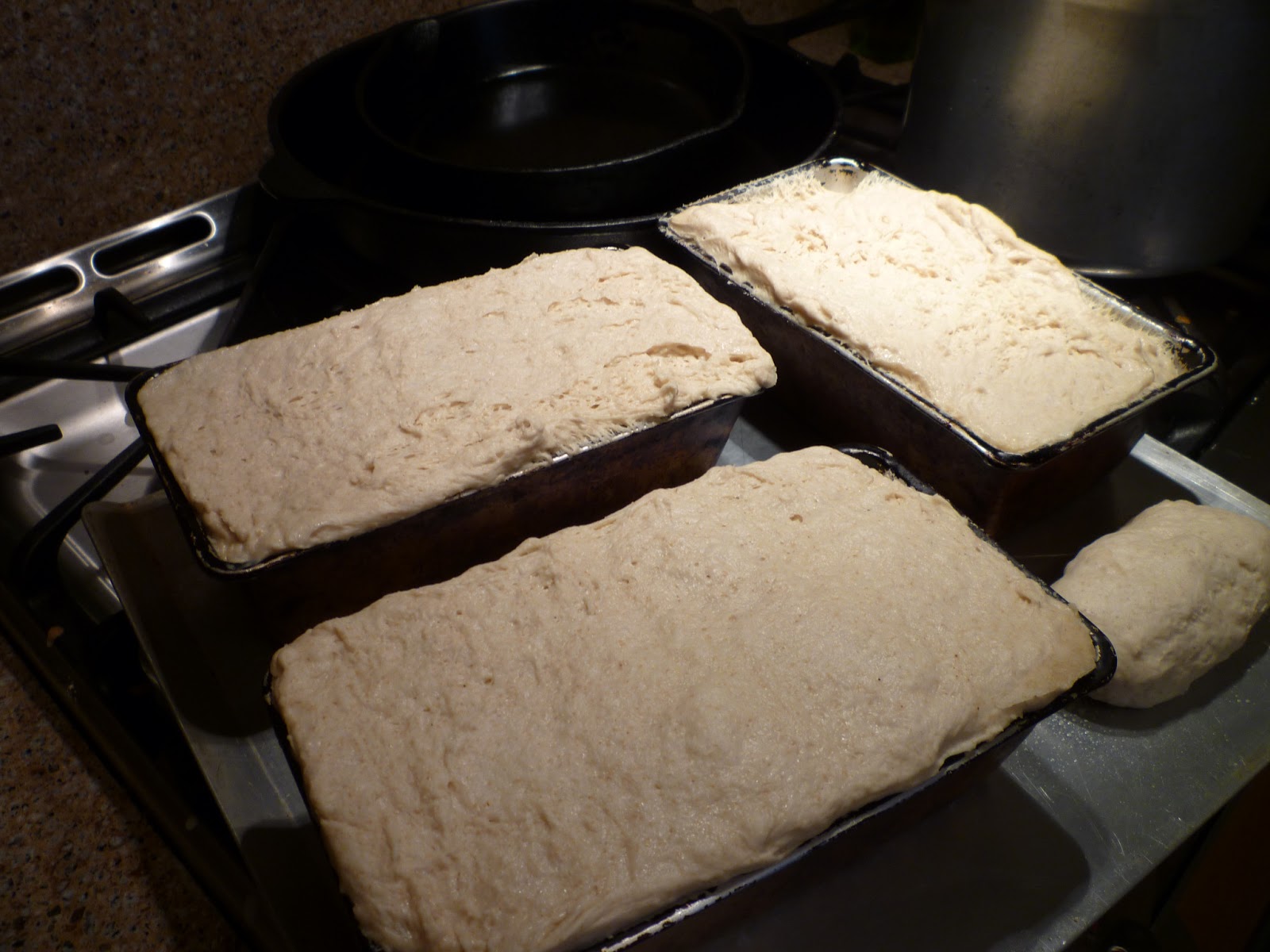
I shaped loaves and put them into three medium loaf pans on the counter. It was late by then, so I didn’t linger in the kitchen, but even in those few minutes before heading upstairs I saw that the dough was rising. Uh-oh. I was so tired, the clever idea of letting them rise in the refrigerator or in the cold garage never occurred to me. I went upstairs to crash.

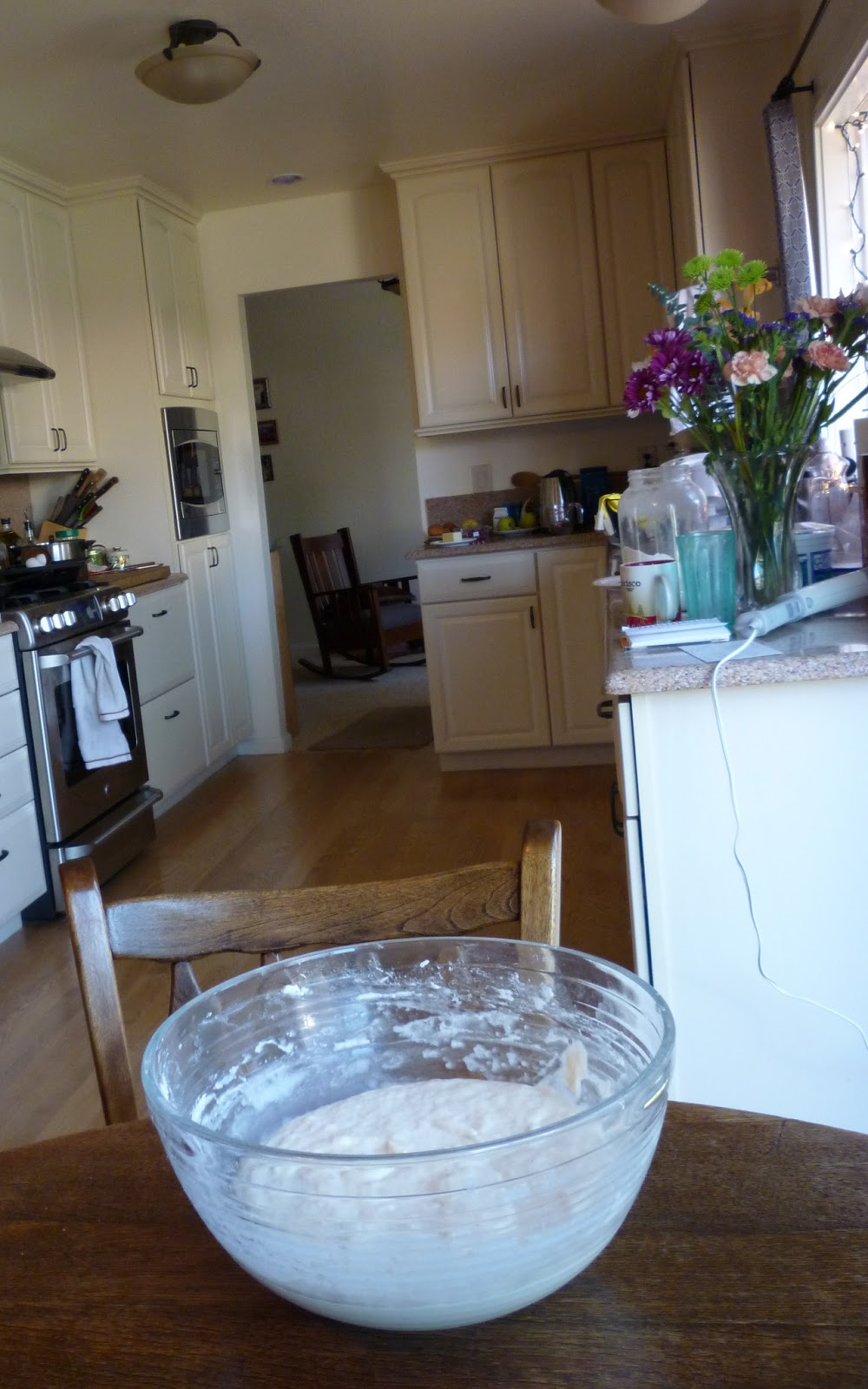
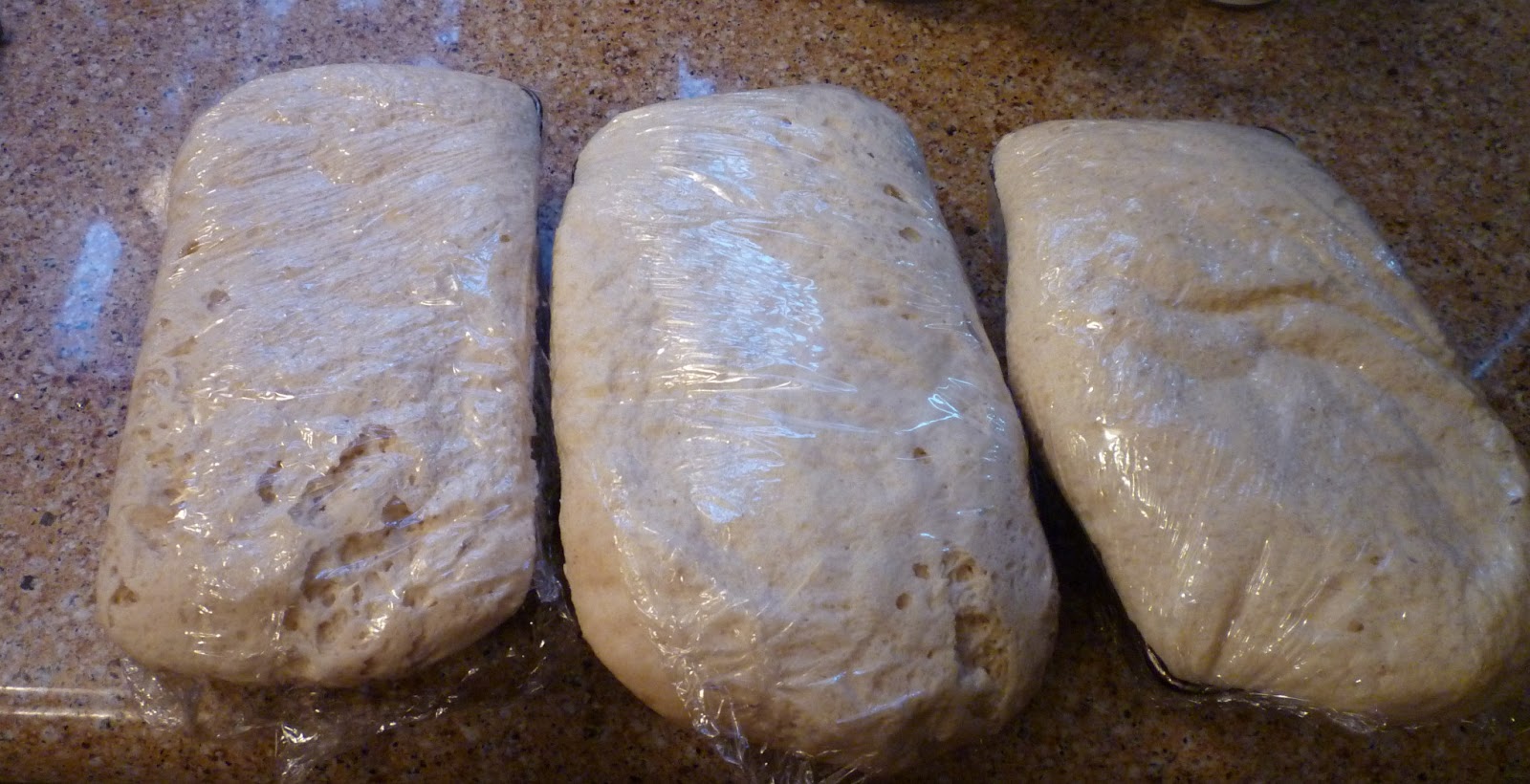
Next morning….as soon as I woke up I ran down in my nightgown to find this:

So there was nothing for it but to do this:
And get those loaves into the oven as fast as possible. The little loaf was made of the trimmed-off pieces of dough.

We were expecting our out-of-town friend Myriah for lunch, but I had plenty of time to make the cookies I’d planned, or so I thought. But the slabs of buttery dough were too firm to roll out right away, so while they softened up on the counter I searched upstairs and down and all over for the pink and red baking decorations I had recently bought. Nope. Not to be found.

Finally I cut out hearts, and sprinkled on the remainder of a bottle of pink crystals left from some long-ago Valentine project. The cookies took much longer to bake than the recipe said, perhaps because my cookies were larger and my cookie sheet was insulated. All through lunch with our good friend I jumped up and down from the table to check the cookies and slide a few more on to the racks.

Meanwhile, the bread baked 50 minutes, cooled a little, and was soon tasted. The tops were rough and ugly where I had peeled off the plastic wrap, but the crust was just the right crunchiness and the crumb was lovely — chewy and moist. My first thought, though, was that I hadn’t added enough salt to the dough. After eating several slices I’ve concluded that I completely forgot to put in any salt at all. No wonder the dough rose so fast!

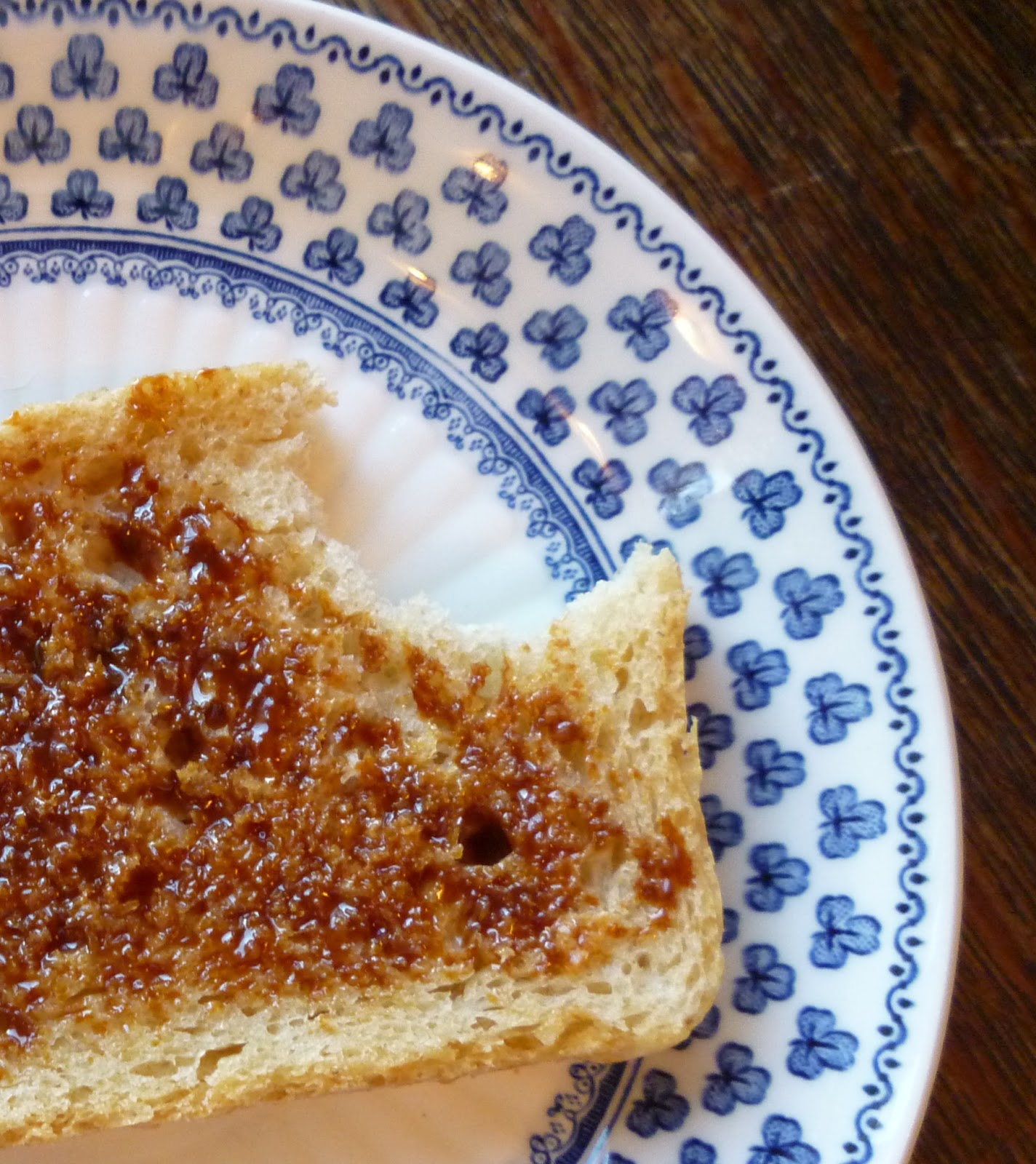
Myriah and Mr. Glad said they didn’t notice anything wrong with the sandwiches I made with the bread — they thought it was good. I’m eager to try doing pretty much the same method on a day when I have my wits about me. What to do with the Super Bland Sourdough? It’s perfect with Super Tangy and Salty Marmite spread on it.

Myriah brought some Crockpot Peanut Clusters that she and her daughters had made. They call for dry-roasted peanuts and the saltiness with the chocolate was addictive. The shortbread was heavenly. We ate plenty of both, no doubt out of salt-deprivation. The fact is, the flavor of sourdough does not come through without a little salt and maybe even a little sugar in the mix.

I didn’t think of taking the cookies’ photograph until I had put most of them into the freezer to have handy when Mr. Glad wants just one cookie, so I took out the container again so you can see them all piled up in it.

Am I not the maddest sourdough scientist you ever heard of? I should be embarrassed to tell this story, but instead it makes me laugh. I am strangely unflappable — I even considered starting another sponge today, but I got a grip on myself and even cleaned the kitchen before writing my tale.

Accustomed to Tepidity

In the West, Lent begins this week with Ash Wednesday. In the Orthodox Church, we don’t begin until March 17 this year! Pascha is May 5th, more than a month after Western Easter. It seems to me this would make it convenient for you who celebrate The Resurrection of Christ the last day of March to visit an Orthodox church near you on May 5th to experience the Feast of Feasts in its glory, in a way you won’t find elsewhere. But I’ll remind you when we get closer to that date.

For now, I want to re-post from almost three years ago a long quote that seems appropriate for Lent, or for any day or hour when needed.

From Father Moses of the Holy Mount of Athos:

An offspring of [the sin of] pride is censure, which is unfortunately also a habit of many Christians, who tend to concern themselves more with others than themselves. This is a phenomenon of our time and of a society that pushes people into a continuous observation of others, and not of the self.

Modern man’s myriad occupations and activities do not want him to ever remain alone to study, to contemplate, to pray, to attain self-awareness, self critique, self-control and to be reminded of death. The so-called Mass Media are incessantly preoccupied with scandal-seeking, persistently and at length, with human passions, with sins, with others’ misdemeanors. These kinds of things provoke, impress, and, even if they do not scandalize, they nevertheless burden the soul and the mind with filth and ugliness and they actually reassure us, by making us believe that “we are better” than those advertised.

Thus, a person becomes accustomed to the mediocrity, the tepidity and the transience of superficial day-to-day life, never comparing himself to saints and heroes. This is how censure prevails in our time – by giving man the impression that he is justly imposing a kind of cleansing, by mud-slinging at others, albeit contaminating himself by generating malice, hatred, hostility, resentfulness, envy and frigidity. Saint Maximos the Confessor in fact states that the one who constantly scrutinizes others’ sins, or judges his brothers based on suspicion only, has not even begun to repent, nor has he begun any research into discovering his own sins.

Thanks to the rector of our parish for posting this passage in the church bulletin.