Category Archives: movies

Thinking about babies and Barbie.

As I may have said here before, I have probably watched fewer movies than anyone you know. So I don’t often mention them. The two I saw most recently were “My Octopus Teacher” and “Babies,” both of which I’ve enjoyed more than once. I watched “Babies,” a 2010 French documentary, with my four-year-old grandson just last month. Its subjects are four babies in their first year of life, in Namibia, Mongolia, Tokyo, and San Francisco.

I very much love that movie, for the meditative and close-up way it shows vastly different styles of mothering across cultures and around the world. I admit, my own style doesn’t exactly fit with any of those shown, but if I had to choose among the four, I feel most akin to the Mongolian way. In any case, all the families in the movie are pretty traditional for the local culture in which they are raising their children.

The contrast between that movie and the current one everyone is talking about, “Barbie,” didn’t cross my mind until I read this article in Salvo Magazine“Existential Barbie: A World Without Love is Never Kenough,” by Annie Brownell Crawford. The author starts with a brief introduction:

“The plot begins when Barbie suddenly starts thinking about death, her feet fall flat, and she discovers cellulite on her thighs. To solve her existential crisis, Barbie travels to the real world with her unwanted Ken tagging along. When she arrives in California, Barbie is shocked to discover a world of exaggerated patriarchy where men think of her as an object and girls hate her for her beauty. Here, as the teen character Sasha explains, ‘Men hate women, and women hate women.’

Crawford notes that “the film moves chaotically between satire and sincerity,” and she wouldn’t be quick to draw conclusions from the above statement alone, but there are reasons to think it was meant seriously. So she responds,

“Modern feminists seem to hate women as much as they believe men do, for the female body confronts all of us with our intrinsic dependence on one another and ultimately upon God. As the apostle Paul reminds us, ‘woman is not independent of man, nor is man independent of woman. For as woman came from man, so also man is born of woman. But everything comes from God.’ (I Corinthians 11)  We only know ourselves as women and as men through our relationship with each other, and we only know ourselves as humans in relationship to the God we image. The female body reminds us of this interdependence and the givenness of our existence, for our mothers literally gave us life.”

Of course the biggest difference between these two movies is that one is all about babies, and the other one lacks babies entirely, except for the unfortunate baby dolls:

“The film opens with an origin story wherein the newly created Barbie rescues little girls from being forced to play with baby dolls. After independent, infertile Barbie arrives, the young girls of the world celebrate their liberation from motherhood by smashing their babies to bits.”

I’m not enough of a movie buff that I am likely ever to see “Barbie,” but if I did, I might afterward go on to read some of the critics who are saying that if you dig deep through those layers of irony and satire, it’s actually anti-feminist and conservative in its message. Maybe how you feel about that depends partly on what you think The Patriarchy is. Is Ken in or out of it?

I wonder if Kimberly Ells has seen “Barbie”…. She attended the Commission on the Status of Women at the United Nations this spring and heard much about the desire to “smash” and “eradicate” the patriarchy; so she started asking around at the event, What is The Patriarchy, exactly? She wrote succinctly about the answers she got in this article: “In Praise of Men.”

I’d be interested to hear if any of my readers has thoughts about these movies or the questions raised by “Barbie.” And if you haven’t seen “My Octopus Teacher” or “Babies,” I definitely recommend those!

A Mongolian mother and child.

Forest and cookie critters.

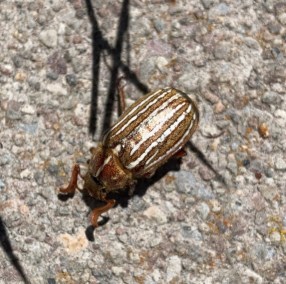
June beetle on the Deadfall Trail

I forgot to show you the summer “bugs” I saw on my trip last week. I know you wouldn’t want to miss them, so I’ll put them at top here. Also so that I can have a flower or something more traditionally pretty at the bottom.

They were all the large size of insects that I only ever see when camping or in the forest, and Pippin does live in the forest. As soon as I would step outside in the early morning my senses took me to mountain camping trips, where the air at the beginning of the day is cool and dry and piney.

Robber Fly


One 95-degree midday Ivy called me over to see a creature resting in the shade on the tree swing. It was a surprisingly still subject, which enabled me to identify it as a Robber Fly. And the morning that I departed, a huge Western Sculpted Pine Borer landed on Pippin’s arm. She brushed it off and then collected it on a paper, where it sat, possibly stunned, and posed.

Western Sculpted Pine Borer
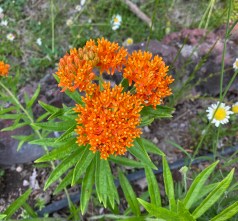
Butterfly Milkweed

My first morning we found a chipmunk on the front doorstep, which a cat had brought as an offering. The second day the sliding door would not shut, and the children and I finally figured out that a dead mouse was jammed between the two doors. I could not access it to get it out, but when she got home Pippin managed after laboring with a yardstick. The next morning another mouse was left at that back doorstep, which I disposed of. Four cats live with the family and at least two are hunters.

We watched “My Octopus Teacher” one night. Have I already mentioned that movie? I also saw it with my Colorado children last summer, and like it very much. I’ve heard a couple of people say that they wish there were less of the narrator and more of the octopus, but if it weren’t for the narrator-photographer, who visited the octopus nearly every day for a year, there would be no story. He had to tell it in his way.

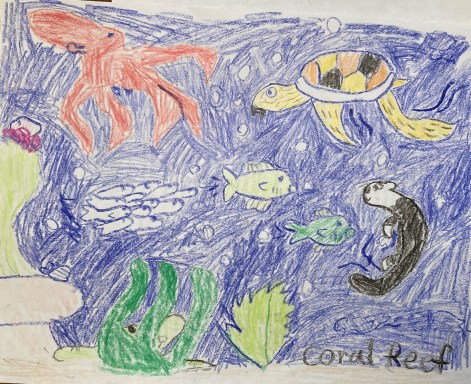
As it is about how the whole experience of interacting with the octopus helped him move into a healthier life and frame of mind, I have to take it as it is, take the human subject as he is. Without agreeing with all of his presuppositions about nature, I very much appreciate that his relationship with the creature was thrilling and healing. Ivy declared that it is her favorite nature movie. Over the next several days she drew one picture after another of ocean landscapes.

Often the children would draw while I read to them, and I read for at least an hour every evening before bed. Mostly this time I read from The Little Bookroom by Eleanor Farjeon. I gave this book to my grandchildren a few years ago, thinking it was an anthology she had compiled of others’ works. But no, all the stories are by Farjeon herself.
They are the most unusual children’s stories I’ve ever read, a combination of fairy tale style with more realistic everyday happenings, and silly stories that make us laugh and laugh. But all happy hearted, and many brimming with pure Goodness. If Scout had not been away at Boy Scout Camp, he would have insisted that we read “The Princess Who Cried for the Moon,” a very long story about a whole kingdom of people who don’t have their thinking caps on.

Eleanor Farjeon

I still haven’t read the whole lot, but I did notice that the last entry in this edition is not a story by Eleanor but a piece titled, “Tea with Eleanor Farjeon,” by my beloved Rumer Godden. I read that one aloud, too, and Ivy was interested but Jamie drifted away. Eleanor sounds like the sort of old lady I would like to be. I wanted to quote from Godden’s article, but I can’t find my own copy of the storybook at the moment.

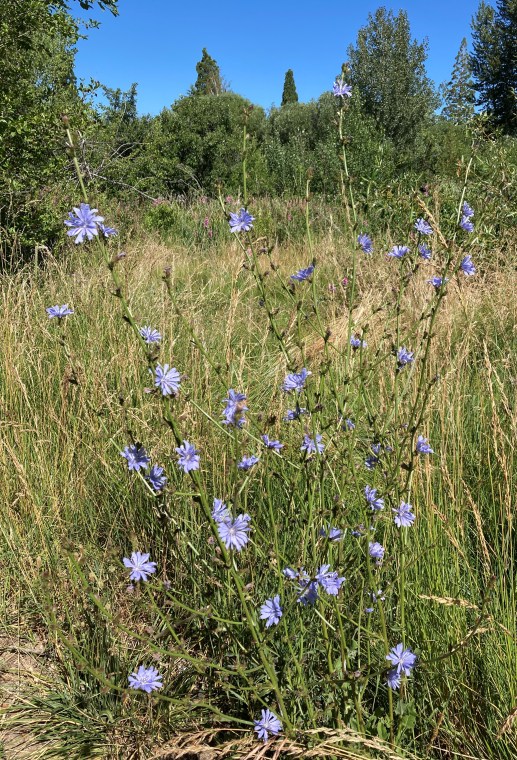
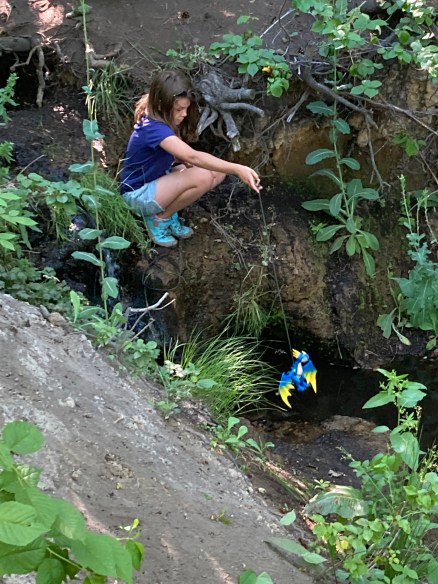
I spent six nights  last week at Pippin’s Mountain Homestead, longer than any other visit. That gave me time to go with the children to the library and to have a breakfast picnic in their favorite park that features a tiny waterfall and “jungle.” Ivy made her dragon to fly over the creek, and I discovered chicory and more.

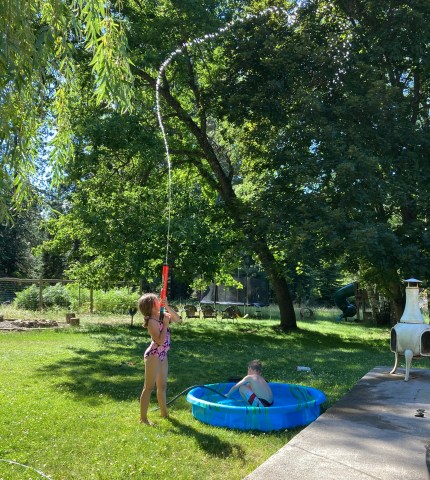
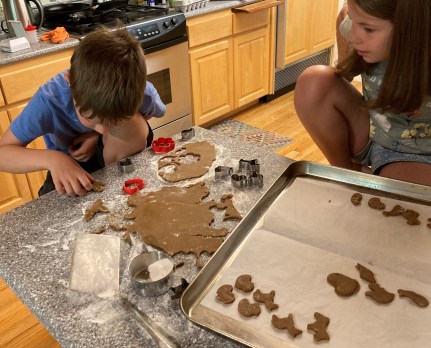
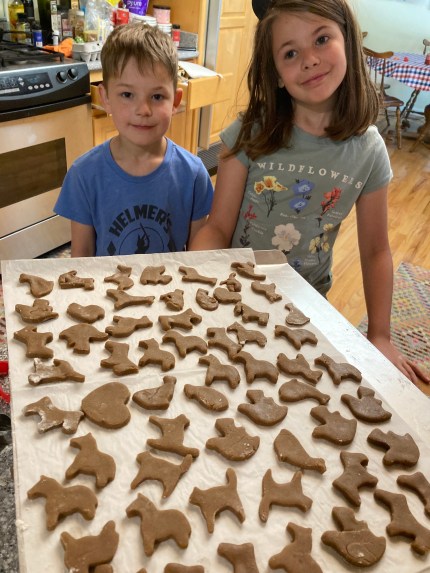
There was lots of water play in the back yard, resulting in burned shoulders. And a big batch of gingerbread for cutting out with my new tiny animal cutters.

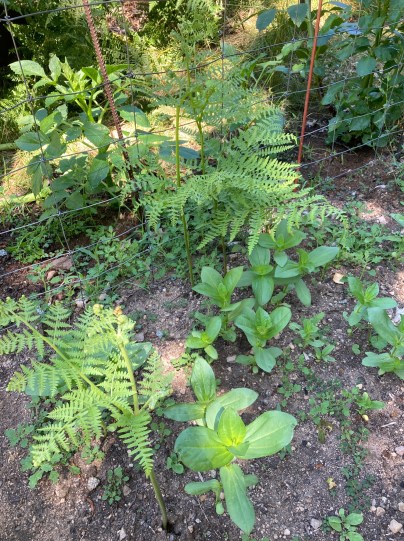
I suppose it’s because Pippin’s garden in the middle of the forest gets extra water, that the ferns constantly encroach. I was watering the new zinnia and dahlia sprouts and wondering at the robust ferns still popping up everywhere. They push against the deer fence that surrounds the vegetable and dahlia enclosure, and try to colonize the whole inside space, too.

Where I pulled out a few fronds to let sunlight on to a strawberry bed, we saw that frogs had been living among them. And while I aimed the hose at small flower plants, Duncan cat lay nearby in his cool and ferny hideaway and begged me to leave that colony as is. And for now it remains, another corner of the estate hospitable to critters.

Maggie and I share stories.

P1010081 crp
grevillia


Now that Pearl’s family has moved to California, I have nearly half of my grandchildren within an hour and a half’s drive. It was so easy to pick up Maggie on the way home from the mountains, and to bring her here to spend almost a week with me.P1010015P1010096

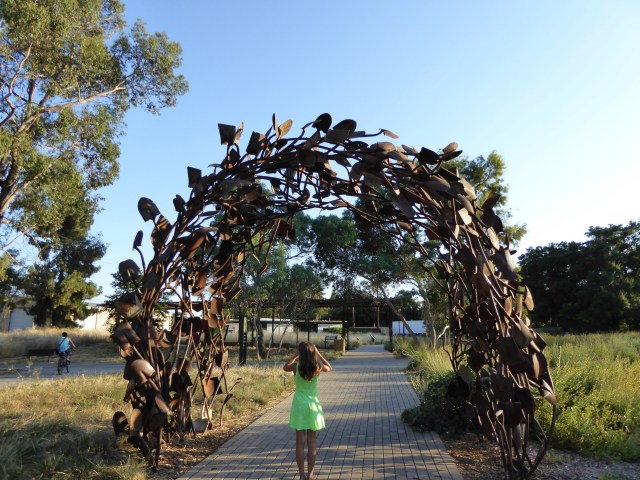
First, though, the evening I arrived, her mom took a few of us to the Arboretum on the University of California campus in their town of Davis, so I could check out some of the many plants with low water needs. A rustic and rusty arch of shovels signals the beginning of this part of the gardens, with wide plantings of grasses and native California plants leading on into the Australian section, which is what I was most interested in. I have noticed in books that a lot of striking and unthirsty species come from Down Under.

Maggie had her camera, tP1010093oo, and found families of ducks to take pictures of. We didn’t spend too long, but I managed to take many pictures with identifying signs next to the plants that I liked, so I didn’t have to take the time to write down names.
I’m only posting a few of those, of the nicest looking, which I wouldn’t mind having in my new garden if I can find them in nurseries.

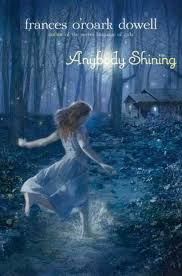
The next morning Maggie and I drove off to my town. I had downloaded Anybody Shining by Frances O’Roark Dowell from Audible on to my tablet so we could listen on the way home, which we did for about an hour, Maggie in the back seat because she’s a lightweight. We shopped that afternoon and evening, to resupply my fridge, and we watched “Cheaper by the Dozen,” under blankets on the couch.

P1010115

Shopping took a lot of our time during the next few days, because we were planning a tea party that we held last Saturday, and also were having company on Sunday. Giving the tea party was the focus of our time together; Maggie came up with several good ideas before we even got home.

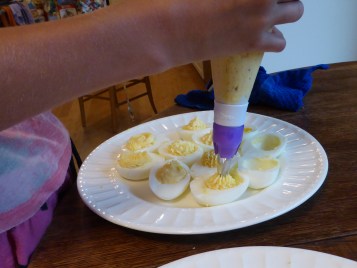
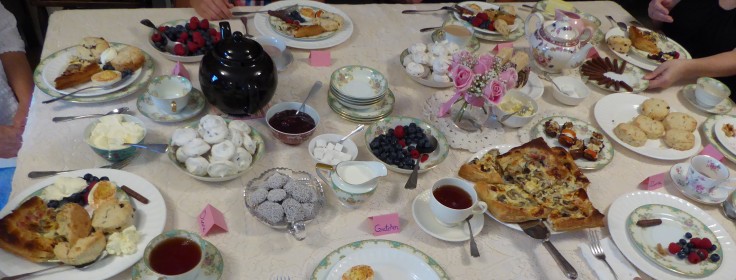
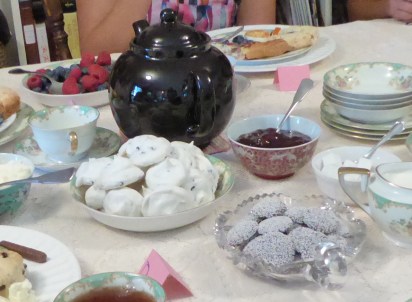
We planned and shopped and cooked and in the end we served: deviled eggs and mint chocolate chip meringues made by Maggie; two kinds of P1010119 crpscones with jam and creme fraiche; chocolate pastilles; ham and Swiss quiche made on puff pastry; fresh blueberries and raspberries; chocolate orange sticks; some fancy chocolate and sprinkle-dipped Rice Krispy treats we discovered on one shopping trip; and of course the tea, black and rooibos, and hot cocoa for little girls who preferred that. They all did.
P1010140 crp

Eight of us ladies whose ages spanned the decades down to four years old enjoyed our party very much.  My little goddaughter Mary, four months old, was also present but not enjoying the goodies. The conversation was edifying and stimulating. I sent scones home to the menfolk, and that evening Maggie and I ate leftovers. P1010142 crp

We listened to more of our book on the computer and came to the satisfying end. The next day Maggie mentioned it in her own blog post. It is about a girl about Maggie’s age, living in the mountains of North Carolina about a hundred years ago, and her desire to have a friend. The history and the culture of the mountain people are the background of the story, in the telling of which the protagonist Arie Mae expresses her good heart and charming wholesome self through letters she writes to her cousin in the city. The descriptor “shining” she applies to at least two other people in the book, but Arie Mae herself is the truly shining character.

I made Maggie pause the recording so that I could write down a wonderful word of advice from Arie Manybody shiningae – but could I find the paper I wrote on, just now? No! So I washed dishes and listened again to the last few chapters of the book till I could find the place again.

A sub-plot of the story is about the more educated people coming from the city to write down the songs and stories of the mountain folk, to start schools, to help them in various ways. One conflict concerns the dynamic of the outsiders coming in with their ideas and advice for the people who get the feeling they are not appreciated for who they really are.

The way Dowell ties this aspect of the story in with Arie Mae’s growing friendships is delightful. She writes to her cousin, “It takes time to get to know people. You got to listen to their stories, and you got to tell your stories back. It all goes back and forth, back and forth, until one day you turn into friends. Until that time, I expect it’s best to keep your opinions to yourself.”

My Maggie and I enjoyed more stories together during her visit, in the form of two more movies: First “Hook,” which we watched here at home. I find that story delightful, but I think Maggie at her age couldn’t enjoy the Robin Williams character as well as I. And maybe the lost boys were too familiar in their exaggerated annoying boyishness to a girl with three older brothers. Then we saw “Inside Out” at the theater. How wonderful to go out to a movie, just us girls. We even shared a bag of popcorn. I am liking this new phase of grandmotherhood!

Soon after the opening credits we were amazed to find out how perfect “Inside Out” was for us right now. The main character Riley has a few big things in common with my granddaughter: They are both twelve, and each has just moved with her family across the country to California. So many good ideas, so much wisdom is in this movie, I think I need to see it a few more times to be able to think about it more. Movies always go too fast for me, and there is a lot of fast action in this one, too, so that I found myself several times musing over the possible symbolic significance of an event – musing for a few seconds – and then another metaphor would interrupt me to suggest itself in the next scene.inside-out-

Riley seems to be at the mercy of her emotions in this story; you might even say that the emotions are the real main characters, as they try to manage her life to make it good. What seems obvious to the ringleader Joy is that Riley needs to be happy, so Joy is always working very hard to program the right thoughts and memories into Riley’s mind to make her happy. The other emotions eventually find out that they have a role to play as well.

Both Maggie and I were uncomfortable with the implication that Riley’s decisions were based solely on her emotions, but there is a lot of truth to the way the thousands of memories in her bank could be used to cultivate various emotions. I loved the image at the end of the movie, after Riley has connected painfully well with her anger and sadness, and the islands of Family and Honesty have seemingly sunk into the sea — she ends up in the arms of her parents, being comforted. She has grown up a lot in the recent weeks and months and is stroncross Maggie July 2015ger than before, and I’m sure her parents are wiser, too.

My granddaughter who was sitting next to me in the theater had decided a few months ago that she wanted to be baptized in her church before moving away. Back then I couldn’t get it together to celebrate such a happy event with her across the miles, so this week we went shopping for the present I wanted to give her, and found this lovely cross that we both liked. It is a symbol of Something  deeper than a memory or an emotion, the great Story of God’s love and our salvation. I’m so thankful He is with us and for us as we go through all the trials that accompany every stage of life. He is the only one who really knows us inside-out.