Category Archives: travel

A Thankful of Joys

Pearl’s sunroom

Firstly, I’m thankful for Jody who encouraged me today to think about what I am thankful for. It’s a perspective I need on a day when my prayers are all tending toward the “Lord, help!” sort and my mind is going along the lines of forty tangents. Because tomorrow I’m getting up at 4:00 a.m. to make my way toward the airport and fly to Maryland for a spell.

I’m thankful for
*family who want to have me with them
*resources physical and financial to make the trip
*a husband who is willing to do without me for the ten days

Today I’ll be flitting about trying to decide whether to pack the blue or brown skirt, making a batch of pasta with pesto for B. to comfort himself with in my absence, doing the last load of laundry, trying to get the house a little less pigpenny, and carefully loading my backpack for the travel, with the perfect selection of books, notebooks, snacks — well, maybe it won’t be perfect — and anyway, I might want to just sit in silence and be thankful for my own little private spot, jammed in next to a fellow human who is suffering the squeeze right there.

In my psyche I have been feeling the tearing away from home and church, and the homesickness that I always fall prey to before leaving home. But when I remember that every event has God in it, offering the grace of Himself in whatever work is before us, there is Joy for the taking.

Pearl in her yard 2 years ago

Today is the first day in a long while that I’ve had the whole day to be home and do my work — and so far it’s been mostly a slow labor of the mind and heart.  Maybe that’s one reason I’ve been able to process some of the truths and encouraging words I’ve been hearing, and put it all together so that I see my way clear. And it is clearly joyful!

I’m going to stay at Pearl’s, and spend time with four of the grandchildren, and see Kate and cherry blossoms. I’m taking snowball bush cuttings, books, and embroidery floss, among other gifts. We’ll go for hilly walks when it’s not raining, and I understand that I am to bake cupcakes with Littlest Granddaughter Maggie. Maybe we’ll watch the movie “Babies” that I love.

Once I arrive, it won’t feel like work, but there will be grace and peace. And I won’t be homesick again until the time comes that I have to leave them and come home. Isn’t it wonderful to have people to love?

Pacific in Pacific Grove

Seaside paintbrush

Counting my dear sons’ wives, which I very thankfully do, I now have five daughters. It’s sad to think how I spent several years complaining that I didn’t birth more children; during that time I never anticipated the familial wealth that in-laws can bring.

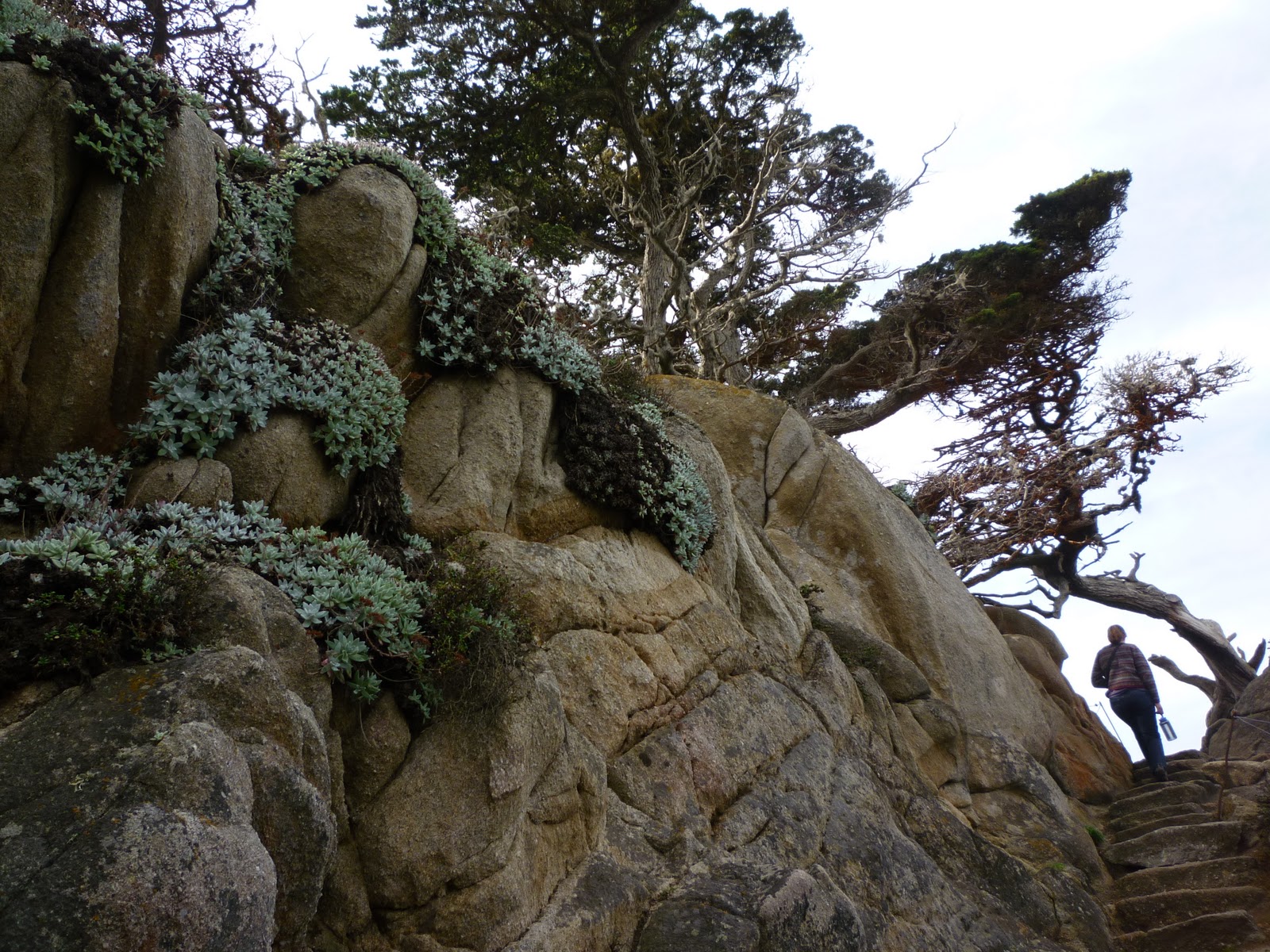
Point Lobos

In an effort to enjoy our family friendships we women spent a few months planning our first mother-daughter holiday. When continents stretch between, the grandchildren have pressing needs, and the young women pressing schedules, so it’s a tribute to our devotion that we even tried. In the end, only half of us, two daughters and I, were able to get together recently, on California’s Central Coast.

Seaside daisy

Pacific Grove was our home base. Every morning I woke with the feel of long-ago visits to my Aunt Margaret, whom I knew mostly in my teens. She lived in Carmel in a cream-colored house with white carpets, under a sky that was often white with fog or overcast, and the mood was so quiet. The sort of quiet that is filled with the sound of surf and the cry of sea gulls.

Our gathering of last week was a quiet group, too, in spite of our much talking, which I imagine was still on the low end of charts that might be made of all-women excursions, as we often stood in silent wonderment over our surroundings.

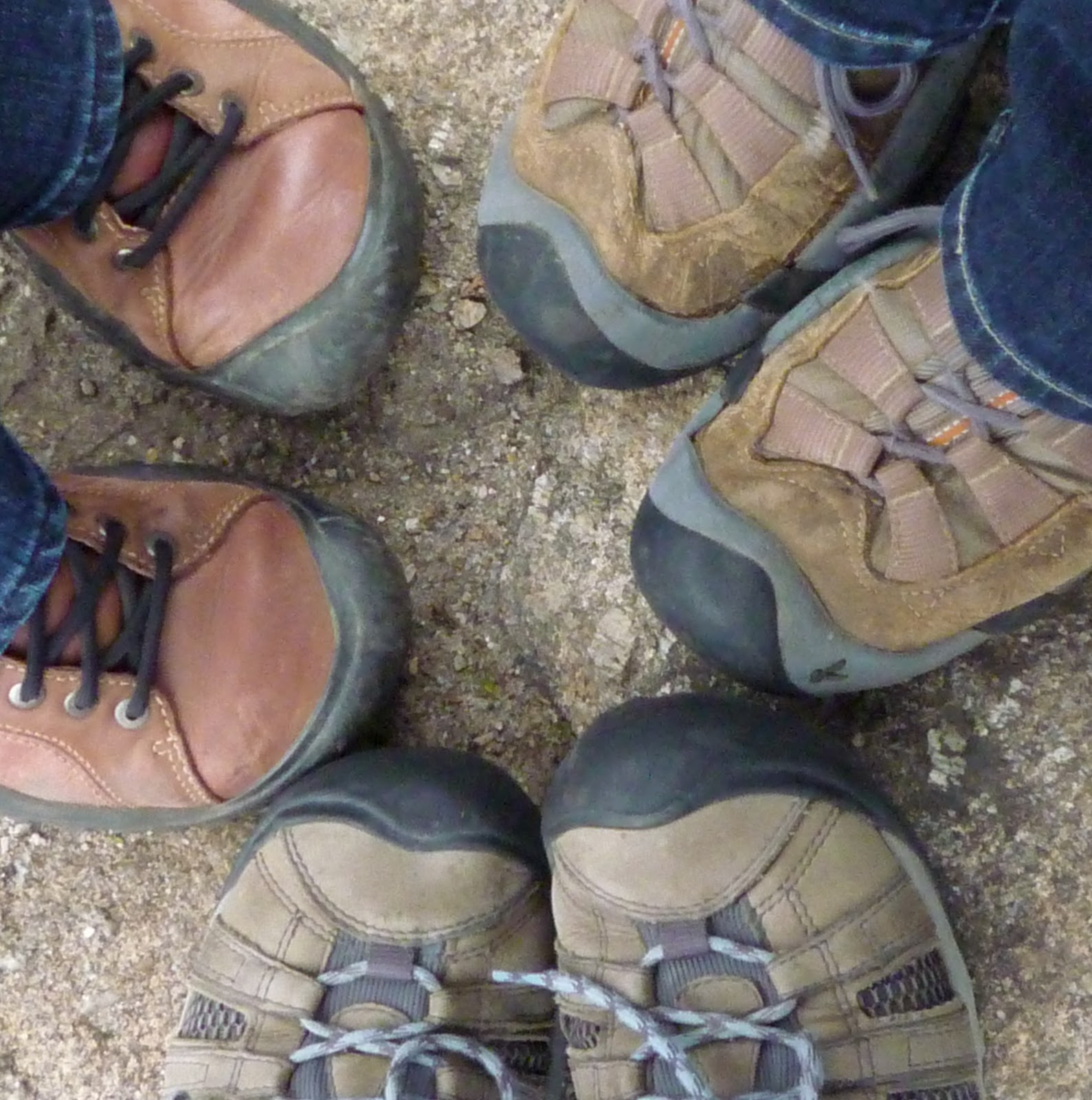
In our Keen boots — really, no one one had coordinated our foot attire, contrary to all appearances — we walked a lot, up and down the hills of Pacific Grove and Monterey and Carmel-by-the-Sea. And we looked at flowers and trees and birds and tried to identify them all.

Flower is California hedge nettle
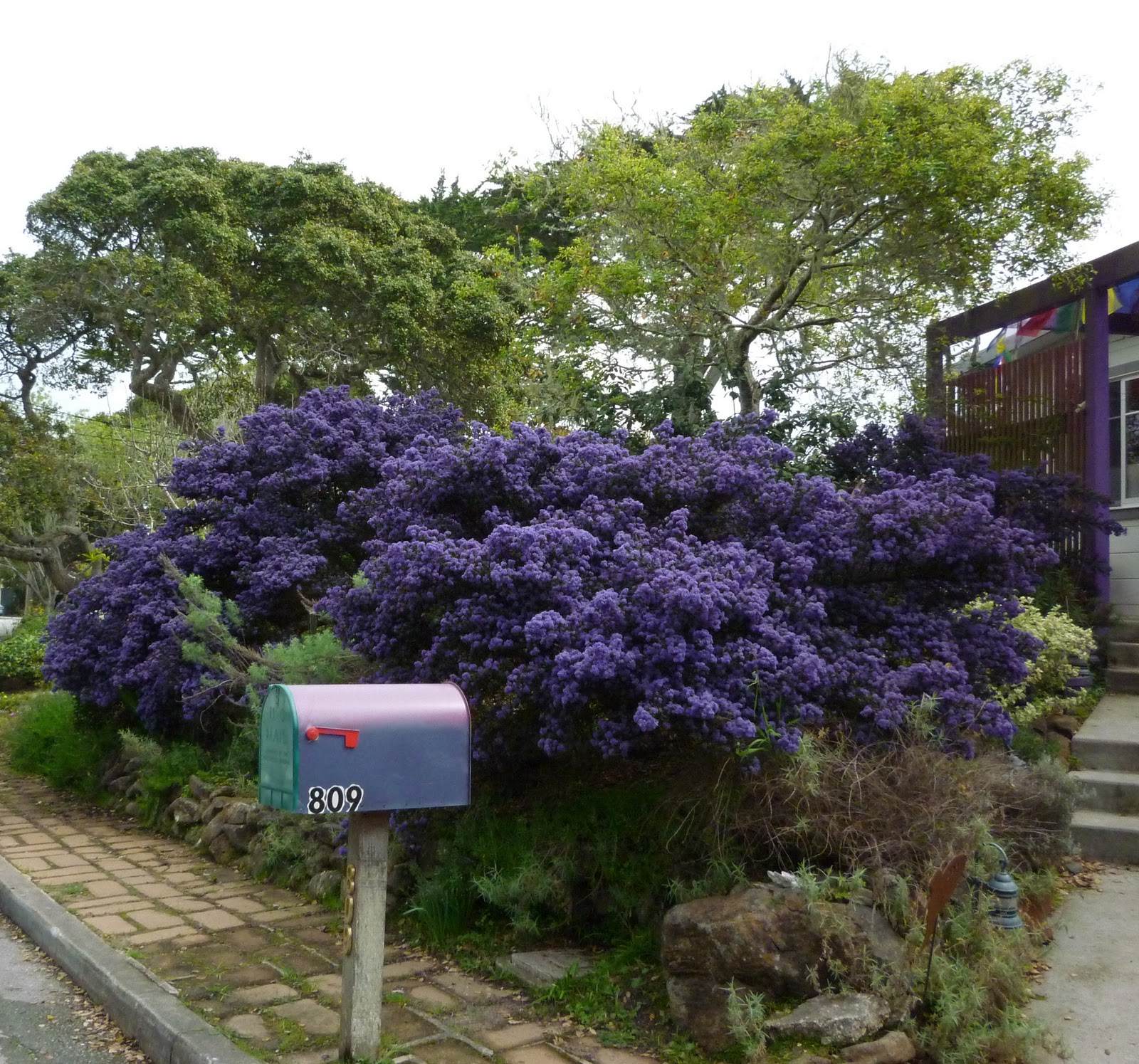
ceanothus in Pacific Grove

On Point Lobos especially the sweet smell of ceanothus blooms was filling the air, along with the buzzing of bees who were crazy over it. We liked the challenge of photographing busy bees. They liked how the pollen was offering itself to them on vast fields of stamens.

Carrying great loads of pollen
Protea behind Cannery Row
Lucky for us that Mrs. Bread showed us a Protea in her garden our first afternoon, so that we could guess their identities when we kept seeing them everywhere from then on. The genus includes a huge variety of forms that are really striking. I came home to find that our bottlebrush tree is not a Protea, however. Proteas seem to have come originally from the southern hemisphere, but they definitely like growing on this patch of the globe.

Behind Cannery Row murals have been painted along the bike path, evoking the culture and history that John Steinbeck depicted in his books. I liked browsing this lane better than the touristy shops which carry, as Joy pointed out, all the same stuff from China that touristy shops all over the nation carry.

Oh, except maybe the otter dolls. I was expending so much mental energy drumming up buyer’s resistance that I didn’t even think about how I could have taken a picture of one. There were three stuffed toy versions of the captivating creatures that we watched lolling and playing in Monterey Bay, and I can’t find one online that is as cute, to post here.

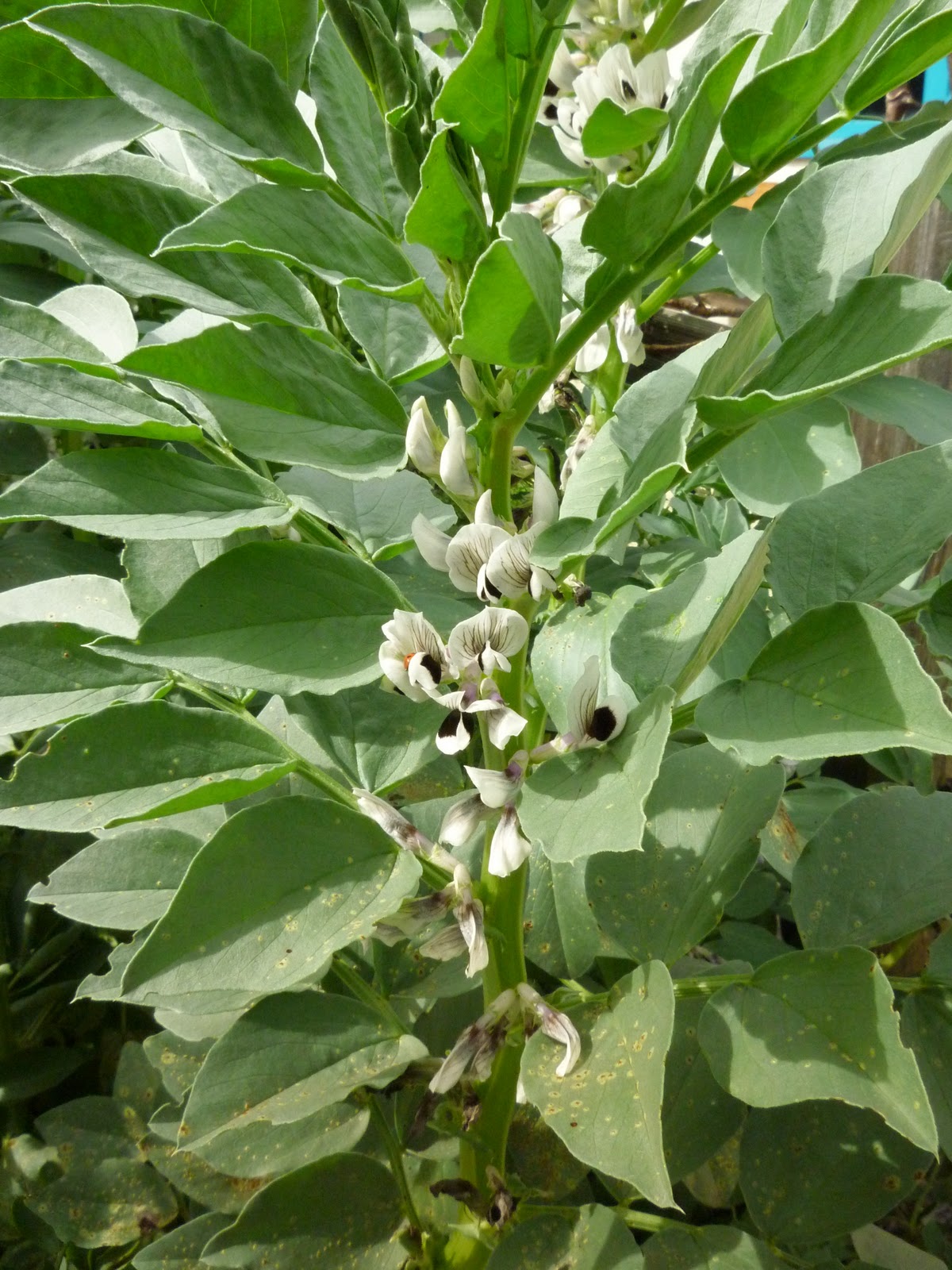
fava plant in bloom
While in Monterey it was quite fun to revisit the Cooper-Molera House so soon after our last visit, but long enough that the plants were further along in spring, as this fava bean plant with its black-and-white blossoms. There were even little bean pods forming lower on the plant.
Another Protea
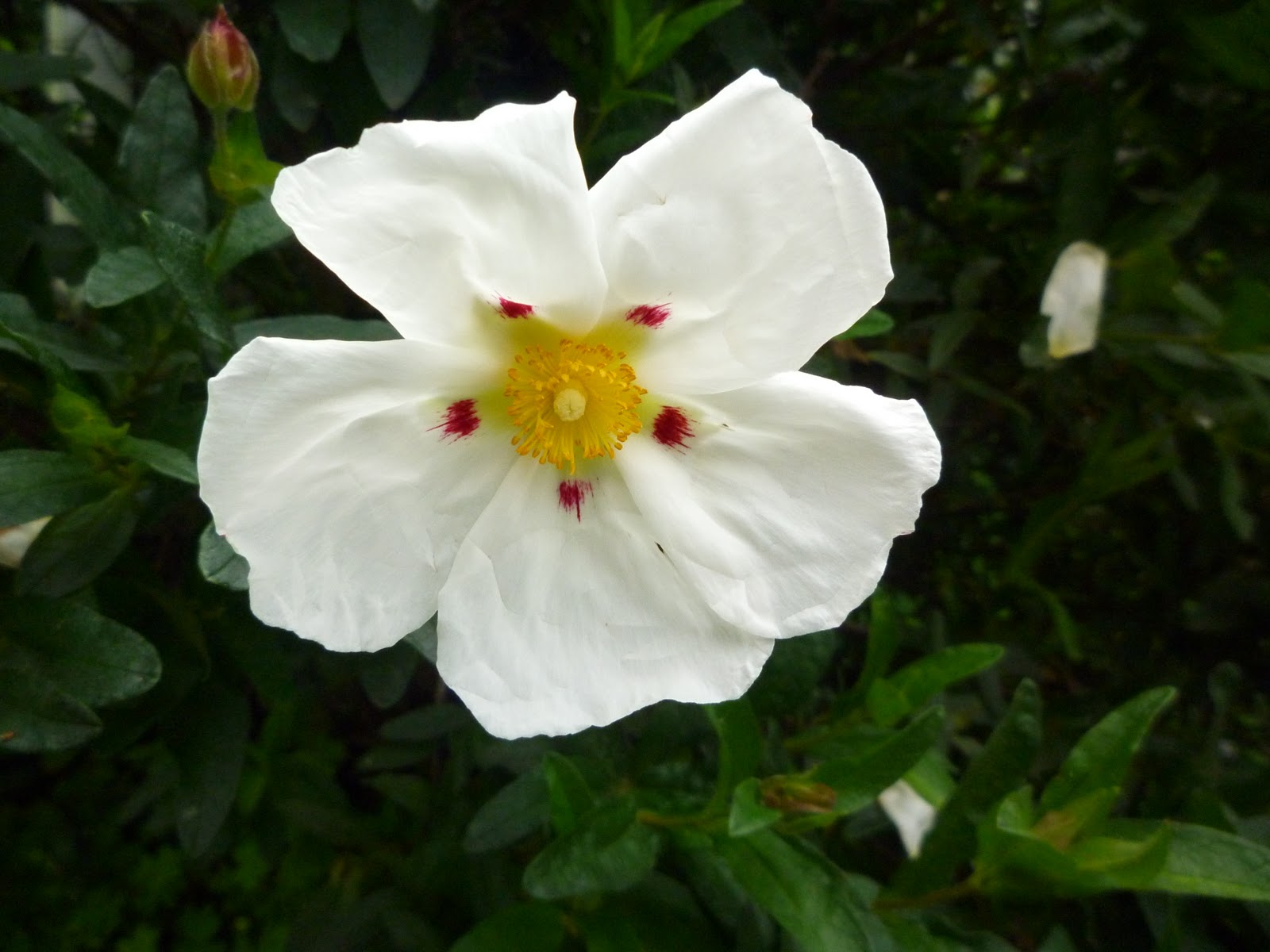
cistus
Pacific Grove is called Butterfly Town, because of the Monarch butterflies that migrate there every year. I’ve long had a vicarious and romantic attachment to the place thanks to the book by Leo Politi, and now it has become a direct relationship with the same feelings.
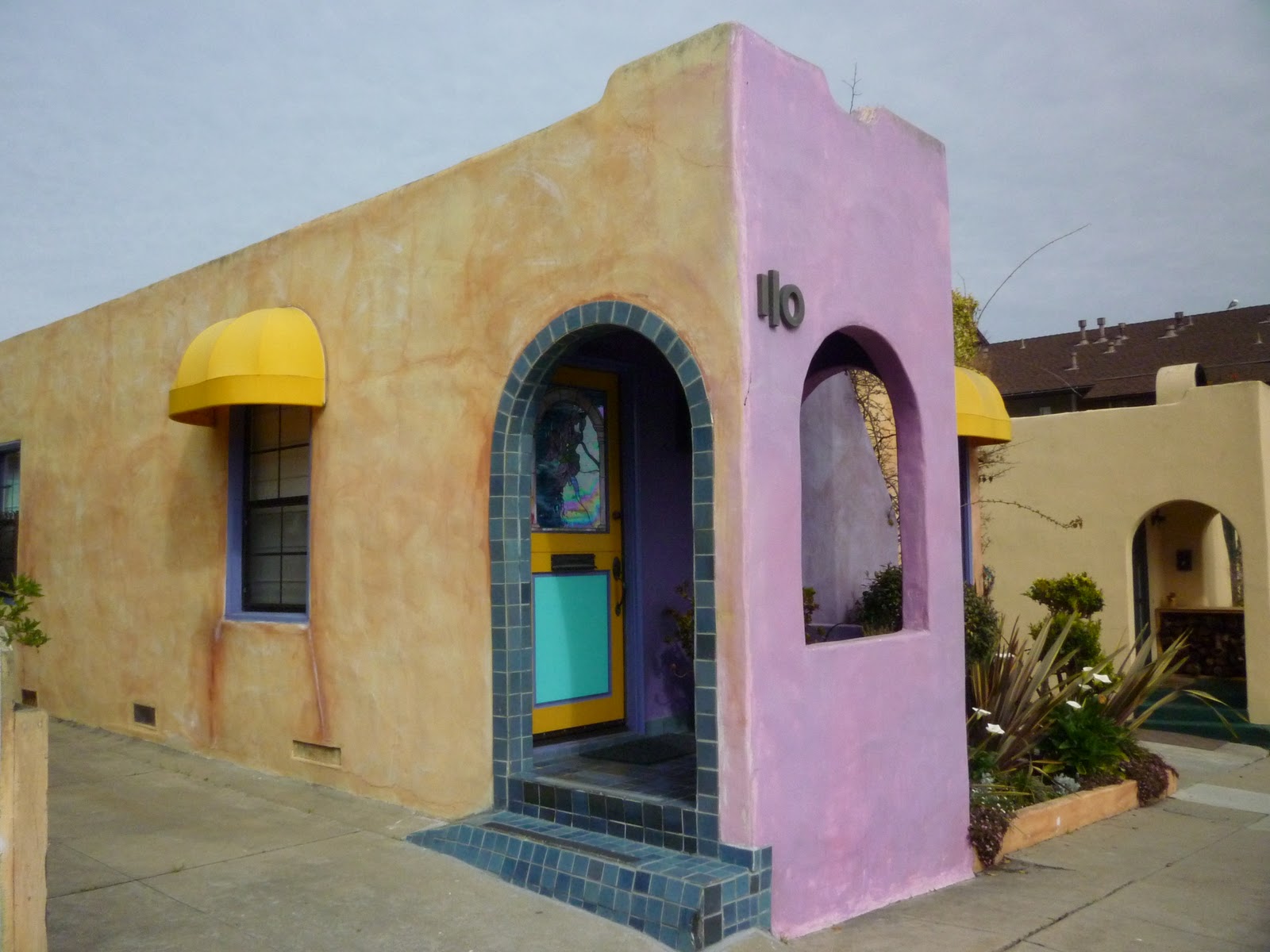
Updated adobe cottage in Pacific Grove

The weather we experienced was surprisingly mild in spite of frequent short showers of drizzle or light rain — but I might find it difficult to stay long where the sun doesn’t show itself often enough to keep the spirits up.

Flowers seem to glow more vividly under grey skies, though, and that makes up for the drear a little bit. People paint their houses in cheerful colors. And peace and quiet count for a lot.

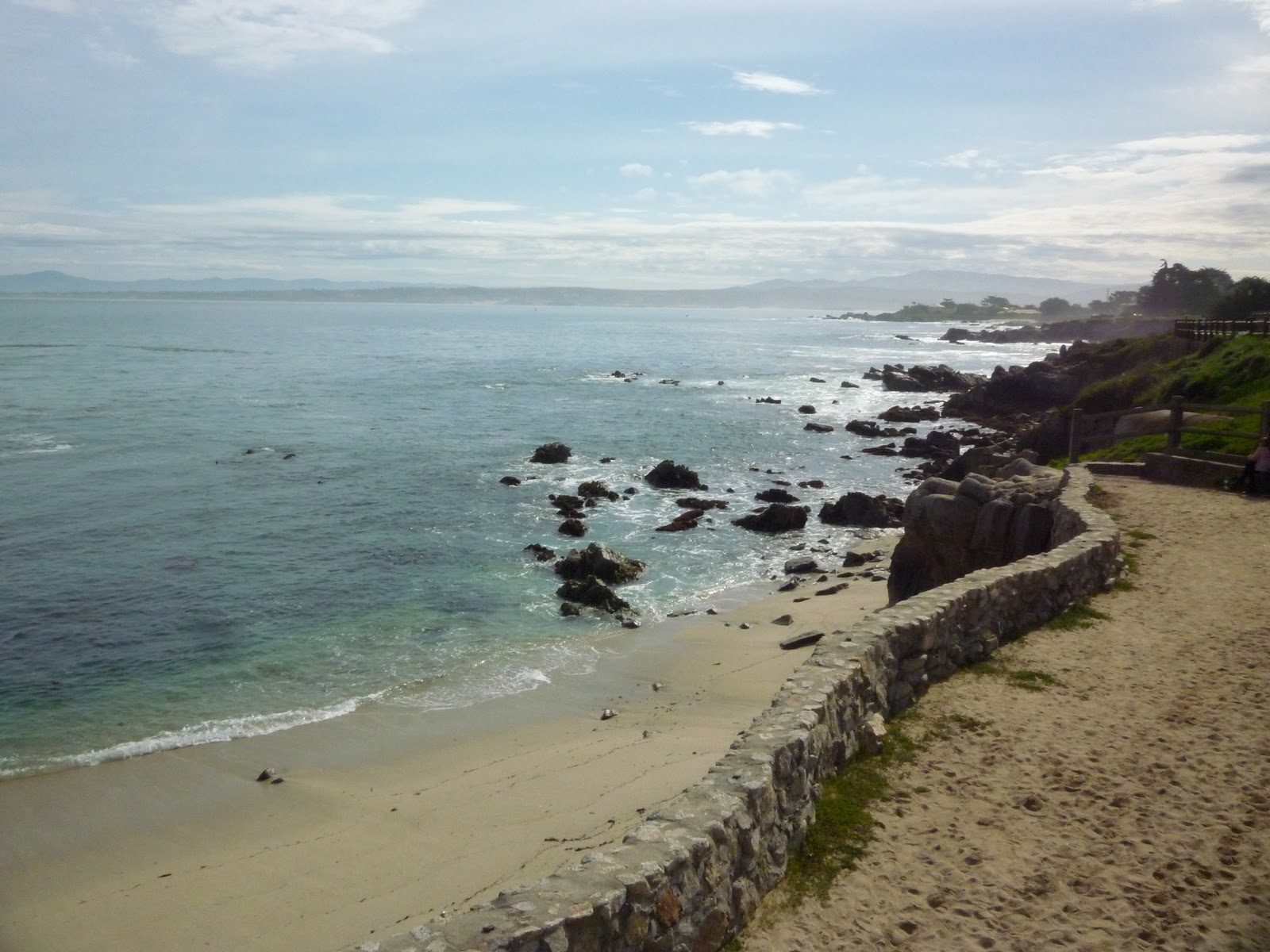
The Pacific Ocean is not always peaceful, but it was fairly calm this week. The tsunami from Japan didn’t make a big wave here. You can’t see them, but two otters are playing in this picture. And peace and serenity and love were all playing some quiet music in our hearts.

Chinese Tea Eggs

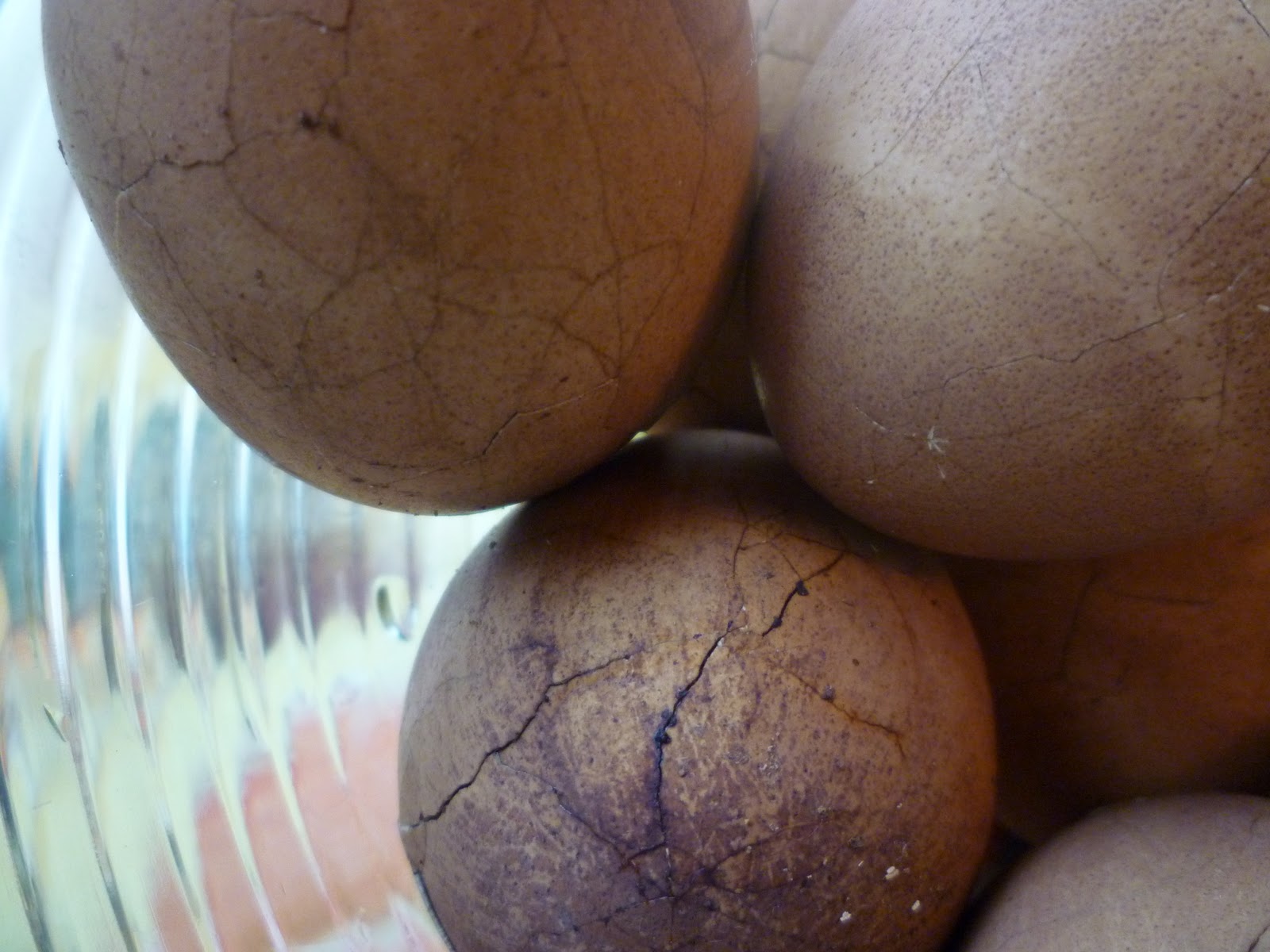
For more than 20 years a photograph of Chinese tea eggs sat in my recipe folder along with instructions for making them. By the time I got around to the project I couldn’t find the original article clipped from a magazine, and was inspired by reading on the Internet. One traveler said that in China a typical hiker will take along a sack full of these eggs the way American backpackers might put granola bars in their pockets.

Probably what stalled me was the thought that making hard-boiled eggs beautiful was only an aesthetic endeavor, and my creative efforts were applied elsewhere. But now I know that the interesting decorations on the eggs instill enough flavor to make them a complete snack without further additions.


I found lots of recipes, with few to many ingredients. The only constant is some tea leaves and salt. The first time I added orange peel, and used what seemed like an extravagant amount of soy sauce, but after perusing enough recipes and eating the results of that first batch, I decided that I could make a nice tea egg while using up some things that I have sitting neglected in the cupboards.

The flavor is so subtle, I’m pretty sure any elaborate recipe and combination of spice would be wasted on me. I don’t see how you could go wrong adding too much or too little of anything, except for the salt. Some spices that were included in many recipes were star anise, cinnamon sticks, peppercorns, cloves, and ginger root.

I used less soy sauce and more salt, and to make up for the loss of color from the soy, I added more tea leaves, because I had some loose black tea sitting around. Jasmine green tea is on my mind to try in the future. Instead of the cinnamon stick and star anise that I used the first time, I added a simple spice combination that I haven’t needed for anything else lately.

Here is the current recipe:

Chinese Tea Eggs

–One dozen large to extra-large eggs – but however many you can fit in one layer in your pot, they will all get the same benefit of the flavors in the broth. One can make a smaller batch in a smaller pot, and reduce the amounts, but I personally didn’t want to bother with fewer than a dozen.
–enough water to cover eggs
–4 tablespoons soy sauce
–1 teaspoon sugar
–1 tablespoon salt
–2 tablespoons Chinese 5-spice powder
–4 tablespoons black tea leaves (or use some tea bags)

Put the eggs in a pot in one layer, and cover with water. Bring to a boil, then lower heat to simmer for 3-4 minutes. (Most recipes cooked the eggs firm at this point, but the first recipe I read interrupted here, so I am following that practice, though it can’t be crucial, as the eggs will be overcooked by most standards by the end. Yes, they will have green on the yolk!)

Remove eggs from heat and allow them to cool a bit before handling; you can run them under water to speed cooling. Take the back of a knife and crack the eggs as evenly as possible all around.

Put the eggs back in the pot and add all the other ingredients. Bring to a boil again, then simmer for 1-3 hours, adding water if the level gets too low. The color and flavor will deepen with longer immersion. Remove from heat and serve as a snack or as an addition to rice or noodles.

If you have room, you can also leave the eggs soaking in the broth in the refrigerator overnight.

Last time I went on a road trip, I took along a couple of hard-cooked eggs to have when I stopped for lunch. But because I had forgotten to bring any salt to add, I didn’t eat them after all. I know, too fussy. Now that I’ve learned how to make these pretty eggs that have the flavor and just the right amount of salt all locked in, I’ll be more ready for picnics, and have an elegant alternative to the rustic method of salt sprinkling.

New Friends on the Way

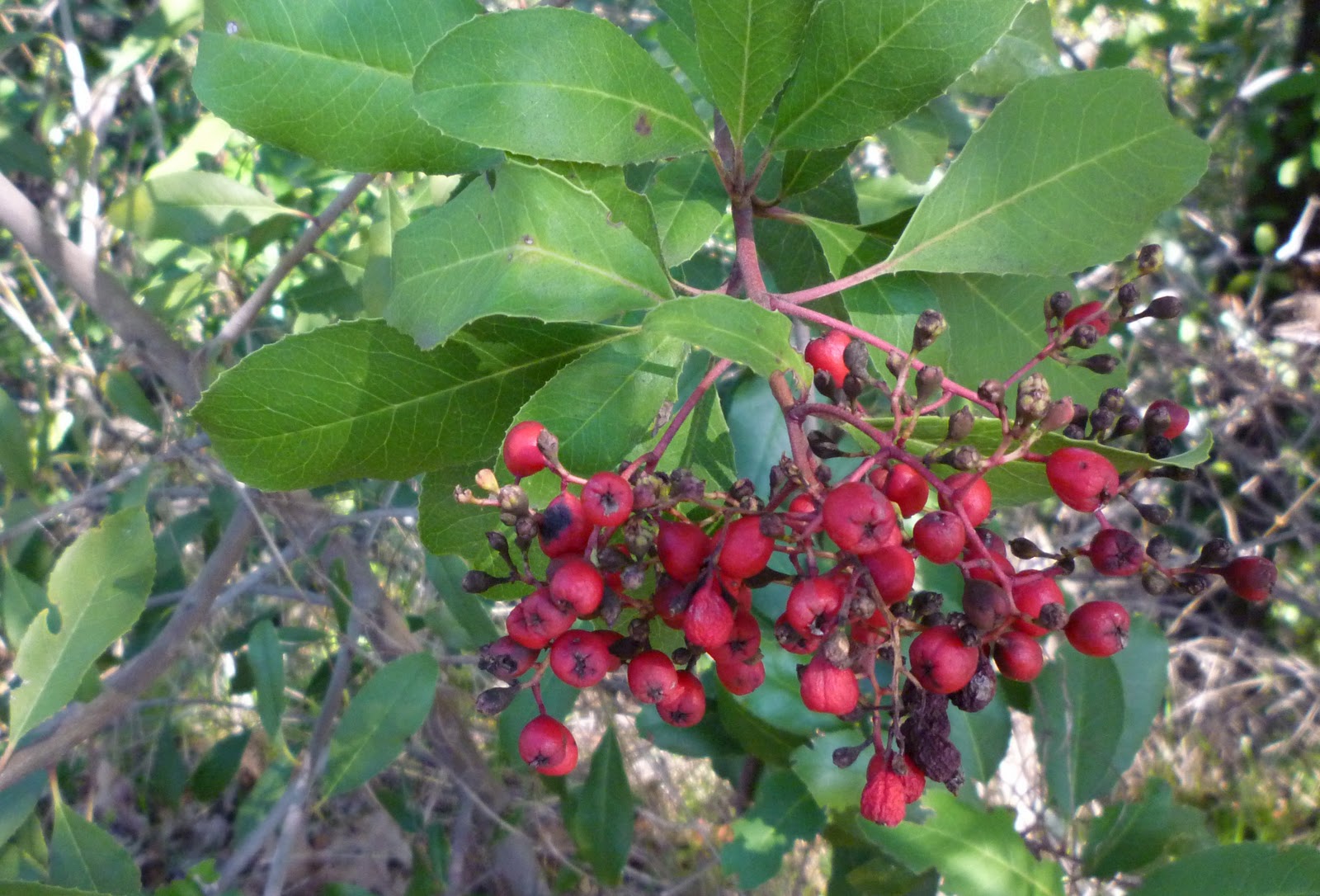
Heteromeles arbutifolia – toyon

On my way to visit Pippin, The Professor, and Scout last week I stopped to see some of my tree friends. The lovely bay tree was blooming, all tangled up with the madrone, whose berries were almost gone.

toyon with manzanita behind

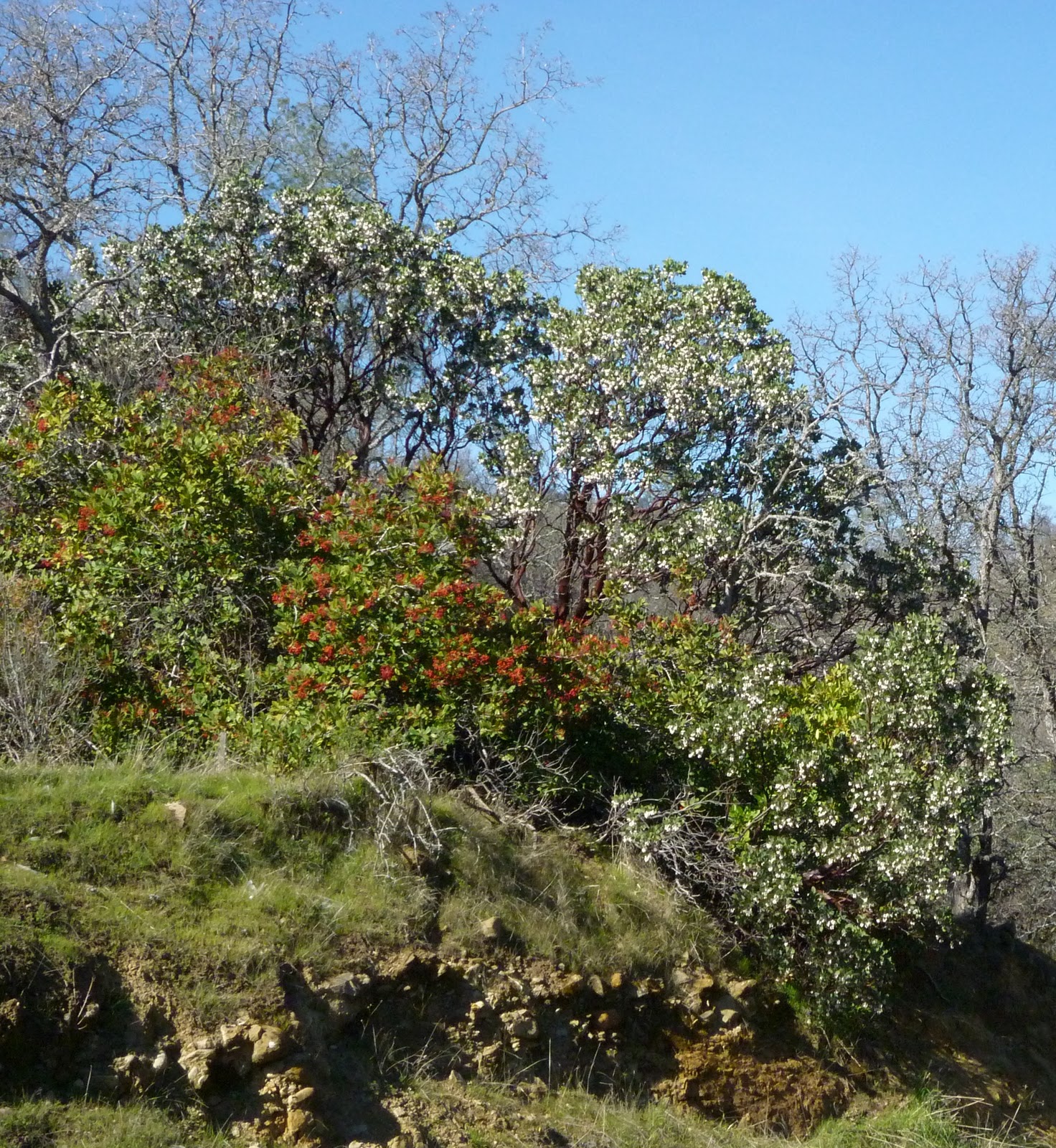
Also in the jumble was the toyon, with slightly fresher berries. I read in Pippin’s tree book that toyon is the only species in its genus, and it grows only in California and Baja California. Though I’d been introduced to Mr. Toyon many times in the last 40 years, I didn’t seem to pay much attention to him. I think we’ll be friends now. On this occasion I had the time and Google to help me focus and learn more, and I also have a blog where I can find him again if my memory fails.

another view of toyon

I did see quite a few of my most beloved manzanitas as well. Manzanita means “little apple.” The botanical name arctostaphylos means “bear berry,” though of course other animals also feed on these fruits. The common name of some varieties is also bearberry.

Right now the bushes are in bloom (so is the one in my yard); I saw pink- and white-flowered variations. There are about 60 species total, and most of those are native to California, so it’s a hard one to pin down as to which species you are seeing.

manzanita

Many of the trees I saw on this outing are growing on the slopes of that volcanic mountain I told about before, Mt. Saint Helena, in Napa County. On the weekend scores of cars were parked at the trailhead for hikes up to the top. The spot is in Robert Louis Stevenson State Park, so named because the author and his wife honeymooned on this mountain in 1880. He went on to use it as the model for Spyglass Peak in Treasure Island. One New Year’s Day a decade ago our whole family made the trek up and got amazing views.

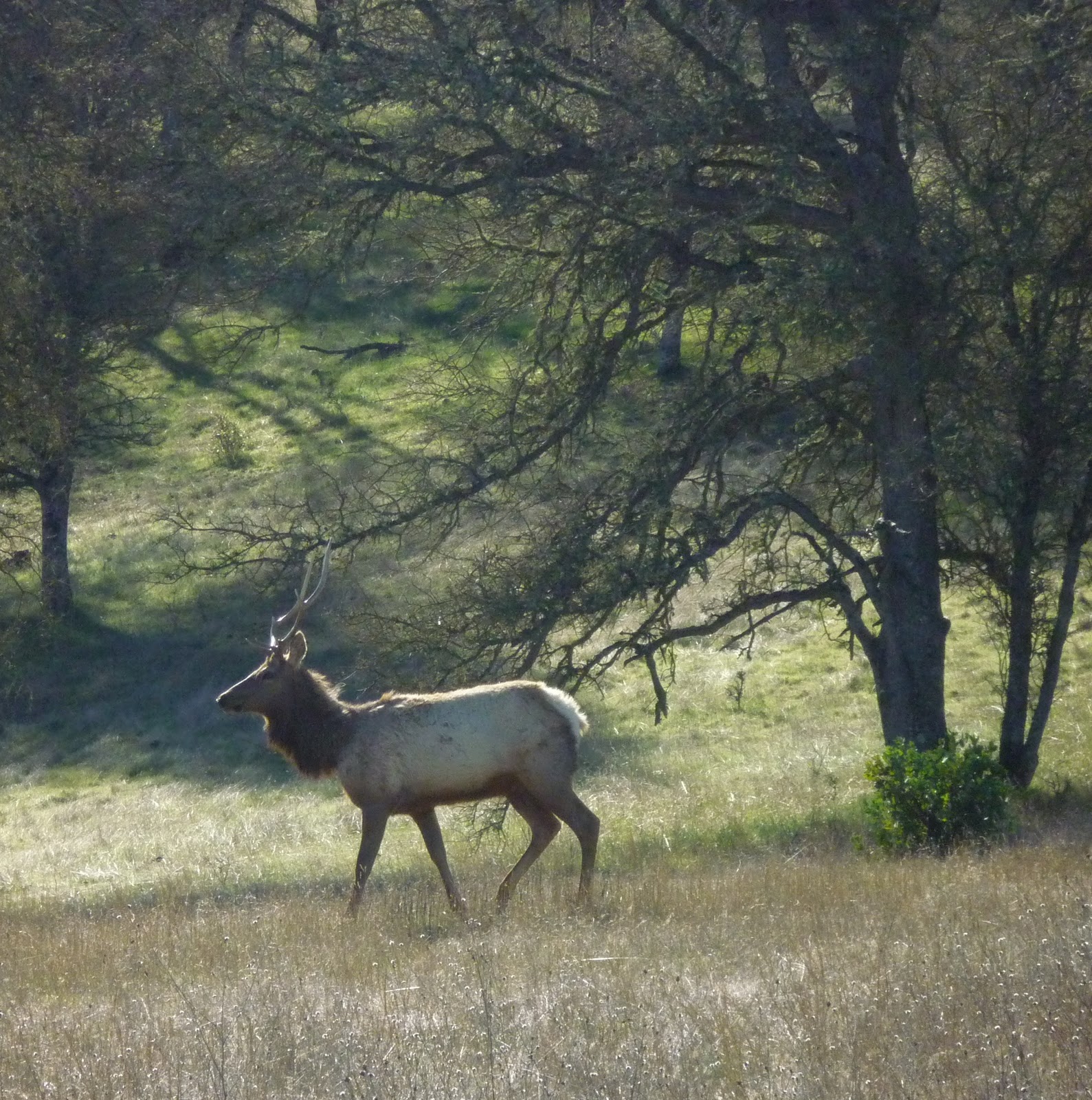
I left the forest and after driving a while longer I caught a glimpse of something off the highway that made me flip a U across three lanes to go back and take a second look. I was lucky there was a turnout right opposite the meadow where 20 elk were grazing!

Later The Professor told me that he had seen this herd of tule elk many times over the years, in this their winter home; it is the largest migratory elk herd in California. Tule elk are a subspecies of elk only half the size of Roosevelt elk, whose habitat is even more narrow than the toyon: they only live in California. I stumbled through the star thistles and got my socks full of prickles, trying to get as close as possible and watch them for a few minutes before they escaped.

On the way home I looked and looked for the spot where I’d pulled over three days before, but I couldn’t even find the turnout across from the meadow, much less see any animals. If I can get a view of the elk another time or two, I might put them in the category of friends, though they didn’t show any signs of wanting to get to know me. So far I’m content to thank God for this happy meeting.