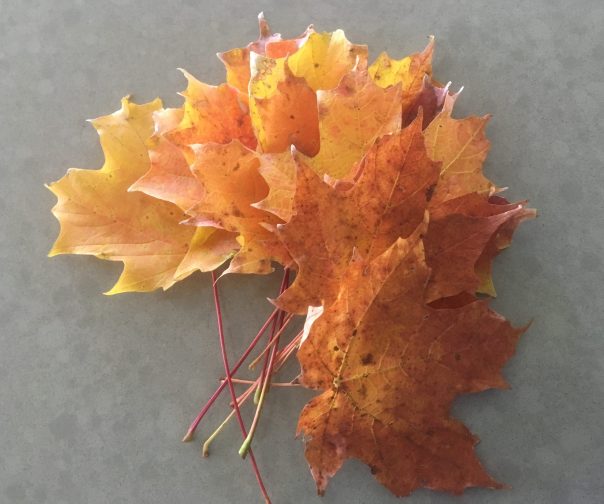
A few years ago I shared a link to this poem so that you could read it in its entirety on the Plough website. Today I’m posting the whole of it here. The poet takes us on a short journey through childhood memories, nostalgia, loss and grief, but doesn’t stop there. She shows how we can honor the memory of those we mourn by living out their virtues in our own lives.
With every autumn that we face, the winter of our life is following closer than ever. Darkness stalks, but I believe each of us has at least one match with which we can light our own “bright fires of love and work,” (and for some of us, even wit) and that these can continue broadcasting waves of encouragement indefinitely.
AFTER HELPING MY FATHER RAKE THE LEAVES
First, I took a running leap,
and then, half buried in the heap
that we’d raked up, I lingered, caught
in a cocoon of leaves and thought.
I still remember how they smelled,
those castoffs autumn winds had felled—
both old and fresh, both wild and clean,
the sweet decay of summer’s green;
and how they looked—small flags half-furled,
hot colors from a chilling world.
I breathed more deeply for a few
enchanted seconds. More leaves flew
as Dad watched, leaning on his rake.
He must have known what seasons take.
Leaves bright as fire broadcast their dark
reminder: beauty was a spark
that couldn’t last, the freshened breath
of autumn air foreshadowed death.
But even so, my father grinned
and turned his face into the wind.
Years later, I’d learn just how brave
my father was, and how a wave
of chill or doubt could leave him caught
in his own grim cocoon of thought.
A darkness stalked him, but he lit
bright fires of love and work and wit,
and faced the wind, and found his way
for decades past that autumn day.
And now I kindle every flash
of memory that warms the ash
of loss. I see his profile still,
and face my autumns with his will.
-Jean Kreiling


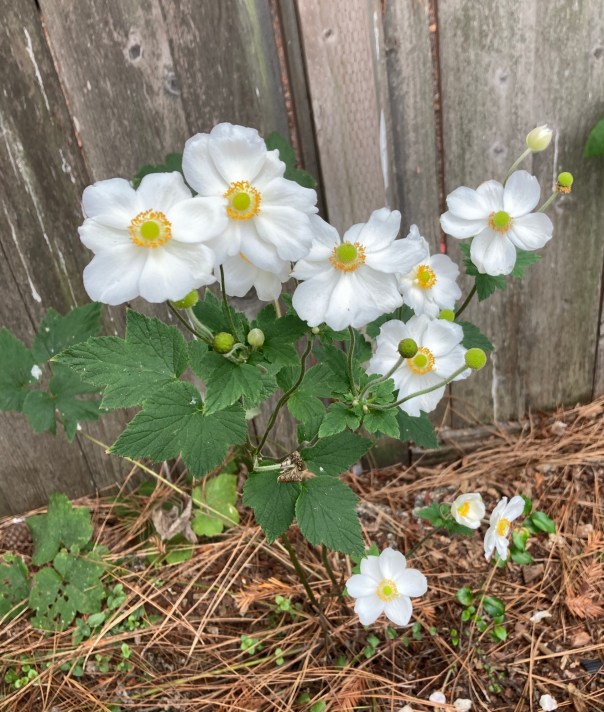
 In Wisconsin my daughter Pearl has been tending a large house and garden for about eight years. She’s much more artistic and organized than I, about all of the design and execution of beautiful spaces indoors and out. She does all the work herself, even to the point of laying bricks to create a quiet and somewhat hidden corner to sit in, with morning sun and afternoon shade. It’s a wonderful spot winter or summer, and I enjoyed it with Pearl on one of my visits. This time, she had little time for sitting, what with being the wedding planner for Maggie. While she was bustling about, on my first morning after arriving late at night, I made the rounds to see all the flowers that are still blooming everywhere.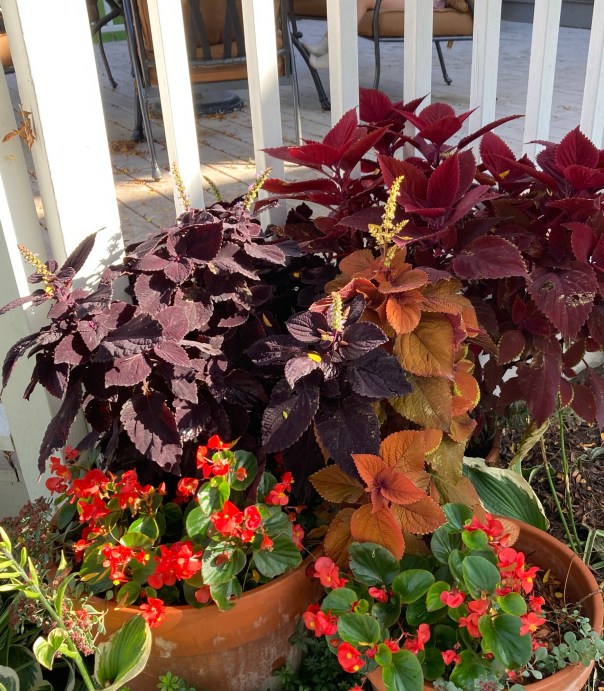


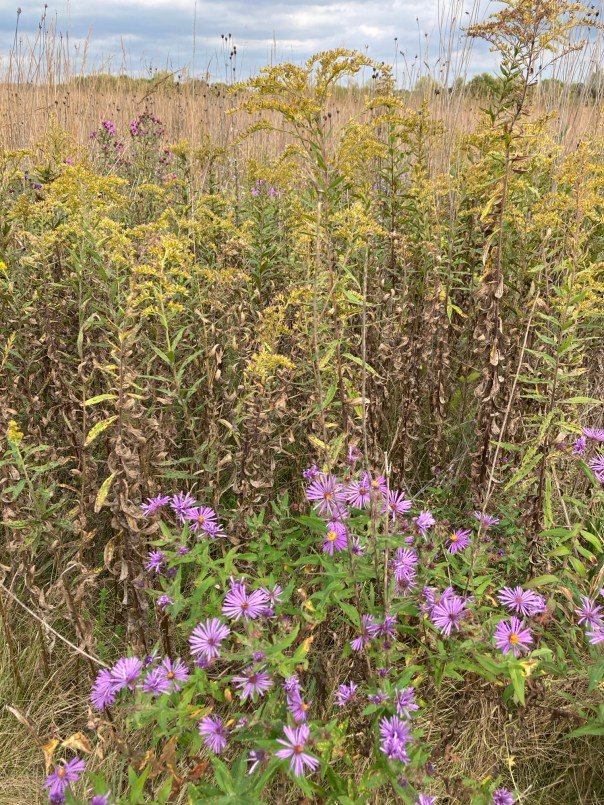

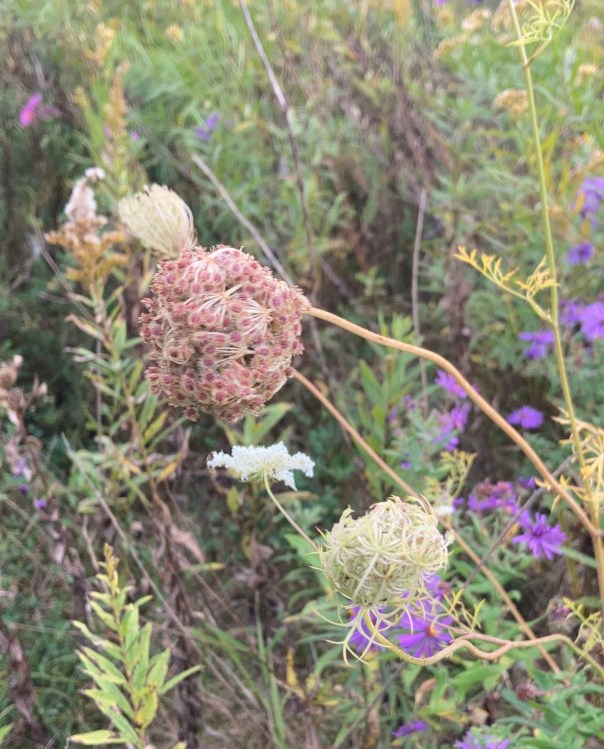



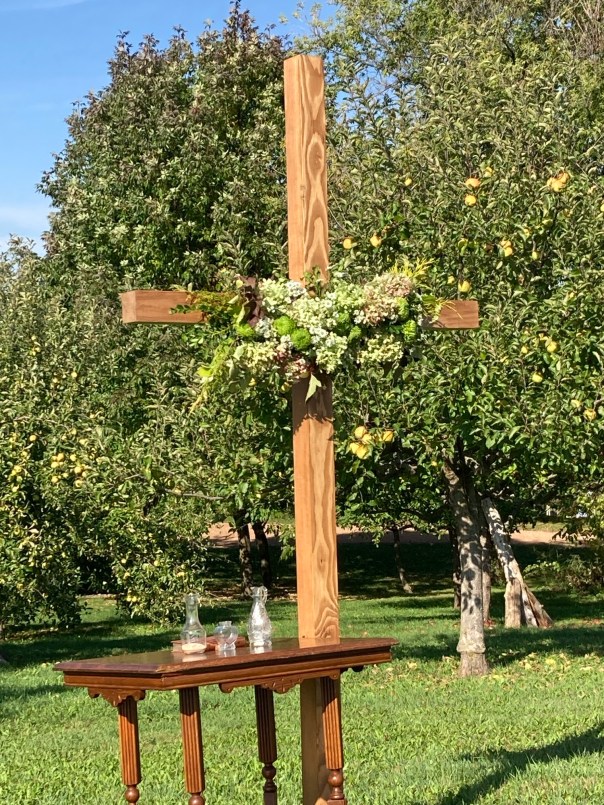


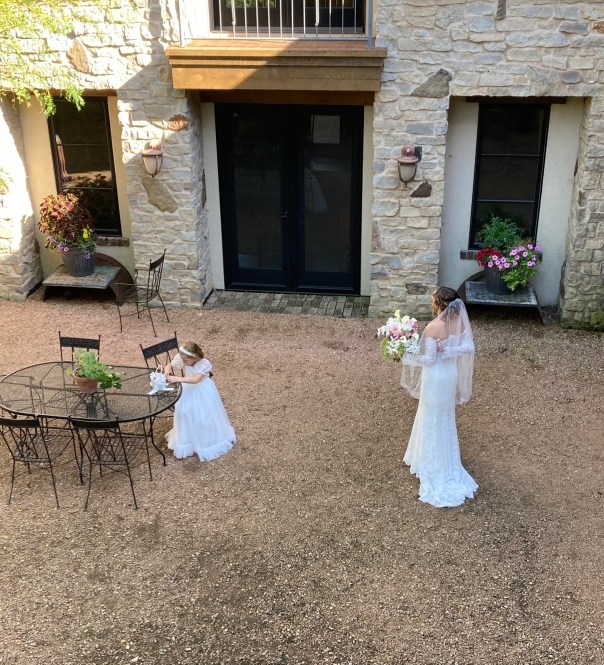
 The venue was a farm, with a big house where all the wedding party could prepare, for the ceremony and reception that were outdoors on wide lawns, with apple trees all around. We were under the sun for the ceremony, and under awnings for a meal and dancing. The weather was warm and humid.


 Gladsome Lights