Tag Archives: lupines

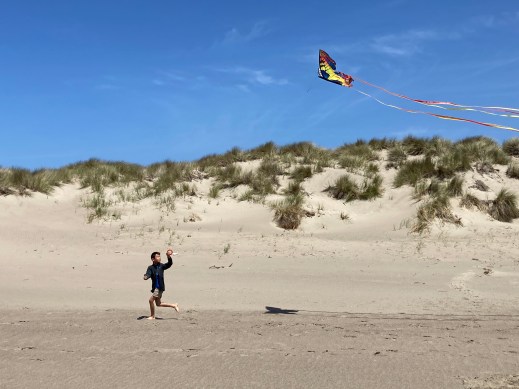
Kites fly high at Limantour.

Even though his older brother is the one I call Pathfinder, my son Soldier took the lead in planning our family outing yesterday. Both of them wanted to include not only a hike but some  beach time, coming as they did from places where one can’t make a day trip to the ocean.

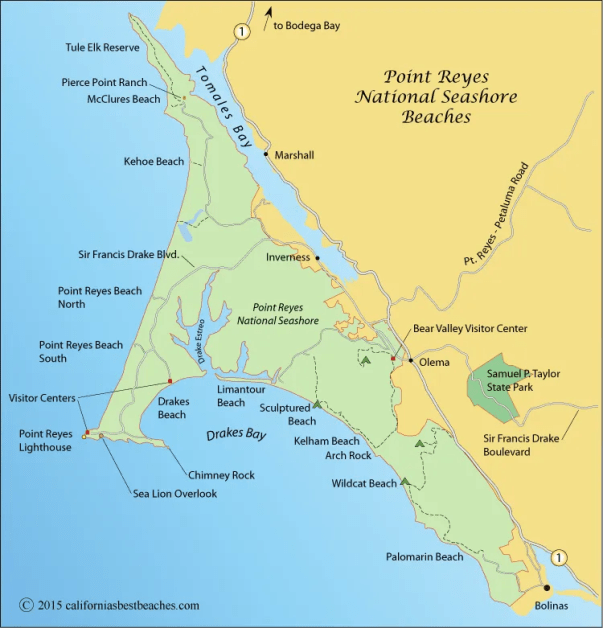
All eight of us were able to go in one car, which added to the fun. The children who had recently endured 12-hour days on the road were cheerful, even though it took us a while to get to our destination, a beach farther south than we usually venture: Limantour. The main thing I always retain in my memory of this beach is that it faces south, so it is a little warmer than many North Coast beaches. It is on a long spit of land on Drakes Bay, named for Sir Francis Drake. In the article, “Drake in California”, you can read the many keys to the identification of this bay as the place where the explorer thanked God for a safe haven.

This map shows you where we were in relation to San Francisco:

And this next one reveals Limantour Beach in the Point Reyes National Seashore:
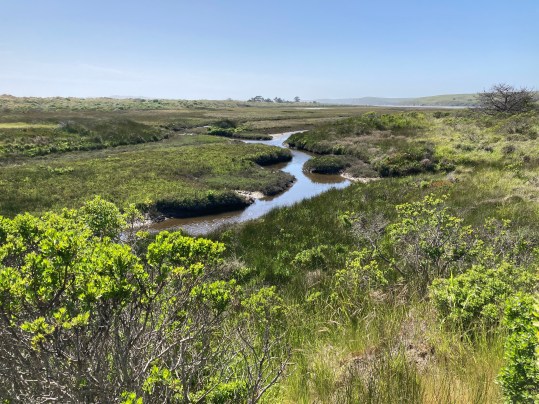
We piled out of the car at the trailhead and hiked about two miles out to the beach, through dense woods opening up from time to time to views of the estuary and wide blue skies; irises in three shades of violet and purple dotted the sunnier banks. Under the trees stands of giant nettles extended back into the dappled shade, with swaths of forget-me-nots or candy flowers at their feet by the path.

Candy Flower – Claytonia sibirica

It was the sort of hike where Grandma, with one or two companions, falls behind the main group to examine and hopefully identify wildflowers, and then eventually catches up when the group stops to wait. Liam spied the Indian Paintbrush first.

The trail was bordered by a lush jungle of trailing blackberry and manroot, strawberries, buttercups and ocean spray. I couldn’t stop for everything that was interesting, and I can only mention a few of the hundreds of plants. But at the time, I pointed out to anyone who would listen, how conveniently the plantain herb was growing near the nettles: if you were to get a nettle sting, you might chew up a few plantain leaves into a poultice to put on the burning flesh to soothe it. Or so I’ve been told many times.
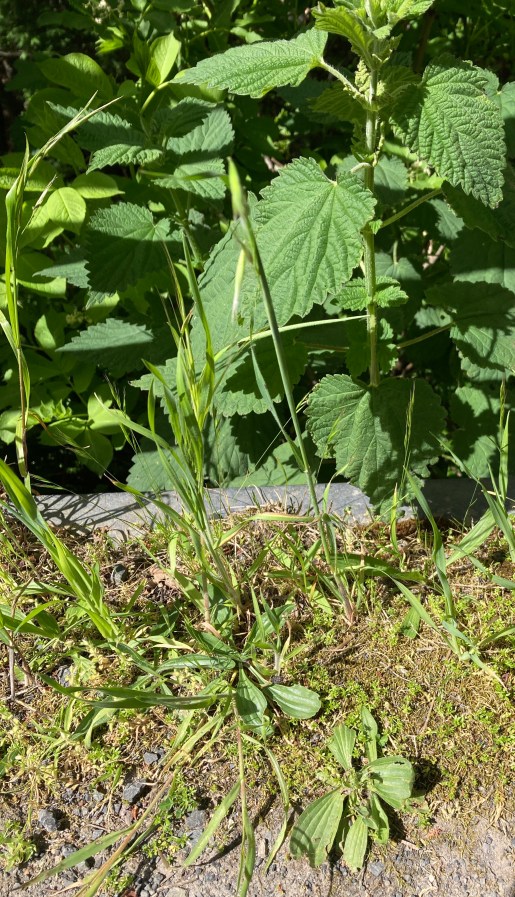
In spite of my lagging, we arrived on the beach and oh, what a lovely, clean and white expanse it was to behold; we didn’t pause, but walked right on out to the shore.

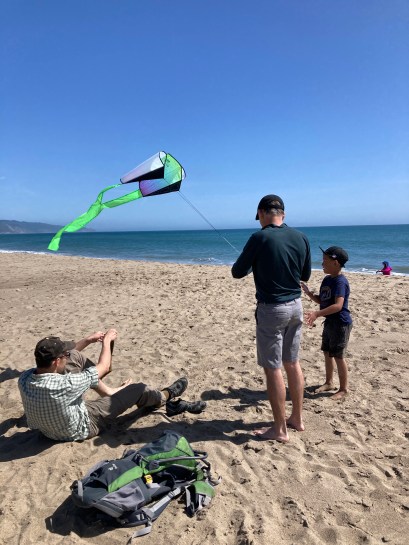
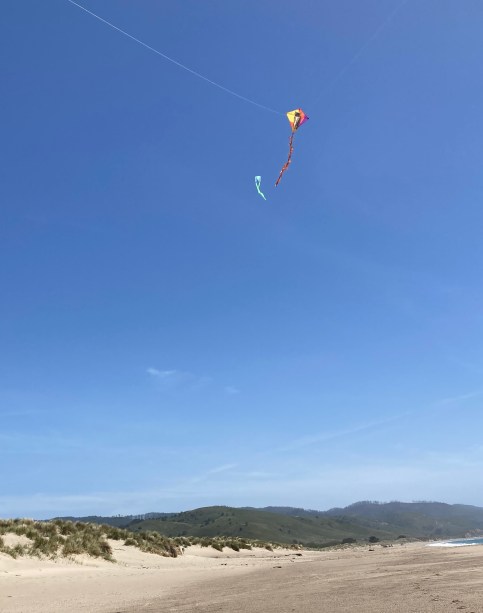
We had brought along three kites, so all the children had plenty of time
holding the fliers against the wind. It was a perfect day for that.
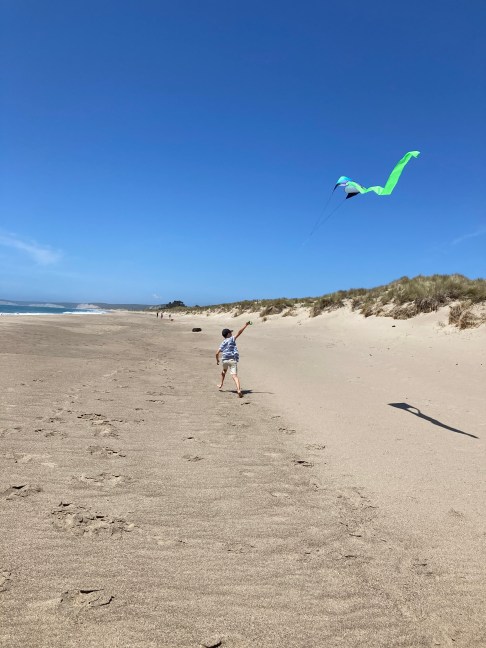
This one above, once it got up, flew by itself all afternoon at the end of its tether,
while we ate a picnic on the sand, and the men dug holes for the waves to flow into.

Then it was time to reel it in, and head back out the way we had come.

It was only on our way out that I had time to really notice these grand bushes of purple lupine, a relation no doubt of the big yellow version I’ve seen so much of farther north, and have even grown in my garden.

Almost the last thing I took a picture of was a baby rattlesnake lying still as could be on the path. It was too young to have rattles, but as we stood around looking at it, the other adults told us about how the shape of its head and neck helped them identify it as a rattlesnake, and how the venom of juveniles is very potent.
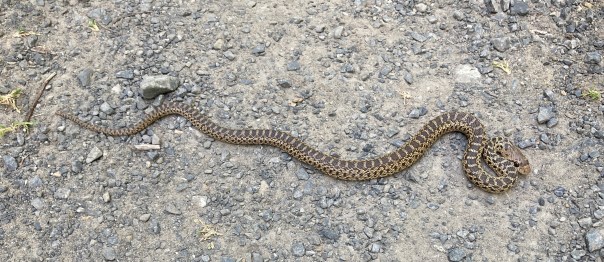
I couldn’t see his eye until I saw the picture I had taken enlarged; he was definitely alive and awake. We were told that rattlers aren’t able to strike effectively if they are not coiled up. But we moved on very soon, stepping around the rattleless tail.

My family all departed this morning very early, before the sun was up, and while fog was still lying low in the neighborhood. All day I’ve been reeling myself in! I had hoped to go to bed early tonight, but instead, before I move on into May — coming right up! — I wanted to finish my story of kites and wildflowers, and my dear people.
High mountain explorers.

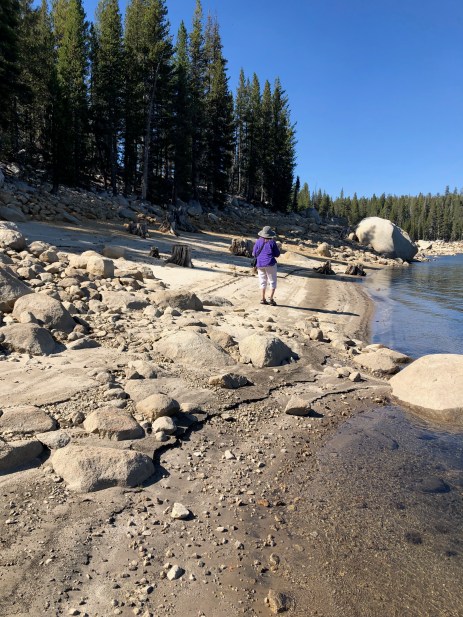
My friend who’d never been to our mountain retreat had a desire to walk all the way around the lake. I told her that would take all day, and I didn’t know if my feet were up to it. So we walked for a few hours (round trip) and got to one end of the lake where a little creek flows in. I’d never done that walk before, so I felt happy about accomplishing a new thing.

It was also fun to get new perspectives on old favorite vistas.

At first I was surprised by the hundreds of dragonflies zipping around us most of the way, but then I remembered my amazement two years ago in this place. When occasionally one seemed to be considering alighting on the ground, I’d say, “Please stop here just a moment so I can look at you more closely!” But their English isn’t very good, and they mistook here for her, and stopped on Myriah’s pant leg. But not long enough for me to get close.


We admired the rocks and grass and moss, and domes across the lake,
and waded in the chilly waters to get to the inlet.
We didn’t see another soul.

Soon after we got back to the cabin, we got our last dinner assembled and cooking.

It’s been more than 25 years since I stayed five nights in a row at the lake. What a relaxing and rejuvenating time this was, and nourishing to the friendship of my companion and me. So I count the whole week as another sort of new exploration. Next time, longer! But now I am home and gathering my wits and strength for adventures coming my way this fall.

Thankful.

North Fork Weekend

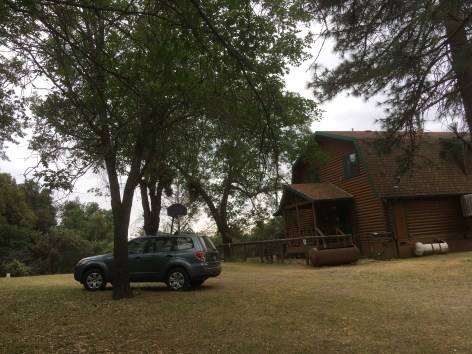
Over Memorial Weekend I stayed with the majority of my children and grandchildren in a couple of cabins in the foothills near Yosemite National Park. One day we were all attending the wedding of my niece. The other days we explored in smaller groups, or hung out at the larger cabin with all nineteen of us together, cooking, eating, playing bocce ball or swinging on the tire swing.

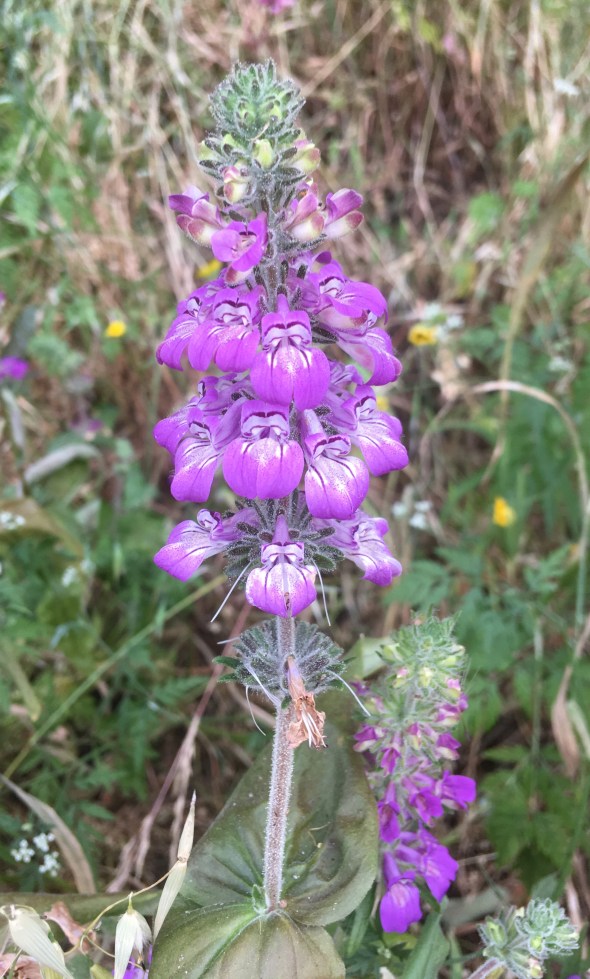
On my drive in to the village of North Fork, near which our cabins were located, I saw lots of these recumbent white lupine plants along the roads. Just now, trying to identify them, I read that there are around 200 species of lupines. I can’t find any that look like these, so I’m giving up.
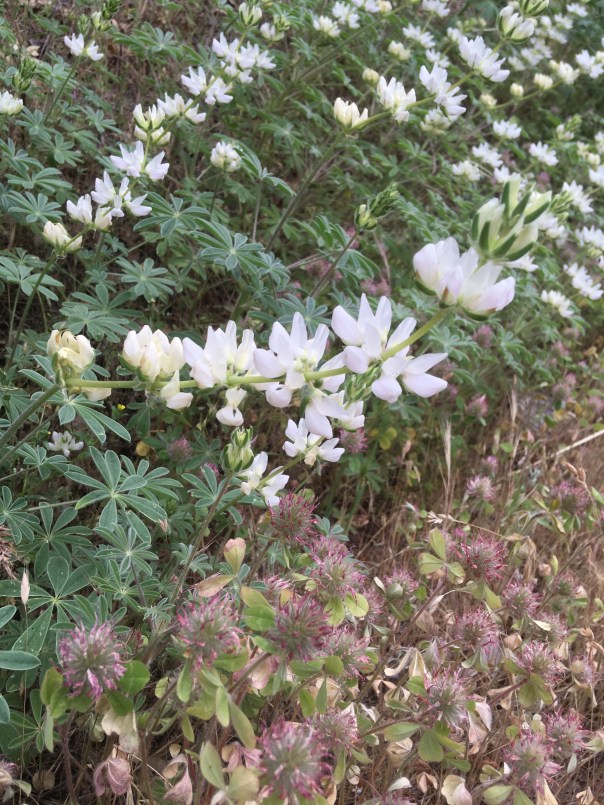
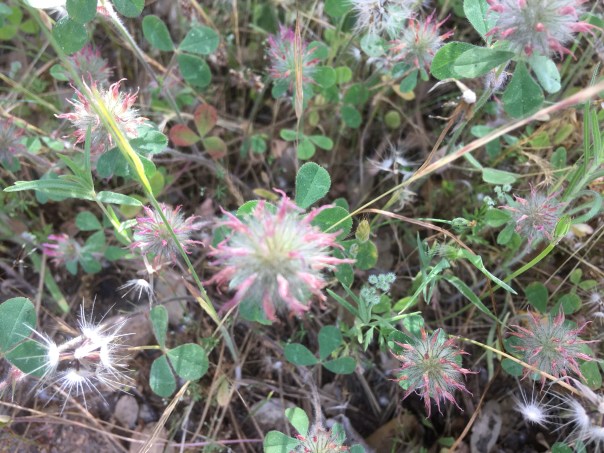
But those pinkish flowers under the lupines appear to be clover. It covered the dry slopes around our cabins.

We trust that Jamie will soon grow out of his love for his toy cell phone that he uses remarkably like silly adults. After all, it is always dead.  His imagination obviously isn’t — but just what can he be imagining?

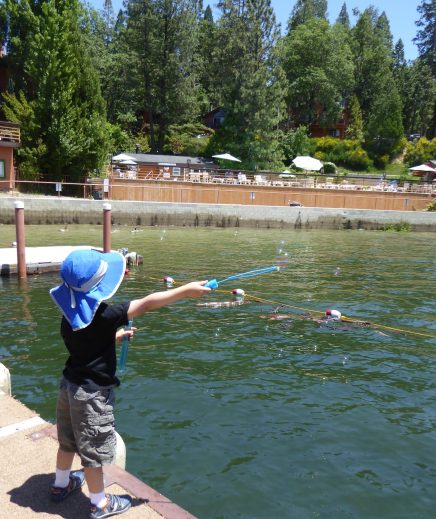
For a couple of hours Sunday Maggie and Annie played on a paddle board in Bass Lake while the others of us watched them, or watched Liam with his bubble wand. We might have rented a boat but they were all taken. Then we ate ice cream; it was hot!

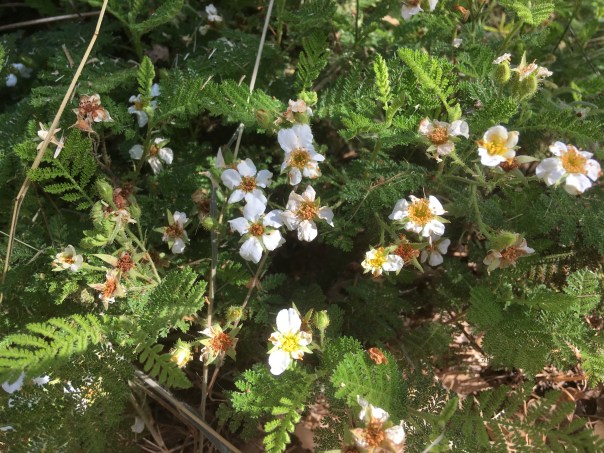
In 2015 I was in the Sierra foothills south of here, and first learned of this plant below, called Bear Clover or Mountain Misery, Chamaebatia foliolosa. Back then we were in the same sort of dry terrain at a similar elevation, so I wasn’t surprised to see it again. Last week I couldn’t remember the name, but I recalled something about it being smelly.

A species of collinsia or Chinese Houses.
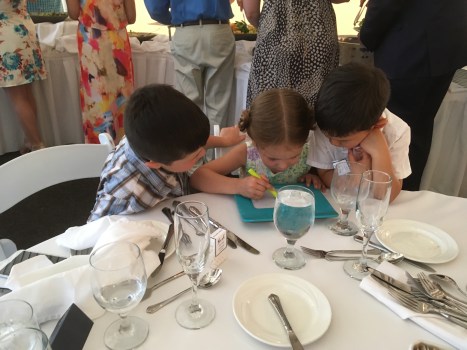
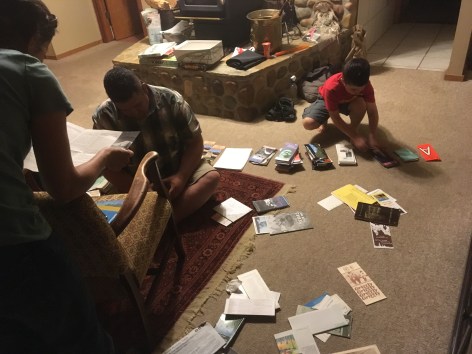
I had taken a big box of old maps up to the mountains with me, to offer to the family before I recycle them. Several people were curious, but Scout was most captivated by them and thrilled at the possibility of having some of them for his very own, now that he can read and decode them. His parents helped him sort them into categories, and eventually they let him take the whole box, to be more thoroughly sorted and culled later. He searched me out several times to thank me for the maps 🙂

One of the maps was called “Indian Country” and showed mostly the Southwest U.S. I don’t think it covered much of the territory that Lewis & Clark’s Corps of Discovery explored, which was certainly Indian Country as well. One of the plants the Corps encountered was a wildflower called Arrowleaf Balsamroot or Balsamorhiza sagittata, and I believe Pippin and I saw it, too, on a walk near our cabin.

The flowers had not quite opened yet, but they were showing some yellow. In the Corps’ journal we read, “The stem is eaten by the natives, without any preparation. On the Columbia. Aprl. 14th 1806.” By the way, lupine seeds were also food to Native Americans.
Our group didn’t eat anything like that. Our big meals together were BBQ on Sunday night, and bacon and eggs on Monday morning before we departed for our homes. I fried three pounds of bacon and drove off with my clothes and hair still pungent a couple of hours later.

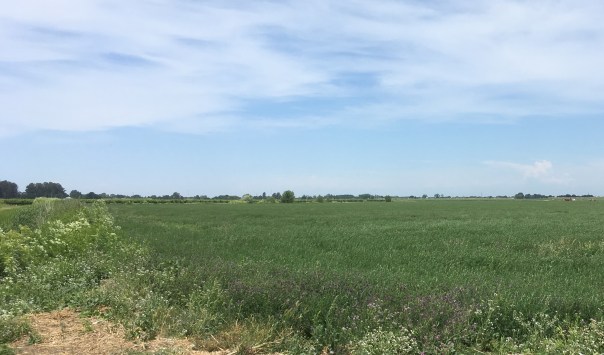
It was far from North Fork, but I will end with this photo of alfalfa fields I drove past — slowly, in holiday traffic — in the Sacramento Delta. In one field I saw they were mowing, so I rolled down my window and got a whiff of that.

I’m happy and home and too tired to pull this all together somehow…. Oh, well, they are all things that I like, and/or think about. 🙂


The death of death, and wildflowers.

“Christ is risen from the dead, trampling down death by death,
And upon those in the tombs bestowing life.”

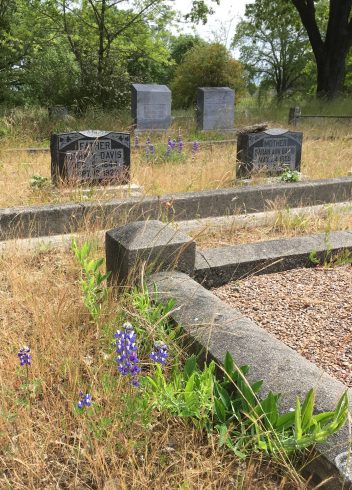
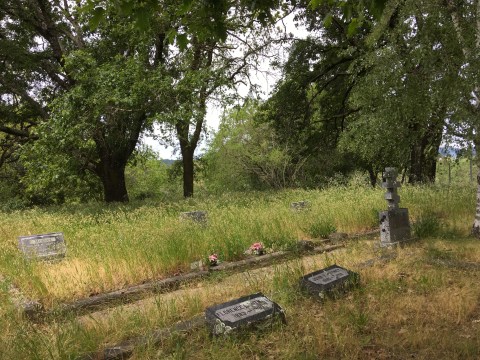
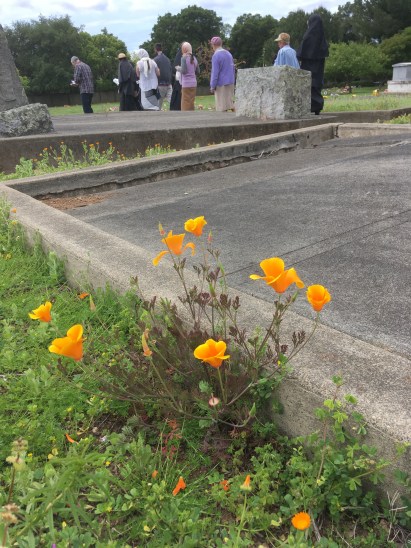
This is one of the Paschal hymns our little groups sang over and over today, as we walked among the graves at several cemeteries, rejoicing with those who wait in hope.

It is called the Day of Rejoicing, or Radonitsa,
and is always the second Tuesday after Pascha.


Today the wind was blowing, so we could not keep our candles lit. The sun peeked out from behind clouds from time to time.

More wildflowers than I’ve ever seen were blooming in the non-endowed cemeteries. This must be because of the very wet winter and spring we have had.


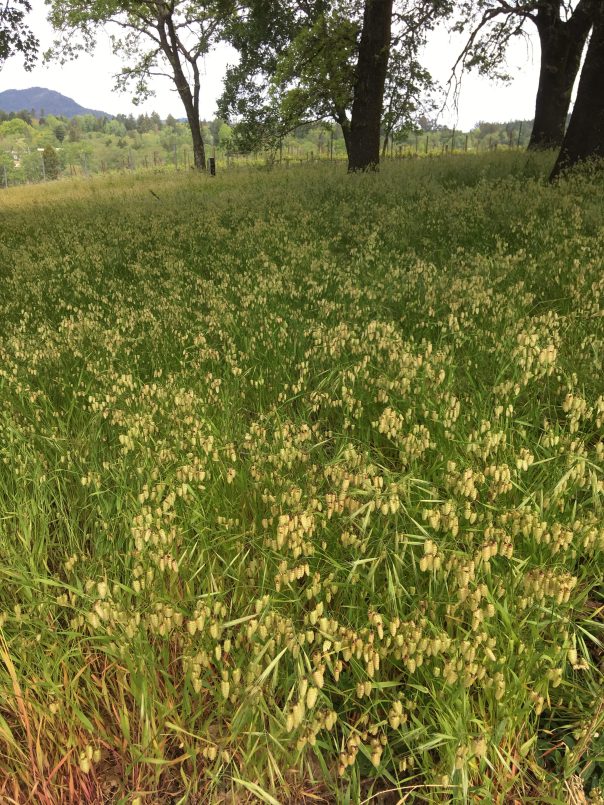
The rattlesnake grass was blowing in the breeze and making a graceful and wavy dance.

I knew that Scarlet Pimpernel was a flower, but I didn’t know it was this flower
growing among the lupines. My godmother told me.

My husband is buried at one of the cemeteries we visited, and my goddaughter at another.
We sang and burned incense and sprinkled holy water over the graves of dozens of others
who are resting in the earth, awaiting the Resurrection of the Dead.

This year I remembered to bring the shells from our red Pascha eggs
to sprinkle on the graves, and flowers from my snowball bush, too.
We were all so happy to be there!

“We celebrate the death of death, the destruction of hell, the beginning of eternal life.
And leaping for joy, we celebrate the Cause,
the only blessed and most glorious God of our fathers.”