
“If the dish you are cooking doesn’t have meat, olive oil is especially needed to give body to it. Today we are making chicken with potatoes so we only need a little olive oil.”
So our teacher explained as she poured a few more generous glugs from the bottle over the raw ingredients in the pan.

We were attending a cooking class taught by a Greek woman named Stella, and in the company of eight or so other visitors to Paros, in this case all Americans. We were to learn quite a lot, not only about olive oil but about feta cheese, baklava, the mastic tree and the local farmers. It was more enjoyable than I could have imagined, because our host and instructor was so real, and obviously liked people.
She only uses oil from olives grown on Paros Island — and she used one whole liter bottle and half of a second bottle for that one meal’s dishes. Also, according to Stella, the creamiest, tastiest feta is made on Paros — and that I can believe.
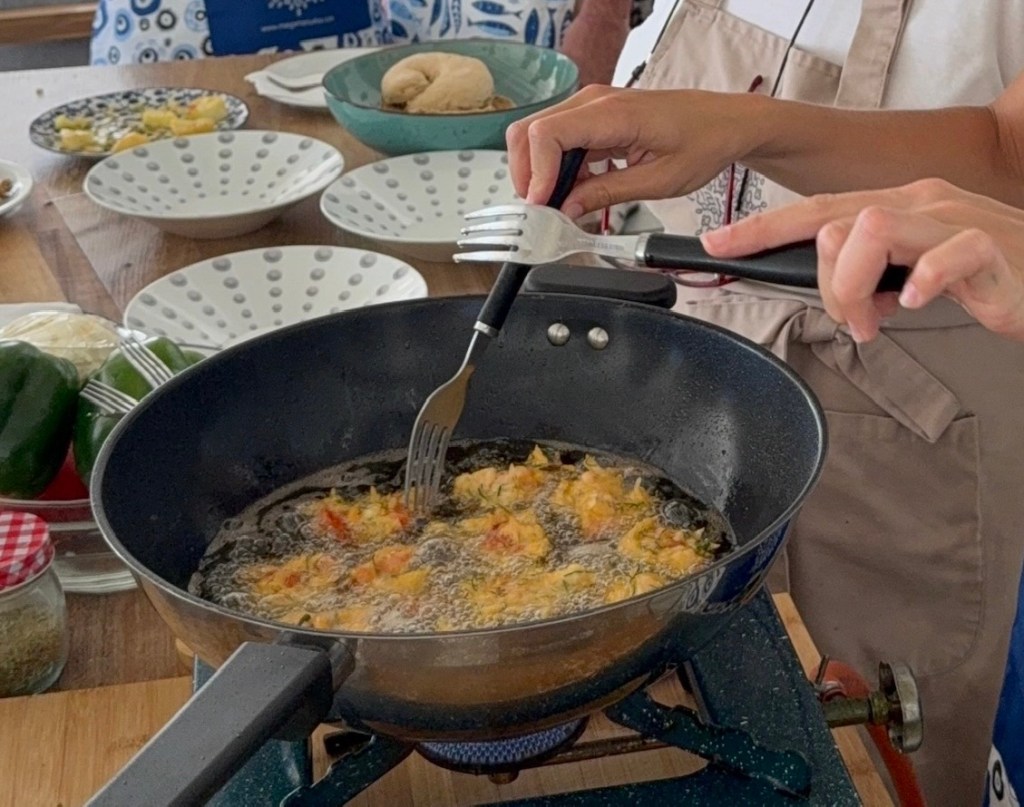
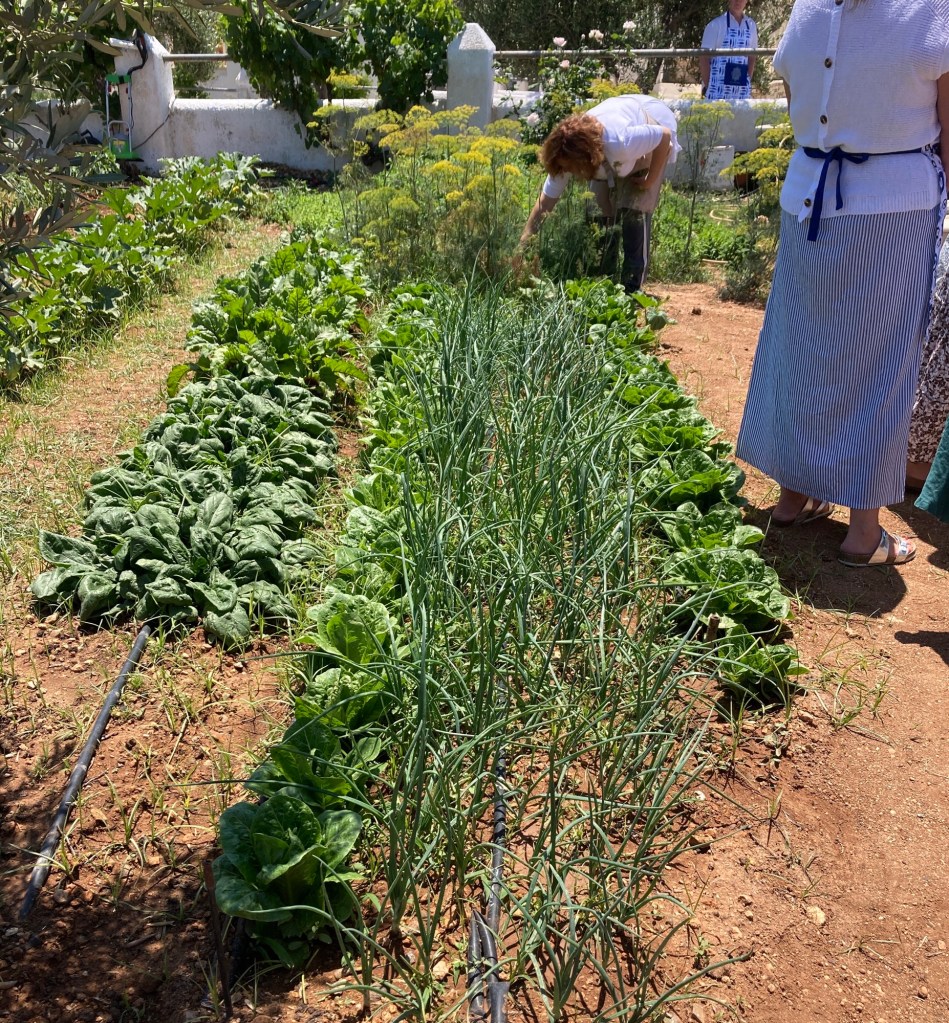
We stood around a big table wearing our blue-and-white aprons, and took turns chopping, stirring, frying and tasting. We got a tour of her garden, and at last, though all that tasting had blunted our appetites, we sat down to a feast.

At some point as we were cooking Stella mentioned the herb mastic, and later while we were enjoying the food we’d prepared, I was pleased to tell our teacher that Pippin and I had seen mastic bushes on the Byzantine Road the day before. At least, that’s what our Seek app said it was, Pistacia lentiscus, and our research online seemed to agree…
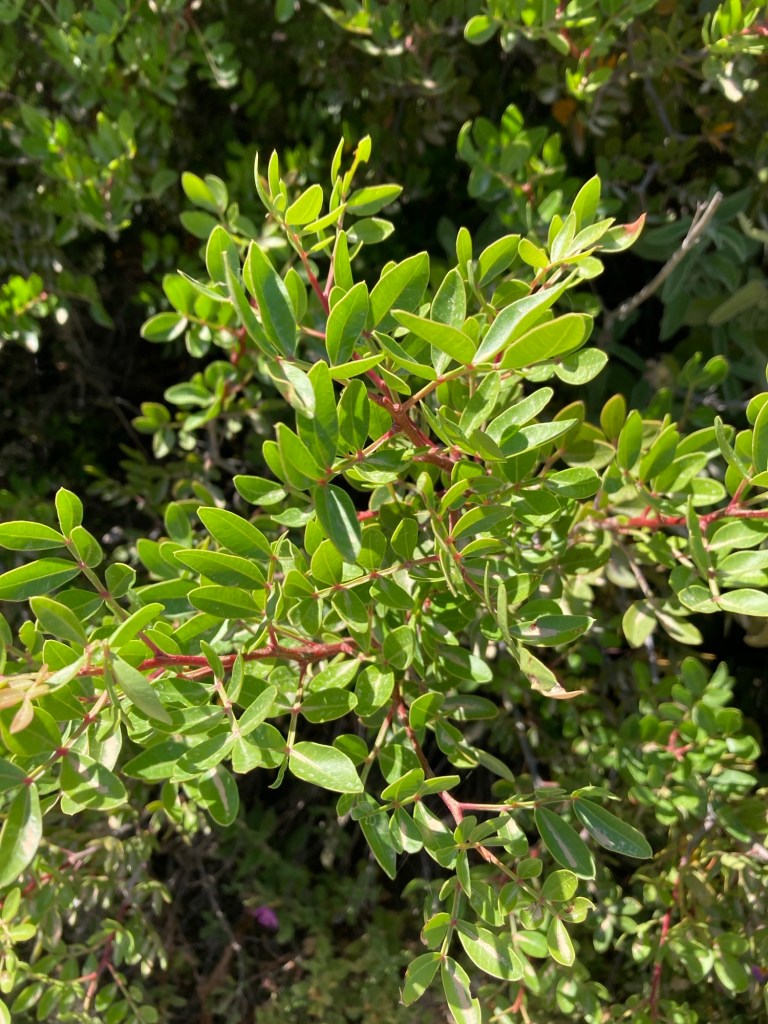
But Stella assured us that in Greece mastika (Μαστίχα) only grows on the island of Chios, though farmers are always trying to cultivate it elsewhere. We could tell she was a bit defensive at my proposing a conflicting story.
One thing Stella did confirm for me is that the best baklava is made mostly with sugar for sweetening, though she includes a very small amount honey in her recipe.
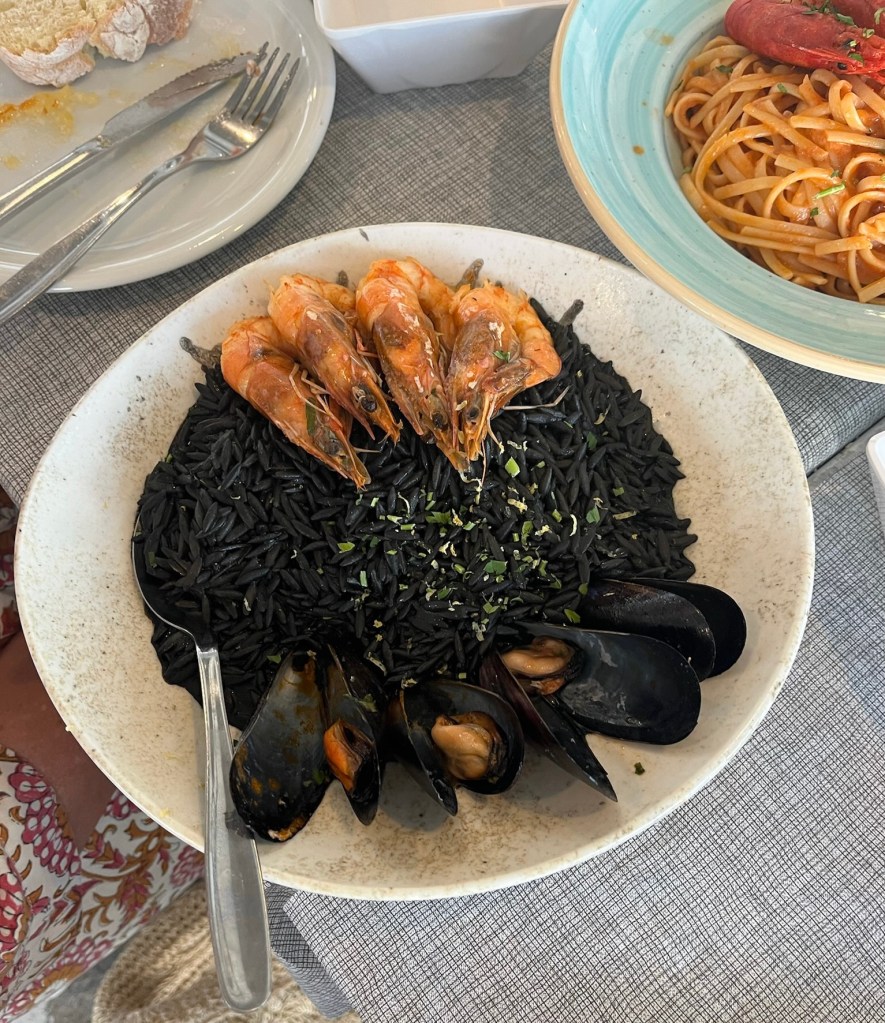
In addition to the taste experiences of our class, my girls and I sampled in restaurants lots of different foods, or new presentations of familiar ones. The Greeks want very much for their guests not to miss out on any of the dishes they are proud of.
Today I met up with a Greek friend I knew from my parish in California, when she lived there for several years, and she was typically eager to feed me something I might not have tried in the last two weeks. So she took me to a Cretan restaurant.
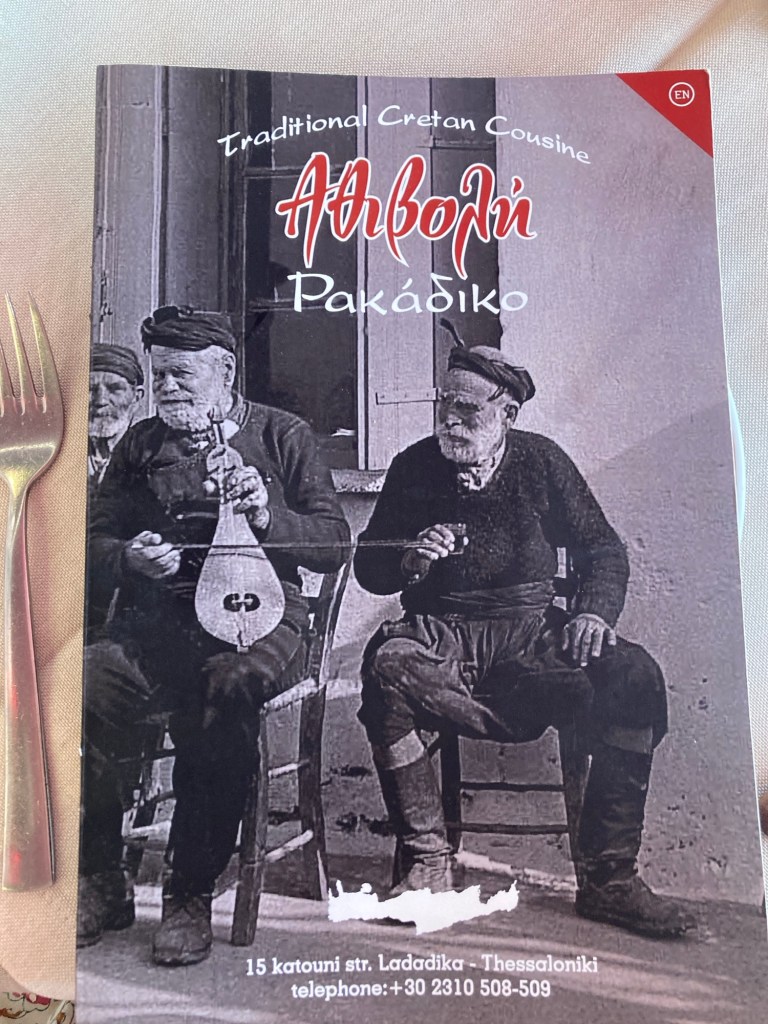
I guess I shouldn’t have been surprised that the people of Crete have their special ways with the typical ingredients of the Mediterranean.

Some of the dishes I tried were: Potatoes With Goat Butter; Fennel Pie; and Rooster Baked in Wine, Served on Cretan Pasta.
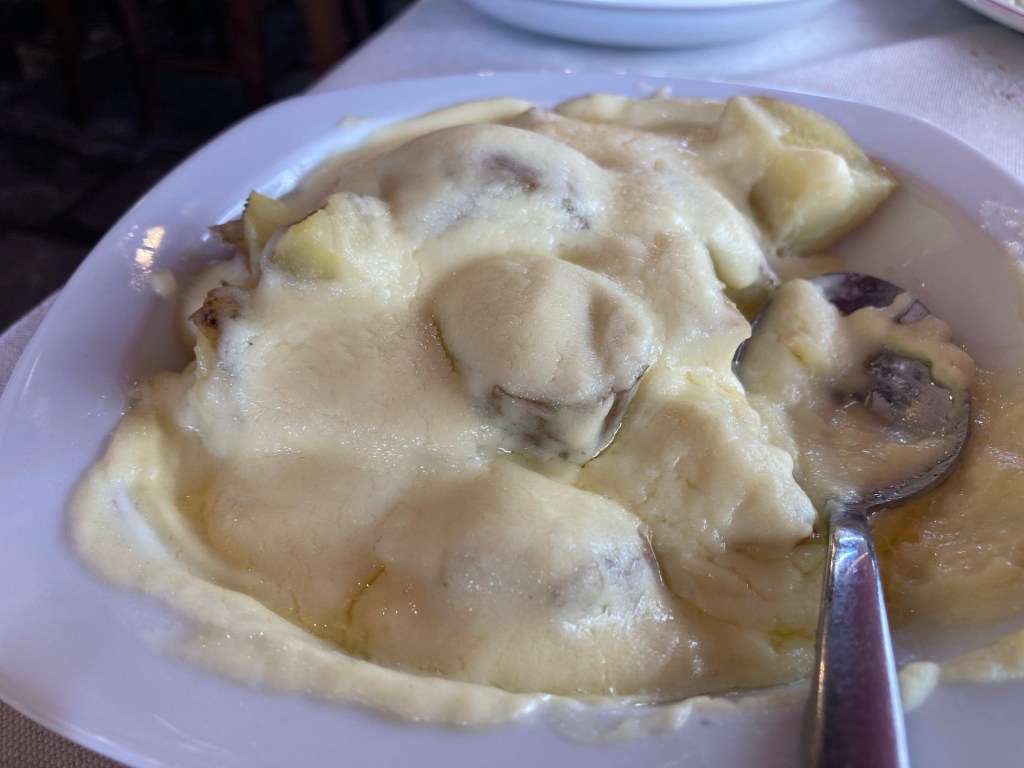
Almost always the platters of each dish are enough to serve 2-4 people, so it’s wise to agree with one’s friends on what you all like, so you can share. But so far, my dining companions are absolutely unconcerned about there being too much food on the table. Being a proper host almost requires it.
It’s a good thing I’m doing so much walking 😀

 Gladsome Lights