Tag Archives: skippers

September is in my blood.

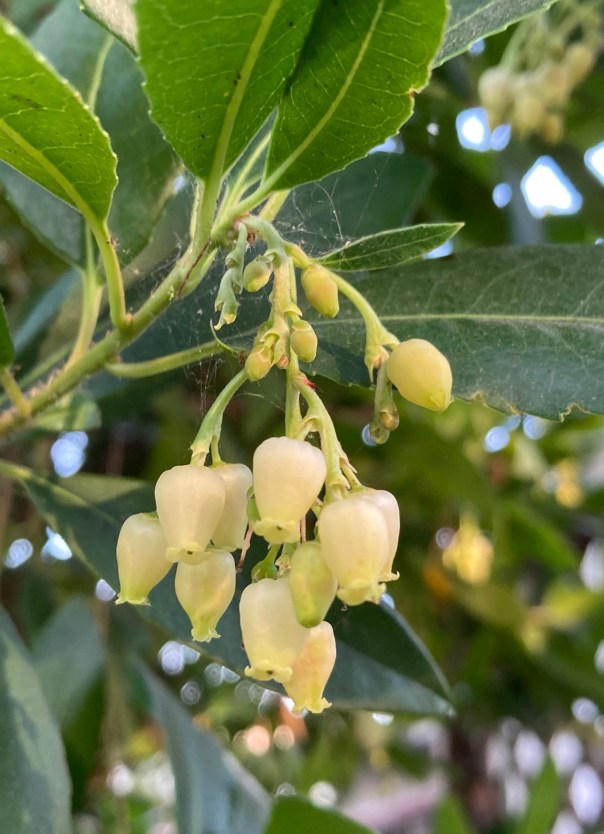
Blooms on arbutus unedo, the Strawberry Tree.

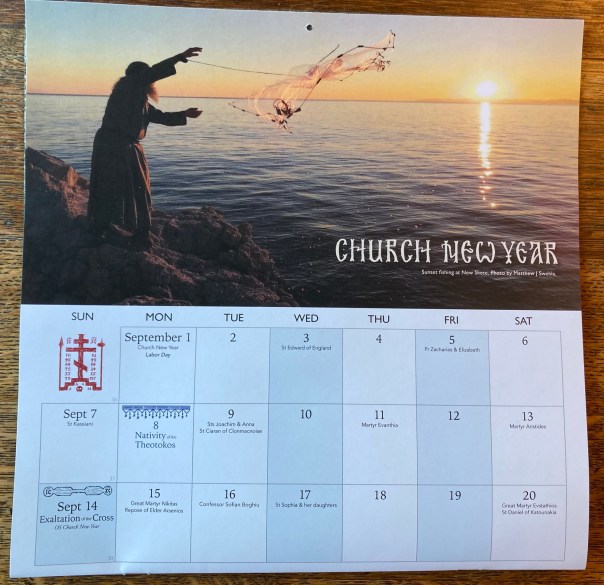
The American Labor Day holiday is on the very first day of September this year. This prompts me to pay closer attention at the outset, because that’s also the first day of the liturgical year for Orthodox Christians. I’ve been supremely blessed by various aspects and events of the day…

First, it’s quite warm, which is too hot for some people, but I guess it’s in my blood, to want to be enveloped by air that is not much colder than my body temperature. (Of course I don’t feel the same way about it when the humidity is approaching that of my blood.) No marine breeze has come against me for a couple of days; even at night, when the temperature eventually drops to the usual mid-50’s, evidently it lingers in those lower registers more briefly. It is sweet, to feel fully relaxed, without sweaters or quilts. This kind of day is why I love September so much.
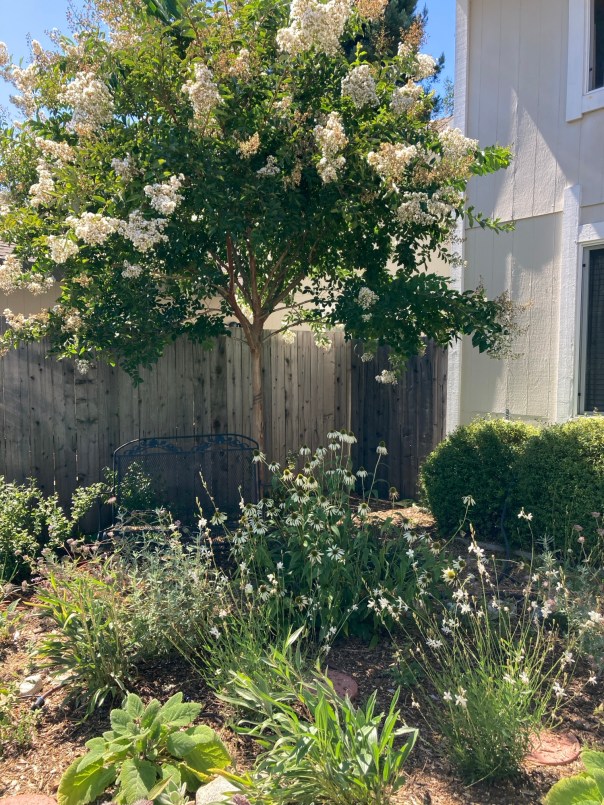
My sometimes helper Alejandro wanted to come and work this morning, so he could do family things later on. He probably would have come at sunrise if I’d let him, but he was willing to come a little later, and he cleaned up and trimmed the most parched and spent things around the place. That lifted my already floating spirits a few feet higher.

I pruned the lemon tree a bit, and removed numerous pine needles and spider webs from it, then texted with my brother about what might be causing some fruit to be deformed. He helped me figure out that it is citrus bud mites. I don’t know, if anything, what I will do about this. Maybe some insecticidal soap…
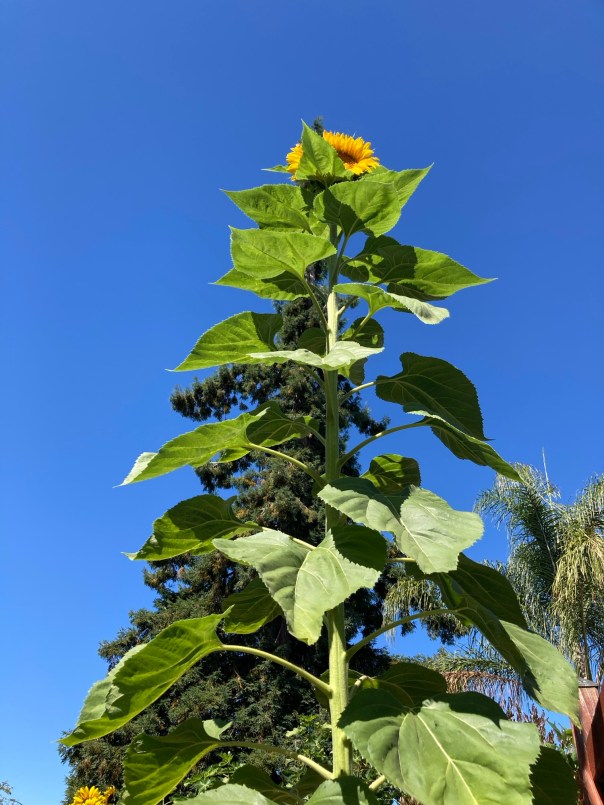
I admired the tallest sunflower I have ever grown.
I dusted one bench, and sat on another
to admire my favorite echinacea flowers.
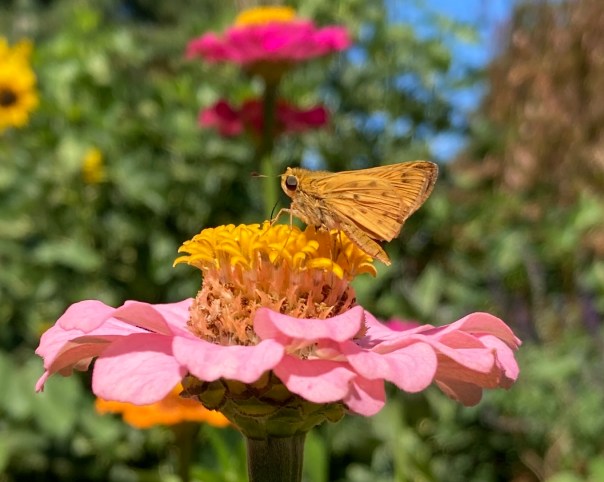
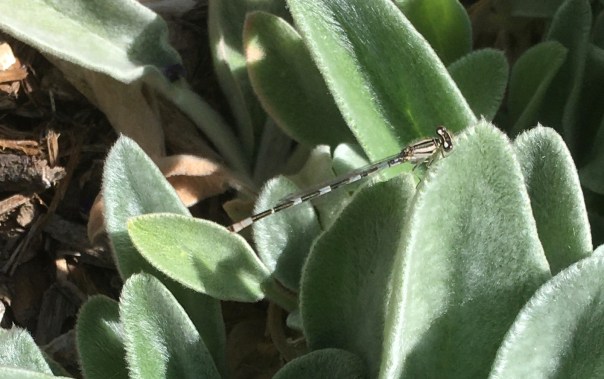
I watched the skippers on the zinnias,
and tidied up the apple mint and the lemon verbena.
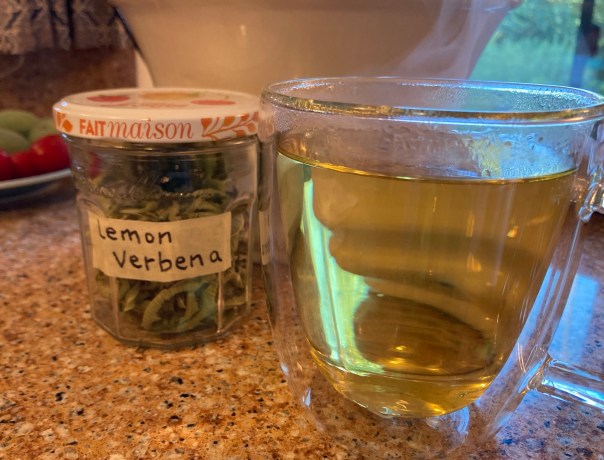
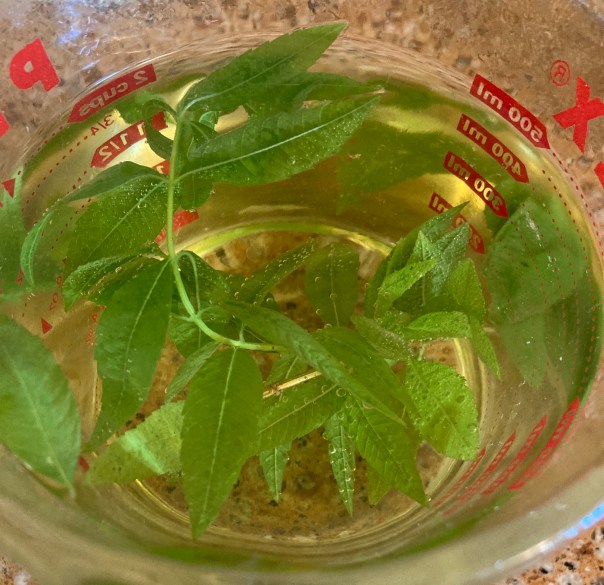
I made tea with the trimmings of the verbena.
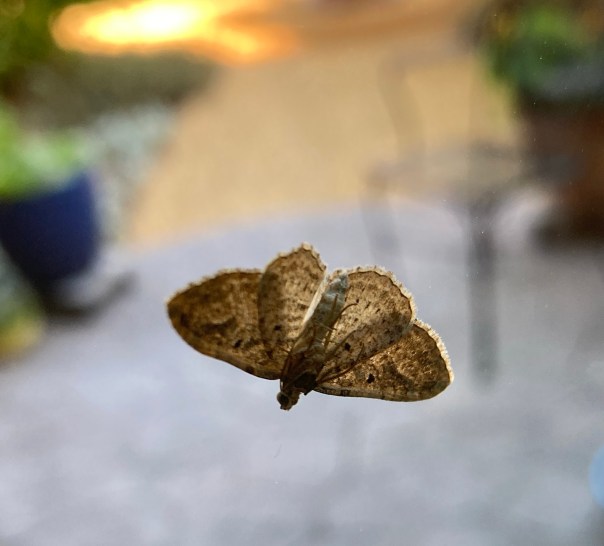
Bent-lined Carpet on the other side of the glass one morning.

From time to time I consider tossing out the orchids that have come to me over the years, all but one of which has never bloomed again. But a friend told me that I should give them the kind of nourishment they like, food that is designed specifically for orchids. She said there are different orchid fertilizers depending on the species of orchid, and whether it is in the bloom period or not. I bought just one type so far; that is a start! My plants have been outdoors for the summer, in the shade, where I remember to water them more often, and they seem to be generally very happy, even if only the one is blooming. Today I will start being a less lazy orchid farmer.
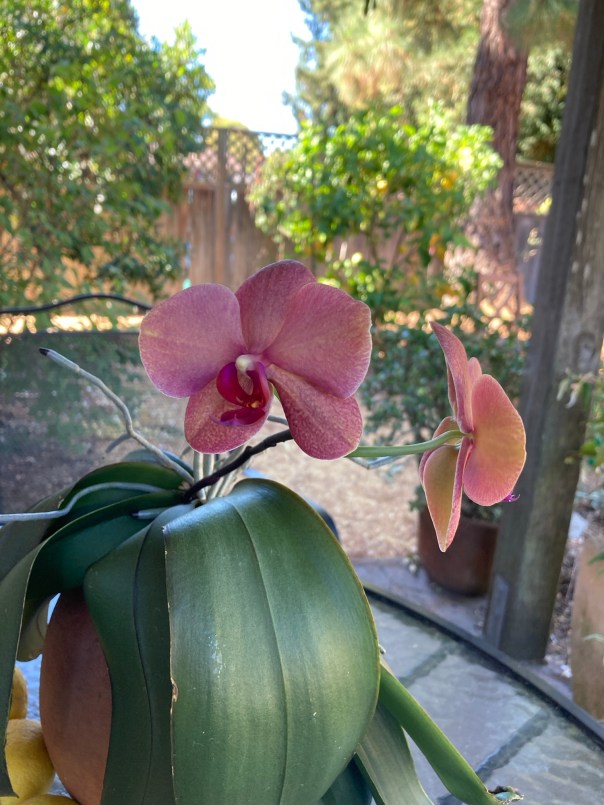
Orchid, with lemon tree in background.

I really would like to grow amaranth in my garden, but I keep forgetting to try again. The one time I planted seeds, they did come up, but I think they were shaded by zinnias or other vegetables and never thrived. Maybe next year. In the meantime, I discovered that a type of amaranth has self-sown in the cracks of my driveway.
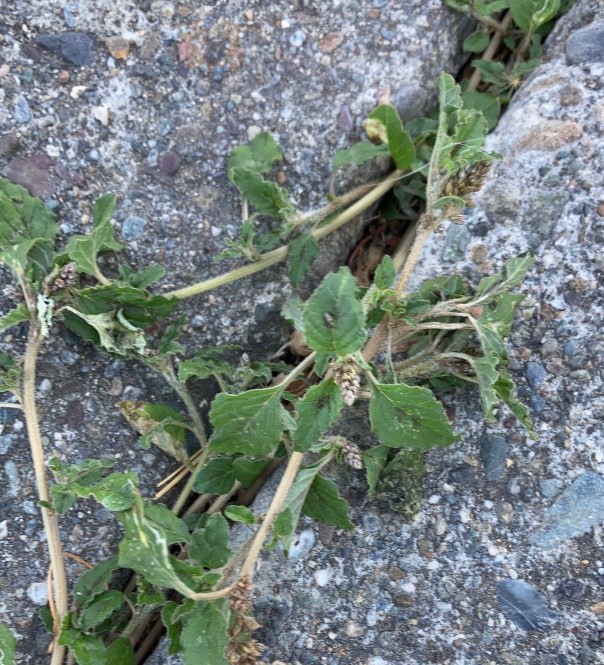
Amaranthus blitoides, Prostrate Amaranth

Is gardening labor, or is it work? Many people have weighed in on the difference in meaning between the two words, and after a brief perusal of their ideas it seems to me the discussion gets too complex for a day like today, when I am relaxing while working. I know working is the word I much prefer, unless I am talking about the births of my children.

Creeping thyme waiting to be planted.

I find a short quote about the words labor and work is not too taxing to think about on this non-laborious day:

“[Hannah] Arendt points to how language itself has always put a consistent break between them: “ponein and ergazesthai” in Greek, “laborare and facere” in Latin, “travailler and ouvrer” in French, “arbeiten and werken” in German, labor and work in English.” -Front Porch Republic 

In any case, I’m sure I will continue to do both, through September and onward, and I will try, I will even work, to be thankful for all of it, whatever God gives me strength to do.
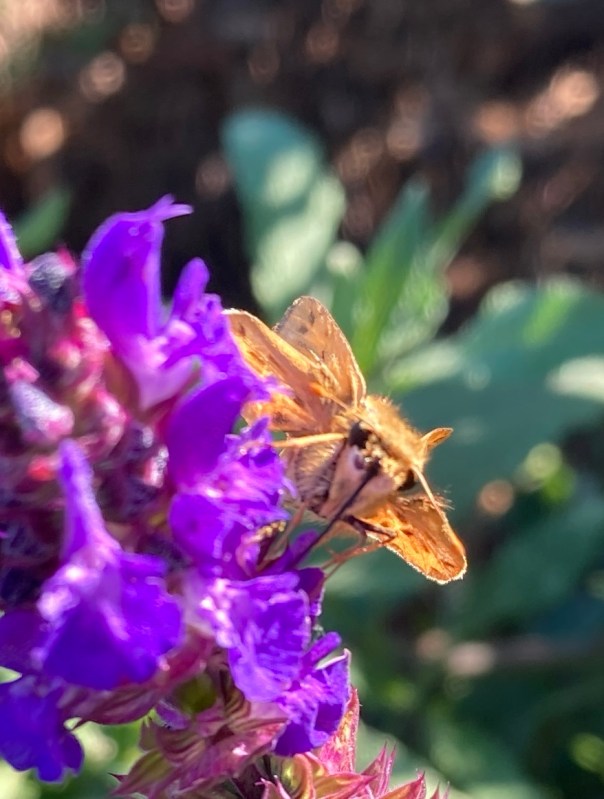
The languid skipper sets an example.

When I was pruning the salvia in front, this skipper was languidly sipping from the same. You can see its proboscis going right down in. The creature was definitely not feeling skippy… I wonder if skippers die in winter? Did it lay eggs somewhere already?

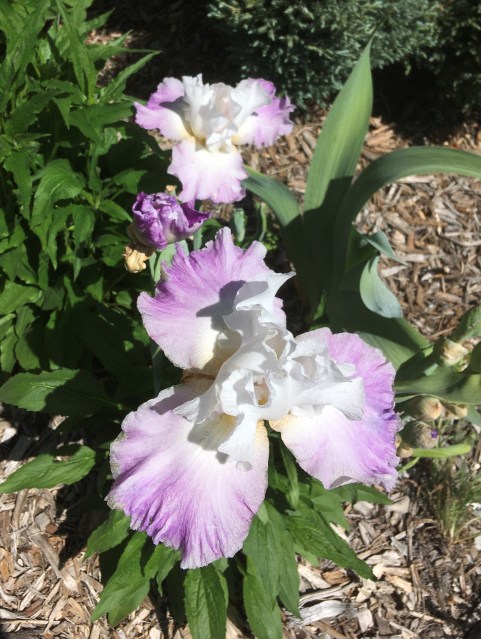
So much is going on in the garden. These irises really should have been divided again — but, already? I’m afraid they will have to wait until next year.


I ended up with so much lemon verbena — what wealth! This is a very nostalgic herb to me, because of when I was in Turkey riding non-air-conditioned buses across Anatolia, and first experienced its delicious scent, though I didn’t know what it was. The bus attendant would walk up and down the aisles every hour or so with a big bottle of something like cologne, and if you held your hands cupped he would sprinkle a tablespoon or so into them. I followed the example of others and quickly splashed it on my face and neck for refreshment. Later, when I returned home, I brought an empty bottle with me and kept it for many years, just so I could take a whiff from time to time.
It was decades before I matched that scent to the lemon verbena plant. I mentioned in the summer how I had made lemon verbena paste, and last week I made lemon verbena simple syrup, trying to use a lot of the leaves before they fall off when the bush goes dormant. Now I wish I had just dried them. Making tea is the obvious thing, but for some reason I never did, though I had dried a few leaves last year and they were sitting on the counter. Last week I made a pot of tea with them and loved it. It’s wonderful just “plain.”

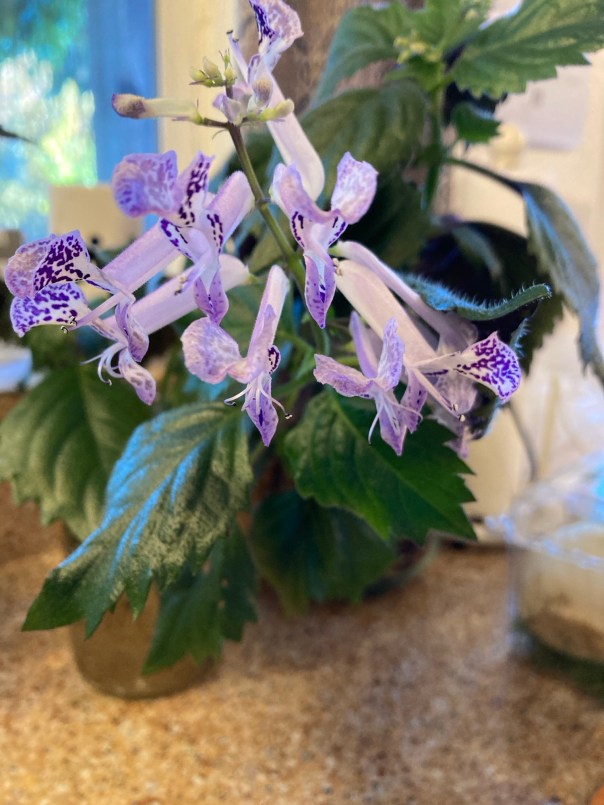
A few months ago my neighbor Kim broke a big stem off a plant on her patio and handed it to me. “Stick this in the ground,” she suggested. Instead, I cut the stem into three parts and put them in water, wherre I noticed they had made a lot of roots pretty quickly. One day I spied this huge flower cluster at the back of the jar by the window. Kim says this is a Plectranthus ecklonii, and her plant never gets blooms like that. I don’t know what I will do with it, but I found out that it is not terribly frost tender.

Plectranthus ecklonii


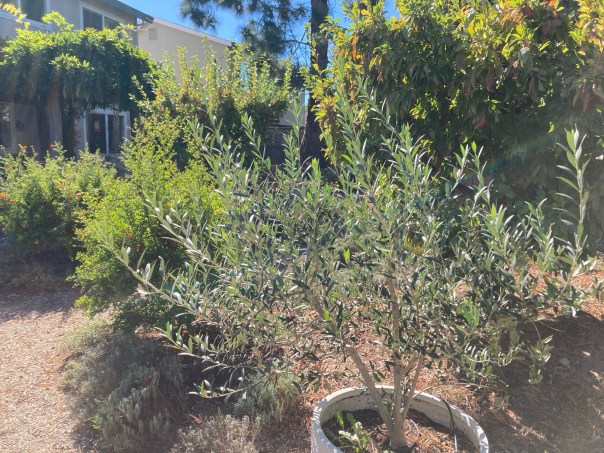
The olive that I repotted with great effort is looking healthy again. I guess my pruning wasn’t too bad, either. I do enjoy pruning, but I’m glad I don’t have to do all of it, or get on ladders anymore for that task. I can just prune the smaller bushes and leave the big ones for my helper.

Recently I did prune all four dwarf pomegranates, in advance of their dormant pruning that will happen later, because my new landscaper consultant told me I should “lift their skirts.” Ahem… is that common parlance in the gardening world? I had never heard the term, but I knew what he meant.

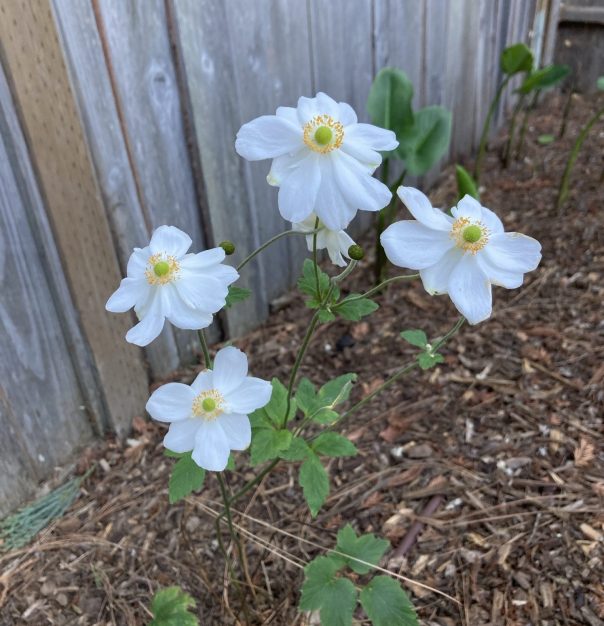
I am thrilled that my Japanese anemones (below) are putting on their best show ever, though they still are not robust — I gave the four of them extra water this year, and they have been getting more sun since the pine tree was thinned. If I feed them a little maybe they will do even better next year.

I have lots more to do before I will feel prepared for winter, but that skipper put me in touch with the reality that I, too, am slowing down. Most likely I won’t get “everything” done. And I guess that will have to be okay!

African Blue Basil

This morning I switched my walking route to the less-frequented, unpaved path by the creek, and I was alone down there. But for a minute I could hear above me on the paved path, behind the trees, a woman talking on her mobile phone. She had it set on speaker, and I could hear both sides of the conversation. The woman near me said, “How is your diet? Are you eating the right things?” and I caught the Woman-on-Speaker saying, “I just can’t eat salad,” after which Woman No. 1 said, “I know people think Special K tastes like cardboard, but I eat a bowl of it every night before bed. It helps me sleep good!” And then they were out of range….

Bristly Oxtongue

That conversation is slightly connected, by being about things we do or do not eat, to the title I almost gave to this post, something about “Bristly Oxtongue” — but it was a little too rough. Now that I think about it, I do see why the plant was given that name, though when I have cooked beef (ox) tongue, I never thought of the bumps as bristly. And the botanical one I saw on the path was in its glory, such as that is, with prolific flowers on a 4-ft high plant. I have identified it in the past, but lately don’t tend to pay attention to the various thistly and bristly plants out there.

Another plant that is not my favorite, and which I wish I could keep far away from my garden, is Bermuda Grass. When I was growing up, the birds brought its seeds to the lawn my father had planted around our new house, and from then on it was a Bermuda Grass lawn, which has a lot to say for it in the dry and hot Central Valley of California. It needed watering less than weekly. It was a scratchy and coarse kind of grass to play on, and in the winter it goes dormant and brown, but it’s very hardy in every way. This plant has been encroaching from my neighbor’s back yard to mine for as long as I’ve lived here, and I am forever fighting its advance.

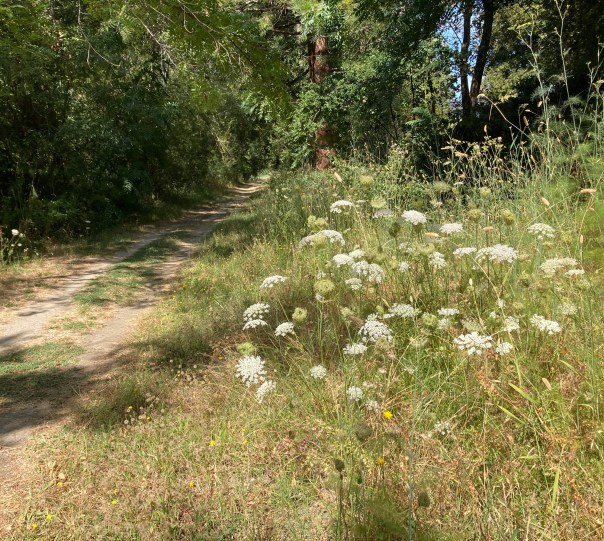
Today I realized that one reason this stretch of path is surprisingly green, is that it has a healthy crop of Bermuda Grass growing on the sides.

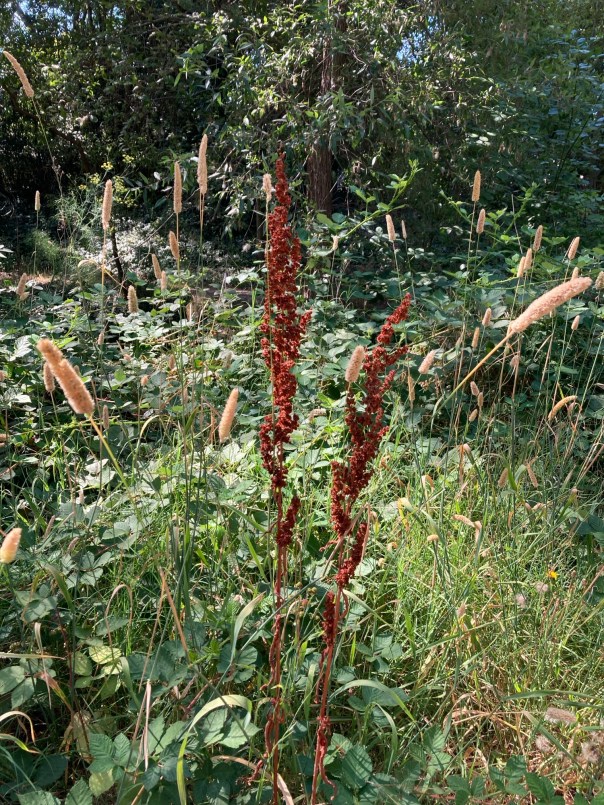
I saw quite a few other plants along the way. Curly dock reminds me of the rural bus stop of my childhood, where that plant was always growing.

Back in the home garden, my cultivated species are filling my cup of contentment. I have strawflowers for the first time, which the skippers love. If I didn’t have the ability to put a big digital photo here, I wouldn’t be able to see the long but miniature tongue the skipper is dipping down into that flower. Drink up, little skipper! Be my guest!

African Blue Basil

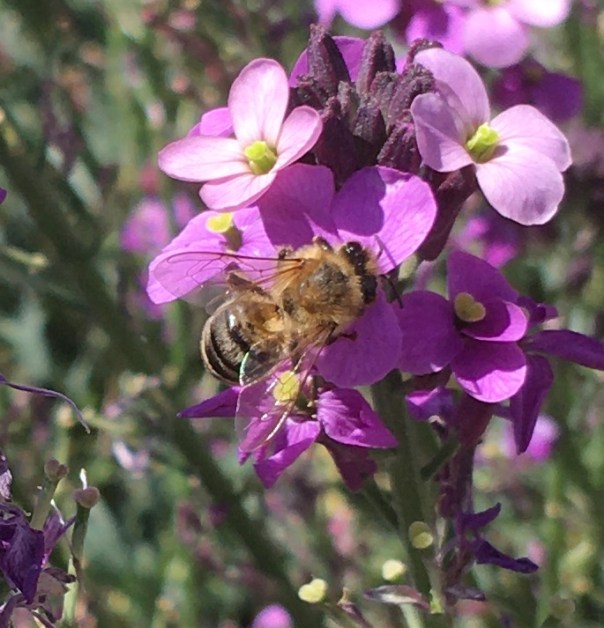
The plant you have been waiting for is the African Blue Basil — at least, that’s what the tag on the little pot said, that I brought home from the nursery. I just read about it online, and it says that the leaves are purple when they first sprout, and mine aren’t… It also is supposedly a perennial, which would be nice. It’s magnificent, and I saw two species of honeybees among the dozen or more were working it. It’s the latest dish that the pollinators are tasting on the smorgasbord in the Glad Garden.

How many burning bushes today?

I stepped just beyond my front door only to put a letter out for the mailman, but I immediately forgot myself and stepped farther, to gaze upon that small part of my kingdom…

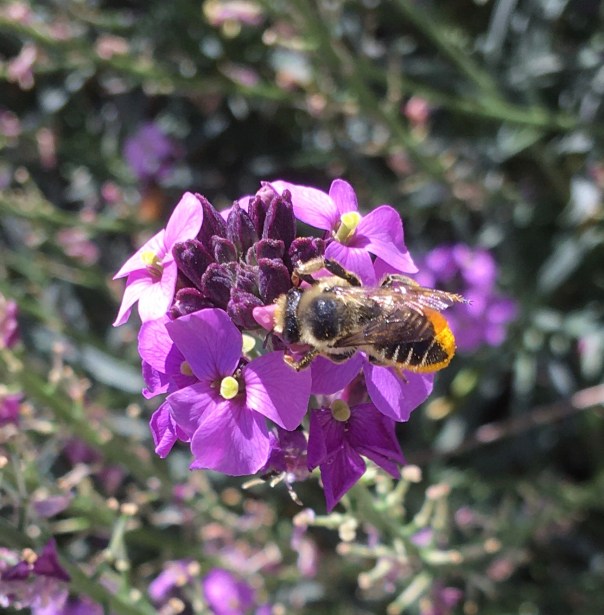
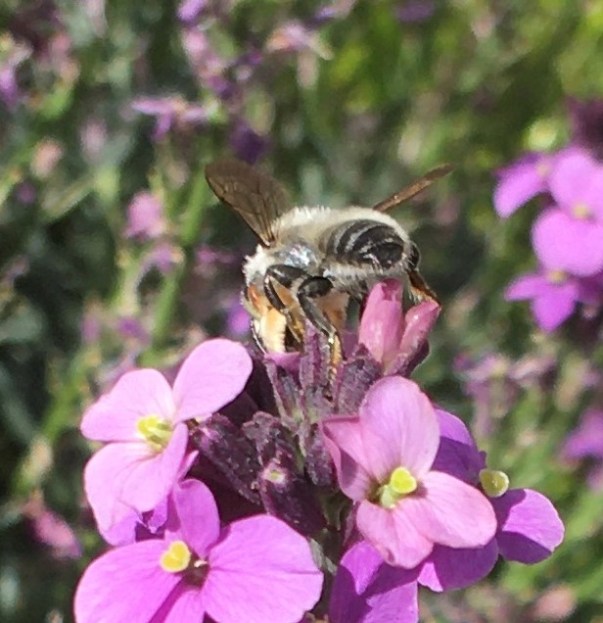
Carpenter bees were working at the white salvia that has filled out so well and become a definite feature of the landscape. Only carpenter bees were there. What about the other flowers? On the wallflower, grown to a prominent bulwark of purple in that area that is squeezed between the street and the driveway, buzzed a half dozen different sorts of pollinators, among them honeybees (I hope), stripey little bumblebees, and a species new to me, with bright yellow abdomens underneath.

And what a quietly “burning” bush — to follow the metaphor of the poem below — this creature is. I’m amazed that I saw him at all:

I spent a half hour studying them and collecting blurry pictures to help me see them better. I pulled out the orange California poppies that I am trying to keep from taking over my pale yellow plantation of them. After peering into the asparagus beds that are becoming a forest, I spied a few spears that could be cut, and managed to remember them long enough to bring out a knife with which to do that.

The rest of today promises to hold encounters with several bright and human epiphanies. My world is illuminated and shining full of these transitory and eternal treasures. Christ is risen!

THE BRIGHT FIELD

I have seen the sun break through
to illuminate a small field
for a while, and gone my way
and forgotten it. But that was the pearl
of great price, the one field that had
the treasure in it. I realize now
that I must give all that I have
to possess it. Life is not hurrying

on to a receding future, nor hankering after
an imagined past. It is the turning
aside like Moses to the miracle
of the burning bush, to a brightness
that seemed as transitory as your youth
once, but is the eternity that awaits you.

~ R. S. Thomas (1913-2000), Welsh poet