Tag Archives: St. Athanasius

What Athanasius knew.

Psalm 58:8

Thou tellest my wanderings:
put thou my tears into thy bottle:
are they not in thy book?

The more one researches current events, historical accounts, and the tangled web of cultures and civilizations going back to the foundation of the world, the more likely is a fall into worry and even despair. We fear especially for children who have to grow up in a violent era, as many have done. That’s why I take courage from the life of St. Athanasius, and pray that my children, grandchildren, godchildren, and all of us, might learn deep in our souls what he knew. The following is an excerpt from a post I wrote several years ago in a time of sorrow. I have shared the quote from his treatise more recently than that, but I hope you might agree with me that it’s worth rereading:
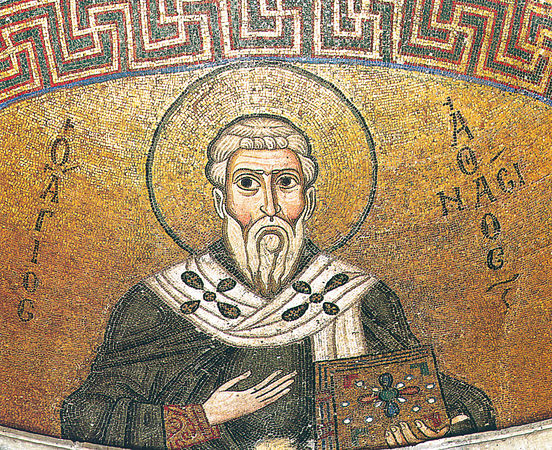
I learned in the short account of the life of Athanasius at the beginning of his On the Incarnation, that the last and worst persecution of Christians ended in Egypt in 311 A.D., when Athanasius was about fourteen. From the age of five he had lived with the constant threat of death, and with the ever-present reality of persecution of his friends and family. The behavior of the ungodly is irrational and inhuman, and tends to cause great pain and suffering, often unto death, not only of the innocent but also of the most Christ-like. As an adult the scenes and events of his childhood seem to be fresh in his mind when he writes:

“A very strong proof of this destruction of death and its conquest by the cross is supplied by the present fact, namely this. All the disciples of Christ despise death; they take the offensive against it and instead of fearing it, by the sign of the cross and by faith in Christ trample on it as on something dead. Before the divine sojourn of the Saviour, even the holiest of men were afraid of death, and mourned the dead as those who perish. But now that the Saviour has raised his body, death is no longer terrible, but all those who believe in Christ tread it underfoot as nothing, knowing full well that when they die they do not perish, but live indeed, and become incorruptible through the resurrection. But that devil who of old wickedly exulted in death, now that the pains of death are loosed, he alone it is who remains truly dead.”
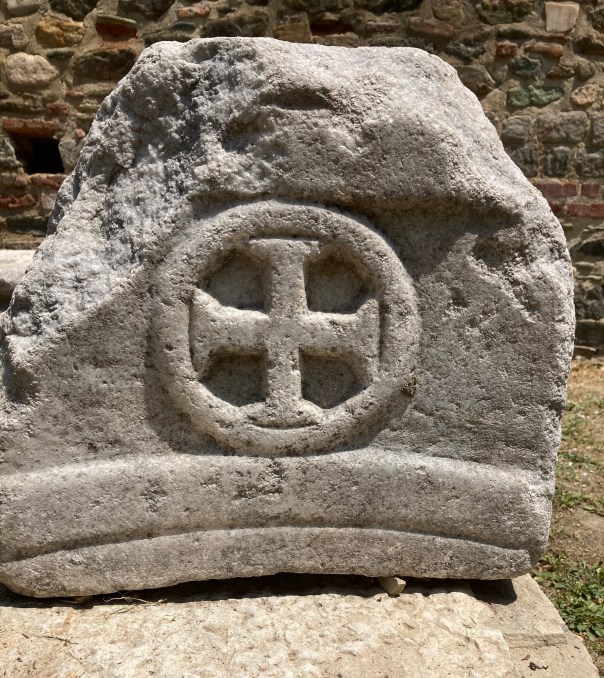
Thessaloniki – Rubble at Church of the Acheiropoietos

Wonderworker of Britain

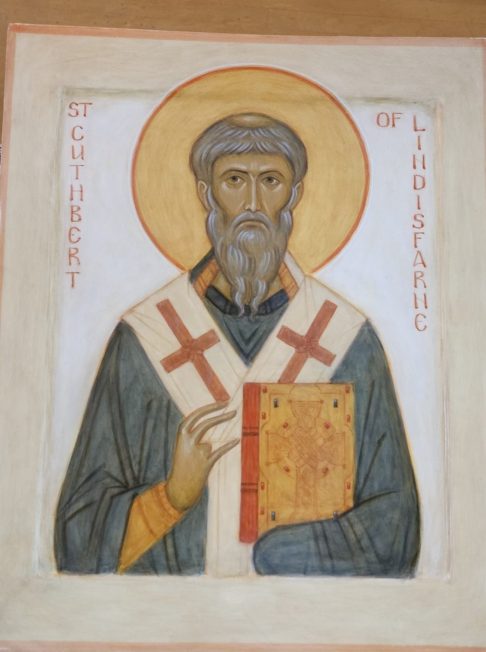
Saint Cuthbert is another bright saint of the church who is remembered this week; he is called Wonderworker of Britain, and is the most beloved English saint in that country’s history. I missed my best chance to become familiar with St. Cuthbert when I visited Durham Cathedral in England where his relics are. I hadn’t become a catechumen in the Orthodox Church yet and didn’t yet grasp the holiness of such things. There is a lot of information online about the saint, and stories from his life in the 7th century; so many miracles are associated with him.

Here is a simple and early event, from his first monastery at Melrose:

The first obedience of Cuthbert at Melrose was to receive guests. So one morning Cuthbert, not knowing who it was, received and ministered to an angel who was sent him by God. Cuthbert cordially met him, washed his feet, gave him food and drink, but at that moment the guest suddenly disappeared. When Cuthbert looked at the table, he saw that the guest had left white and fragrant loaves on it that were sweeter than honey. Cuthbert’s life was very hard, at times he had to endure the brethren’s slander, frequent attacks of demons and many other hardships, but he always remained peaceful and trusting God. And angels more than once saved him in a visible way, in some cases bringing him food directly from heaven.

Durham Cathedral

Because we have just entered the Great Fast, that story, though it is more about eating than fasting, reminds me of the saying of another worthy saint even farther in antiquity, St. Athanasius the Great:

“To fast is to banquet with angels.”

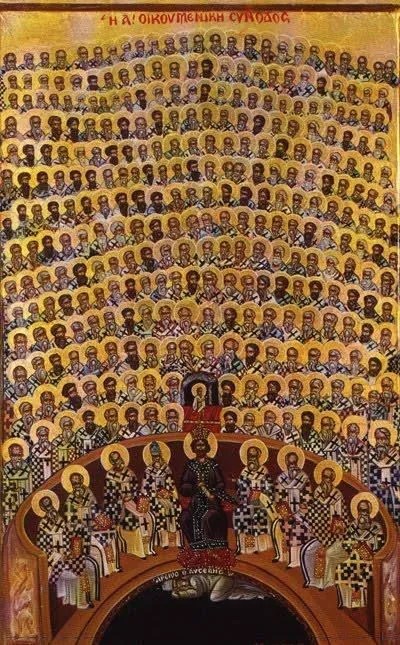
Fathers of the First Ecumenical Council

The Apostles’ preaching and the Fathers’ doctrines
have established one faith for the Church.
Adorned with the robe of truth, woven from heavenly theology,
it defines and glorifies the great mystery of Orthodoxy!
-Hymn for the feast

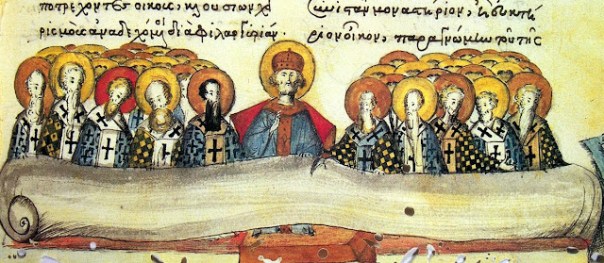
On the seventh Sunday of Pascha we Orthodox commemorate the Fathers of the First Ecumenical Council. This gathering was organized by the Emperor Constantine in 325. St. Nicholas of Myra and many others whom we now know as saints were present.

Arianism (not Aryanism) had been a recurring source of controversy in the early Church, and when Constantine called for a council, it was primarily out of a desire to settle the underlying theological questions. This was the Council at Nicea in Asia Minor, held in 325, where the major part of the Nicene Creed was formulated. Many of the hymns and readings for this feast are very theological, too.

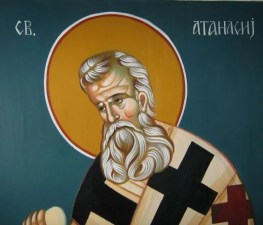
St. Athanasius

On the site linked above, we read, “A list of bishops at the council exists, including about 230 names, though there are indications that the signature lists are defective. St. Athanasius of Alexandria (Athanasius the Great) puts the number at 318, which is regarded as a mystically significant number, as in Genesis 14:14, the number of servants whom Abraham (then still named “Abram”) took with him to rescue his nephew Lot.”

Though we aren’t commemorating the Fathers of the second council today, those who completed the Creed as we know it, I wanted to post the full Symbol of Faith here, as we profess it in our daily prayers and in many services. The majesty and splendor of The Holy Trinity and of His loving plan of salvation captivate me from the first few lines, and by the time we get to “the Life of the age to come,” I am full of joy at being a participant in this Life. Here is some background:

The Creed as it now stands was formed in two stages, and the one in use today in the Orthodox Church reflects the revisions and additions made at the Second Ecumenical Council. Some centuries later, the Roman Catholic Church attempted a unilateral revision of the Creed by the addition of the Filioque, this being one of the causes of the Great Schism between Rome and the rest of the Church.”

THE CREED

We believe in one God, the Father Almighty, Maker of heaven and earth, and of all things visible and invisible;
And in one Lord Jesus Christ, the Son of God, the Only-begotten, Begotten of the Father before all ages, Light of Light, Very God of Very God, Begotten, not made; of one essence with the Father; by whom all things were made:
Who for us men and for our salvation came down from heaven, and was incarnate of the Holy Spirit and the Virgin Mary, and was made man;
And was crucified also for us under Pontius Pilate, and suffered and was buried;
And the third day He rose again, according to the Scriptures;
And ascended into heaven, and sits at the right hand of the Father;
And He shall come again with glory to judge the living and the dead, Whose kingdom shall have no end.
And we believe in the Holy Spirit, the Lord, and Giver of Life, Who proceeds from the Father, Who with the Father and the Son together is worshipped and glorified, Who spoke by the Prophets;
And we believe in one, holy, catholic, and apostolic Church.
We acknowledge one Baptism for the remission of sins.
We look for the Resurrection of the dead,
And the Life of the age to come. Amen.

You are most glorious, O Christ our God! 
You have established the Holy Fathers
as lights on the earth! 
Through them you have guided us to the true faith! 
O greatly Compassionate One, glory to You!

They trample on it.

On my drive home yesterday, I listened in turn to both of the books that our women’s book group will discuss soon. This passage from On the Incarnation by St. Athanasius is one I’ve shared before; in its quiet way it reminds me of the enduring foundation of our Christian faith, that Christ has destroyed death. This is a thought and phrase that we Orthodox sing extravagantly every Pascha, but we don’t always act as though we believe it. St. Athanasius calls across the centuries to refresh our hearts by the witness of our brothers and sisters in the faith:

“A very strong proof of this destruction of death and its conquest by the cross is supplied by the present fact, namely this. All the disciples of Christ despise death; they take the offensive against it and instead of fearing it, by the sign of the cross and by faith in Christ trample on it as on something dead. Before the divine sojourn of the Saviour, even the holiest of men were afraid of death, and mourned the dead as those who perish. But now that the Saviour has raised his body, death is no longer terrible, but all those who believe in Christ tread it underfoot as nothing, knowing full well that when they die they do not perish, but live indeed, and become incorruptible through the resurrection. But that devil who of old wickedly exulted in death, now that the pains of death are loosed, he alone it is who remains truly dead.”

-St. Athanasius, On the Incarnation

Holy Martyr Gordius of 4th-Centry Cappadocia is one of those who took a fearless stance regarding death. He is commemorated on January 3rd.