Tag Archives: Turkey

Strolling by the sea.

Izmir, Internet photo

Long, long ago, I lived in Turkey for most of a summer as an exchange student. My host family lived in a house in an older neighborhood of Izmir, the district of Bayraklı. Three years later when I visited them they had scaled up and moved to a high rise apartment at the other end of the city.
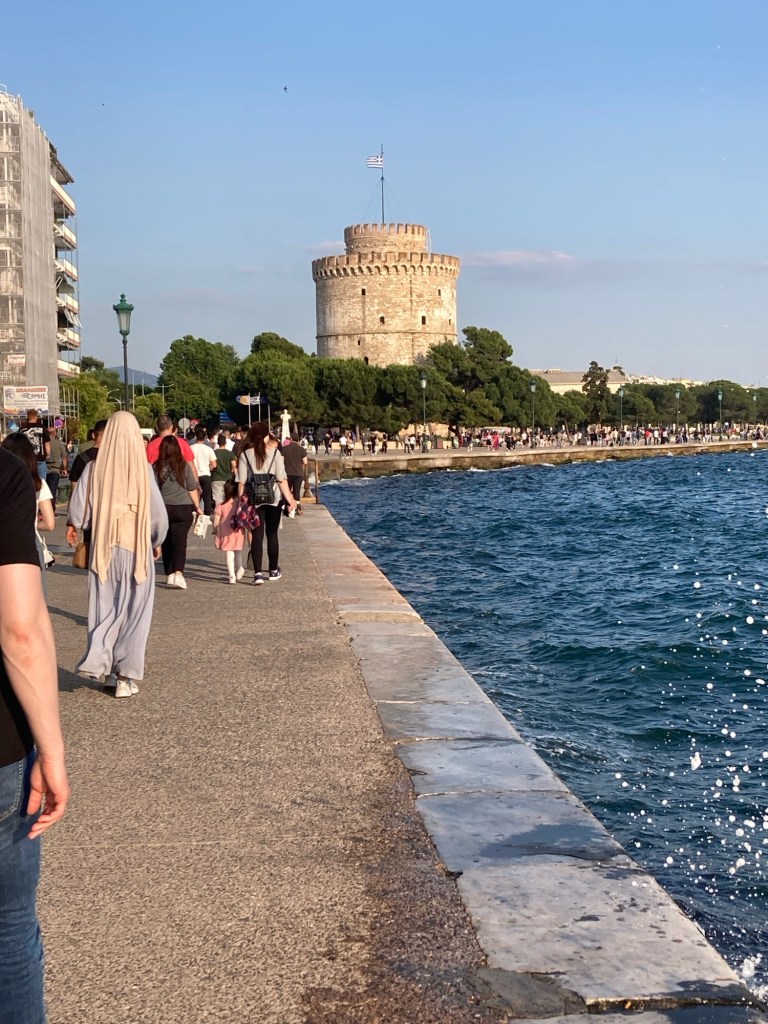
The New Waterfront in Thessaloniki

One thing that was the same both times I was there was the custom of strolling along the wide walkway next to the sea that is called the Kordon.

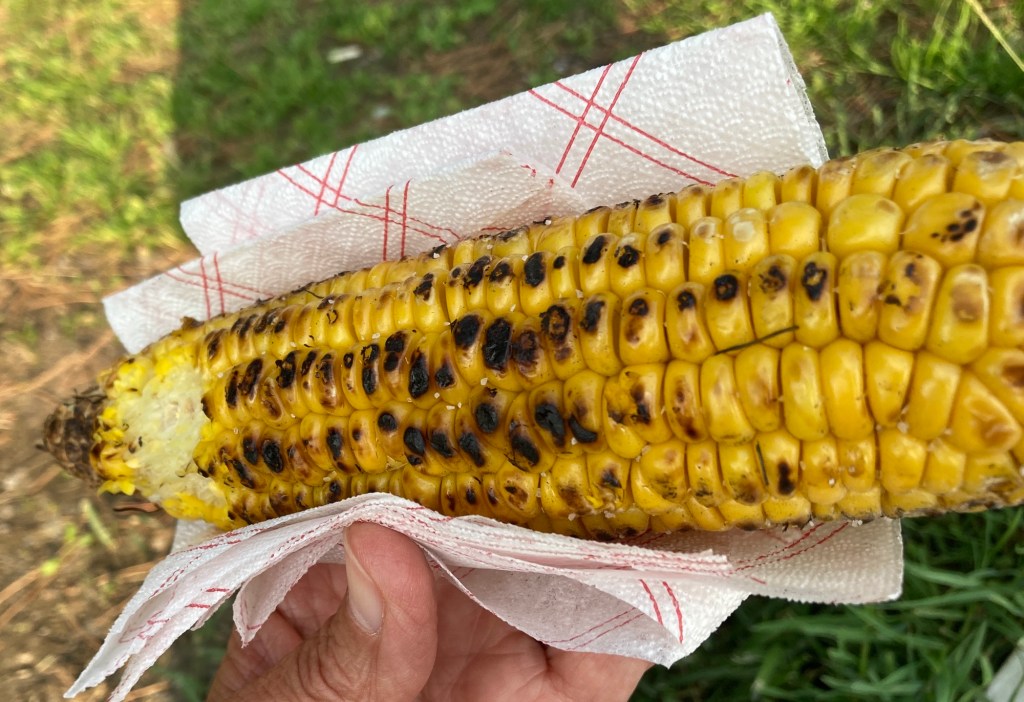
On summer evenings especially it was the place to be, refreshed by the breezes off the Aegean. But at any time of day you might run into friends, or intentionally meet up with them there; it was a simple pleasure for families. Street vendors sold snacks from their carts, such as roasted corn and nuts. As the sun was setting we’d buy a cup of the pudding-like warm drink called salep.

Thessaloniki

Over the years since I have often thought about how that city had so wisely made the most of its setting for the health and prosperity of its inhabitants.

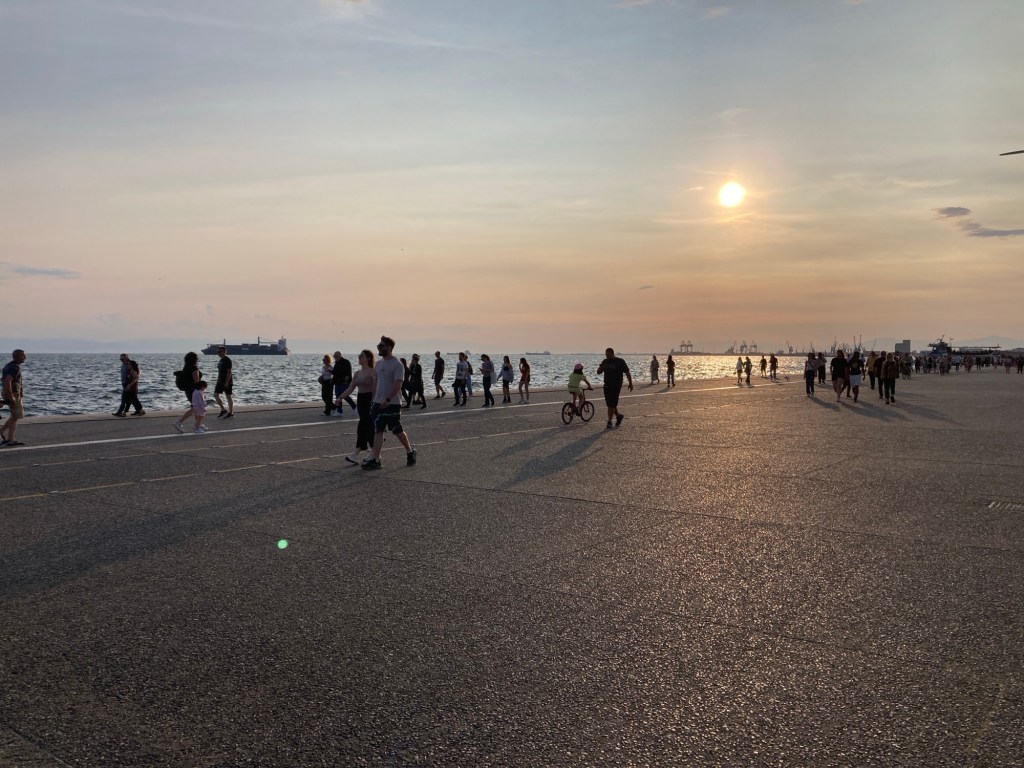
I saw in advance that Thessaloniki had a similar recreational strip, called The New Waterfront, and last night I walked there for an hour.
I learned this morning when looking for a picture of Izmir’s promenade that some people have called these two “twin cities,” because of various historical and demographic aspects they share, besides their seaside location and pleasing waterside parks. Wouldn’t it be fun to spend time in both cities for a year or two while researching and writing a book comparing the two? Hmm… I should have thought of that about twenty years ago, but I suppose I was busy with something else.

Alexander the Great

Well, it felt very strange and dreamy to wander along that walkway last night, like going back to a different life in a different place that was somehow the same place, an existence that belonged to a different person. But no, it was me, and it is me. It’s a mystery for sure.
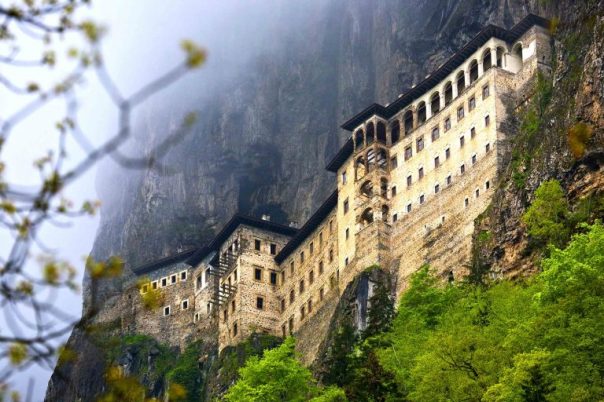
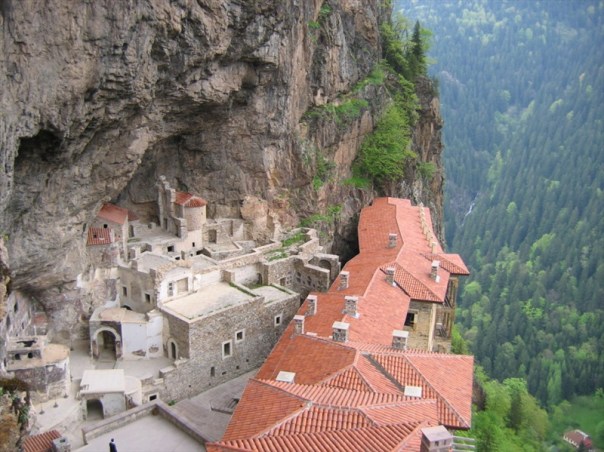
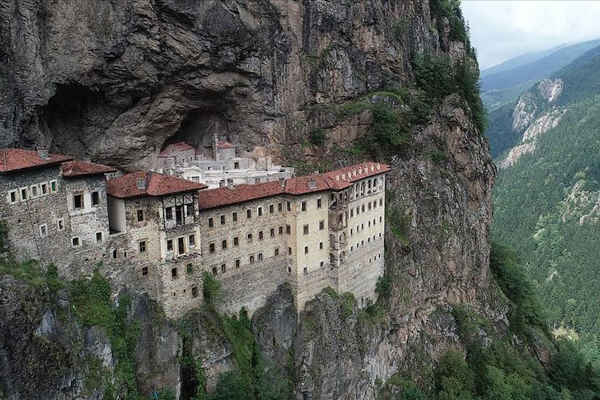
Sumela Monastery

Only recently did I learn of the existence of Sumela Monastery, a place which briefly in this century became particularly associated with the Feast of the Dormition (falling asleep in death) of Christ’s Mother, which we commemorate this month. This recent connection started in 2010:

“Orthodox Christians from around the world attended a rare Liturgy at an ancient monastery in Turkey… at the Sumela monastery in Trabzon province, north-eastern Turkey. At least 1,500 pilgrims, including people from Greece and Russia, traveled to the Byzantine-era monastery. The service was the first Greek Orthodox Liturgy to be held at the shrine since 1923, after the Turkish government allowed pilgrims to worship there once a year in a gesture toward religious minorities, in line with Turkey’s aspiration to join the EU.

“Those attending were elated, with one worshipper saying it was a great moment as they could now pray on the land where their great-grandfathers had come from. In 1923, the Turkish authorities had banned religious services at the monastery, built on the side of a mountain, and turned it into a museum, after it was abandoned when a population swap between Turkey and Greece saw most local Orthodox move to Greece.”

The Patriarch of Constantinople was allowed to celebrate Divine Liturgy every year on the Feast of the Dormition from 2010 until 2015, but starting in 2016 reconstruction work has prevented this.

I watched several videos about the monastery and the one I really liked was this one: “What is the Sumela Monastery?” because the personable guide had taken time to learn something about the history of the place, and he respectfully refrained from blathering ignorantly, unlike some other visitors who put up videos on YouTube.

The monastery was founded by two monks in the fourth century, and through the following centuries repeatedly fell into ruin and was restored; in the 13th century it had grown into its present form.

Occasionally when I happen upon pictures or stories of ancient sites like this, built into steep cliffs, I become entranced with the otherworldliness of them and the drama of their settings. I’m glad I can visit them by means of these pictures and videos.

A blessed Feast of the Dormition to you all!

Greedy among the flowers — and fruit.

WHO CAN EXPLAIN WHY WE  LOVE IT (PICKING MULBERRIES)

Who can explain why we love it—West Lake is good.
The beautiful scene is without time,
Flying canopies chase each other,
Greedy to be among the flowers, drunk, with a jade cup.

Who can know I’m idle here, leaning on the rail.
Fragrant grass in slanting rays,
Fine mist on distant water,
One white egret flying from the Immortal Isle.

-Ouyang Xiu,  (1007 – 1072) China

I get the impression that this outing to West Lake is primarily a chance to get away from work. The poet enjoys being idle, and maybe he and his friends just happen to find mulberries to pick while they are enjoying their drink and exulting in the beauty of the day.

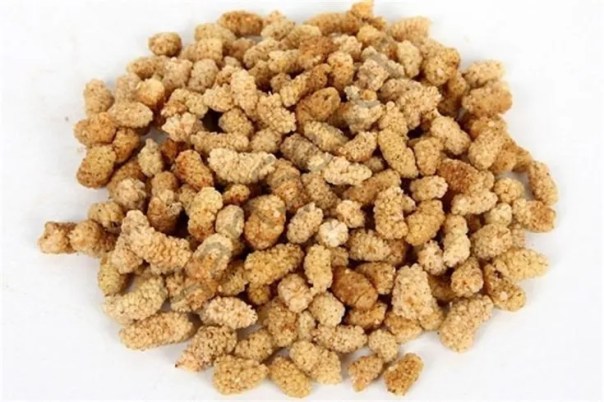
In any case, even the title of the poem is not about eating the mulberries — but the fruit itself is on my mind since I recently discovered dried white mulberries in the market, from Turkey. They are unlike any dried fruit I’ve ever eaten. Their extreme sweetness leads people to say that the flavor is honey-like; the chewiness of them is what I love most.

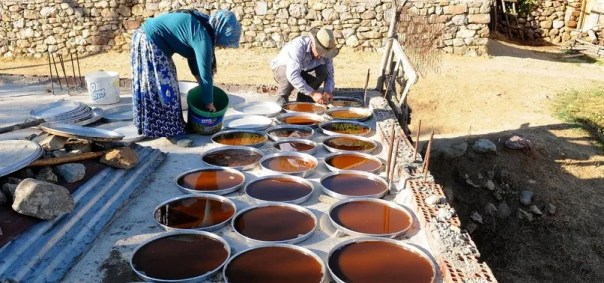
I read that nearly every village in Anatolia grows them, and the growers also make mulberry syrup, which I’d like to try as well. So I offer some photos that I found online. I also ran across a post, “White Mulberries,” from a  Turkish blog, and it contains the kind of information that is most interesting to me.

The site Tropical Fruit Trees shows photos of several varieties of Mulberry, by which I was able to see that the ones I’ve eaten dried are the “Persian White” type. They are the most cold hardy and grow in USDA zones 3b through 9. If I had twice as much land as I do, I would surely want to plant one of these trees. They attract birds, and produce lots of fruit, which means, plenty to dry. The leaves are not only the best food for silkworms, but make good livestock feed as well. Maybe one of my readers will be inspired to plant a Persian White!

Tea and Tomatoes

Turkish tea fr Kate 9-2014Kate brought me the most amazing tea from Istanbul. I keep sniffing it and trying to discern what all those exotic smells are — no label tells me anything about it. And I’m kind of afraid to make a pot of tea and end up disappointed, because you know how herbal teas often don’t taste as good as their dry aromas lead you to expect? It  Well, what do I expect, after all that watering down…

P1110230 new mugBut when I do take the plunge, I will drink it out of this new mug I gifted myself with. Big mugs, preferably those that hold a pint, are my favorites, but they usually aren’t so girly looking. When I saw this big and flowery one, there was little deliberating.

Today Mr. and Mrs. C. came over. The guys then went to Starbucks to drink tea and talk, and we “girls” worked in the garden. It reminded me of when I was in Turkey lo these many years ago, and in the villages the men would sit in the café and drink tea and play tavla (backgammon) while the women were out in the olive groves harvesting the fruit.tomatoes peeling 9-14

But today really wasn’t much like that – we also spent quite a while looking at pictures of Kate’s wedding for which Mrs. C. had arranged the flowers, and we talked to the man who delivered a cord of firewood on to our driveway. He is 83 and still does all his own busintomatoes peeled 9-14ess.

Mrs. C. is always glad to take cuttings from my garden to experiment with. This time I sent her home with some wayward sprouts of my mystery salvia, and some succulents. Also some of our lovely Yellow Brandywines. But we still have more tomatoes than we can use fresh, so I scalded and peeled a bunch last week and made tomato pudding.

tomatoes peeling ice