Monthly Archives: May 2009

Crude Classifications

Friends of mine have had relatives who died leaving a house full of stuff, the junk all mixed in with the valuables. Someone has to put order into the mess and dispose of it. In one particular case, my friends were the only family members willing and able, so they spent two or three whole weeks working full-time to sort through the clutter.

One room in my house, plus several boxes and drawers, nooks and crannies elsewhere, are in need of similar treatment, but I am not dead. If I were dead, it would certainly be easier for someone else to sort through things and quickly figure out that a large part could go in the trash. After all, I don’t have money stashed between the pages of books or in amongst old newspapers, as my father did.

The things of value–well, I just know there is someone in the world who would want them, if I could only locate that person. I also know that I myself want some of the items, but I can’t find them right now, and I’ve forgotten what many of them are….

Faced with this kind of meandering mind, another friend found herself almost wishing (to actually wish it would be an outright sin, so I’m confident that her thoughts were more along the line of vain imaginations, as in counting the serendipitous blessings of something bad happening) that her house would burn down, and reduce the quantity of goods over which she was responsible.

“Crude classifications and false generalizations are the curse of organized life,” said George Bernard Shaw. Whole housefuls classified as “Gone” would be too crude, I’m afraid. A more practical outworking of acquiescence to life thus cursed is the three-box system, by which one sifts one’s possessions into one of three boxes labeled “Toss,” “Give,” or “Keep.” If I could do that, it would at least be a step in the right direction. Later I could sort the “Give” things into about twenty sub-boxes–or maybe reconsider and start another “Toss” box. T.S. Eliot said that “Success is relative: it is what we can make of the mess we have made of things.” I know without a doubt he wasn’t talking about women’s work, but it is a comforting thought.

One large group of belongings is my collection of quotes, some of which you see popping out on this page. Quotes are small and tidy things which is why I have been able to keep them corralled in just four places in one room: a folder in a drawer, books on a shelf, favorites in a small notebook, and digitally on the computer. They are legion and yet not overwhelming in physical size, so I spend enough time with them to keep them disciplined and fairly at-the-ready. See here, I have put several of them to work helping me to tackle my mountains of clutter.

I even managed to cut this blog down from the unwieldy treatise on life that it was originally going to be, and am hopeful about boxing up more of my world into bite-sized chunks for more enjoyment in the future.

As Martha Stewart says, “Life is too complicated not to be orderly.”

Oregon Trails Weekend

Over the weekend we drove north to see children and grandchildren. First there was a drive of many hours to arrive in time for a baseball game in which C. played Friday evening.

Next morning, following the ballet lesson of L., seven of us packed into the van to drive two more hours farther into Oregon for a double-header baseball game at Glide. The weekend was heavy with baseball.


Daisy chain bracelets are a nice ball field pastime.

After the games, we stopped by Colliding Rivers, where Little River and the North Umpqua have a head-on.

Then dinner, and driving, driving, so late that all the children and one grandpa were asleep when we got back.

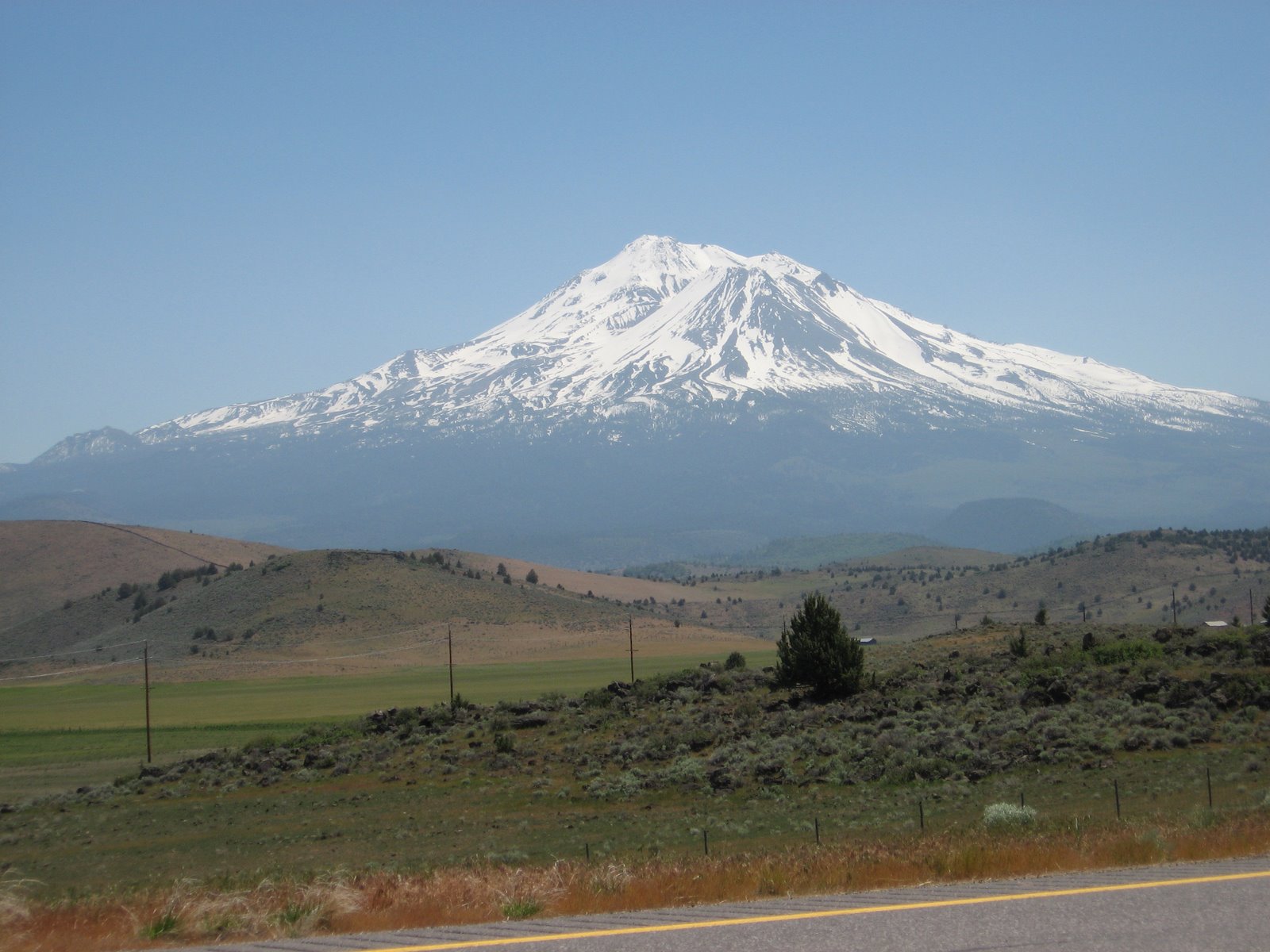
And on Sunday, back down into Siskiyou County, CA and the beloved Mount Shasta. It so dominates one’s consciousness with drama and size–it’s no wonder people tend to think of it as magical and spiritual in itself.

The lupine bushes are also large up there. Mount Eddy in the distance.


Thanks be to God for families and love and cars to drive so we can visit. Thanks for safety and for a home to come back to.

Ice Cream Spoons

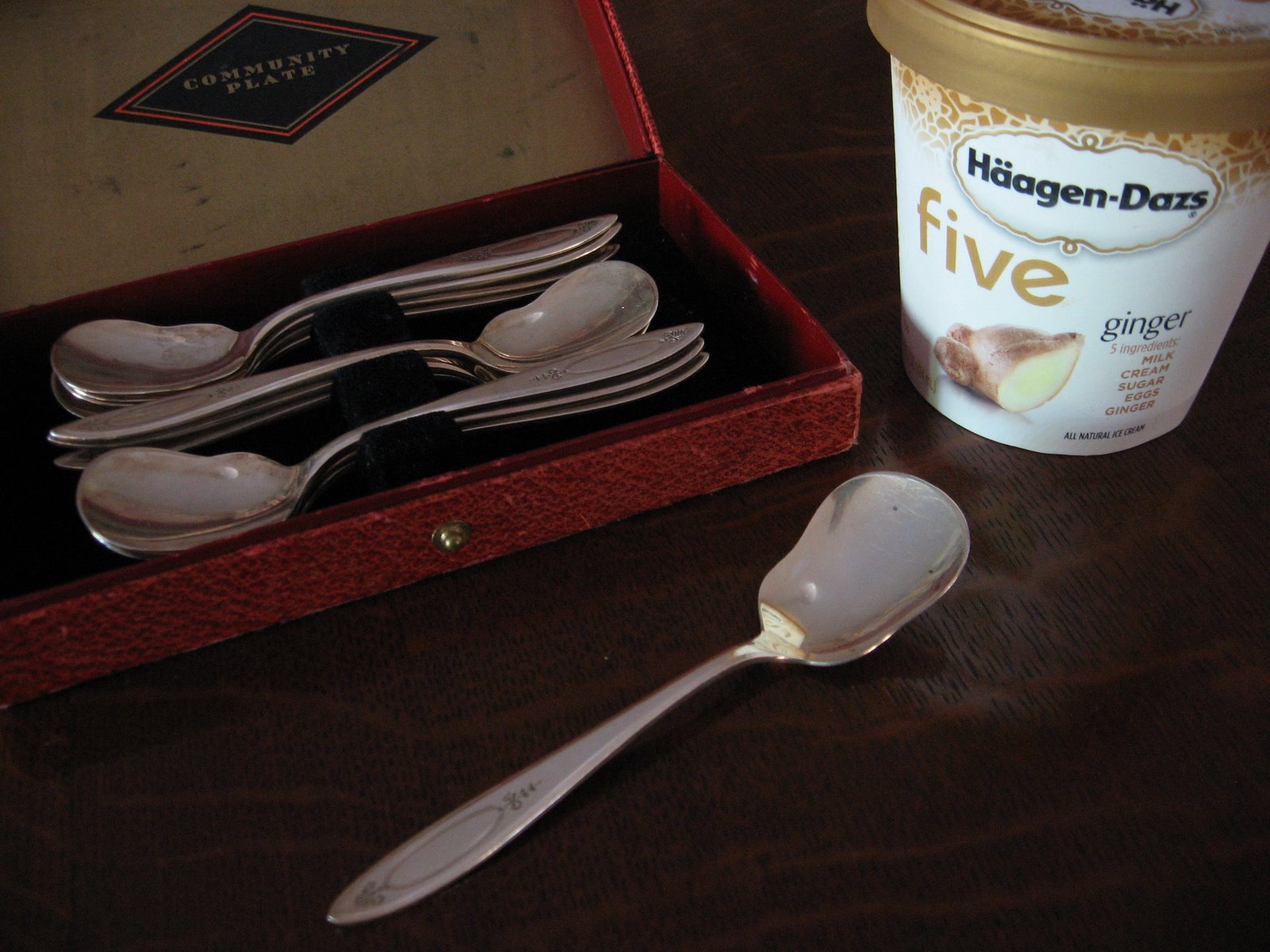
On Mother’s Day we had ice cream for dessert, and I remembered to use the ice cream spoons to make it more festive. They belonged to my maternal grandmother, and when as children we were given ice cream at her house she always insisted on getting this little box out of the buffet so that we could partake in the most exalted and tasty fashion. Because, as everyone agrees, ice cream really does taste better when eaten with the spoon designed just for it.

Death and Love and Prayer

The day following my last post, my father became very ill, went into the hospital, and departed this life all in the course of that one day. I had just quoted the Church’s hymn about Christ’s victory over death, and immediately I was clinging to the broadest possible meaning of that fact. In the morning I was tending the rosebushes and remembering my mother, who had passed over to “the other side” nine years ago that day, when I got the call from my sister that Daddy was going to the ER. The whole day then was infused with a heightened awareness of death and the grave that kept me turning to the One in Whom we are not ultimately separated by death. Before the day was over my remaining parent was gone from this world.

I am not about to consider either of them absolutely cut off from me and their fate finalized. Many would say that the dead are beyond help–they had their chance while they were on earth. How do they know? God will have mercy on whom He will have mercy. He is beyond systems and protocols, beyond time, a Trinity of persons full of love and mercy, and we humans are all connected in our need for Him and for His forgiveness. So let’s stand together and pray for one another.

Father Alexander Schmemann in Great Lent writes, “Praying for the dead is an essential expression of the Church as love. We ask God to remember those whom we remember and we remember them because we love them. Praying for them we meet them in Christ who is Love, and who, because He is Love, overcomes death which is the ultimate victory of separation and lovelessness.”

I prayed today for my father–and for many other dead–with the Akathist (Hymn) for the Departed, a prayer that accumulates metaphors and phrases attesting to the ocean of forgiveness that is in our Lord. “…behold, Thy cry from the Cross for Thine enemies is heard: ‘Father, forgive them.’ In the name of Thine all-forgiving love we make bold to pray to our Heavenly Father for the eternal repose of Thine enemies and ours.'”

Besides enemies, the prayer lifts up to God for his mercy those who died in various ways, who had no Christian burial, the young, the hardened sinners, the innocent who suffered, those who made the innocent suffer, and on and on. Not one of us is righteous before Him, after all.

Are we not encouraged by Christ’s parables to be persevering in asking for what we want? And if we love people, we want very much for them to be forgiven and to live eternally in God. We would hate to give up easily, to write them off, if there is one more thing we can do. Christ has trampled down death by death. Let’s show love to our fellow humans by carrying their pallet down through the roof tiles, so to speak, to Christ, to the Holy Trinity.

The Akathist continues: “May the Divine Lamb be their perpetual light. Grant, O Lord, that we too may celebrate with them in a deathless Passover. Unite the dead and the living in unending joy.”

Christ is risen!