Last week my friend K. let me know that she had a large crop of leeks she needed to harvest to make room for summer plants. Not once but twice I went to her back yard and got a bunch. If you aren’t familiar with this vegetable, you won’t know what a treasure had been bestowed on me. K. says that when she cooks leeks it makes the house smell like a French restaurant. They are in the allium family, but have their own distinctive flavor, not like onions or garlic or anything else.
But I’m getting ahead of myself. Leeks need some prep work before you can fully enjoy them.There was my bundle of leeks (the second batch, as I’d neglected to do any documentation of the first) on the back step. These were mostly smaller in diameter than the ones I see in the store, but contrary to the resemblance, they don’t taste like a large scallion, either. And they are dirtier than other members of their family. The next photo was taken a couple of days later, after I took them out of the refrigerator and sliced them lengthwise for cleaning.
Leeks always have dirt between the layers of flesh and you have to spend some time getting them clean. Just plop them in the sink and run the water over them while you use your fingers to loosen the dirt and let it run down the drain.
I accidentally deleted the picture of leeks in my sink, but I think you can imagine it.
Here are the nice clean vegetables. I was preparing to make Leek Confit, a recipe I got online at
http://www.epicurious.com/ and then changed a little bit. I made it twice, once using mostly the white part and this time using the whole thing, I found out that it works either way. It is a very easy way to prepare the vegetable, and the finished product can be used as an ingredient in more leek recipes.
Leek Confit
1/4 cup unsalted butter
4 large leeks, halved lengthwise and cleaned, cut crosswise into 1/4″-thick slices (about 5 cups)
2 tablespoons water
1/2 teaspoon salt
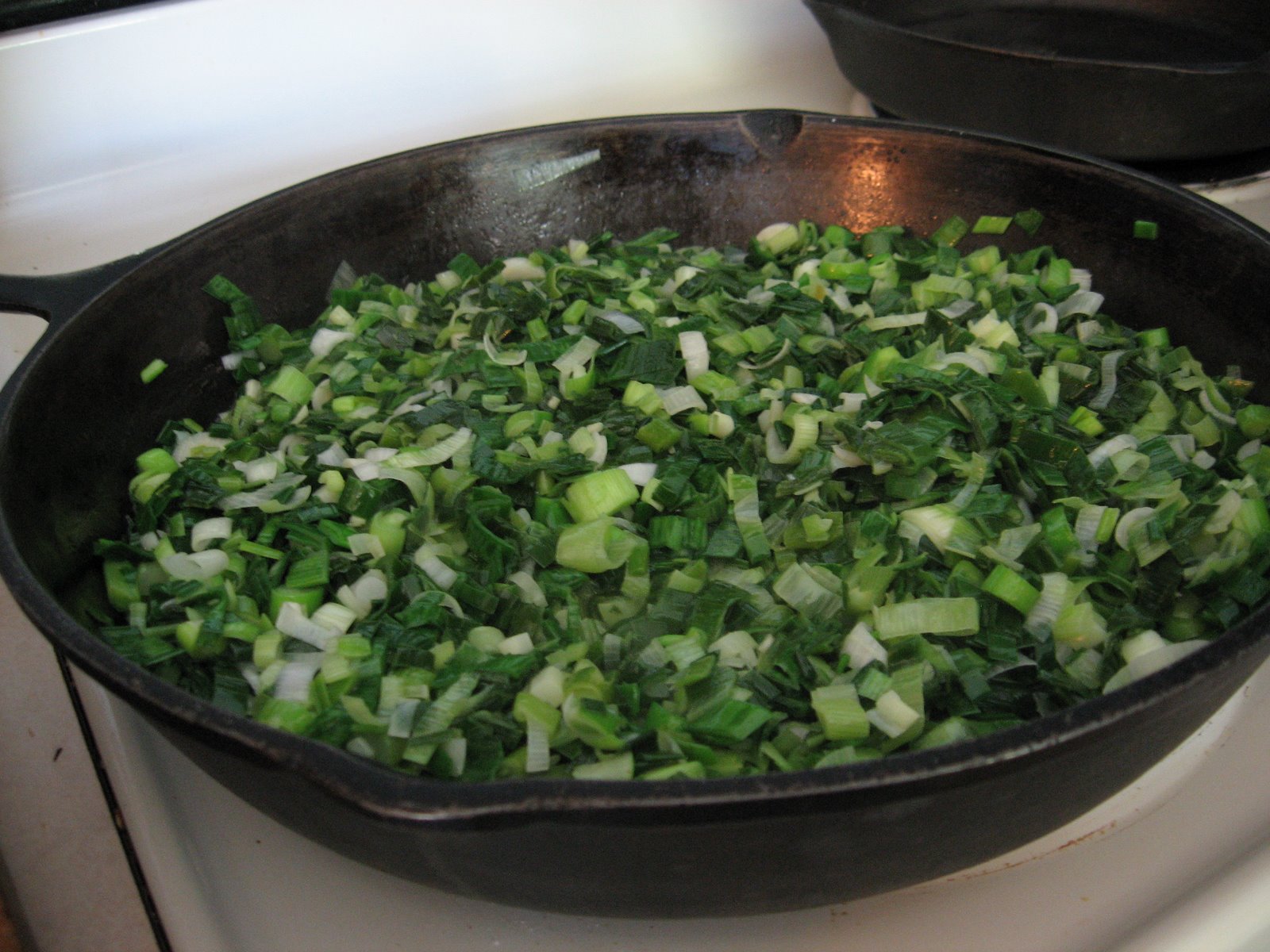
Melt butter in a large pot over medium-low heat. (I had 15 cups of chopped leeks, so I tripled this recipe and used a 12″ cast-iron skillet.) Add leeks; stir to coat. Stir in water and salt. Cover pot; reduce heat to low. Cook until leeks are tender, stirring often, about 25 minutes.
Uncover and cook to evaporate excess water, 2-3 minutes. Serve warm.
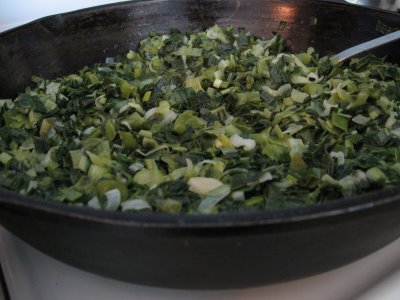
This second picture shows how the leeks turn more of an olive green color after cooking. At this point they are ready to eat as a side dish just the way they are. The first night I made crostini and we spread the toasts with goat cheese and piled the confit on top. That was my favorite. Since then I have also served them alongside or in eggs or as a vegetable dish next to–anything!
The author of the recipe said that the confit will keep for a week in the refrigerator, so I have been hoarding the last bit of my second batch to savor some morning on my eggs or toast. If I get a windfall of leeks again I think this confit would be a good way to freeze any excess.
And after reading pages of recipes for leek tart or quiche, I added some of the confit to whatever typical quiche ingredients I could find in my refrigerator and came up with the following:
Leek Tart
2 cups Leek Confit (recipe above)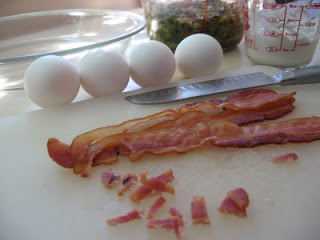
4 eggs
1/3 cup sour cream
2 tablespoons heavy cream
2 tablespoons Chardonnay wine
3 slices cooked bacon, diced
1/4 teaspoon salt
freshly-ground black pepper to taste
Preheat oven to 400°. Beat the eggs with the creams, wine, salt and pepper; add bacon and leek confit and stir. Pour into a pie shell that has been pre-baked for 10 minutes, and place in the bottom third of the oven. Bake for 25-30 minutes, until the top is golden and puffed and the custard is cooked through.
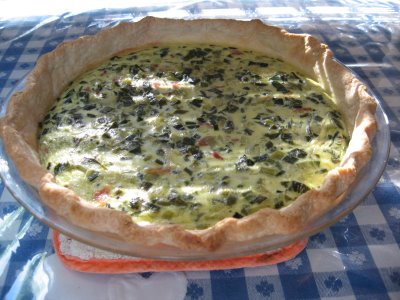
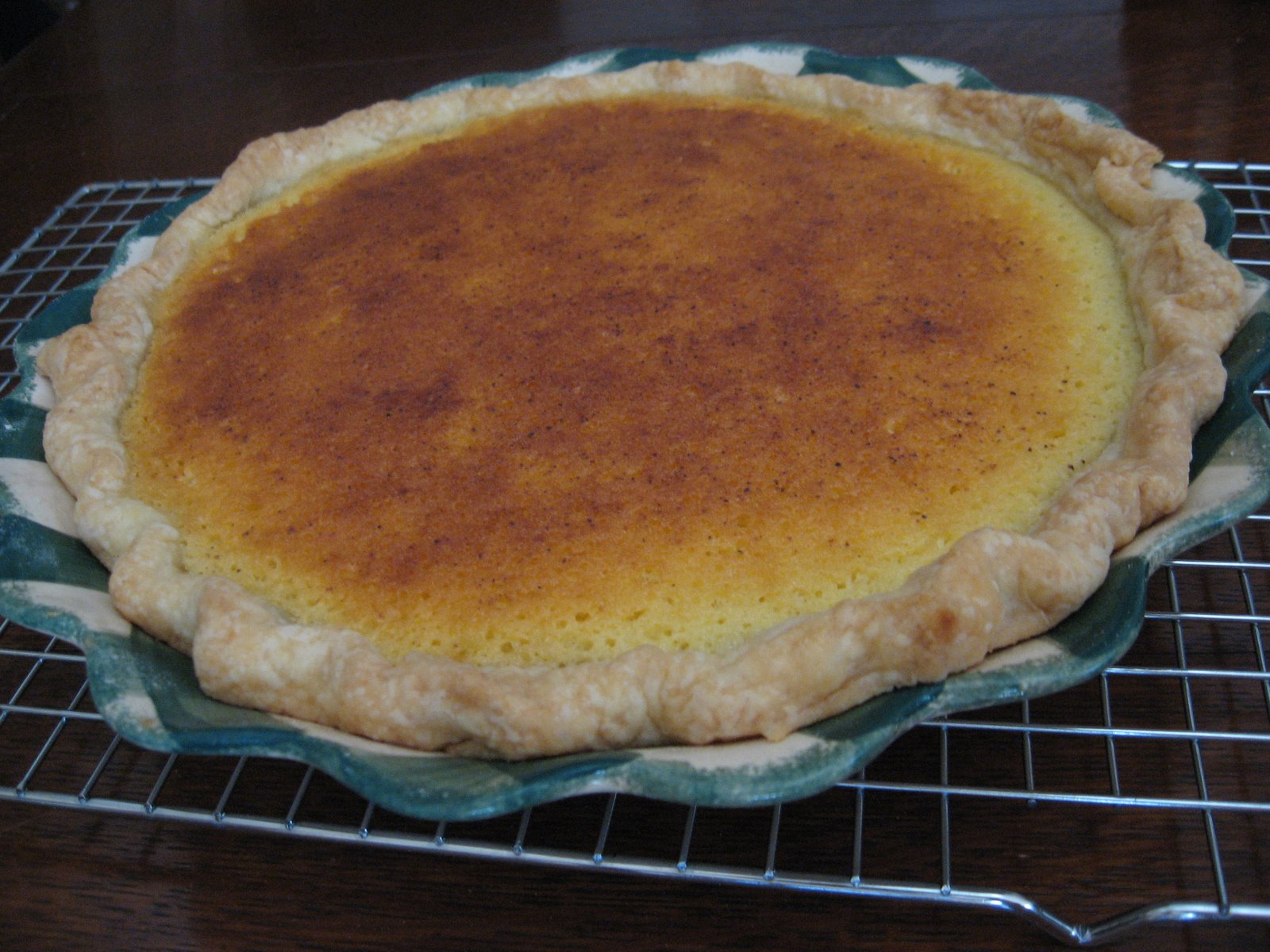
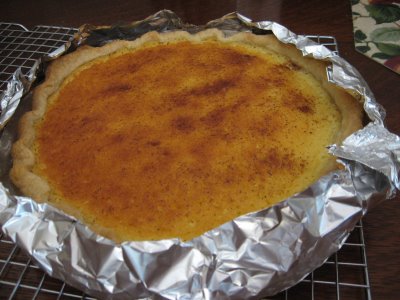
I like this picture of the tart, even though it has dappled sunlight on it, and it wasn’t even quite done cooking when I took the photo. I didn’t want to stick a knife in to test the custard before I’d taken some pictures. When I did peek inside, I realized that the quiche was still too soft, and I put it back in and it puffed more as it was finishing.
I’d like to try more variations on Leek Tart–perhaps something that is not so eggy. But I think it would be hard to go wrong with leeks. Their irresistible flavor almost guarantees success, at least in my house.
Here I’d like to give you my favorite pie crust recipe, since I’ve been blogging about pies lately. For most of my life I used the basic pie crust recipe from Joy of Cooking, until a few years ago I discovered Mark Bittman’s wonderful recipe in How to Cook Everything. It is my new standard never-fail basic, and he gives variations for different size pie pans, single and double crusts, and so on. His was my basic, but I have already altered this recipe to make it less salty. He is assuming salted butter, by the way. I am only giving you the ingredients list here, because I can’t imagine using printed directions to make pie crust, and I didn’t write his down. If you don’t know how, find a real person to teach you while standing next to you.
Pie Crust
For an 8-10″ single crust:
1 1/8 cups flour (5 oz.)
1/4 teaspoon salt
1 teaspoon sugar
8 tablespoons cold butter
3 tablespoons ice water
(sweetened/enriched, add 2 tablespoons sugar and/or 1 egg yolk with the water)
For a generous 10″ or deep single crust:
1 1/2 cups flour
1/2 teaspoon salt
1 1/2 teaspoon sugar
10 tablespoons butter
4 tablespoons ice water
For a 2-crust pie:
2 1/4 cups flour
1/2 teaspoon salt
16 tablespoons butter
2 teaspoons sugar
6 tablespoons water
Happy Baking!
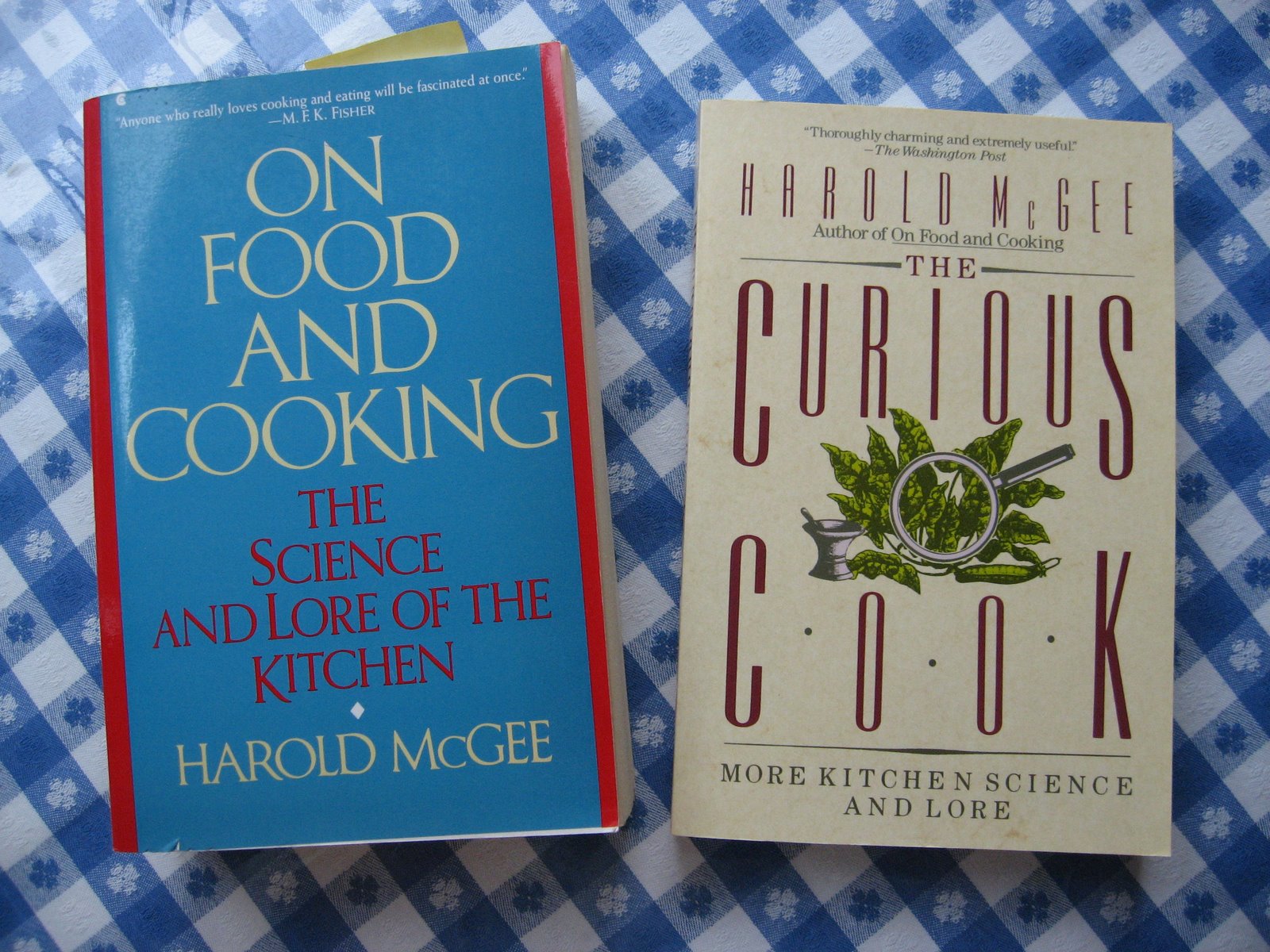 pens. And it’s o.k. to wash mushrooms, because even sitting in a bowl of water, they hardly absorb any (he weighed them before and after) and don’t get soggy.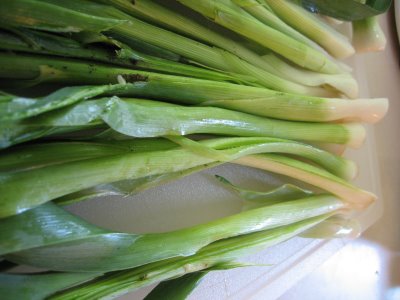


 Gladsome Lights