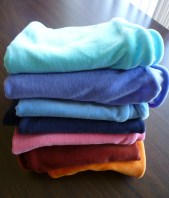
 Back in August I posted this picture of yummy fabric I had bought to use sewing the Waldorf doll I wanted to give to granddaughter Ivy for her first birthday at the end of September.
I managed to do it! As it was my first time assembling this kind of head and body and sewing a face, I decided to make two dolls so as to get extra practice. I was so glad I did, because very quickly it became obvious that two very different little dollie girls were taking shape.
 It wasn’t just that one had brown hair and one had yellow. The expressions on their faces and even the shape of the heads gave them different personalities.
I knew early on that I liked the brown-haired dollie much better than her blond friend. The blonde — I hate to say it — looked like the neighborhood girl no one wants to play with.
 Why was that? My friend Myriah agreed that she wasn’t very likeable, but she thought I should try to fix her. So when I was up at the cabin in early September I tried to brighten her up a bit.
Both her eyes and her mouth were problematic. I guess I had learned how hard it is to make short and precise stitches in such a way that they form at least vaguely even features, when the instructions are to use only two stitches per feature. The mouth looked pinched, and the eyes squinty.
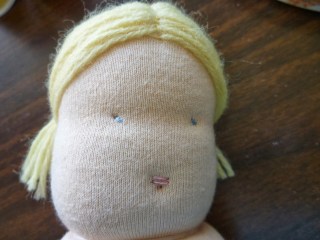 |
| Before |
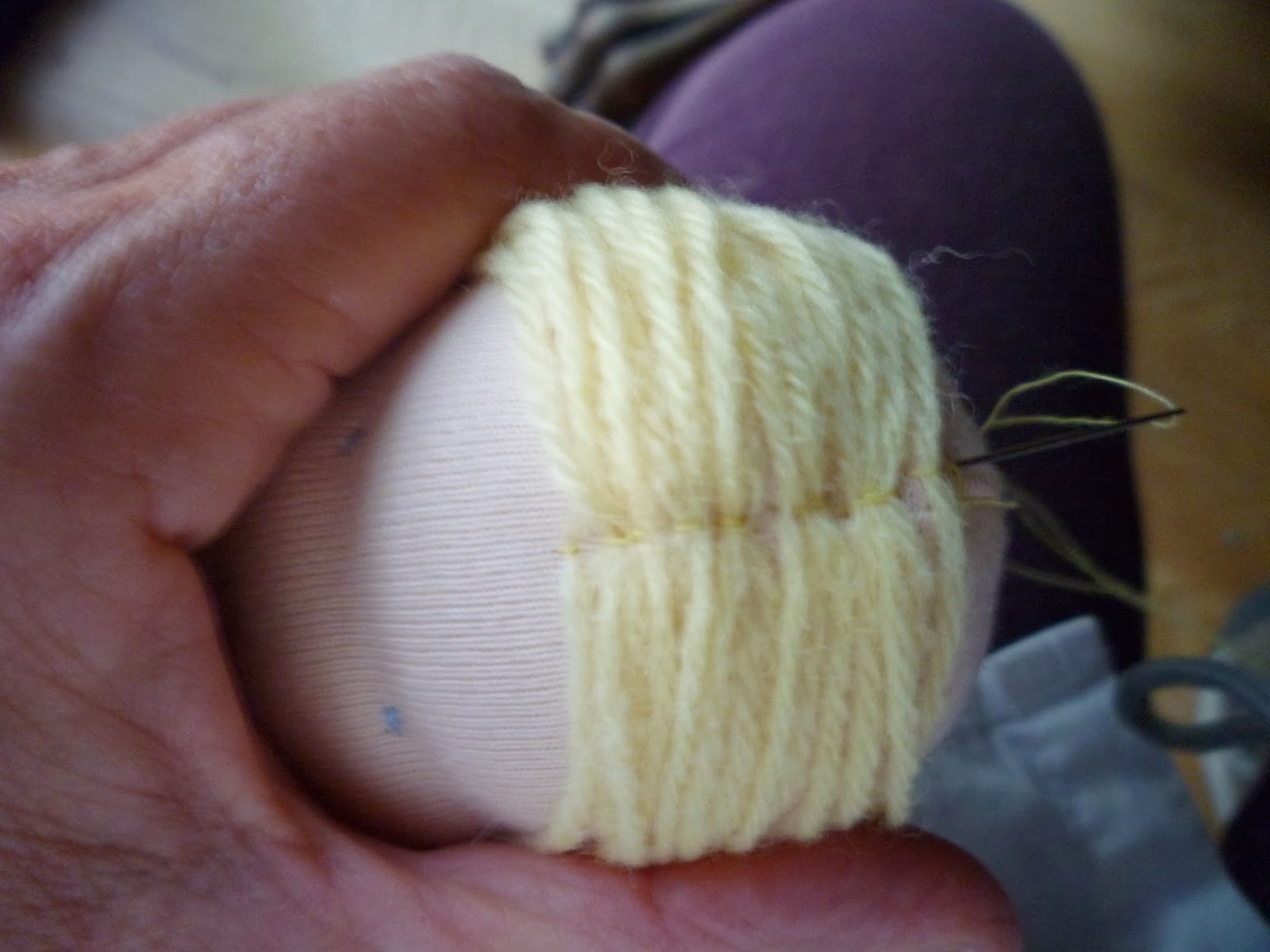
Not only the position of the features and the meagerness of them were unappealing, but the color was lacking. The eyes were pale blue, the mouth pale pink, and as I had already sewn a light color of hair on her head, the total effect was washed out.
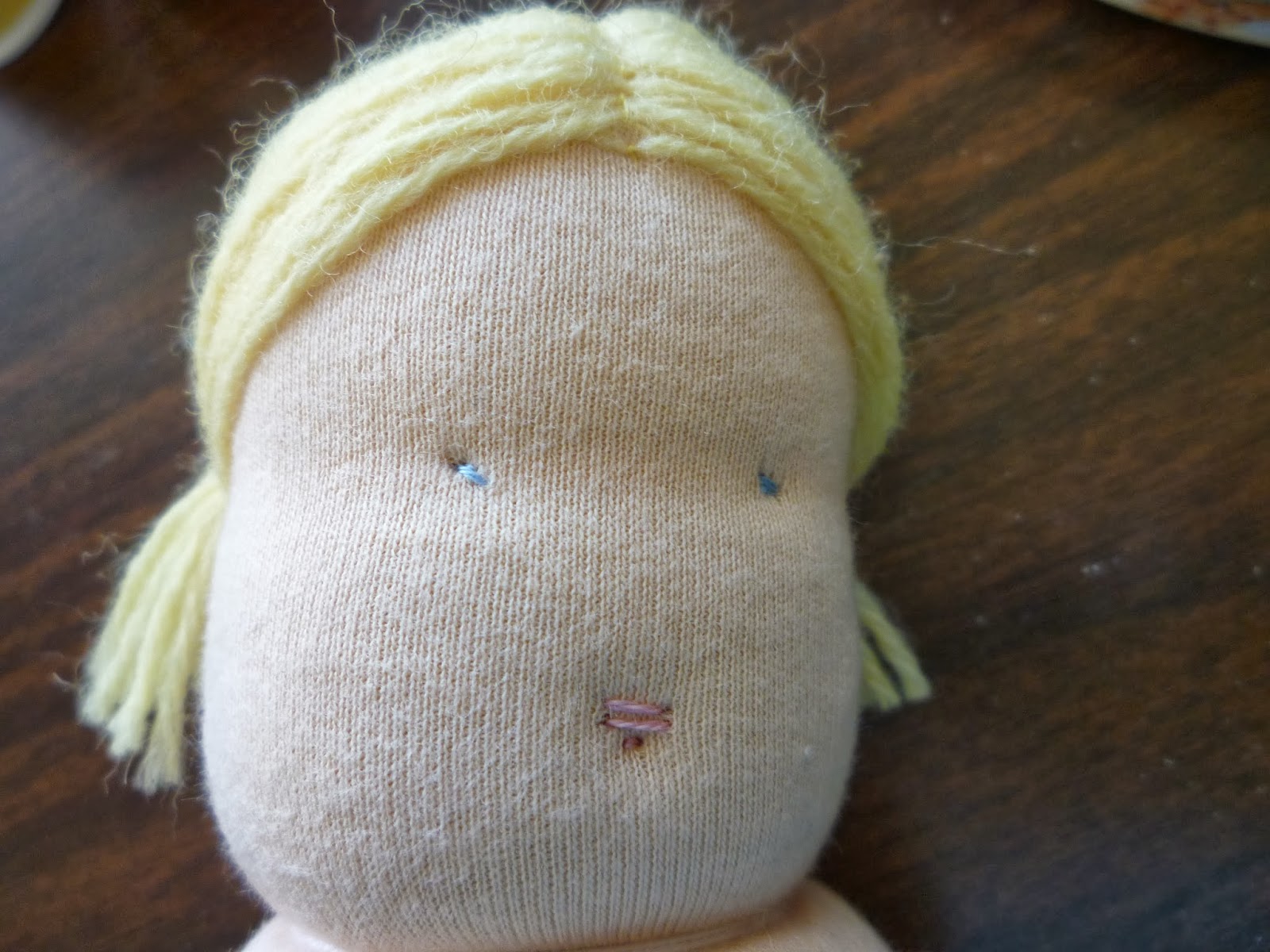
On a rainy afternoon up there in the mountains I set to work, and added bright aqua embroidery thread to her eyes, and darker pink to her mouth. After just a couple more stitches in these more intense tones, her disposition and her IQ improved dramatically.
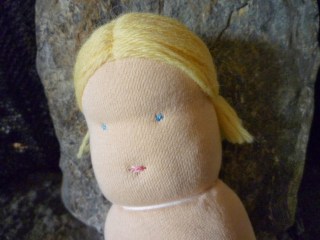 |
| After |
Her jaw is still a bit too prominent, shall we say, but maybe that will not be too bad when she gets her hood on. I’m just happy that she is calmer and more agreeable. I still haven’t finished Blondie, because I knew I wanted to give the sweeter baby to Ivy.
The thrill of seeing the two dollies come almost to life was not something I expected. Immediately I had the urge to start forming a new creature right away, just to find out what sort of character he or she might turn out be. Other things have taken my attention and prevented me, but my materials are at the ready whenever I find the block of time to take the next first step.
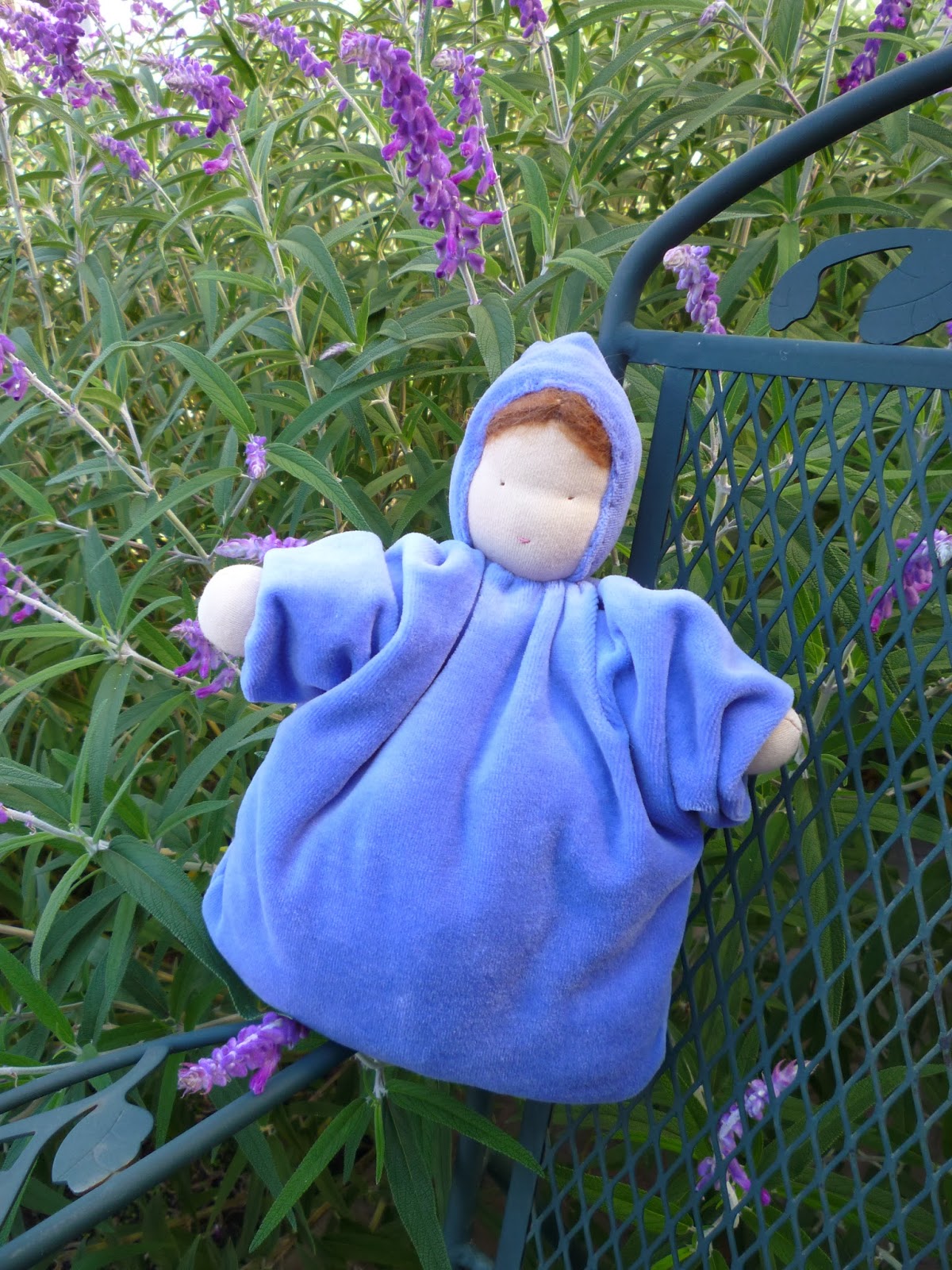
In the meantime, I finished the brown-haired lass up with a lavender suit, and posed her all over the house and yard in hopes of getting some good pictures to show you.

I was surprised at how much Bag there is to a Baggy Doll. The drawings in the book from which I got the pattern somehow don’t convey the pillow-like quality of the doll’s body, a shape they say toddlers love.
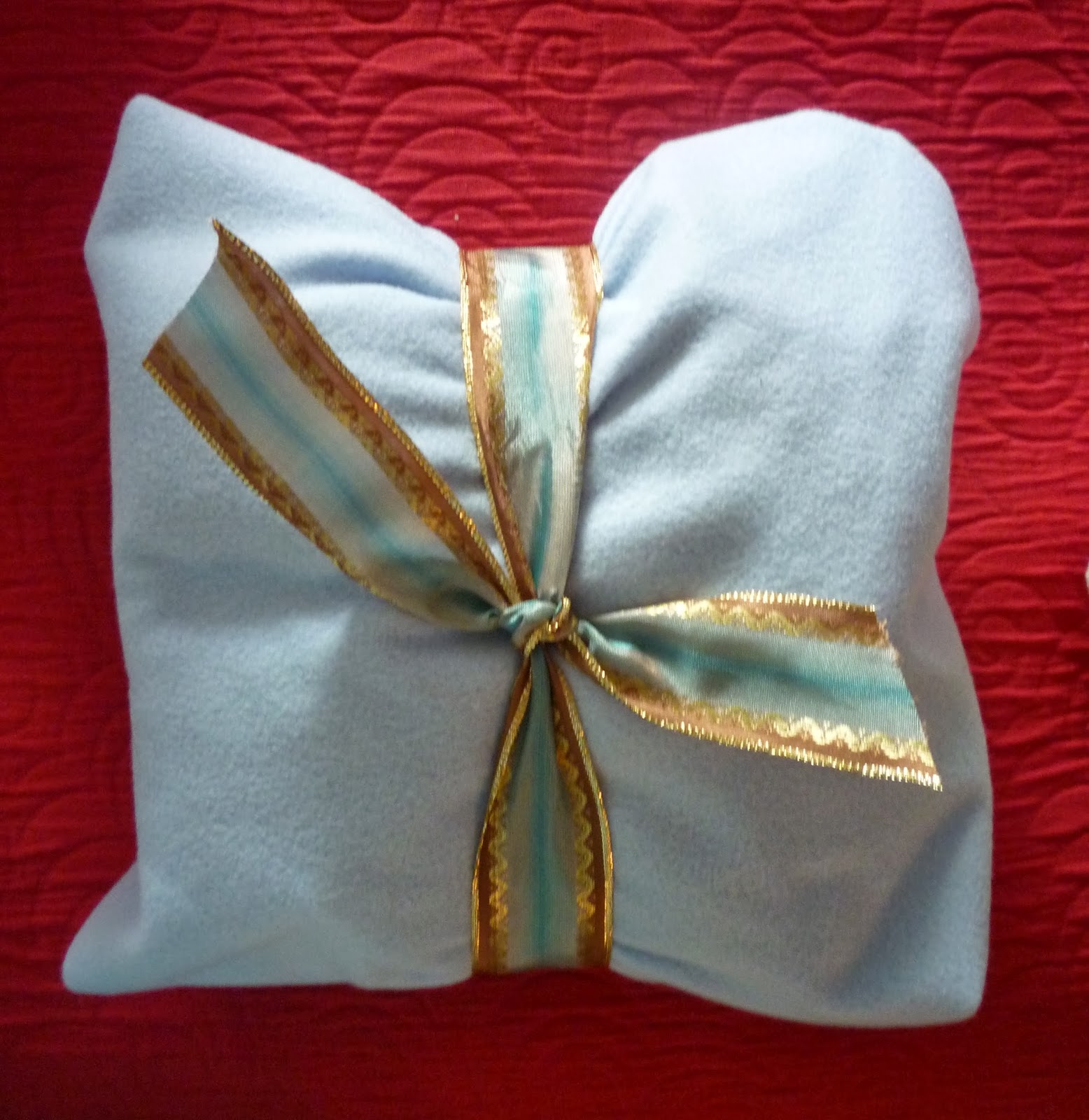
I pinked the edges of some fleecy fabric to make the first layer of “wrapping,” and then put her in a final layer of blue flannel that could also serve as a doll blanket in the future if the children get into the business of playing house and wrapping up dolls or stuffed animals.
They might not…they are outdoorsy kids whose own mother never cared much for dolls. But the dolly whom I now call Lavender Baby won’t mind if she sits on the sidelines or in a corner of the crib. Her hood and all her wool stuffing will keep her warm, and she lives in a house full of love and joy, to which she has already contributed just by being her happy and cuddly self.
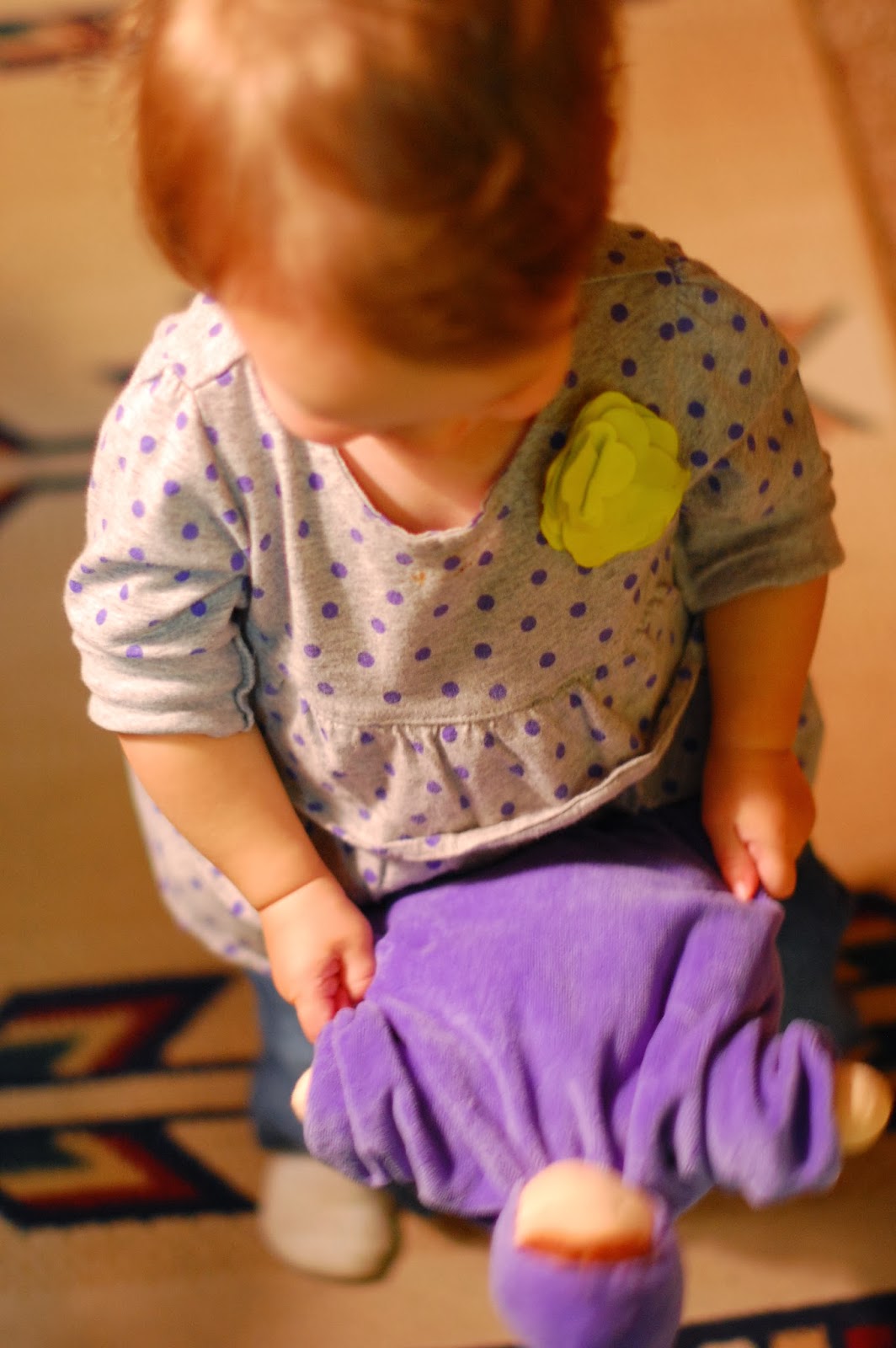
Little Ivy didn’t waste any time getting familiar with her new doll and flopped her around contentedly.
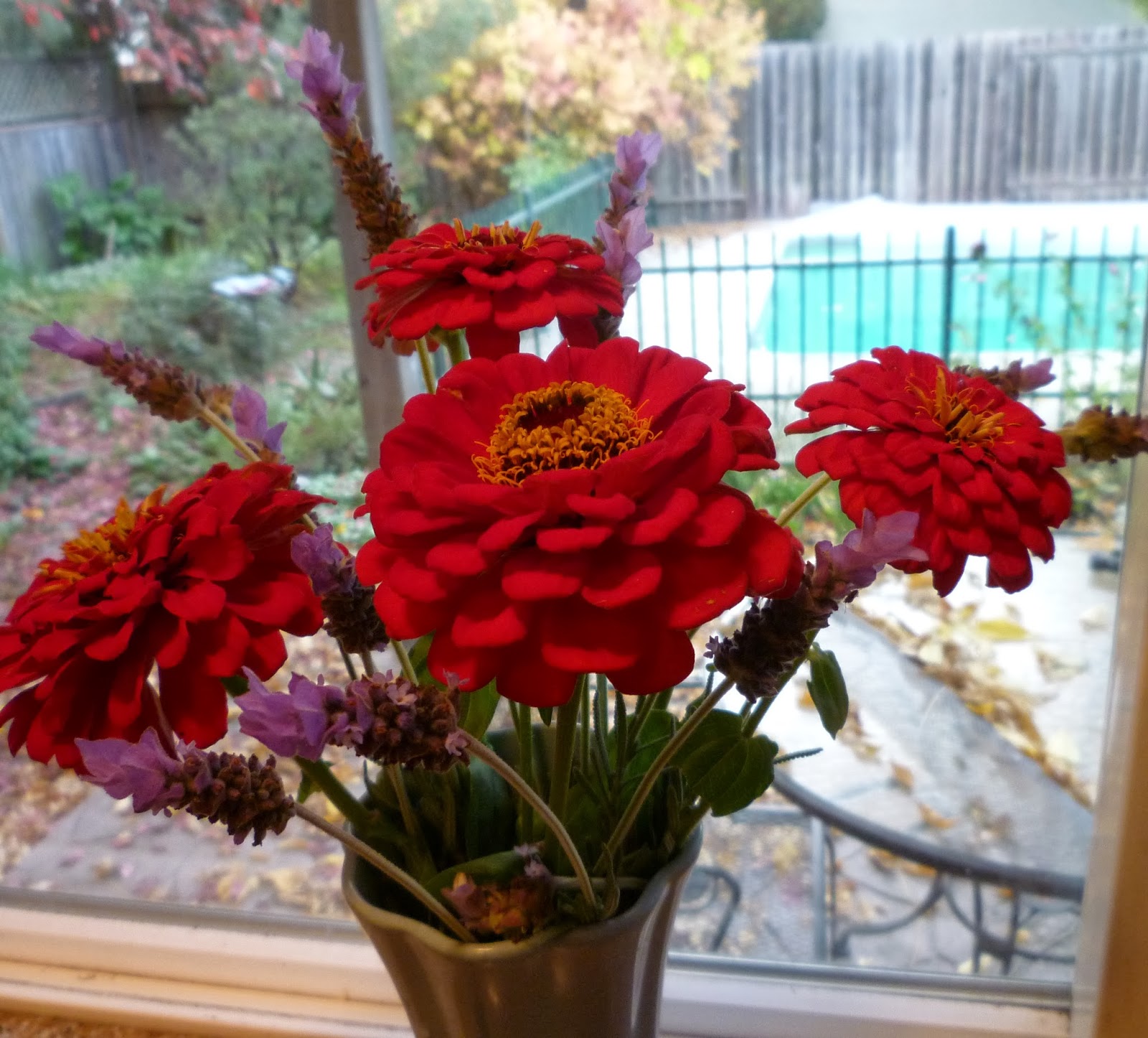 Leaves from the cherry plum tree are piling up in the back yard. I should get out and rake them, but I just look out from my kitchen window, beyond the leaves, and notice the zinnias still climbing, past five feet now. On the windowsill was remains of a three-week old bouquet, so it was time for a new bunch, don’t you think? Some French lavender rounds out the picking.







 Gladsome Lights