Monthly Archives: July 2014

Summer is for tea parties.

P1100600teapotWarm weather means that if we have any grandchildren around, we can have tea parties outdoors. The other day at Scout’s suggestion I made tea from what could be had in the garden: lemon balm and three kinds of mint.

Ivy and Scout and I sat on the patio with our little plastic cups of tea. Four-year-olds think the sugar cubes are the main event, and the toddler just wanted to put her chocolate kisses, cherries, and cubes of cheese into her cup.

P1100601ivytea


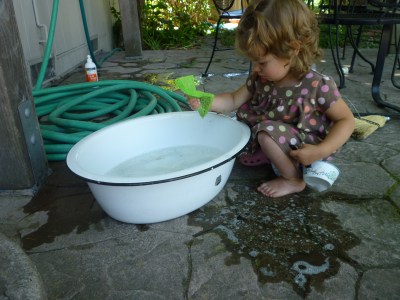
When I had my head turned she put cherries into my tea as well. Soon she had moved on to the washing-up, which she liked even better than the dining (or soup-making) part.
 

Ivy wash 6-14

Unfortunately, chocolate doesn’t come off with cold water.

P1100609 kids alyssum 6-14

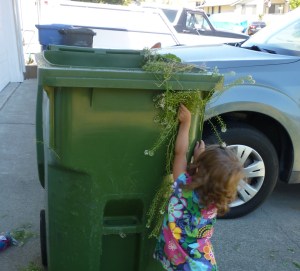
Later in the day I sheared the alyssum and the kids tried to help with their little scissors. But the challenge of getting the piles of cuttings into the yard waste can turned out to be the most fun.



P1100621 can

P1100624crp

By the time Liam arrived a few days later, all the work was done, but he was well pleased with the toys and books galore. Little wooden people from his parents’ past were the most popular.

P1100643 little people

Some toys that I keep around you would not be able to find in stores anymore, because their parts are too small to be considered safe. If I had a child who’d choked, I might feel differently, but I am sorry that some of the most charming and fun playthings are now forbidden.

Remember Micromachines? We just ran across one of those this week and were amazed. They seem small enough for a child to ingest without much problem. Of course, I never would let the older children bring them out if there were crawling babies around.
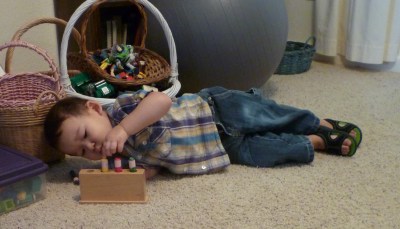
Liam 6-14 play

This last toy that Liam is focused on was Kate’s 25 years ago. Many many children have enjoyed it since, but I am thinking of stashing it away so that all the pieces will still be there when her own children are ready to play with them down the road. This week she showed her nephew how to hit the little stick people just so, to make them bounce out of their holes. A good toy is a joy forever.

Web gleanings for the interested.

Over the last several weeks I’ve collected some good Internet finds into this draft which I haven’t yet managed to finesse into a very cohesive offering. Even so, I think I better post it, before it gets even larger.

What does it take for you women to “feel good about yourself”? This blog post, What’s Your Excuse? spins off a provocative photo and discusses our life’s purpose and calling. It’s true we all make excuses for failings, but maybe some of us are focusing on the wrong goals in the first place.

How we live out and demonstrate our priorities has a huge effect on our children. Lisa writes about training our children and about praying for them, in The Prayers of Parents. It reminds icon suffer the little childrenme of a book I read when my own children were small, by Andrew Murray, Raising Your Children for Christ. From the blurb on the paperback cover I expected lots of practical advice such as methods of discipline and teaching, but 90% of the book was a month’s worth of devotionals emphasizing the parents’ faith and prayer. Of course, that is very practical – definitely not theoretical! And so is Lisa’s admonition.

From the cultivation of the spiritual life, I will segue into the cultivation of the earth, and a very surprising thesis of this article on the unsustainability of organic farming. Why would this be? I am only beginning to process the complexities of what the writer is saying. I know that the natural and best ways of doing many things are often not the most “efficient,” and that is one reason I am not a big believer in efficiency. But unsustainable? That’s taking it to a new level of disturbing.

seedbombs-300x225

People trying to promote natural healing of the earth is one aspect of this article on Mossy’s blog  telling about seed bombs. Has any of my readers done this “guerrilla gardening”? Mossy tells you how to make your own at home, but if you search the term you quickly find that you can buy the clay balls ready-made.

I appreciated another blogger‘s treating the subject in more depth and bringing up some issues, such as vendors selling “bombs” that contain seeds of plants that are invasive and undesirable for the part of the country they are marketed to. For example, some people are concerned about sweet alyssum, which I have certainly tulips w alyssumfound to be invasive, but controllable in my own home garden.

I’m happy to tell you that hundreds of hardworking bees are flying around my garden these days. They make me so happy. My husband and I like to sit in the sun in the afternoons watching them buzz all over the lavender nearby. I hope you will go see Kelly’s picture of a honeybee — she caught him in a secret magnolia-blossom cave. I love looking at photos of bees on flowers — they are so hard to get. If any of you have one on your own blog I’d think it the sweetest thing if you sent me the link.

If you haven’t already acquired the habit of reading Fr. Stephen Freeman’s blog, here’s another prod: We Will Not Make the World a Better Place. He discusses “The Modern Project,” modern because, “You will search in vain for the notion of making a better world prior to the 16th century.” Fabian Socialists, the Treaty of Versailles, and the Armenian genocide all figure in his remarks on political theory and history. And a quote: “Stanley Hauerwas has famously noted that whenever Christians agree to take charge of the outcome of history, they have agreed to do violence.”

Last, and important, humor: One of the funniest things I came across this week was on Language Log, a place to read linguists’ comments on many everyday happenings in languages, English and others. From time to time one of their many contributors writes about how Chinese signs get translated inchinese - JustTheQueen1 odd and amusing ways. Some are written to forbid urination in various places and the English versions of the warnings can come out saying, “Urination is inhuman,” or “It is forbidden to urinate here. The penalty is bang.”

My pal Chesterton said that there are no uninteresting subjects, only uninterested people. I hope at least one topic here has been interesting to you!

Savor the heady dry breath.

I miss spending time in the public library, not that I have had a great deal of that experience. In my youth the city library was not a convenient place to study, being ten miles from our house, and my elementary school had no library.

When I stayed with my grandma she would actually drop my sisters and me off at the branch library in Berkeley while she ran errands and we could roam at liberty for an hour. I’m sure none of us knew what a lavish gift that was, but from this vantage point I can appreciate the sublimity, and the mental picture of the room where I spent the most time is still there.

Back home in the country we depended on the bookmobile that every two weeks provided plenty of the sensory excitement that is the subject of the poem below. The visits were brief and fairly businesslike, as we had to jostle a bit with the other young patrons in that cramped space and there certainly was nowhere to sit and ponder. Mom was waiting outside in the car.

I paid no conscious attention to anything but the book titles, being mainly interested in getting my stash to take home and savor in a more purely intellectual fashion. But now, so long removed, if I think on that county van for only a minute, I can remember the clunking sounds  of books being pulled off shelves and put back, and our tennis shoes scuffling around in the grit that we’d brought in from the gravelly parking lot. The librarian-driver would speak as few quiet words as possible as she stamped our cards. And the scent of the books — it’s still in me.

Library
by Valerie Worth

No need even
To take out
A book: only
Go inside
And savor
The heady
Dry breath of
Ink and paper,
Or stand and
Listen to the
Silent twitter
Of a billion
Tiny busy
Black words.

From All the Small Poems and Fourteen More

Revisiting the Fort Ross Fourth

I wasn’t able to participate with my church in the Fort Ross pilgrimage this year, but I thought I’d re-publish my article about the yearly event that I shared five years ago. I hope you all had a blessed Independence Day!

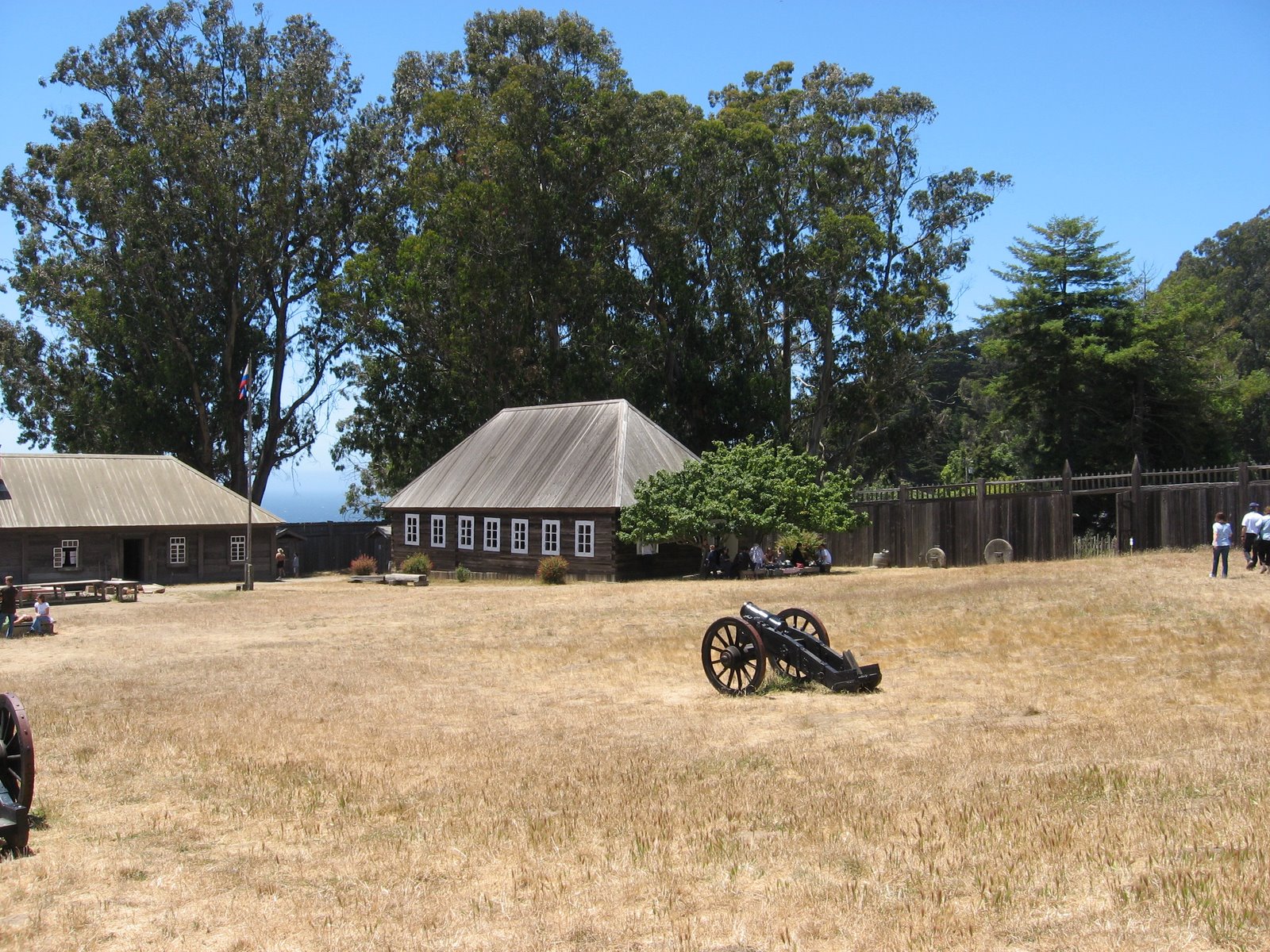
Fort Ross State Historic Park has been a favorite destination of our family for decades. It is a restored fort from the early 1800′s, when California was not yet a state in the Union, and for a while the Russians had an outpost in Northern California for fishing and trapping and growing food. You can see lots more photos and read about the history of Fort Ross online.

I loved the place from our first discovery of it when the children were small. A historic association holds yearly re-enactment days that are great fun, but just visiting on our own was relaxing and renewing, at least in the summer, when the sun would break through the fog and you could smell the ocean and the baking grasses at the same time, and imagine the people of long ago.

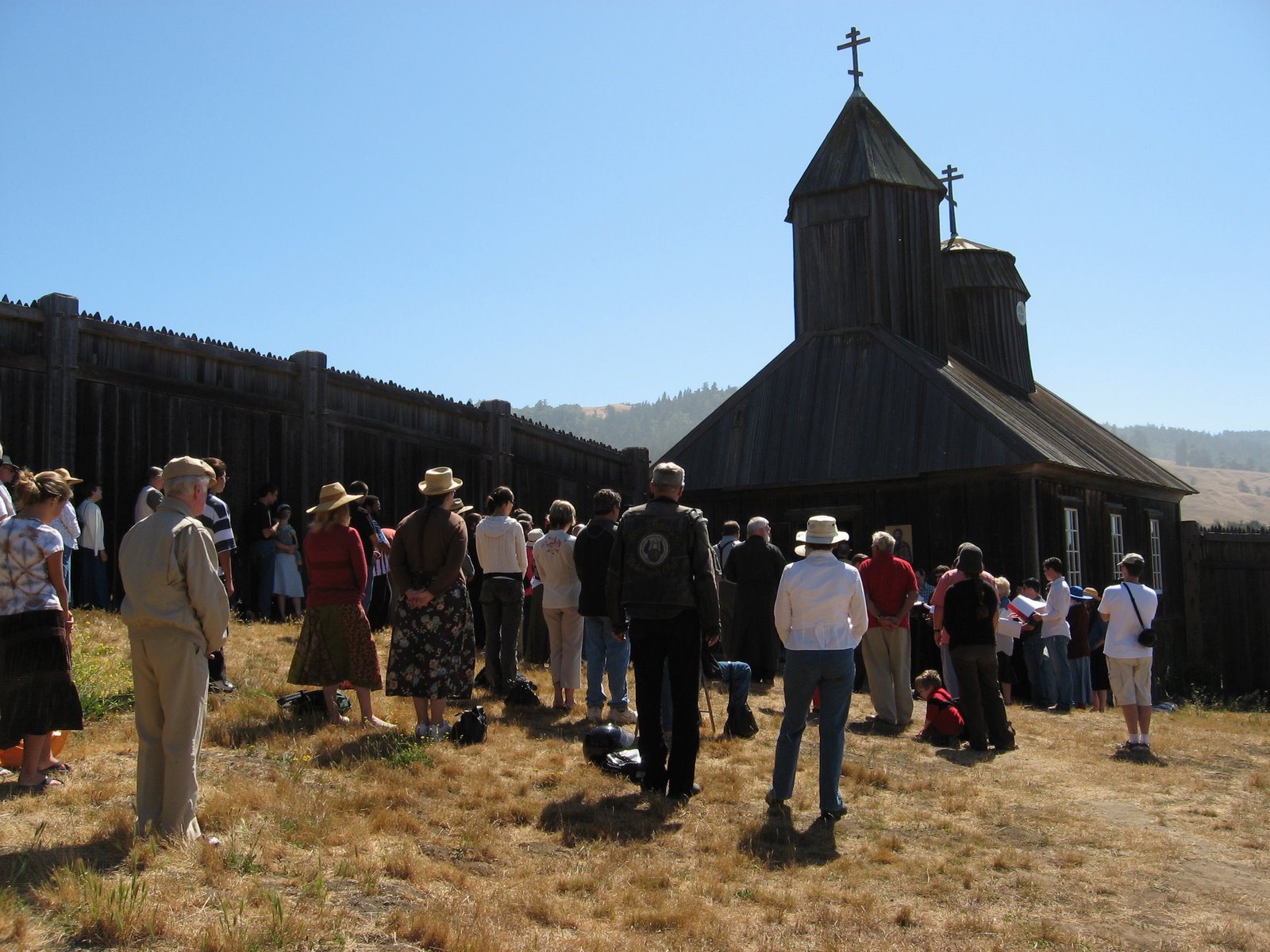
After I joined the Orthodox Church, I was delighted to learn that our diocese has permission to use the chapel at the fort twice a year, including on the 4th of July. We worship in the morning and have a picnic afterward when the sun usually comes out. There is plenty of time to get back home in the evening for Vespers and maybe fireworks later on. I’ve made the pilgrimage three times now, and my pictures here are collected from all the visits.


It’s a short walk from the parking lot to the actual fort enclosure. The photo at right is looking across the field from the chapel.


The church building as restored is small, and sometimes we let the whole of it serve as the altar, with the congregation and the choir standing outside and the priests and deacons coming in and out frequently as they pray and serve Communion.

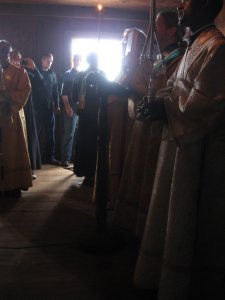
This year we all squeezed into the chapel, which is very intimate. I couldn’t get a good picture because of that window, but I am posting a bad one just to give an idea of the atmosphere. Very thin idea, indeed, as there is only the one visual dimension, and no conveyance at all to the other senses.
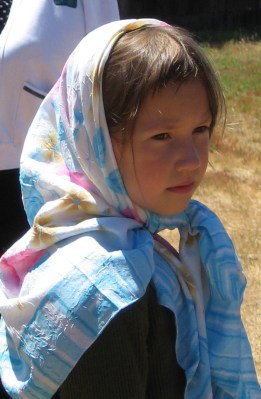
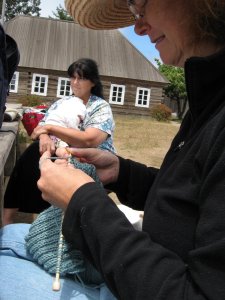


After the liturgy, the clergy and many others made the trek to the cemetery to sing a short service for the ones buried there. Others of us waited within the walls of the fort for their return.


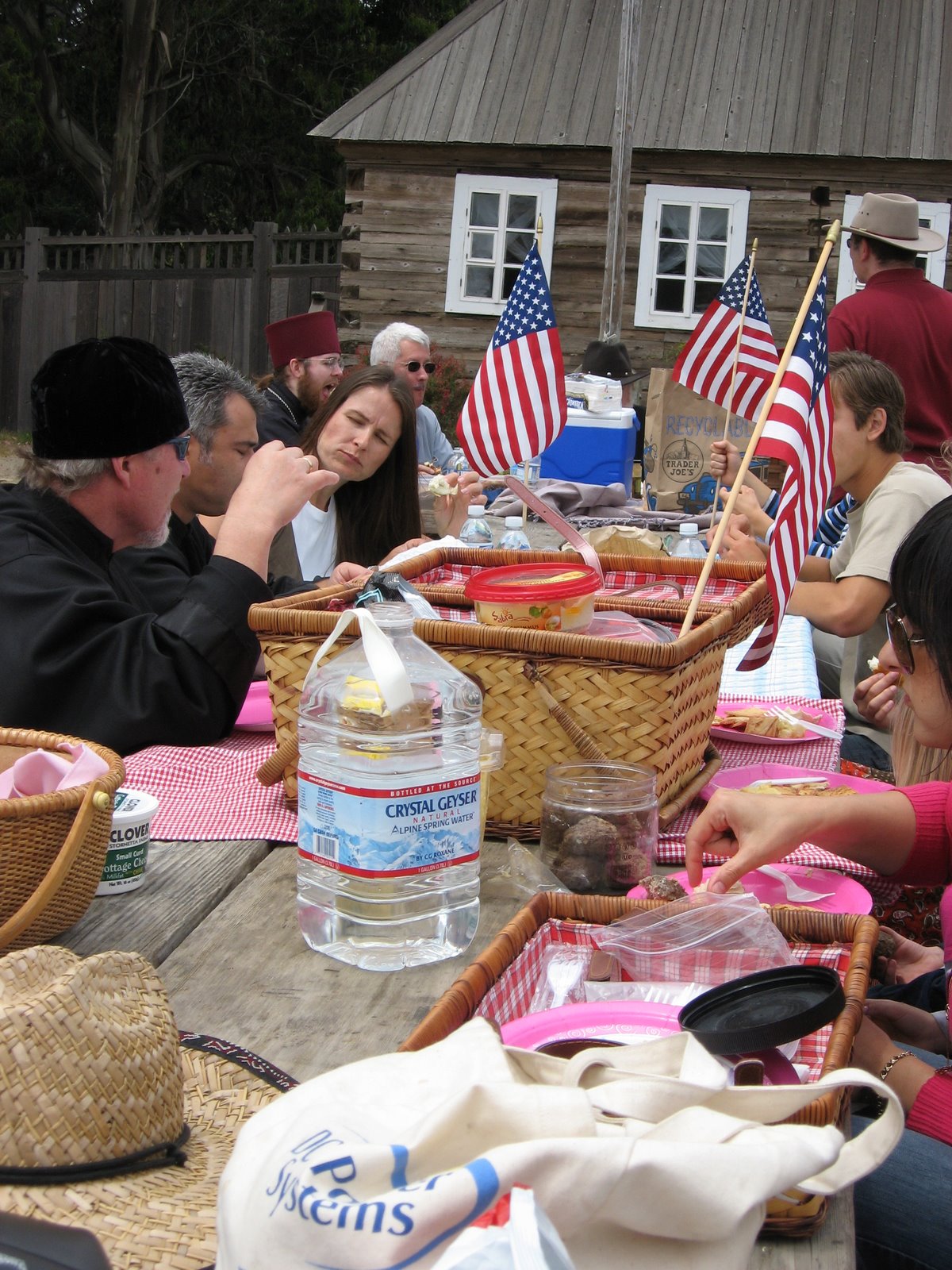
The bishop brought a picnic lunch, too.


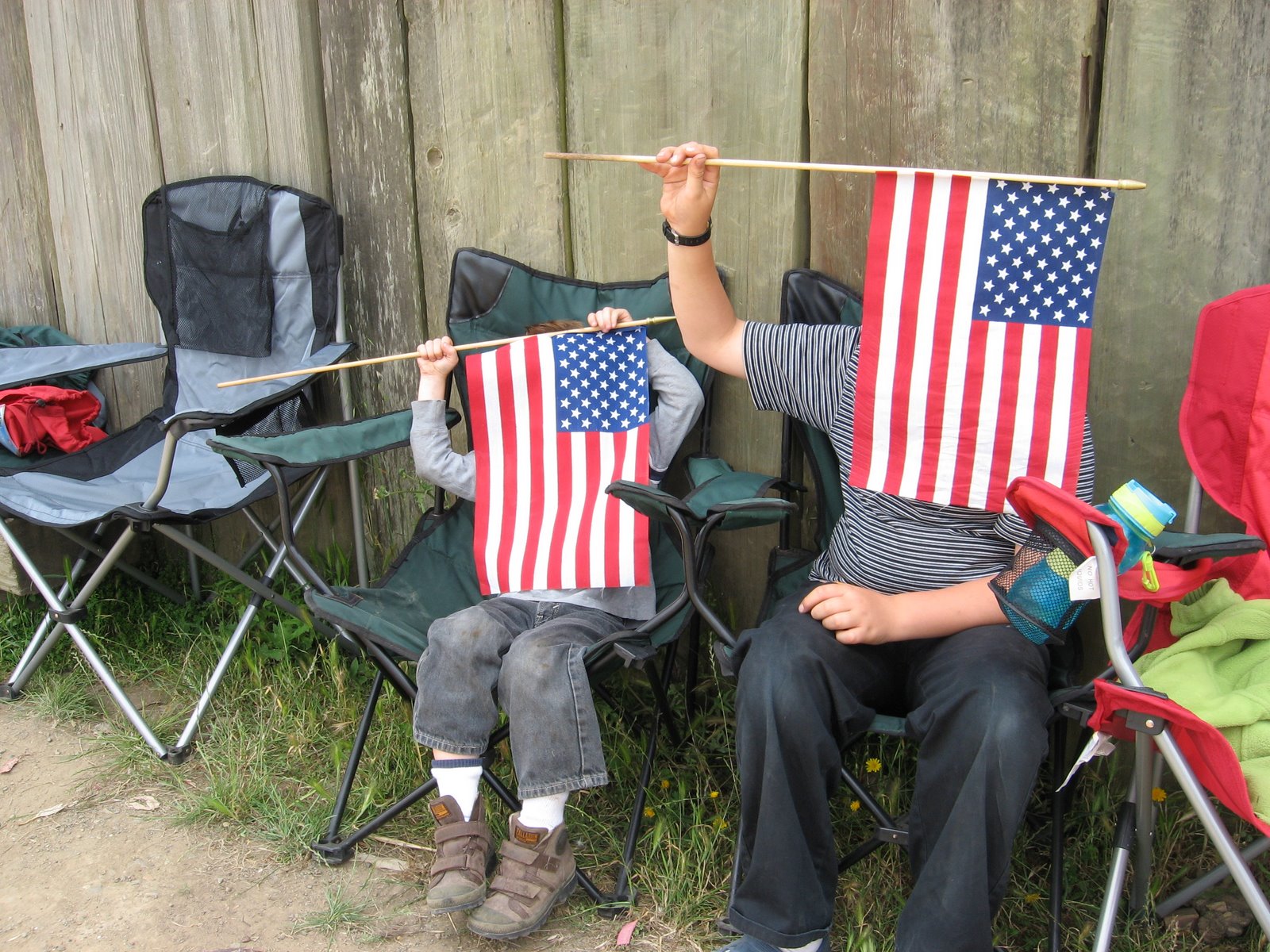
We waved plenty of flags to show our thankful allegiance to the nation whose birthday we were celebrating, at a fort now owned by Americans.


One year N. brought his hammered dulcimer and treated us to music at the picnic.

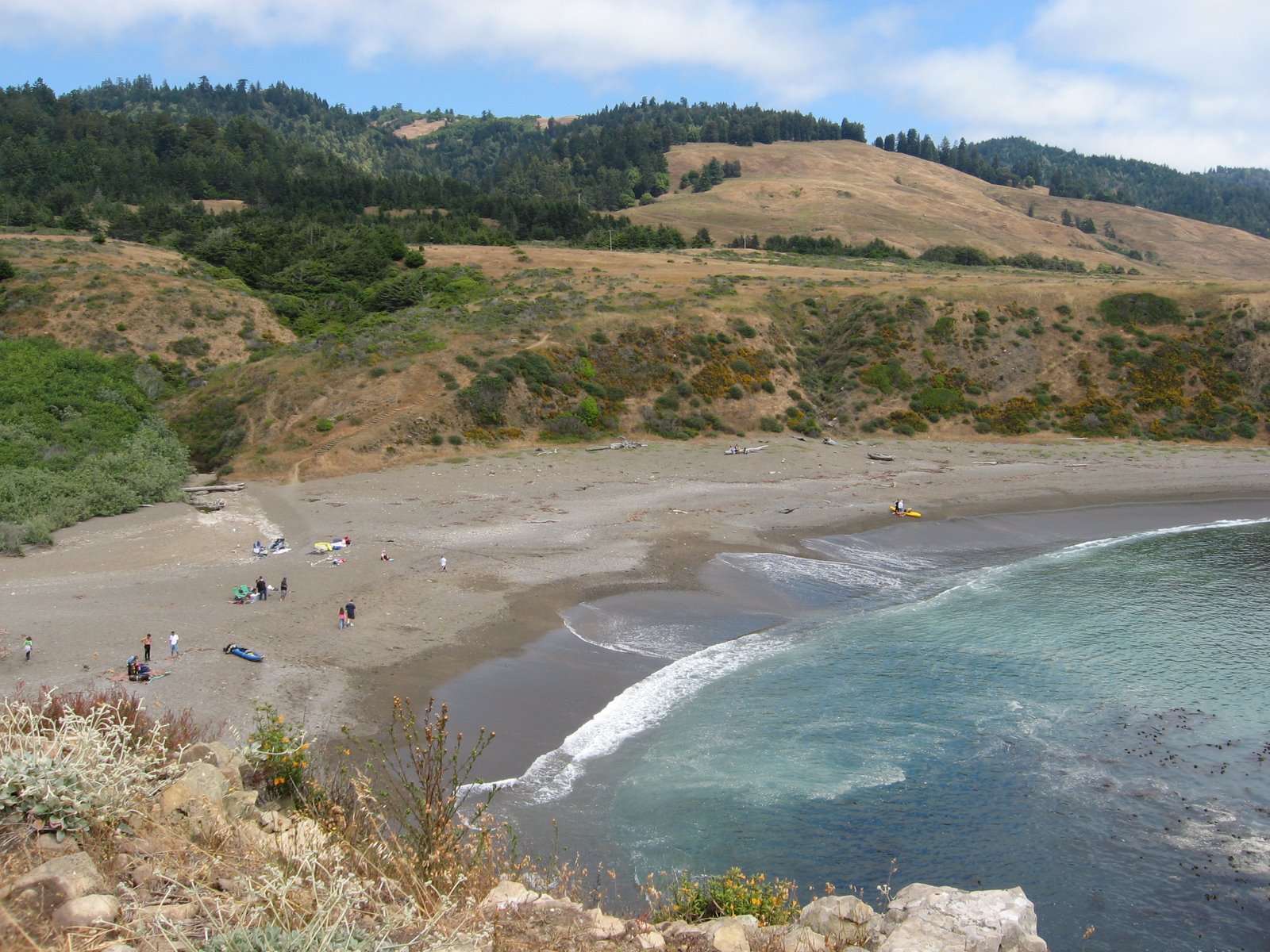
After lunch, K. and I took a walk down to the lovely cove below the fort.

One young parishoner and his mother had found treasures in nearby tidepools.


When we got back, the history talk by the park ranger was still going on. It leads up to instruction in loading and firing the cannons.

My favorite priest is getting ready to load the cannon.


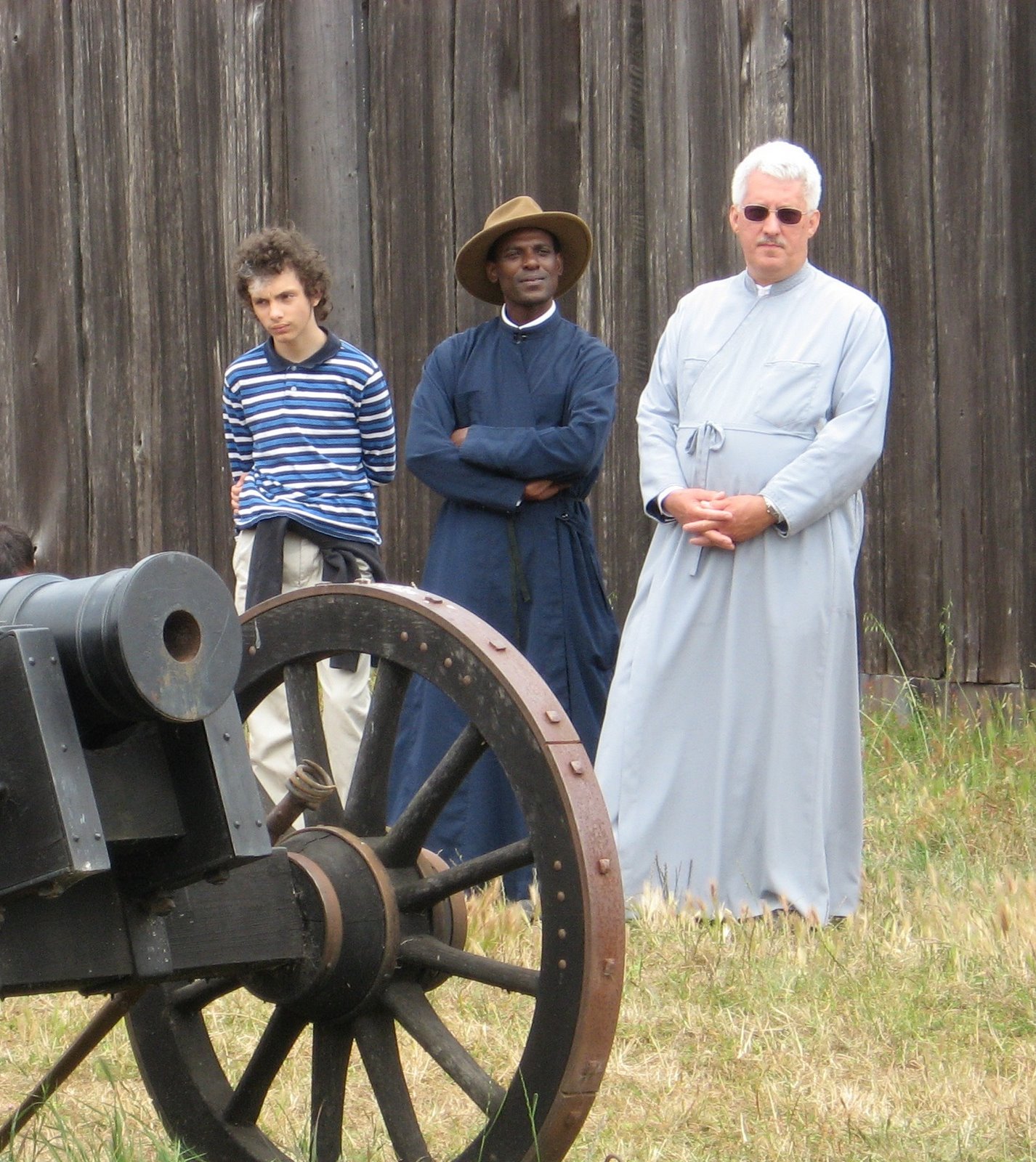
A blue study of guys waiting for the explosion.

Bang! Poof! No cannonball was shot–only gunpowder.

The majority of California’s state parks are likely to be closed because of the deep debt our state is in. If that happens, our Fort Ross pilgrimages may become a fragrant memory, and something to hope for in the more distant future.

Update: Since I wrote that last gloomy paragraph, grassroots efforts of many people have improved the likelihood that the park will endure and continue to be one of my favorite destinations — and maybe as a pilgrim in 2015.