Monthly Archives: May 2016

Zoë

On Bright Friday, that is, the Friday after Pascha, the Orthodox Church commemorates The Life-Giving Spring of the Most Holy Theotokos. Though I had heard of the monastery by that name, it seems I had never paid attention on Bright Friday before to get the backstory; this year I heard about it twice. The story of a miraculous pool of water and how it was rediscovered is well told here.

I also learned that women with the name Zoë might have been named for this feast of the Theotokos. Zoë means life in Greek. In his Prologue of Ohrid St. Nikolai Velimirovich relates the story of a St. Zoë and her family, who were slaves in the second century. On the same day’s entry St. Nikolai’s homily is on this pertinent scripture from Jeremiah:

Be amazed at this, O heavens, and shudder with sheer horror, says the Lord. Two evils have my people done: they have forsaken Me, the source of living waters. They have dug themselves cisterns, broken cisterns that hold no water.

From the homily:

The Source of living water is the Lord Himself: inexhaustible, copious and sweet. The cistern is every man’s work which is performed in opposition to God and God’s law, and from which men expect progress, happiness and satisfaction for their hungeTheotokos lifegivingfountr and thirst….

….O Lord, Immortal Source of every good that the heart of man can desire and the mind of man can imagine, have mercy on us sinners and unworthy ones. With Thy powerful right hand, turn us away from our godless and vain works and quench our thirst with Thy sweet and living water.

Whether in her womb, or in a pool of healing waters, or in her example and exhortation to “Do whatever He tells you,” it is the life of the Lord Himself that His mother offers us.

This concludes my alphabetical posts. As in the first I acknowledged that Christ is Alpha and Omega, the first and last — according to the Greek alphabet — so here at “Z”, the last letter of our alphabet, we find that He is Zoë, Life itself.
 

Xerophytes

GL P1020377
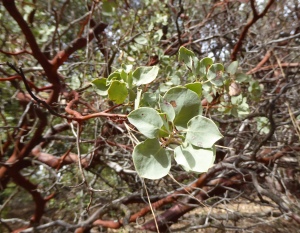
manzanita


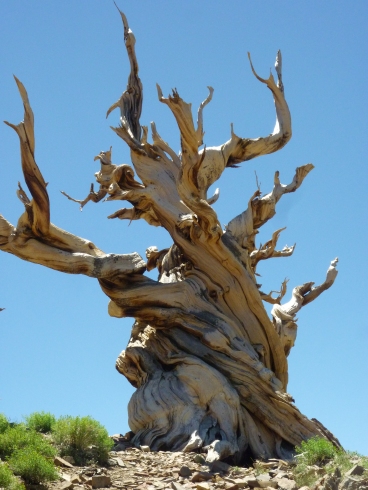
Xerophytes are plants that are xerophilous, which means they have special features that enable them to survive in very dry environments. One of my favorite xerophytes is the Bristlecone Pine, which I wrote about some years ago, calling them Gnarly Patriarchs.

P1070019
gnarly patriarch

Some of the plants in my home landscape are considered to be xerophilous, though to maintain a xeriscape such as I have it is not necessary to have nothing but xerophytes. A xeriscape, in addition to featuring drought-tolerant plants, uses deep mulches and other means of conserving water besides those that are built into the plants themselves.

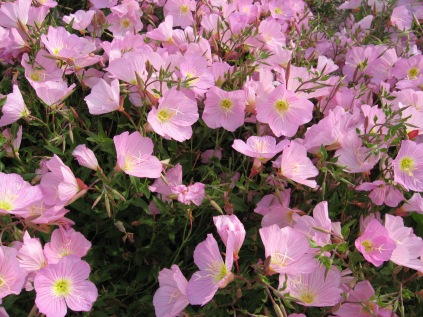
In a patch by my driveway, enclosed on all sides by concrete, Mexican Evening Primrose blooms and thrives all summer with a little water once a month or so. It thrives so well that such an enclosed space as it lives in here is usually the best spot for this plant, unless you are okay with it taking over the whole garden.

Mexican Evening Primrose
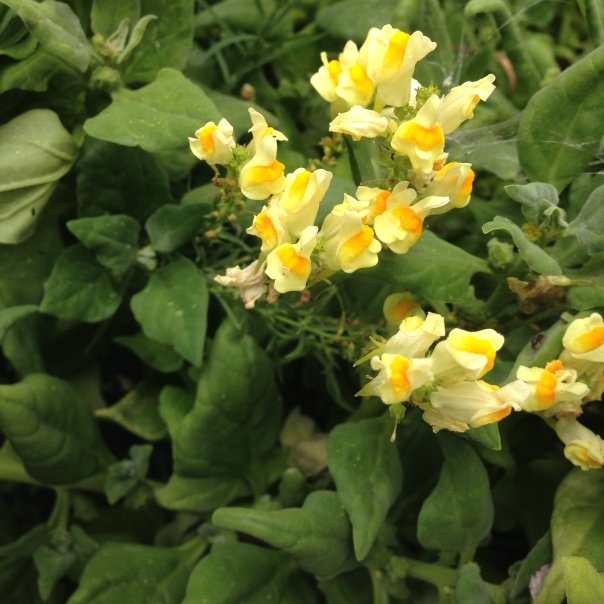
IMG_0280 toadflax w warrigal
toadflax – Linaria vulgaris, with warrigal

The picture at right is of warrigal or New Zealand Spinach, an edible green, growing alongside a yellow mystery flower [since discovered to be toadflax], both of which I consider quite xerophilous, as they lived in my back yard for months last summer with no water, and never so much as wilted.

That root xeros comes from the Greek, for dry. My current project is to incorporate more of these unthirsty friends into a plan for my front yard, and I hope to have them planted by the fall.


Wake, and lift up thyself.

GL 10 P1020112 sunflowersWe often sang the last verse of this hymn as a Doxology in The Presbyterian church in which I grew up. I didn’t know until recently that it is composed of many more stanzas of exhortation, including “Wake up!”, which one might speak to one’s soul to good effect. On those mornings when I’m slow to get moving and my thoughts start sinking precipitously, I would do well to use this song to stir up my spirit.

I have heard at least two melodies for the composition; it was the one from the Geneva Psalter that I used to sing, and to which I hope to learn these other heartening words.

Awake, My Soul, and With the Sun

Awake, my soul, and with the sun
Thy daily stage of duty run;
Shake off dull sloth, and joyful rise,
To pay thy morning sacrifice.

Thy precious time misspent, redeem,
Each present day thy last esteem,
Improve thy talent with due care;
For the great day thyself prepare.

By influence of the Light divine
Let thy own light to others shine.
Reflect all Heaven’s propitious ways
In ardent love, and cheerful praise.

In conversation be sincere;
Keep conscience as the noontide clear;
Think how all seeing God thy ways
And all thy secret thoughts surveys.

Wake, and lift up thyself, my heart,
And with the angels bear thy part,
Who all night long unwearied sing
High praise to the eternal King.

All praise to Thee, Who safe has kept
And hast refreshed me while I slept.
Grant, Lord, when I from death shall wake
I may of endless light partake.

Heav’n is, dear Lord, where’er Thou art,
O never then from me depart;
For to my soul ’tis hell to be
But for one moment void of Thee.

Lord, I my vows to Thee renew;
Disperse my sins as morning dew.
Guard my first springs of thought and will,
And with Thyself my spirit fill.

Direct, control, suggest, this day,
All I design, or do, or say,
That all my powers, with all their might,
In Thy sole glory may unite.

I would not wake nor rise again
And Heaven itself I would disdain,
Wert Thou not there to be enjoyed,
And I in hymns to be employed.

Praise God, from Whom all blessings flow;
Praise Him, all creatures here below;
Praise Him above, ye heavenly host;
Praise Father, Son, and Holy Ghost.

–Thomas Ken, Man­u­al of Pray­ers for the Use of the Schol­ars of Win­ches­ter Col­lege, 1674

violets

gl P1040398crop2edThe Cape Violet or Nodding Violet Streptocarpella seems to have everything it needs now, in order to be happy. I have the larger, original one that Mrs. Bread gave me as a little start, and its daughter that I grew from a branch that I accidentally broke off.
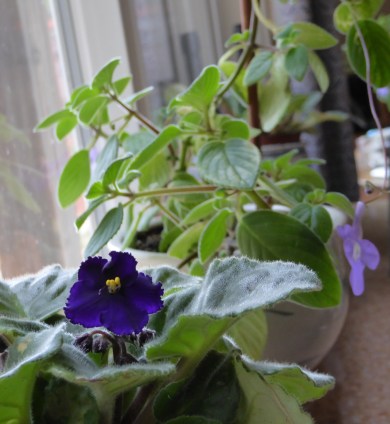
The larger one is on the dining table by the window, where daily it decorates the pysanky below by dropping its yet pristine flowers. Someone decorated the violet itself with a branch from Palm Sunday stuck into the dirt.

It’s hard to find the Streptocarpella online if I look for “Cape Violet.” They seem most often to be known by their botanical name. They are a subgenus of Streptocarpus which are called False African Violet.

The younger plant is on the windowsill near the (True?) African Violet that beautified one of my birthday party tables and is on its second round of blooming since then.

gl P1040401

Currently I am keeping five plants in the house, which is very unusual for me. I’m much more comfortable growing things outdoors where, unfortunately, you can’t grow all things beautiful and expect them to make it through the winter. You can’t expect these violets to make it through the summer in a sunny greenhouse, either, even if I do get a shade for part of the roof.

In the meantime, we get by with a fairly roomy windowsill. 🙂