Monthly Archives: April 2025

The greenest noodles.

Following an afternoon of foraging, an evening of cooking, and a yummy pasta dinner, I went to bed with the feeling that a hot iron was lying on top of my fingers. I wondered if I would be able to go to sleep with my hands so swollen and angry. I finally did; in the morning the pain level was at a slow burn, and it soon dissipated.

It was all from the nettles — all the fun and adventure, the delicious dinner and the extended pain. And it was worth it!
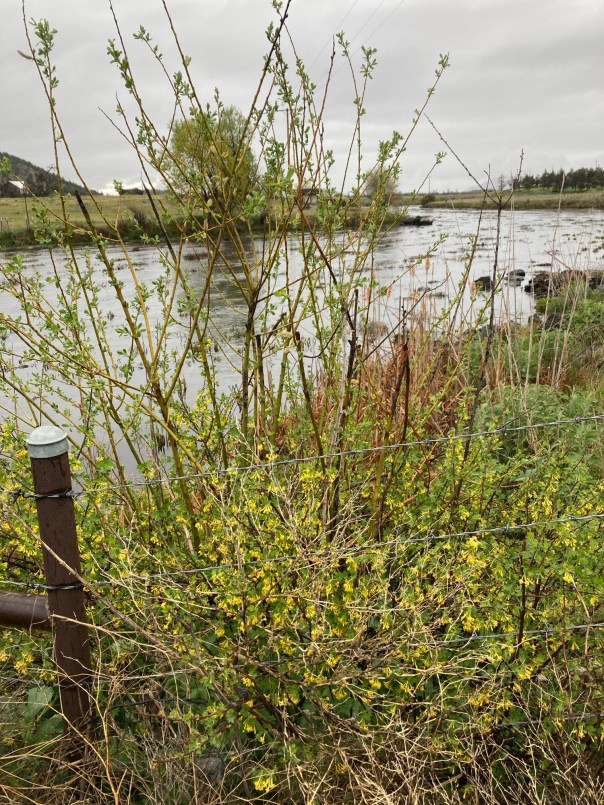
Golden Currant Bush and the Shasta River

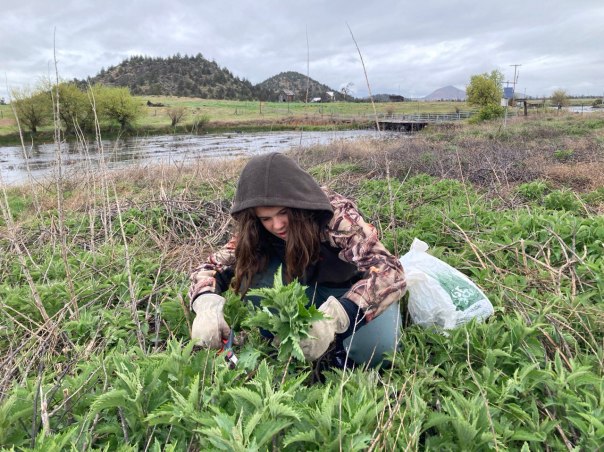
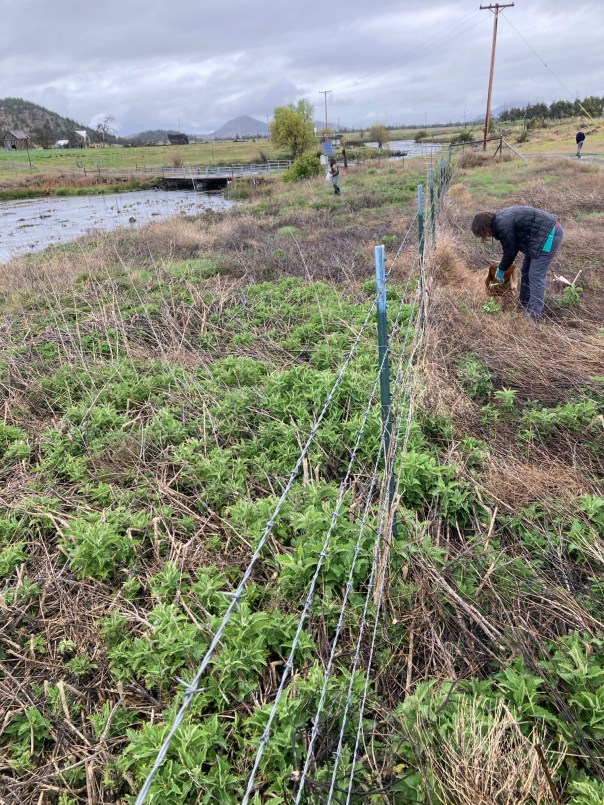
My Forest Family had made Nettle Pasta several times in the past, but I hadn’t been around to experience any of the project, and when I’d seen the pictures I’d been a little jealous. So this time, I was glad to participate. We had to go a distance to find out if the nettles were even at the best stage for using — up the highway for a while, then down a one-lane winding road for a while, then out of the car and on foot through a drizzle. Meadowlarks and red-winged blackbirds were calling under the big and dripping sky as we continued along a gravel road that didn’t have enough gravel — till finally we came to the Shasta River. And there were the nettles in all their robust glory. And they weren’t past their prime at all; they looked perfect.
Golden Currant (photo from internet)

I had brought some gardening gloves along on my trip up, not knowing what task they might come in handy for, and I happily showed Pippin that she didn’t need to hunt for an extra pair for me. I set to work filling a couple of grocery bags with bunches of nettles cut with scissors or just pulled out of the top inch of soil. It wasn’t until we were back home that I felt the full effect of the stinging and burning; my gloves only protected me on my palms and not on the backs of my hands, where the glove was cloth. Note to self: pick nettles only with rubber or leather gloves.

Before our outing I had discussed the message of this 300-yr-old rhyme with the children:

Tender-handed stroke a nettle,
And it stings you, for your pains:
Grasp it like a man of mettle,
And it soft as silk remains.

Scout flatly declared it false, and I in any case hadn’t planned to test the truth of the ditty. On Quora someone writes,

It means to act firmly, with resolve. The reference to the nettle relates to the fact that if you make only superficial contact with a nettle plant it will sting you. However if you grasp it firmly with an upward motion you avoid the stinging effect. (The stinging hairs grow in a slightly upward-facing direction. Grasping with a firm upward stroke tends to flatten the hairs against the stem or leaf so their ends can’t penetrate the skin and deliver their sting.) I’ve seen this done with no apparent ill effects and heard of gardeners who can clear a nettle patch bare-handed.
Urtica dioica – European Nettle

The problem I see with the kind of nettles we were dealing with, is that while you are grasping some of the nettles boldly like a man or woman of mettle, other leaves are coming in from the side against your tender hands and stinging you. That’s essentially what they did through my gloves; I wasn’t grabbing with the tops of my hands, after all.

A nettle-eating contest is held in Dorset every year, where super-mettled people compete over such (raw) foods as this European nettle (Urtica dioica) at left, shown in its seed stage. In the article about the contest they explain:

Nettle leaves sting because they are covered in tiny hollow filaments, the silica tips of which break off at the lightest touch to expose sharp points that deliver an instant shot of formic acid into the skin surface, followed by histamine, acetylcholine and serotonin.

Ouch! We took our greens home and washed them (wearing rubber gloves).

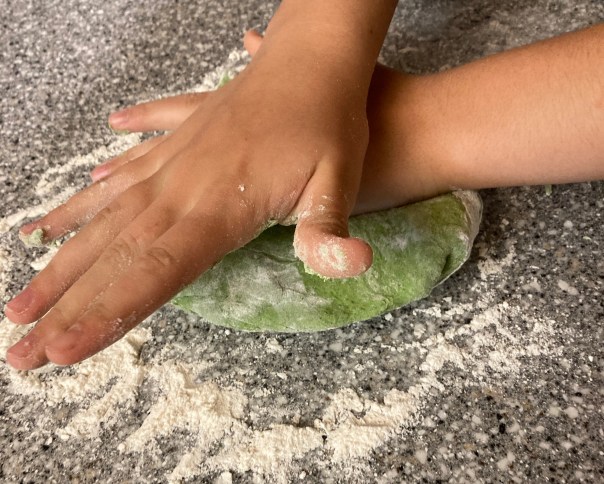
After blanching to neutralize the sting, we removed the leaves and incorporated them into an eggy pasta dough.
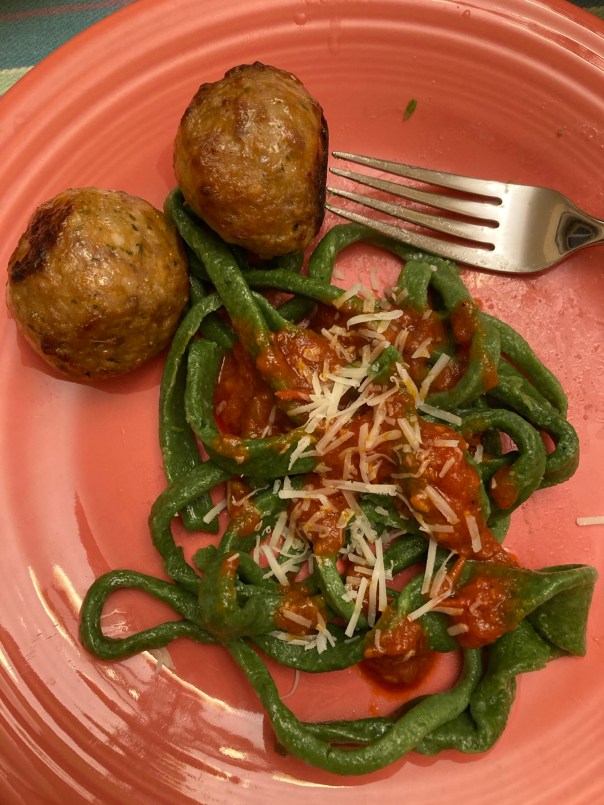
The noodles were delicious.
We had a pint of blanched leaves left over, which Pippin may make into soup. There were bagfuls of unused raw nettles as well, which I brought home, blanched and froze, and would like to put into soup myself. Maybe this version from the Forager Chef site: Classic Nettle Soup. Have any of you, my readers, cooked with nettles? Have you participated in a nettle-eating contest? Do you have any nettle-stinging stories to tell? I’d love to know!

Soup I might make.


Flowers wild or exotic.

mystery plant

Pippin drove the younger children and me to the same botanical garden we visited two years ago, but several weeks earlier in the spring. Before looking at the plants in the garden itself, we briefly explored an area of the larger park down by the Sacramento River, which is roaring through its narrow channel in the town of Dunsmuir.

On trees growing at the river’s edge, Ivy found dozens of exoskeletons that Seek tells us are of the California Giant Stonefly. They were certainly the giantest fly of any kind I’ve ever seen. Pippin thinks the flies exited these skins last year, because it’s too early in this spring for it to have happened recently.

California Giant Stonefly

We saw poison oak and regular oak, and several wildflowers along the riverside path, including annual honesty, which is in the mustard family. And nearby, last year’s seed pod, now a faded moon.

Lunaria annua – Annual Honesty

Up the hill, rhododendrons!

Blaney’s Blue Rhododendron

Dogwoods layered with Japanese maples and rhododendrons make a beautiful scene.

The big lawn around which the garden is arranged is a setting for recreational events, and there were lots of poles and wires and big boxes of electrical equipment that interfered with our photography, but not with our appreciation of the display of plants, which included various other shrubs native to the Far East, like this Japanese Andromeda (Pieris japonica):

Japanese Andromeda

The other favorite exotic was the Dove Tree, or Handkerchief Tree (Davidia involucrata), native to China:

Behind the dogwoods and smaller trees, tall conifers form a backdrop.

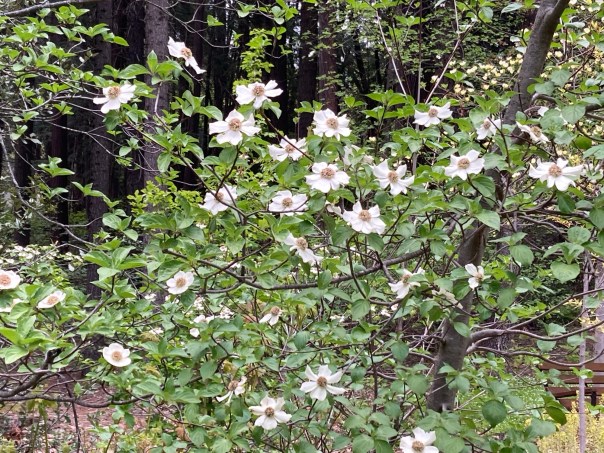
Dogwood

If there had not been a chill breeze blowing up from the river, I might have plopped myself down on that lawn to gaze at dogwood trees for a half hour. I forget about their existence for years at a time, and then am blown away all over again by their beauty. There are at least eight species of dogwoods to enjoy there. From the garden’s website:

Cornus nuttallii, Mountain or Pacific Dogwood, is the emblematic tree of the City of Dunsmuir and the Dunsmuir Botanical Gardens. They are native to the Gardens and the surrounding area. What appear to be flower petals are actually bracts – petal-like modified leaves. The (mostly) inconspicuous true flowers are ringed by four to eight of the showy, white bracts. In fall as the flower ovaries develop and set buds, they turn a bright yellow with red seeds.

Mountain Dogwood

At last, we did have to leave.
And I will say good-bye for now
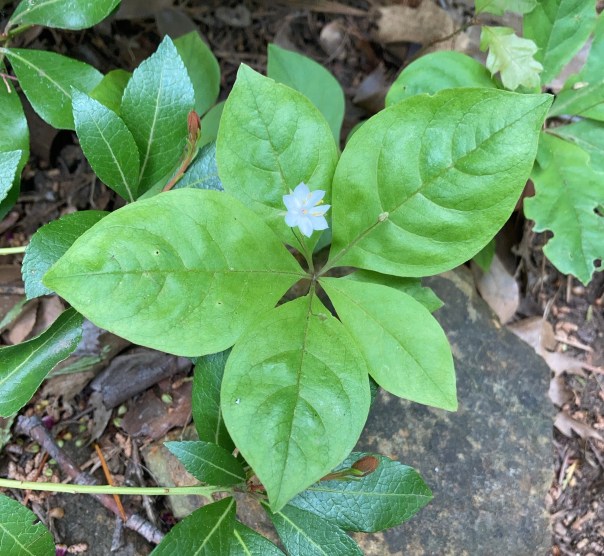
with the simple Western Starflower:

Western Starflower

The cutest pine trees.

It’s a rainy afternoon at Pippin’s, where I am now, having journeyed up the state and into the mountains a couple of days ago.

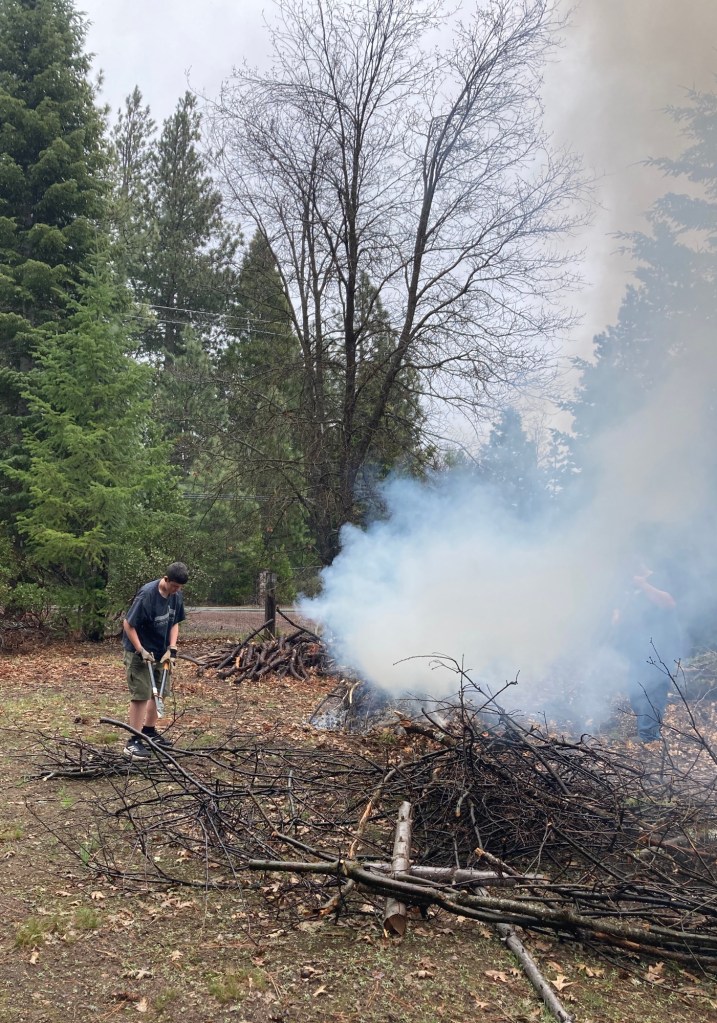
The Professor has been waiting for wet weather in which to set fire to his burn pile, which has grown larger than ever with the addition of large tree limbs broken in the snow.

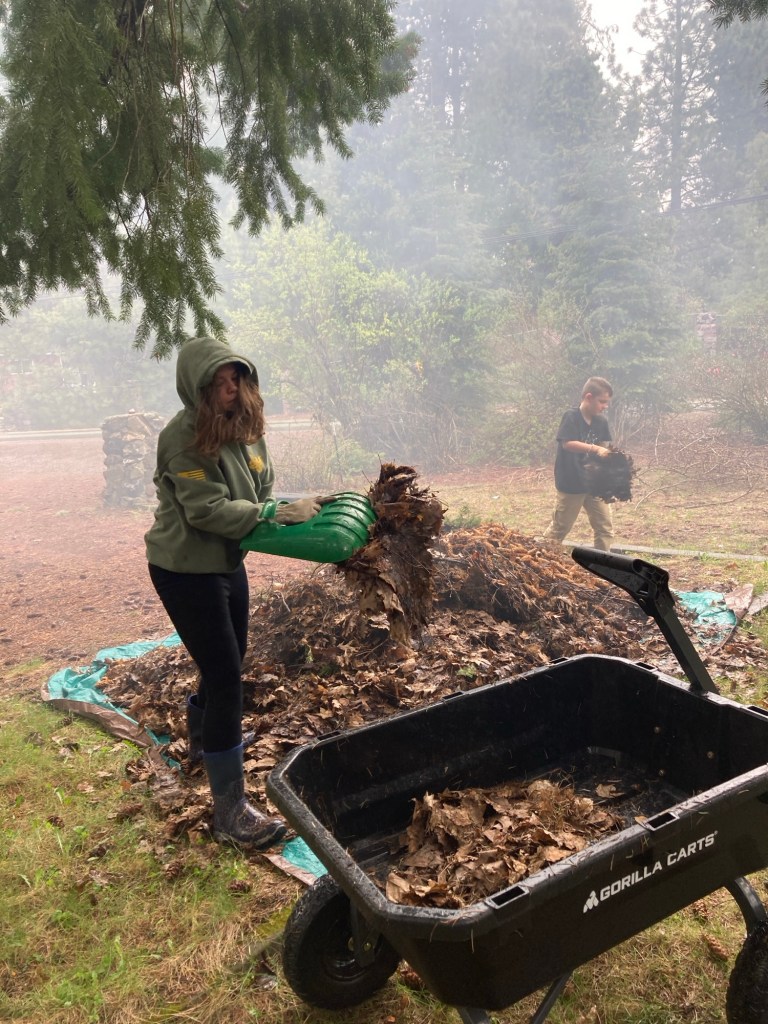
I was able to help Ivy and Jamie a tiny bit by forking clumps of wet leaves into carts, from a leaf pile across the yard, for them to haul to the fire.

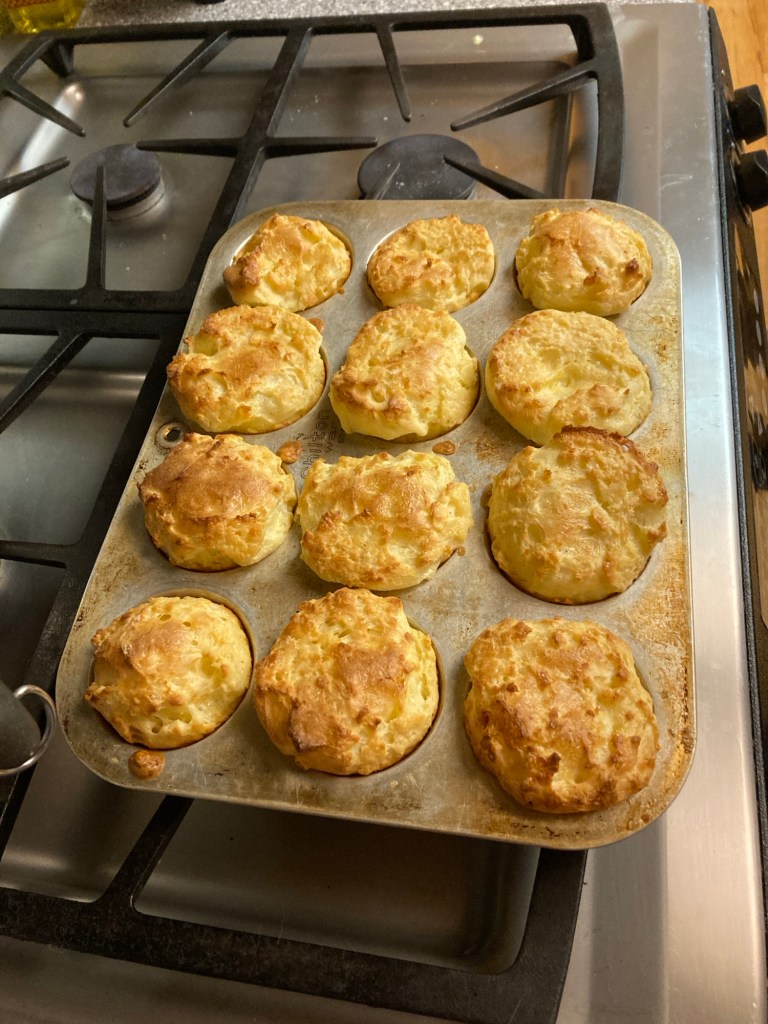
Ivy had just pulled a batch of popovers out of the oven when their dad called all the children out to help.

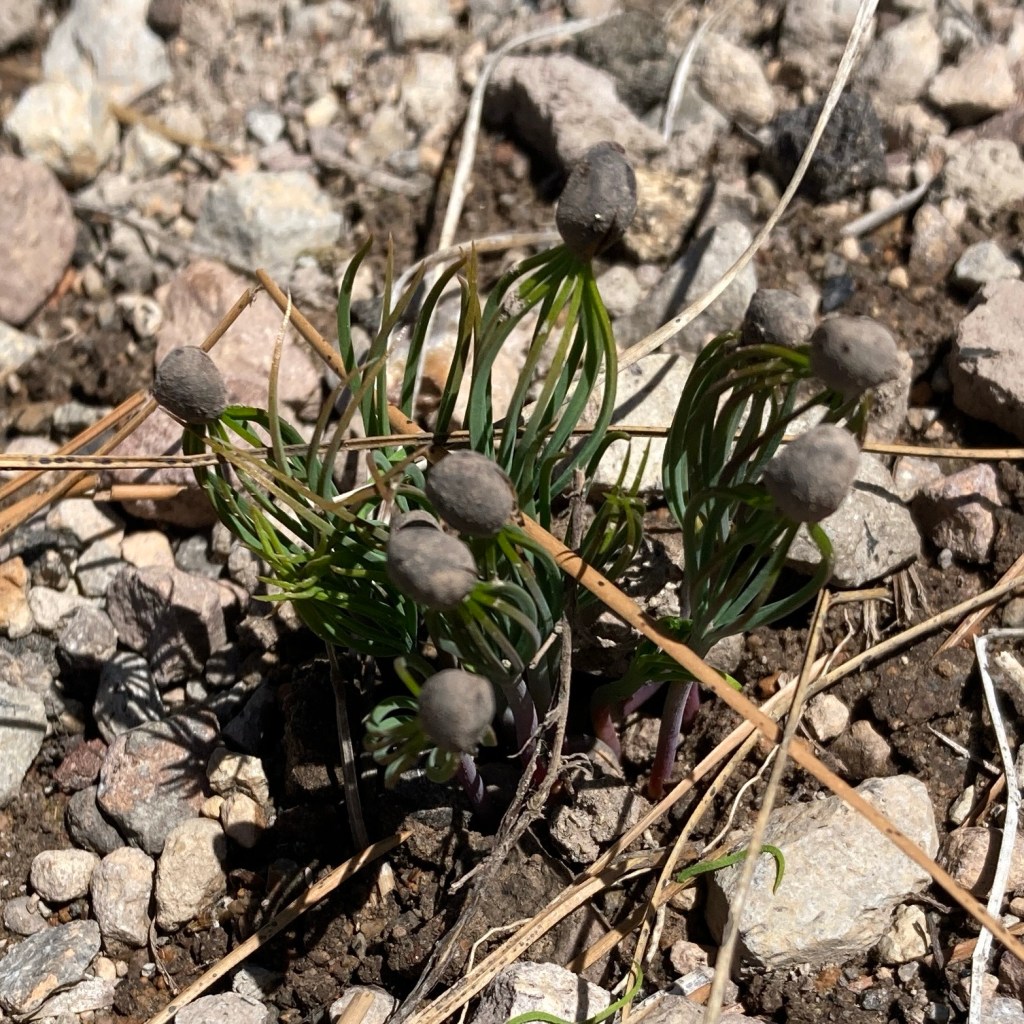
Yesterday I took two walks, first with Jamie and later with Scout. The forest floor is covered with pine cones, and also with cute sprouts of Ponderosa pine, each topped with the seed or seed case, presumably from which it sprouted.

Ivy peeled a few of them for me to eat, and one looked and tasted something like a commercial pine nut.

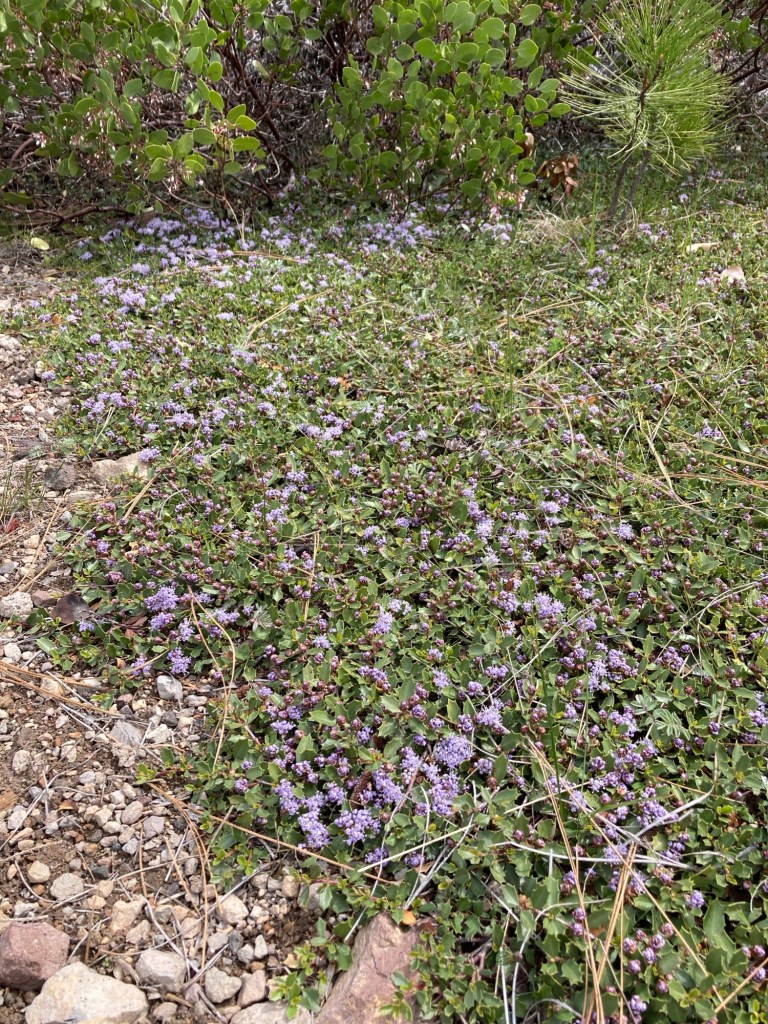
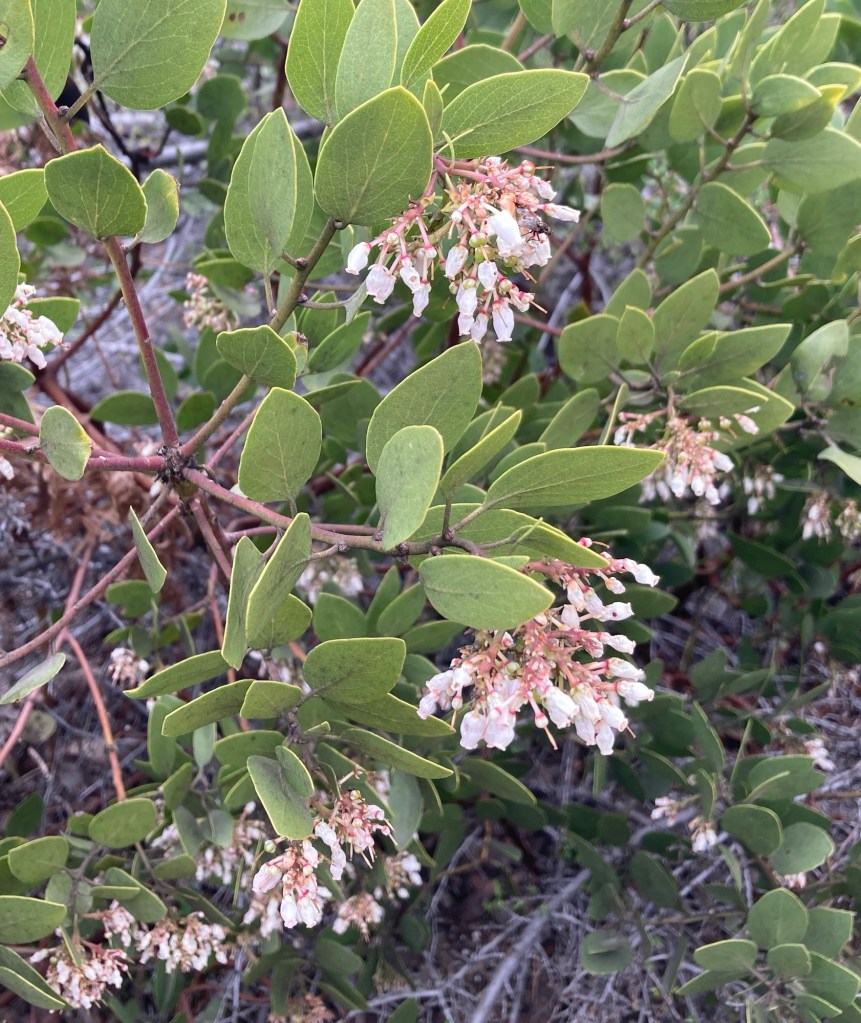
The pink and white flowered manzanitas are in bloom all around, and the Squaw Carpet lovely in violet.

Pippin drove a few of us even farther north to do another fun thing in the rain, but I will come back later to tell you about that. Completing a post on my phone is a challenge, and I want to publish this one before something goes wrong!

O come and tell me of the when.

KNOW’ST THOU THE WAY?

O littel bird! know’st thou the way
Which is unknown to me?
How swift thou flewest at break of day,
With heart all full of glee!

Around thy neck my message tied,
Full of my longing mind;
Thy speed the sailor has outvied,
Thou waitest for no wind.

No sweet reply can I get now;
No word to ease my pain;
I know not when, I know not how,
Or if we meet again.

O might that be, what gladness then!
I’d sing, sweet bird, like thee;
O come and tell me of the when
That happy time shall be.

-Theodor Kjerulf (1825 – 1888) Norway

Mikhail Olennikov, Rest Under the Bird Cherry