
Saint Demetrios entered the story of my trip to Greece almost at the beginning, and before I end my telling I want to bring him back into it more fully. As I write, I’m still in Greece, but in Athens and on my way home.
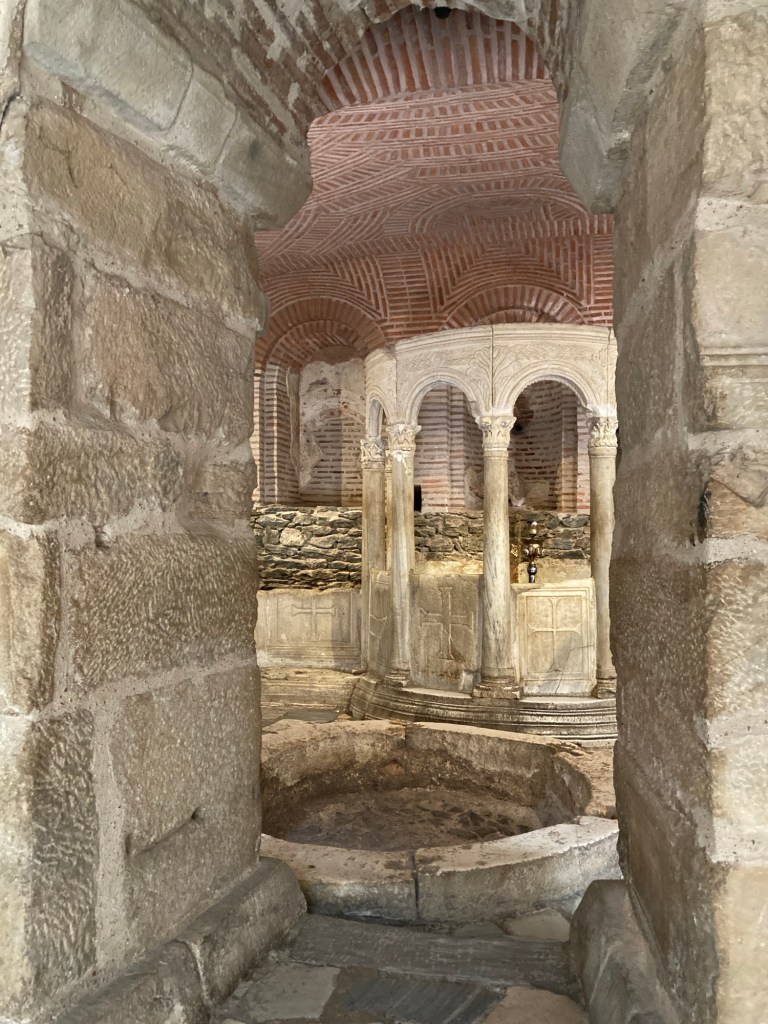
The Church that houses the saint’s relics was built on the site of a Roman bath house, believed to have been the place of his imprisonment and death. Emperor Maximian Galerius — yes, the same one who built the Arch and the Rotonda — had appointed young Demetrios proconsul of Thessalonica district, not knowing that he was a Christian.
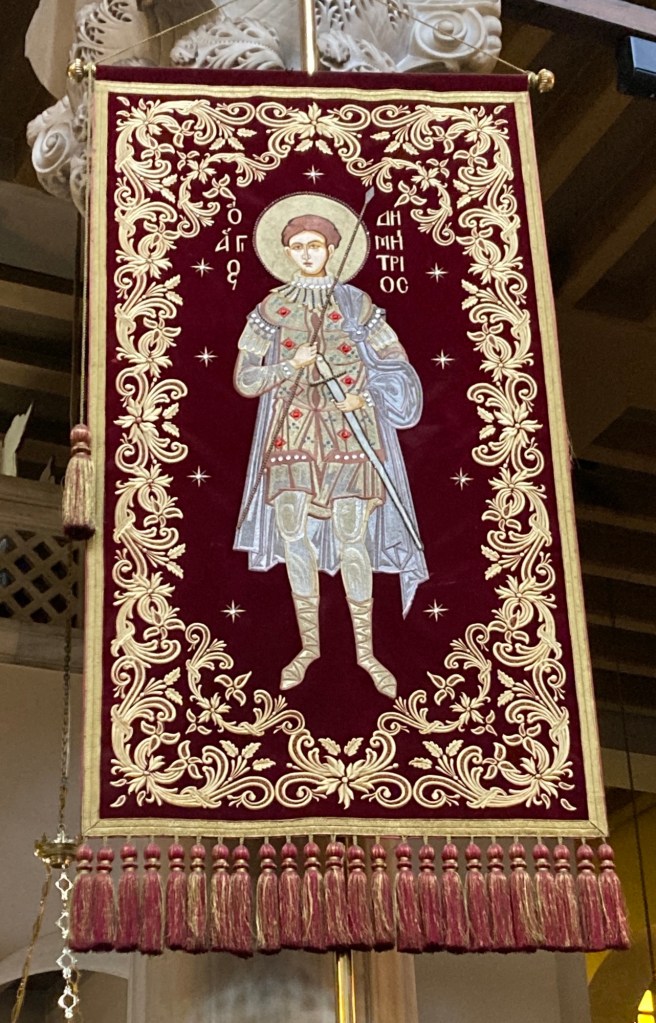
One of his duties was to put to death Christians, but instead he preached the faith, and was said by some to be a “second Apostle Paul,” for Thessalonica.
When Galerius found out, he ordered his imprisonment, and eventually his death, on October 26, 306. This article tells the story of his life in detail, including subplots concerning his friend Nestor’s martyrdom at the same time, how Demetrios became so beloved of the Slavs, and how he never would allow his relics to be moved to Constantinople.

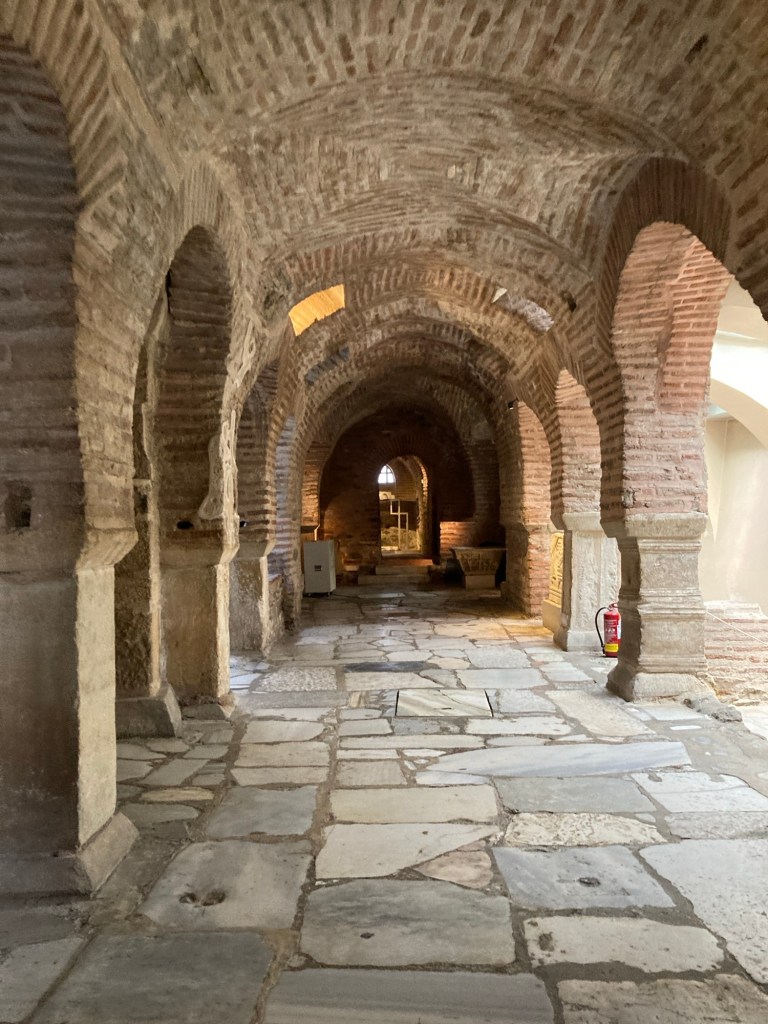
During the reign of St. Constantine the first church was built on the site, and in later centuries the Christians began using the old bath house structures.
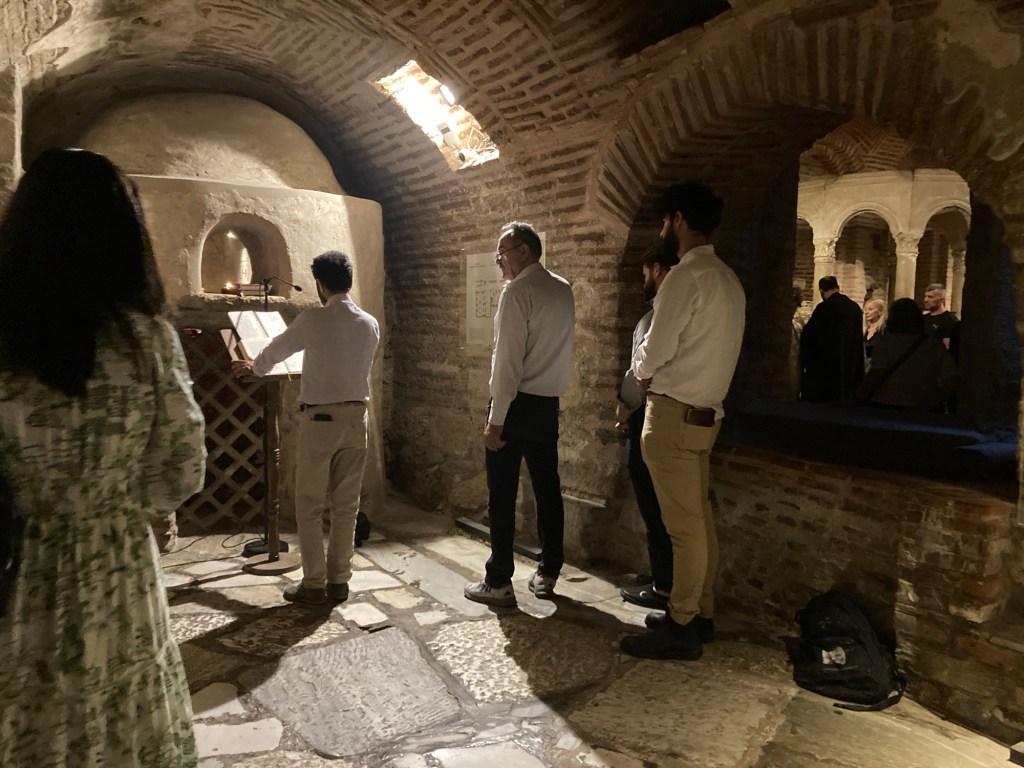
It was during the Ottoman rule when it was a mosque that the underground part became cryptic or “secret,” because whether by their intent or neglect, it was filled with earth and forgotten, until the fire of 1917 that destroyed much of the city; during restoration work on the church the crypt was revealed.
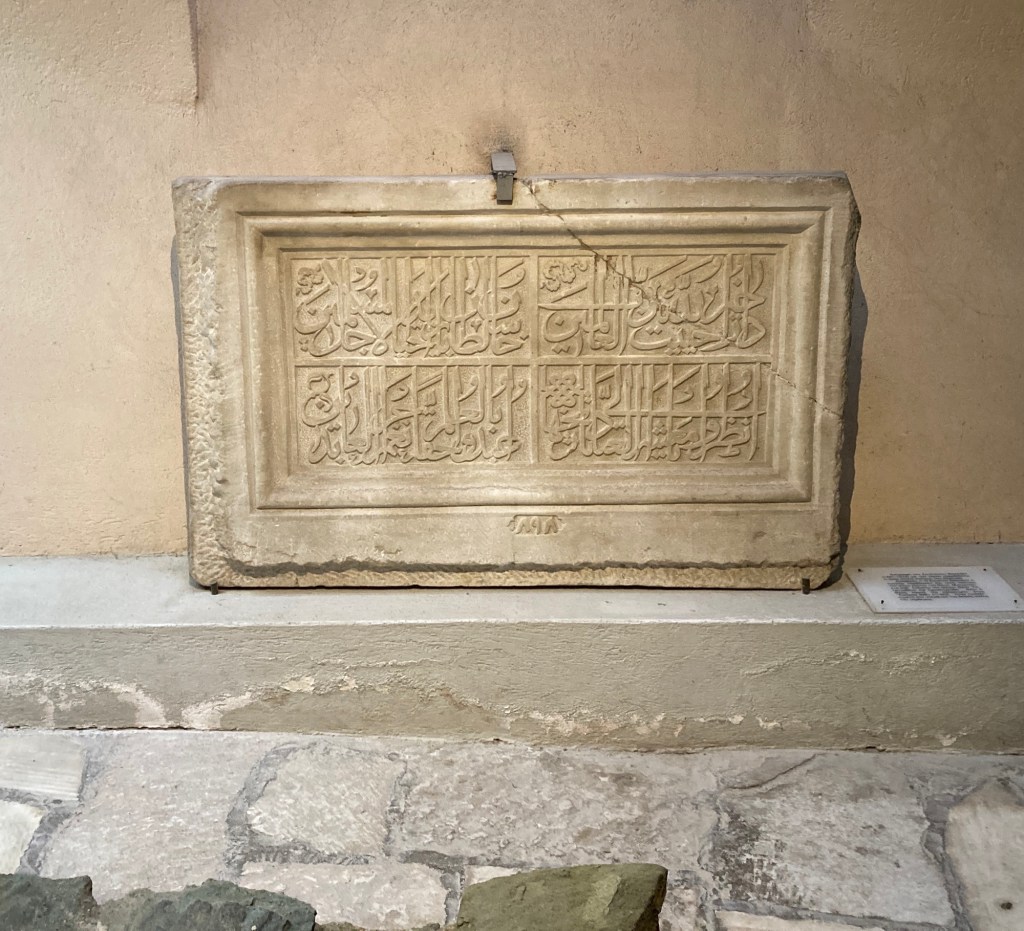
In recent years Orthodox services are often held in the space. I walked up to the church last Friday for Divine Liturgy that was served down there, where so much history is embedded in the stonework and the venerable marble floors.
The day before, the priest at the Church of the Panagia Acheiropoietos had reminded me, over coffee in his office, that there is nowhere on earth that God’s blessing is not present. You might think that He is here in Greece in a way that He is not to be found at the North Pole, for example, but it’s not true.
I have been thinking about that a lot. We Orthodox pray daily to the God Who “is everywhere present, and fills all things.” Also, we experience the eschaton at every Divine Liturgy, when Christ descends to commune with us.
The presence of God has been my experience in Greece, and He will be as immanent as ever back home when I return to the “same old” everlasting mercies of God new every morning. As I embark on my long, long day of travel, I hope I can keep in mind this constancy of grace.
Given the dailiness of our earthly pilgrimage, I can’t be too sad to leave Greece, and at the same time I’m extremely thankful for the short and rich time I’ve had here. Glory to God for all things.

 Gladsome Lights
What an amazing story of that saint. I love what you said about God being everywhere and his love being with us in every place and how it is a comfort!
LikeLiked by 1 person
I’m not sure that anyone, regardless of faith, could enter a place like this and not be surrounded by an overwhelming feeling of spirit and awe. This has been a wonderful journey, Gretchen. Thanks for bringing us along.
LikeLiked by 1 person
I hope your trip home is not too uncomfortably long and exhausting. What wonders you’ve experienced these past weeks.
LikeLiked by 1 person
I agree with Marmalade Gypsy’s comment, Gretchen. Amazing! Thank you so much for sharing this journey.
LikeLiked by 1 person