My father and my father-in-law were unusual, in that after their wives died, they each lived another nine or more years. Many men die soon after their wives, and people speculate about why. It seems that women in general do better when they lose their spouses; I have read theories about why this is… probably a lot of things contribute. Here are my ideas, largely gleaned from other people. Please forgive the over-simplification and generalities – we are all probably exceptions at least sometimes:
1) Women are used to taking care of things and people, so they know how to take care of themselves. They at least get the necessary things done for survival during the period while they are learning to live without their husbands. But if men have been used to the women cooking for them and in various ways making the house a home, they would be at risk for becoming less healthy very fast when their wives are gone, to some degree reverting to the risky behavior characteristic of unmarried men.
2) If women are, in the words of author John Gray, like “waves” whose emotions periodically roll over people around them, perhaps they know instinctively to let that tide of grief flow as long as it must. Men, on the other hand, don’t know how to deal with things they can’t control, and they want to fix problems such as emotions. If we know that we will get through this, and that there is no going around it, we are able to survive.
3) Women often have support networks with other women, and these friends help them to not feel alone. They have someone to talk to, and/or go shopping with, etc. They have a pattern of activity with other people that they can continue in some fashion as widows so they don’t start from nothing when creating their new lives. Men are notorious (at least, among most of my women friends) for not having friends in the same way. They are more likely to become depressed.
About th is last point, I know that you readers of my blog have been a important part of that network for me. I have never been in the habit of going out to lunch or taking walks with friends on a regular basis, being part of a knitting group, etc. I don’t even get helped by talking about my grief, but I am without a doubt helped by writing about it, especially if at least one person is reading-listening and affirming. So I thank all of you very much – you are extending my life span!
What sparked my thinking on these things recently was finding a quote by
Donald Hall, the poet who was married to poet Jane Kenyon when she died in her 40’s. He wrote: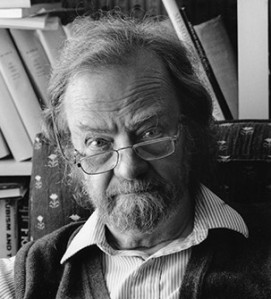
“Poetry gives the griever not release from grief but companionship in grief. Poetry embodies the complexities of feeling at their most intense and entangled, and therefore offers (over centuries, or over no time at all) the company of tears.”
Many years ago I enjoyed in The New Yorker an article that Hall wrote about his late wife. It was the first I knew of him, but several times over the years I’ve read more of his prose. He is still alive, though she died 20+ years ago, and he was almost 20 years older than she. Now he writes only prose, but I thought that if I were going to share that quote I ought to read some of the poetry he wrote after she died. So I borrowed the collection Without from the library.

I found most of the fresh-grief poems to be too fresh and overwrought, and I don’t know if that is only because I’m past that stage myself, or because of something to do with him being a man. Perhaps he was too distracted by mourning to be able to do his best work. I never did find one I loved; I like his prose so much better. But this later one serves well:
Letter After a Year
Here’s a story I never told you.
Living in a rented house
on South University in Ann Arbor
long before we met, I found
bundled letters in the attic room
where I took myself to work.
A young woman tenant of the attic
wrote these letters to her lover,
who had died in a plane crash.
In my thirtieth year, with tenure
and a new book coming out,
I read the letters in puzzlement.
“She’s writing to somebody dead?”
There’s one good thing
about April. Every day Gus and I
take a walk in the graveyard.
I’m the one who doesn’t
piss on your stone. All winter
when ice and snow kept me away
I worried that you missed me.
“Perkins! Where the hell
are you?”
————-In hell. Every day
I play in repertory the same
script without you, without love,
without audience except for Gus,
who waits attentive
for cues: a walk, a biscuit,
bedtime. The year of days
without you and your body swept by
as quick as an afternoon;
but each afternoon took a year.
……
The poem goes on for many more stanzas – this first part was my favorite, especially the last four lines.

Ten years after his wife’s death Hall published The Best Day the Worst Day: Life with Jane Kenyon. I was surprised that the majority of the book is about their life after her diagnosis of leukemia. It does include the essay The Third Thing, in which he writes about their years as a whole and how the writing life figured into it. The story of how he brought Jane, not yet 30, to New Hampshire from Ann Arbor, Michigan, to his grandmother’s house where from a child he had always wanted to live, is very touching.
She fell in love with the place at Eagle Pond, but their joint realization of the strong desire to move there came in stages. It seemed preposterous for him to quit his reliable teaching job to do it.
“It was late October when Jane made the definitive announcement: She would chain herself to the walls of the rootcellar rather than leave New Hampshire. I was terrified; I was joyous.”
I wonder at my interest in a couple whose poetry I’ve barely read, with whom I might seem to share very little in common, unless you count, as I do heavily, their love for a secluded life at home by a lake, in the garden, reading and writing much of the day. They were part of a warm church community of which Donald’s relatives were also members. Donald loves baseball, and has been a lifelong smoker (Well, no, I don’t share that with him). They lived a life that perhaps the majority of the population would not be able to endure. In fact, some people asked, “What do you do?”
From “The Third Thing”:
“What we did: we got up early in the morning. I brought Jane coffee in bed. She walked the dog as I started writing, then climbed the stairs to work at her own desk on her own poems. We had lunch. We lay down together. We rose and worked at secondary things. I read aloud to Jane; we played scoreless ping-pong; we read the mail; we worked again. We ate supper, talked, read books sitting across from each other in the living room, and went to sleep. If we were lucky the phone didn’t ring all day.”
I would probably find it easy to read about other couples also if they knew how to write as well about their everyday satisfactions – and sufferings. But I will have to move on, when I have finished this 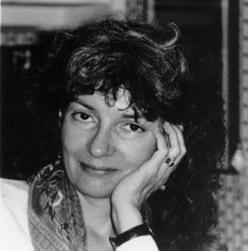 article, without learning everything that might be known about Donald and Jane, their life and their loves.
Though I might yet read more of their poetry. I have the fat Collected Poems of Jane Kenyon in the house right now, and will share with you this:
In the Grove: The Poet at Ten
She lay on her back in the timothy
and gazed past the doddering
auburn heads of sumac.
A cloud — huge, calm,
and dignified — covered the sun
but did not, could not, put it out.
The light surged back again.
Nothing could rouse her then
from that joy so violent
it was hard to distinguish from pain.
-Jane Kenyon
Donald Hall is 87 now. In a review of Essays After Eighty we read, “Jane Kenyon’s presence is everywhere in Essays After Eighty. The couple were married for 23 years, until her 1995 death from leukemia. Kenyon was 47 years old. Hall endured a period of intense pain, captured in two poetry collections and a memoir. Twenty years later, raw agony has become constant, aching loss: ‘I will mourn her forever.’”
Perhaps his writing is the support that has kept him going, even though he had cancer before Jane ever got sick, and last we heard, he was still smoking a pack a day.
“Give sorrow words;
the grief that does not speak
knits up the o-er wrought heart
and bids it break.”
-William Shakespeare,
Macbeth
[Donald Hall died on June 23, 2018, at the age of 89.]