All posts by GretchenJoanna

Unknown's avatar

About GretchenJoanna

Orthodox Christian, widowed in 2015; mother, grandmother. Love to read, garden, cook, write letters and a hundred other home-making activities.

Joy in the Holy Spirit — Pentecost

Today the church is decorated with green–ferns, birch branches, palm fronds, hanging from the chandelier and draped over everything. Lilies frame the icon that portrays the pouring out of the Holy Spirit 50 days after the Resurrection. The vestments and other cloths are green now as well. This passage from Alexander Schmemann’s For the Life of the World explains why we Orthodox take so much trouble for the sake of the appearance of our temple:

The liturgy [Communion service] is, before everything else, the joyous gathering of those who are to meet the risen Lord and to enter with Him into the bridal chamber. And it is this joy of expectation and expectation of joy that are expressed in singing and ritual, in vestments and in censing, in that whole “beauty” of the liturgy which has so often been denounced as unnecessary and even sinful.

Unnecessary it is indeed, for we are beyond the categories of the “necessary.” Beauty is never “necessary,” “functional” or “useful.” And when, expecting someone whom we love, we put a beautiful tablecloth on the table and decorate it with candles and flowers, we do all this not out of necessity, but out of love. And the Church is love, expectation and joy. It is Heaven on earth, according to our Orthodox tradition; it is the joy of recovered childhood, that free, unconditioned, and disinterested joy which alone is capable of transforming the world. In our adult, serious piety we ask for definitions and justifications, and they are rooted in fear–fear of corruption, deviation, “pagan influences,” whatnot. But “he that feareth is not made perfect in love “(I John 4:18). As long as Christians will love the Kingdom of God, and not only discuss it, they will “represent” it and signify it, in art and beauty. And the celebrant of the sacrament of joy will appear in a beautiful [robe], because he

is vested in the glory of the Kingdom….

Today is Pentecost, or Holy Trinity Sunday, so named because all the Persons of the Trinity are remembered–Christ sent the Holy Spirit from the Father. This event is, as our rector reminded us, the seal and crown and joy of Pascha, and our salvation. It is a feast second only to Pascha, to the Resurrection itself, and there is so much to celebrate that we have another Divine Liturgy tomorrow, on Holy Spirit Day.

During the time between Pascha and Pentecost, we withheld the prayer about the Holy Comforter from our daily selections, as we entered into a period of “waiting” for the Spirit to be given. Now its restoration imparts the reality of Pentecost as a historic event which has been given to us in Christ, and we pray:

O Heavenly King,
The Comforter, The Spirit of Truth,
Who art everywhere present and filleth all things,
Treasury of Blessing, and Giver of Life,
Come and abide in us,
And cleanse us from every impurity,
And save our souls, O Good One.
Crazy About Roses

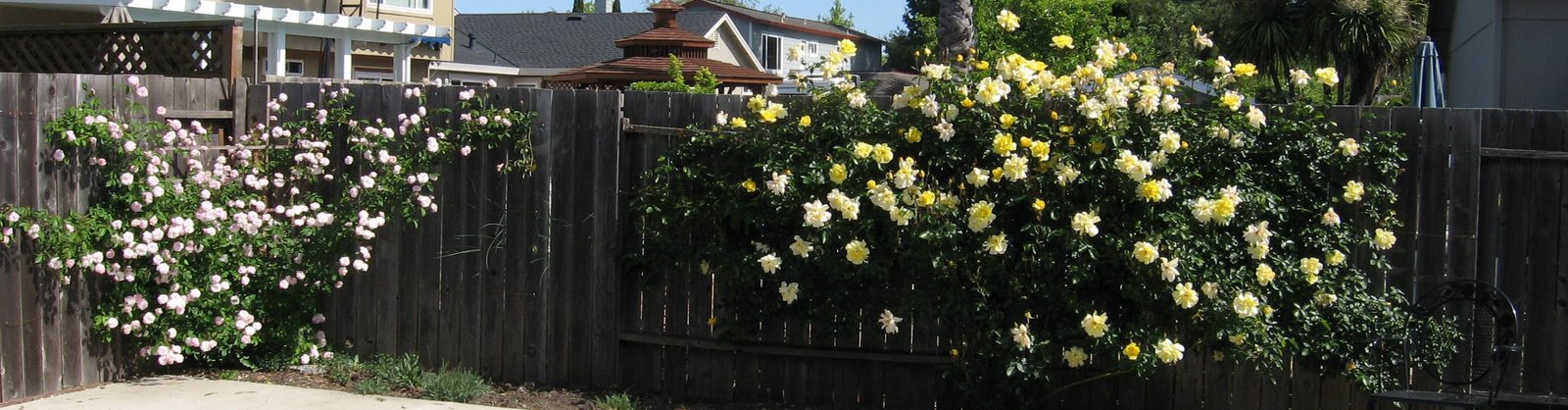
This week I spent a good while pruning roses at church, which reminded me how much I love those flowers, and I decided to prolong the feeling by writing about it a little and looking at pictures with you. The photo above is of our two climbing roses we have at home, Cécile Brunner and Golden Showers, taken last spring, which I think was the first season after being pruned properly.Here they are this year. The C.B. at least is a little bigger. It’s quite a bit younger, and is the first plant that has worked to sort of fill up that corner of the yard visually. Note in the second picture the change in the background–the neighbors’ messy palms! Oh, well, I usually have my nose in the blossoms or am looking the other direction trying not to get poked in the face while I cut dead blooms, so that I don’t see what’s over the fence.
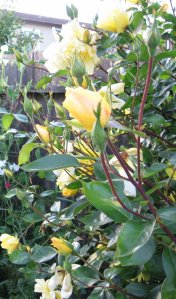
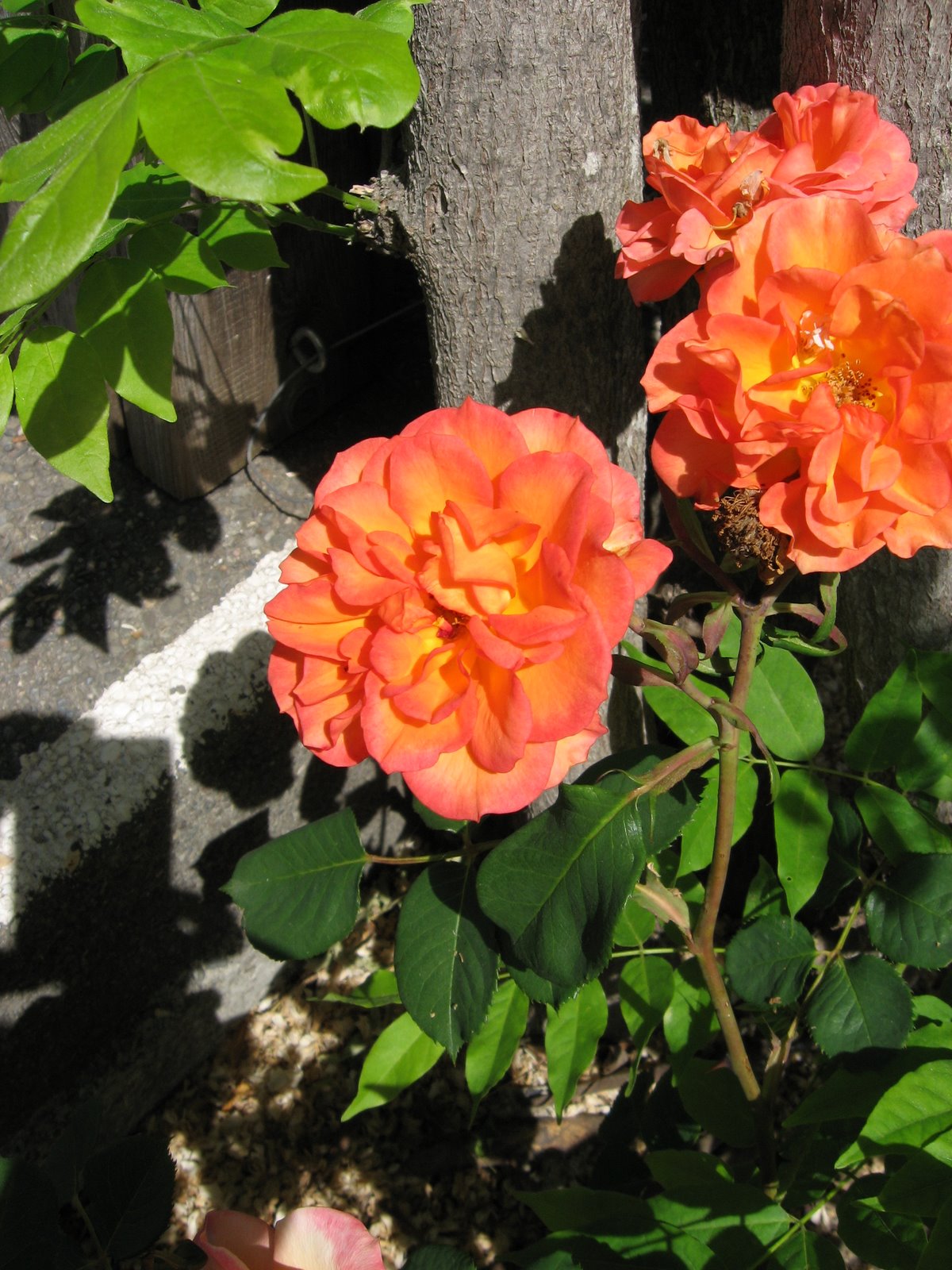
Here is a close-up of the Golden Showers, a rose I bought with a Jackson & Perkins gift certificate that my fellow-gardener sister K. so thoughtfully gave me for my birthday one year. Now it always makes me think of her.

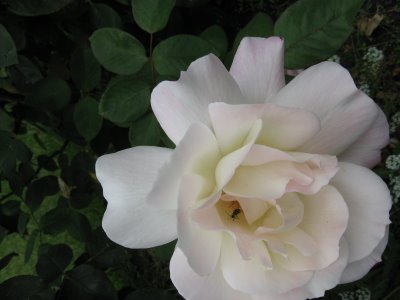
This lovely flower that the Japanese beetle is enjoying is a tea rose in the front yard; its name is Pristine. (We have another rose bush out there for which I can’t find a photo at present, but I’ll show you in the future.) Pristine is a gem.

At church we have about 50 rosebushes. When I was tending them earlier in the week, deadheading, pruning a bit, watering, I didn’t want to stop, though I didn’t finish the job. I never do finish at church, because there is enough work there for at least one full-time gardener, and we don’t have any. It is a challenge to stay focused and enjoy the task of the moment; the mind wants to race ahead and dwell in the problems of the future–as in, How will I ever get half of this work done?

But somehow, that day, I was able to take a few minutes of the many and think how marvelous it is that I can do such sweet-smelling and satisfying work, loving Creation by ministering to the needs of these beauties. They can’t help it if they poke and scratch me, and the aromas and velvety petals and rainbows of colors make up for the pain.

Who would have thought I would like an orange rose? The two at church are on either side of a sidewalk intersection, and not being the same variety, they complement each other in their different tones of orangeness. This one is Ginger Snap, and the one I have pictured at the top of the sidebar, in two tones, is About Face. I am very fond of both.This is “merely” a gorgeous red rose that gives glory to God there on the church property.

My favorite at church is this pink climber that is also my special pet. It is at a spot where a lot of people see it, next to the parking lot. Last fall Mr. Glad helped me to drive a large redwood stake into the ground between it and the pillar that is concrete on the bottom. Then I wired the stake/post to the pillar, so that when I anchor the rosebush to the stake it won’t get pulled over, and the trunk of the rose will be closer to the redwood part of the pillar, where I hope to train it. A long process. But it is a climbing rose, and last year it kept reaching out away from the pillar. It’s doing better now with some discipline.

Now that May is past, many of the roses will have finished their biggest show. There will be plenty of rose work to be done, or left undone, all summer long. But let me not miss the immediate and rich rewards.

Curious about asparagus.

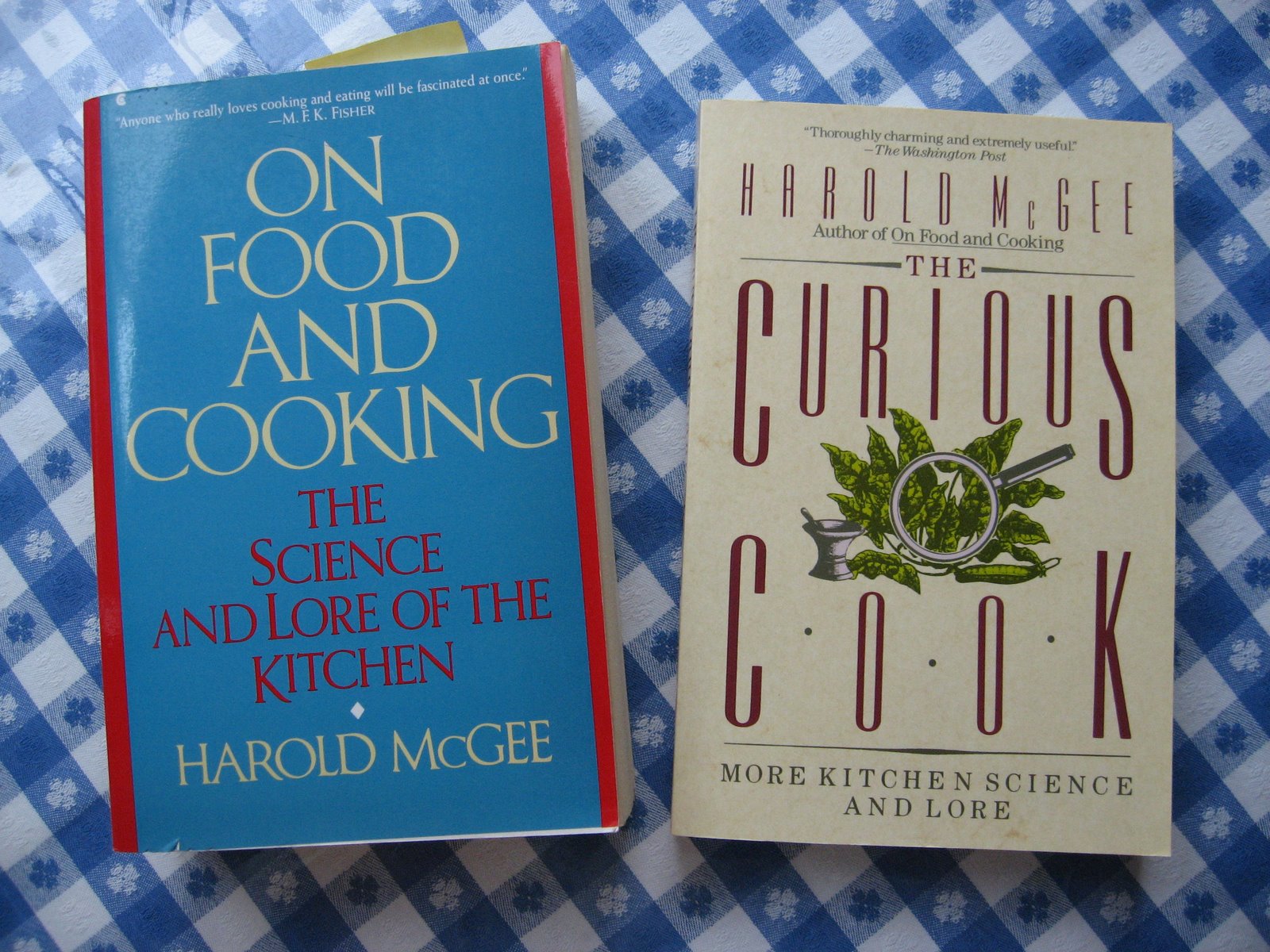
The Curious Cook, Harold McGee, has now studied whether asparagus-snapping is the best way to avoid this vegetable’s tough parts, and you can read his conclusions here . We were just having a discussion about this issue in our kitchen last week. My own style of trimming is sort of a variation on Harold’s. But I’ll tell you about that, maybe, next spring when I have more and fresher of the stalks to photograph. In the meantime, there is much fascinating and useful information to be had from the short article.

I haven’t made very much use of the two books by McGee that I invested in many years ago. But I am grateful to him for applying scientific research to our common kitchen tasks. I did learn–and remember– that if you happen to have a copper bowl around, you will get more volume to your egg whites if you beat them in it, because of a chemical reaction that happens. And it’s o.k. to wash mushrooms, because even sitting in a bowl of water, they hardly absorb any (he weighed them before and after) and don’t get soggy.

Recently I subscribed to his blog, but it isn’t very busy. And just taking his books off the shelf and leafing through them makes me think that if I put in a little time with them, I might be able to learn more for use in my current culinary phase.

French Cooking (Leek Week)

Last week my friend K. let me know that she had a large crop of leeks she needed to harvest to make room for summer plants. Not once but twice I went to her back yard and got a bunch. If you aren’t familiar with this vegetable, you won’t know what a treasure had been bestowed on me. K. says that when she cooks leeks it makes the house smell like a French restaurant. They are in the allium family, but have their own distinctive flavor, not like onions or garlic or anything else.

But I’m getting ahead of myself. Leeks need some prep work before you can fully enjoy them.There was my bundle of leeks (the second batch, as I’d neglected to do any documentation of the first) on the back step. These were mostly smaller in diameter than the ones I see in the store, but contrary to the resemblance, they don’t taste like a large scallion, either. And they are dirtier than other members of their family. The next photo was taken a couple of days later, after I took them out of the refrigerator and sliced them lengthwise for cleaning.
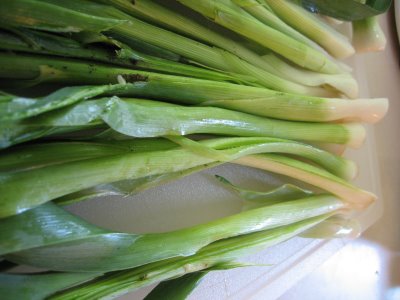
Leeks always have dirt between the layers of flesh and you have to spend some time getting them clean. Just plop them in the sink and run the water over them while you use your fingers to loosen the dirt and let it run down the drain.

I accidentally deleted the picture of leeks in my sink, but I think you can imagine it.

Here are the nice clean vegetables. I was preparing to make Leek Confit, a recipe I got online at http://www.epicurious.com/ and then changed a little bit. I made it twice, once using mostly the white part and this time using the whole thing, I found out that it works either way. It is a very easy way to prepare the vegetable, and the finished product can be used as an ingredient in more leek recipes.
 
Leek Confit
1/4 cup unsalted butter
4 large leeks, halved lengthwise and cleaned, cut crosswise into 1/4″-thick slices (about 5 cups)
2 tablespoons water
1/2 teaspoon salt
Melt butter in a large pot over medium-low heat. (I had 15 cups of chopped leeks, so I tripled this recipe and used a 12″ cast-iron skillet.) Add leeks; stir to coat. Stir in water and salt. Cover pot; reduce heat to low. Cook until leeks are tender, stirring often, about 25 minutes.
Uncover and cook to evaporate excess water, 2-3 minutes. Serve warm.

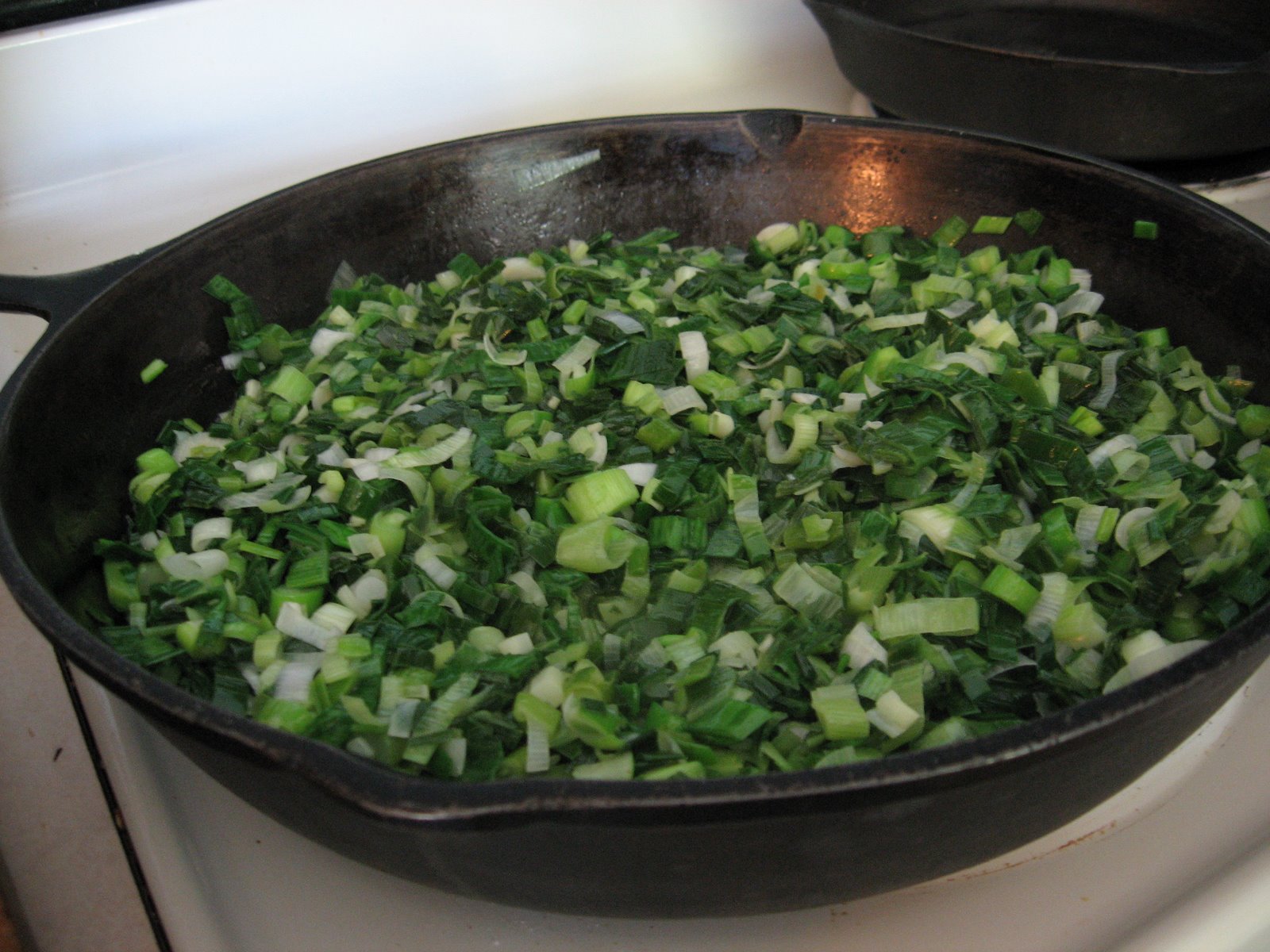
This second picture shows how the leeks turn more of an olive green color after cooking. At this point they are ready to eat as a side dish just the way they are. The first night I made crostini and we spread the toasts with goat cheese and piled the confit on top. That was my favorite. Since then I have also served them alongside or in eggs or as a vegetable dish next to–anything!

The author of the recipe said that the confit will keep for a week in the refrigerator, so I have been hoarding the last bit of my second batch to savor some morning on my eggs or toast. If I get a windfall of leeks again I think this confit would be a good way to freeze any excess.

And after reading pages of recipes for leek tart or quiche, I added some of the confit to whatever typical quiche ingredients I could find in my refrigerator and came up with the following:

Leek Tart
2 cups Leek Confit (recipe above)
4 eggs
1/3 cup sour cream
2 tablespoons heavy cream
2 tablespoons Chardonnay wine
3 slices cooked bacon, diced
1/4 teaspoon salt
freshly-ground black pepper to taste
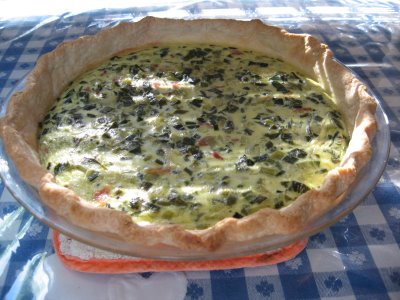
Preheat oven to 400°. Beat the eggs with the creams, wine, salt and pepper; add bacon and leek confit and stir. Pour into a pie shell that has been pre-baked for 10 minutes, and place in the bottom third of the oven. Bake for 25-30 minutes, until the top is golden and puffed and the custard is cooked through.

I like this picture of the tart, even though it has dappled sunlight on it, and it wasn’t even quite done cooking when I took the photo. I didn’t want to stick a knife in to test the custard before I’d taken some pictures. When I did peek inside, I realized that the quiche was still too soft, and I put it back in and it puffed more as it was finishing.

I’d like to try more variations on Leek Tart–perhaps something that is not so eggy. But I think it would be hard to go wrong with leeks. Their irresistible flavor almost guarantees success, at least in my house.

Here I’d like to give you my favorite pie crust recipe, since I’ve been blogging about pies lately. For most of my life I used the basic pie crust recipe from Joy of Cooking, until a few years ago I discovered Mark Bittman’s wonderful recipe in How to Cook Everything. It is my new standard never-fail basic, and he gives variations for different size pie pans, single and double crusts, and so on. His was my basic, but I have already altered this recipe to make it less salty. He is assuming salted butter, by the way. I am only giving you the ingredients list here, because I can’t imagine using printed directions to make pie crust, and I didn’t write his down. If you don’t know how, find a real person to teach you while standing next to you.

Pie Crust
For an 8-10″ single crust:
1 1/8 cups flour (5 oz.)
1/4 teaspoon salt
1 teaspoon sugar
8 tablespoons cold butter
3 tablespoons ice water
(sweetened/enriched, add 2 tablespoons sugar and/or 1 egg yolk with the water)
For a generous 10″ or deep single crust:
1 1/2 cups flour
1/2 teaspoon salt
1 1/2 teaspoon sugar
10 tablespoons butter
4 tablespoons ice water
For a 2-crust pie:
2 1/4 cups flour
1/2 teaspoon salt
16 tablespoons butter
2 teaspoons sugar
6 tablespoons water
Happy Baking!