Everything is plundered, betrayed, sold, Death’s great black wing scrapes the air, Misery gnaws to the bone. Why then do we not despair? By day, from the surrounding woods, Cherries blow summer into town; At night the deep transparent skies Glitter with new galaxies. And the miraculous comes so close To the ruined, dirty houses— Something not known to anyone at all, But wild in our breast for centuries.
Today there have been lovely things I never saw before; sunlight through a jar of marmalade; a blue gate; a rainbow in soapsuds on dishwater; candlelight on butter; the crinkled smile of a little girl who had new shoes with tassels; a chickadee on a thorn-apple; empurpled mud under a willow, where white geese slept; white ruffled curtains sifting moonlight on the scrubbed kitchen floor; the under-side of a white-oak leaf; ruts in the road at sunset; an egg yolk in a blue bowl.
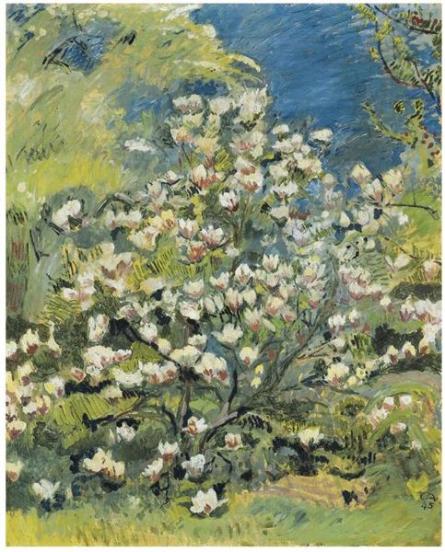
Deep in the wood, of scent and song the daughter, Perfect and bright is the magnolia born; White as a flake of foam upon still water, White as soft fleece upon rough brambles torn. Hers is a cup a workman might have fashioned Of Grecian marble in an age remote. Hers is a beauty perfect and impassioned, As when a woman bares her rounded throat. There is a tale of how the moon, her lover, Holds her enchanted by some magic spell; Something about a dove that broods above her, Or dies within her breast—I cannot tell. I cannot say where I have heard the story, Upon what poet’s lips; but this I know: Her heart is like a pearl’s, or like the glory Of moonbeams frozen on the spotless snow.
-José Santos Chocano (1875 – 1934) Peru Translated by John Pierrepont Rice
I will not write about Christmas lights garlanding the tree, how steadily red blends to sapphire emerald gold, how strong the little bulbs must be to throw their dancing hearts upon the café wall, how children try to catch them. I will not say there is tinsel draped about the branches like seaweed over pebbles, nor paint the cloths swaddling our skins apricot, indigo, violet, teal. I will not speak of glazed pastries on the counter, how they shine so much they could be varnished, there for the hell-of-it, for the sheer beauty of their glistening berries. I’ll turn away from buses heaving down the rush-hour road, ignore how in all this rain the headlamps could be tumbling garnets, polished amber, as if a picture-book box of pirate treasure had spilt its pearls and precious stones across a tarmacked page.
I will not describe how the sun becomes the sea, I will not delight in words to name its colours – cerise, crimson, indigo, scarlet, madder, rose. I will not try to find a way to show your smile across the table, how it slips like warm charcoal into the fabric of my heart. I will not suggest I light a candle as the year prepares to wane, that you hold a second wick to mine then another and another, that together we whisper a prayer for each growing flame. I will not talk about the light that is everywhere, how far you have to travel for the sky to be completely black (and even then there are stars, there is the moon’s borrowed brightness). I will not question why fire burns more fiercely before sputtering out, or how – when we know we’re dying – we can be so fully alive. I will not say these things because this is a poem about darkness. I am writing about the darkness.


 Gladsome Lights