As summer warmth makes the lizards and bees busier, so it works on me. The point of Too Much Heat might lie ahead at some point, but evidently I am still on the continuum with no end in sight. New opportunities and fun things have recently come into my life, so that my calendar has been over-full for a couple of weeks, and my heart the same. So far I haven’t reached the stage where I am craving empty days… but today I am a little bit at loose ends, and probably  distracted by the wildfire smoke that is drifting south from the Woodside Fire up on the coast, not close to us, but making the air unhealthy.
I don’t like having to keep the house closed up against smoke, but I am glad the indoor spaces had cooled off the night before the smoke blew in; I had closed all the windows and shades that morning, and in the evening it was still cool, so we didn’t open the windows when the sun went down. Our only “AC” is the marine air that almost always flows into the neighborhood in the evenings or at least at night. So far, the heat (about 90 degrees at the moment) has not seeped indoors very much.
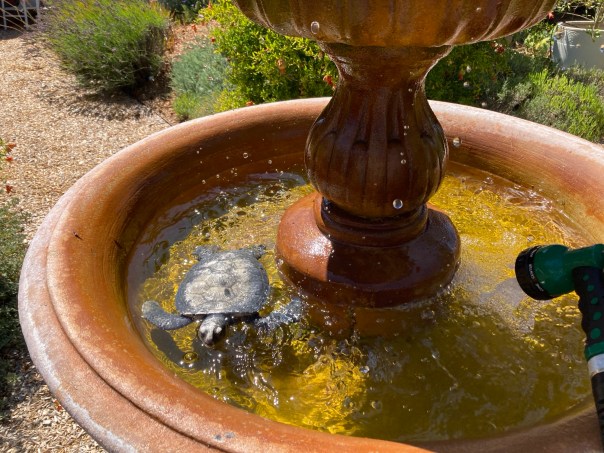
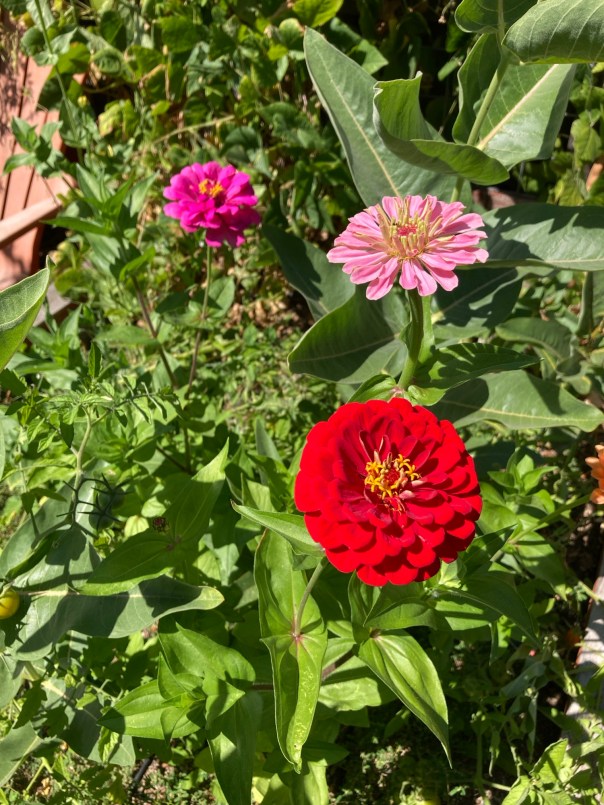
Leaving comfort behind me, I walked out the door into the smoky heat to add water to the fountain, to see new things that have bloomed, and to deadhead a little. I tend to focus on garden “problems” that need fixing — transplanting, weeding, trimming, irrigating. But when I don’t have it in me to do actual work, I usually can remember to just look around and be thankful — for my patch of paradise.

At church, we had a funeral this week, and I was able to participate in commending a 90- year-old child of God to her Father. Our funerals are so nourishing to the soul, as the hymns and prayers acknowledge our grief, and help us grieve in what is ultimately a healing way. The Church and her sacraments are truly full of Christ, His Life and Love, and I come out of every funeral full to the brim.
I told my priest that I wish I had a book into which I had transcribed over the years all the short homilies he has given at the end of funerals. Each is unique to the person and the situation, but they all are incredibly rich and edifying. Next week will be another funeral, for a priest dear to me, and I am very interested to learn how that is different from other funerals in the Orthodox Church.
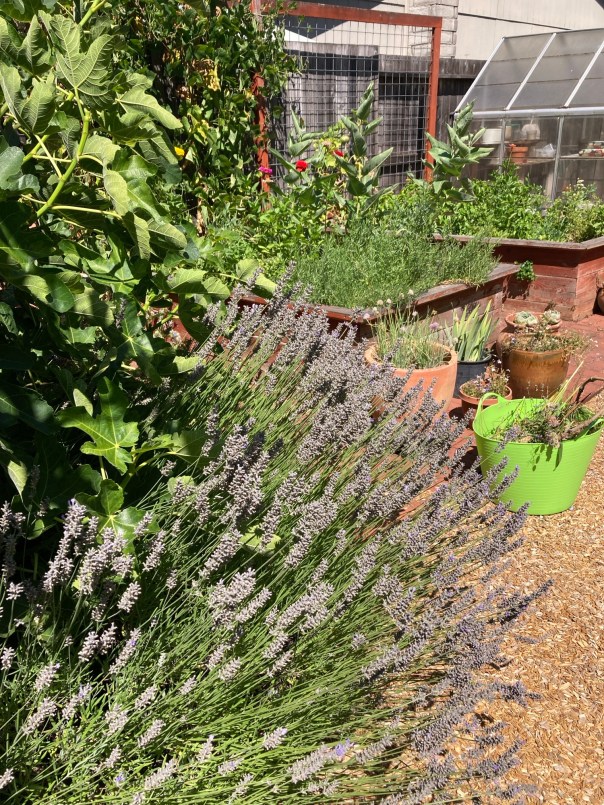
I trimmed all the lavender but two bushes that the bees were still visiting, though they are faded quite a bit. Another purple note showed up in soup I made, using gifted carrots, cabbage from the freezer, a few ingredients from my garden: Painted Lady beans, kale, parsley, and tarragon.

I have joined a small in-person book group reading The Ethics of Beauty (by Timothy Patitsas) together every week, and an on-line class to study Universal History. I’m planning a trip to see my granddaughter Ivy in a youth musical production, and will continue visits about once a month to the nearby house of a family at church, to read stories to three young children. This is one of my very favorite activities, and it’s so sweet how this arrangement benefits all of us.
 My new housemate Bea has been with me now for about a week. We are already having a good time brainstorming about various events we’d like to collaborate on, around books, high schoolers, tea, cooking… She’s baking a cake at this moment, and almost every day she is playing the piano, and that makes the house feel right.
Our usual women’s book group continues, and we have been reading Peace Like a River, by Leif Enger. It’s the second time I’ve read it, and I love it still. I’ve been reading Death Comes for the Archbishop over and over, because the narrator and the story are very calming, when I wake in the night and can’t go back to sleep on my own. For the first time ever I’m reading The Iliad in the original (translated), and that has been satisfying. Because I haven’t read the whole of the Odyssey before, either, I’m a little reluctant to jump into watching the new movie based on it. But I’ve read plenty of interesting reviews!
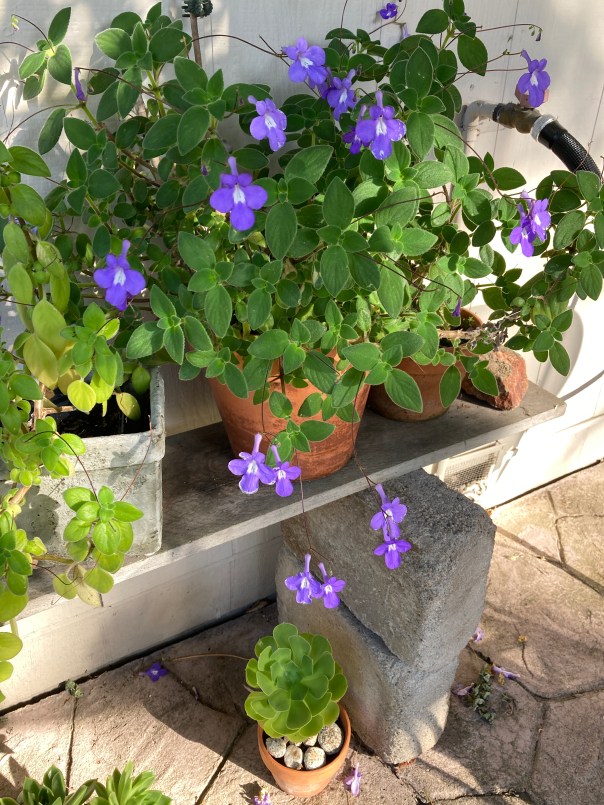
My large Nodding Violet plant I have been planning to give away as soon as it started blooming again, which is Now! If you live nearby and want it, let me know in a direct message. It needs protection from frost, so I bring it indoors in winter, but many people in my area leave them under a roof outdoors.

Here is a clearer photo of it from a year ago:
At the moment I can’t remember what this plant is… I think a salvia. But it is the one that pulled me outside this afternoon when I saw it out the window. One of the bright and wonderful things in my life right now.


 I made a lemon meringue pie only once, and wrote about it here:
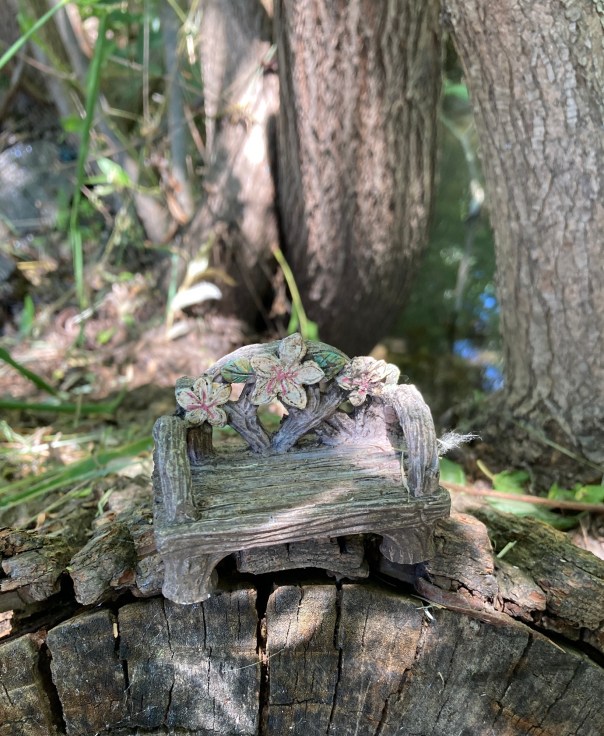
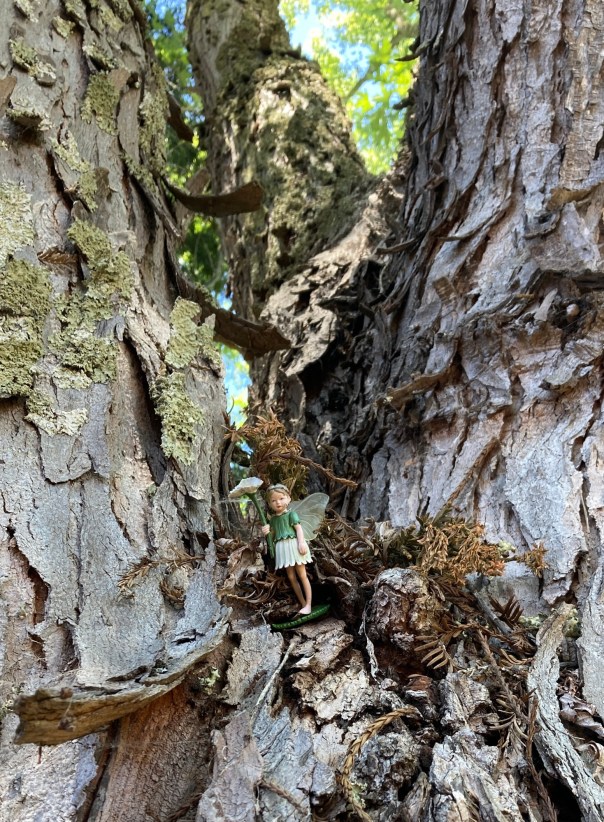
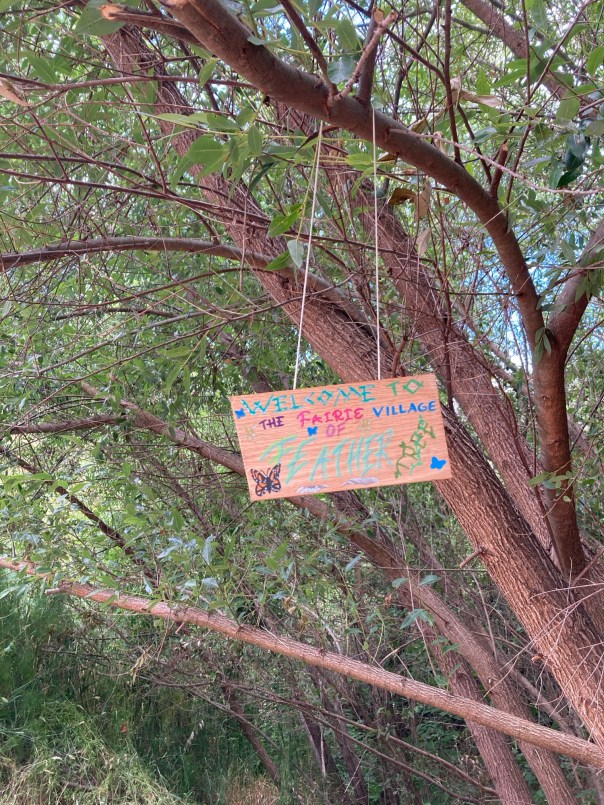
 A couple of grandchildren, Ivy and Jamie, were with me for ten days, which we all agreed felt luxurious. We walked a lot! To the grocery store twice, to the bridge over the creek almost every evening, to the fairy houses and to the library more than once.


 read three or four staves, which was a good start for me. I will continue to read aloud now, though no one but me will listen.


 If I had opened Moby-Dick even ten years ago, I wouldn’t have been able to appreciate it. Many of my peers read it in college, and I always knew that many people considered it a Must Read, the Great American Novel, etc. No one ever personally recommended it to me, though. This spring I read online two book-lovers’ brief comments on it, ideas I’d never heard before: first, that it was often funny, but also, that it was a joy to read such prose.
 argument for the above supposition.
 we certainly had little enough life experience to enable us to catch all the subtle humor.
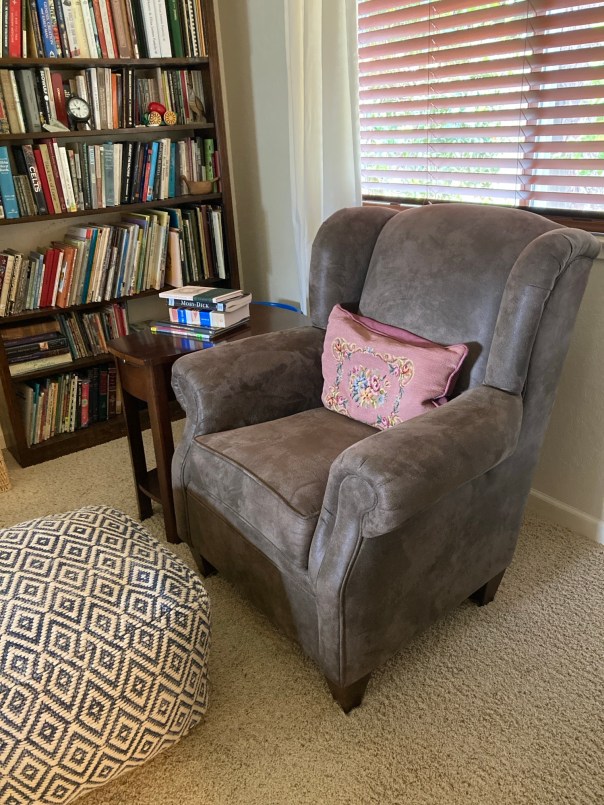 I marvel at the scope of Melville’s “mental furniture,” and the way he weaves his vast knowledge into the philosophizing of Captain Ahab, and the musings of several characters. What a way he has with words — If I had read the whole thing in print the first time through, I’m afraid I’d never have finished, because I would pause at least once in every paragraph to wonder How does he do this? or to analyze the author’s worldview.
 “In the serene weather of the tropics it is exceedingly pleasant the mast-head; nay, to a dreamy meditative man it is delightful. There you stand, a hundred feet above the silent decks, striding along the deep, as if the masts were gigantic stilts, while beneath you and between your legs, as it were, swim the hugest monsters of the sea, even as ships once sailed between the boots of the famous Colossus at old Rhodes. There you stand, lost in the infinite series of the sea, with nothing ruffled but the waves. The tranced ship indolently rolls; the drowsy trade winds blow; everything resolves you into languor. For the most part, in this tropic whaling life, a sublime uneventfulness invests you; you hear no news; read no gazettes; extras with startling accounts of commonplaces never delude you into unnecessary excitements; you hear of no domestic afflictions; bankrupt securities; fall of stocks; are never troubled with the thought of what you shall have for dinner—for all your meals for three years and more are snugly stowed in casks, and your bill of fare is immutable.”