Category Archives: books

My encounter with Churchill’s friend.

Almost nine years ago I was in the middle of a Winston Churchill immersion experience, in England with my daughter who is a big fan of the man. We visited the Churchill War Rooms museum in London, his country estate at Chartwell, his birthplace at Blenheim Palace, and his grave.

One of my favorite parts of the museum was a huge collection of quotes, unfortunately displayed in an “interactive” touchscreen format so that I couldn’t easily or thoroughly access them, and I didn’t have the time to write any down, but the essence of one stuck in my mind the way a tasty seed lodges between the teeth and surprises you later on with its savor. I counted on the trusty Internet to help me find the quote after I returned home.

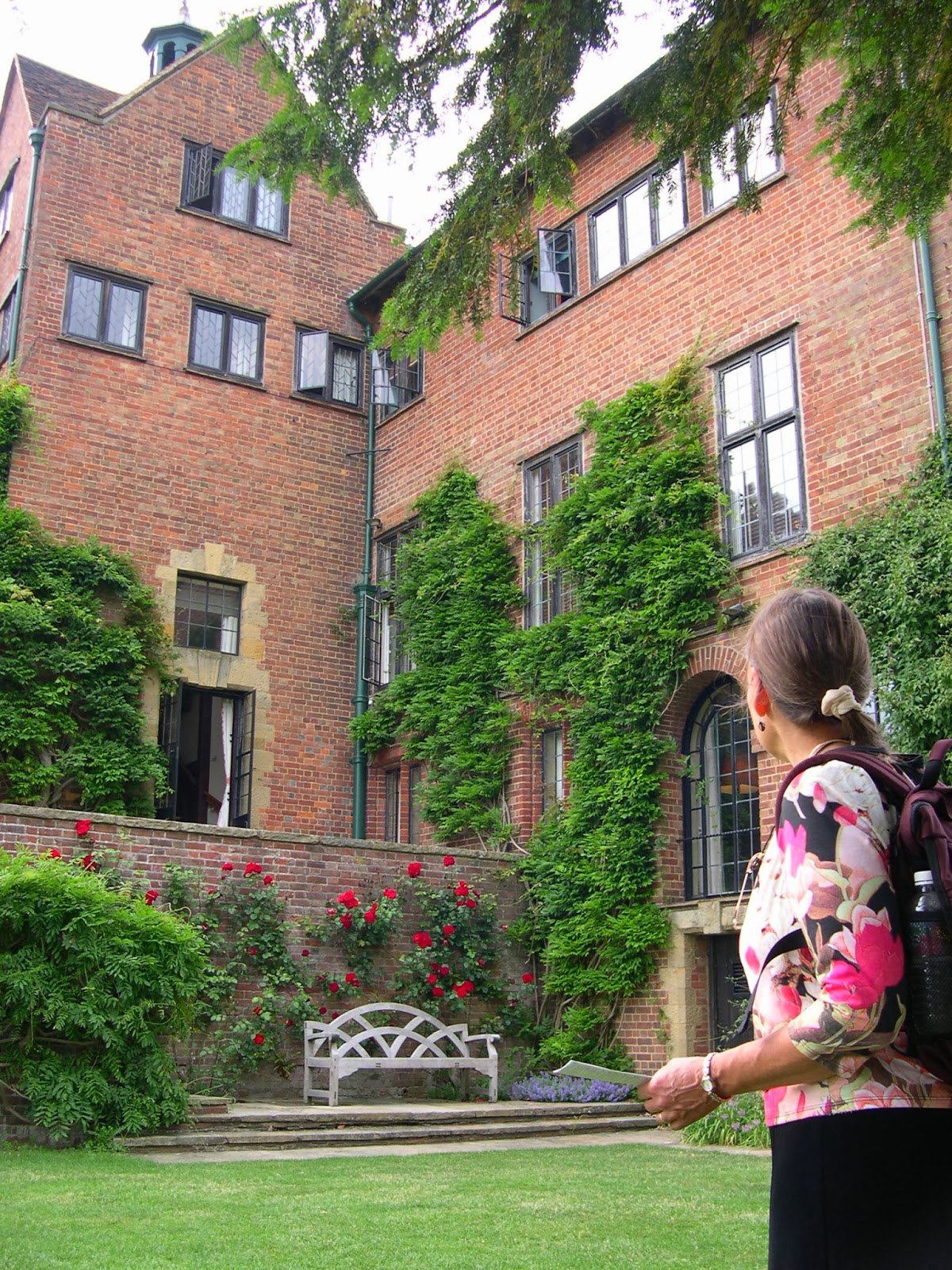
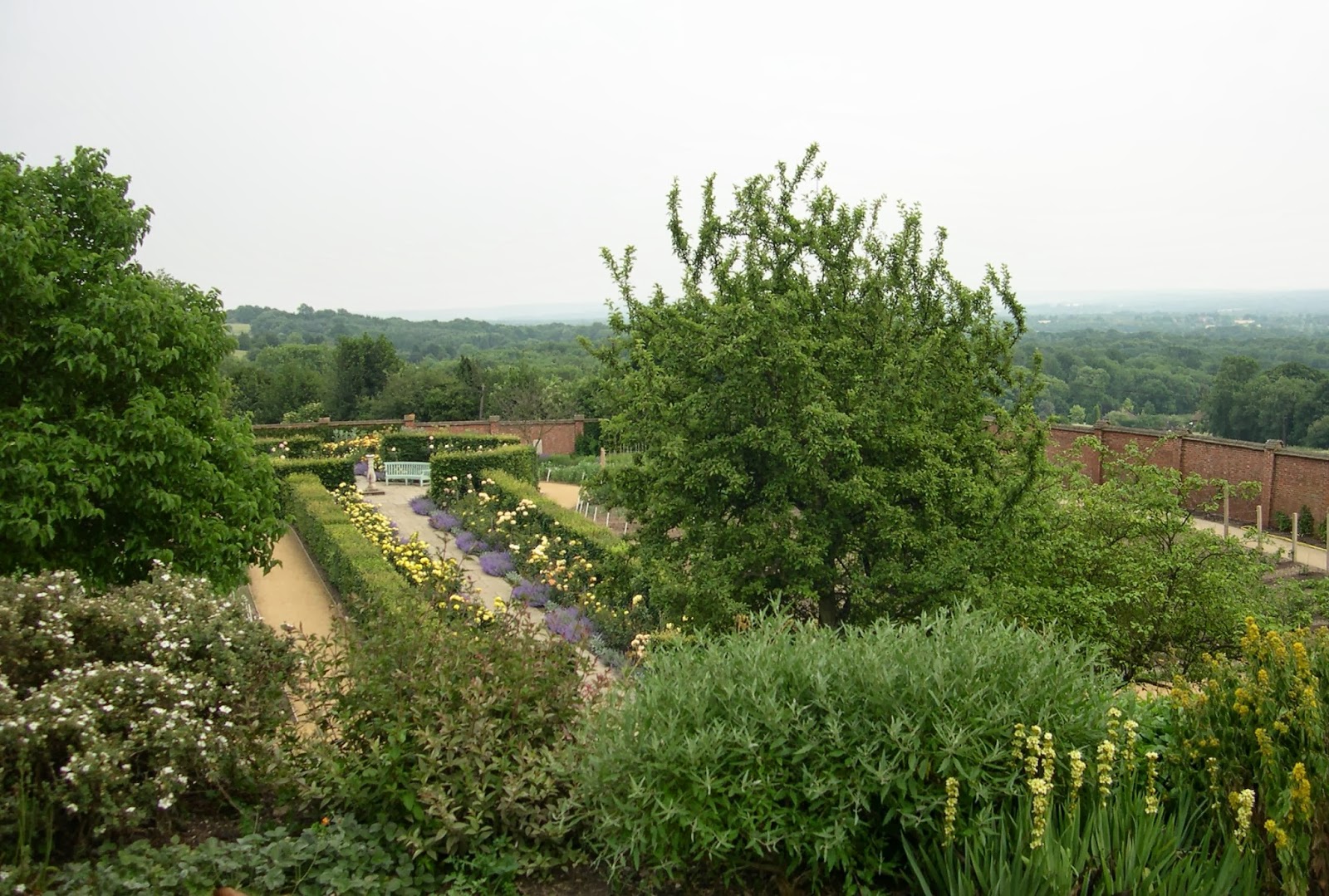
From London we’d taken a side trip to Chartwell, Churchill’s beloved country estate in Kent. We were in his very library, with his own books and furniture. I could just imagine him sitting there enjoying some book that had nothing to do with the government or war; this was the place he came to when he needed to decompress from the strain of his usual days.

from the Internet

I told the docent about the quote I had read the day before, in which Churchill had advised us to think of our books as our friends, and if we couldn’t read them all, at least we could take them off the shelves and touch the pages, and perhaps read a line or two. She didn’t know of this quote, but it was permitted to handle the books on the library shelves, so I did take one down and try to follow his advice.

It was one of those times when I just want to sit down and be there. I’d have liked to read a few lines from several books, or a chapter from one book, or see how they all were organized.  But I was so nervous about meeting this book friend that I didn’t even catch his name. I was trying to keep up a conversation with the docent, and we needed to get through the house to the grounds before the rain started….Now it seems like a fairy story that I was ever there at all.

It’s the anniversary of the death of Winston Churchill, Anna reminded me on her blog that is a compilation of “Seven Quick Takes” on him today. I was going to leave a comment on her blog about how I never could find that quote — and I had tried so hard. But then I thought, it’s been a couple of years since I searched; maybe, just maybe if I look again….

And it came up in flash, on Goodreads. One of these experiences that makes you love the Internet.

If you cannot read all your books…fondle them—peer into them, let them fall open where they will, read from the first sentence that arrests the eye, set them back on the shelves with your own hands, arrange them on your own plan so that you at least know where they are. Let them be your friends; let them, at any rate, be your acquaintances.

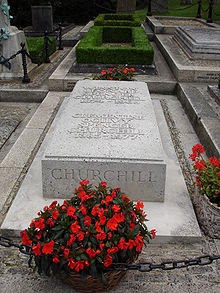
The last Churchill place we saw was his humble grave not far from Blenheim Palace, at St. Martin’s Church, Bladon. It was more humble then than now, as it was renovated in 2006.

Mr. Churchill, I honor you on the day of your death; may you rest in peace. One day I hope to get back and spend an hour soaking up your library and making friends with your books.

It takes wisdom to be content – or discontent.

Comforts that were rare among our forefathers are now multiplied in factories and handed out wholesale; and indeed, nobody nowadays, so long as he is content to go without air, space, quiet, decency and good manners, need be without anything whatever he wants; or at least a reasonably cheap imitation of it.

–G.K. Chesterton in Commonwealth, 1933

I don’t know that my comments on this ironic statement can add much, but for my own sake I will think while I type, and ramble as I think. GKC’s words startle me out of feeling guilty for complaining about modern life — after all, “We are so well off!” We have (noisy) leaf blowers so we don’t have to spend so much time raking. We can stop for fast food on our mad trips up the interstate, and while we eat off paper plates at dirty tables and lick our fingers we can be thankful we didn’t have to go to the trouble of finding a picnic spot by the river.

My first encouragement to question the amassing of things we don’t really want was 40 years ago, in the La Leche League’s Womanly Art of Breastfeeding. The motive was to help women cultivate a peaceful home in which they would have the time to leisurely nurse their babies; that goal would require sorting out one’s priorities concerning what we now call lifestyle choices. Do you really want your tabletop cluttered with knick-knacks, the author wrote, or might you enjoy having clear surfaces that are easier to keep clean and will ultimately be, in their simplicity, more pleasing to the soul?

The whole concept of More With Less has gained ground in the last decades, but Chesterton’s words reveal how easy it is to lose, bit by bit, the most valuable and wholesome “comforts” that our poorer forebears had in abundance, and not even notice what we have given in trade. Note that intangibles such as decency and good manners are on the list, to remind us that civilization is more than physical comforts.

The book Margin by Richard Swenson comes to mind here. He writes (first in 1995) about how the  people he doctored in third-world countries were by-and-large happier than the Americans back home, and he analyzes the reasons why. Even without health care and modern technology, they enjoyed several of the things mentioned in the quote, in good measure.

My own life provides the leisure that Josef Pieper calls the Basis of Culture, enough of it that I can take the time to ruminate on several facets of Chesterton’s clever jibe. At this stage, for myself, I can’t complain. But I pray that I’ll always have the wisdom to know what I want and need to go without, for the sake of being content.


 Linking up to Weekends with Chesterton.

Yet farther on my road today.

My lights and bows are still up – and the tree.

The bright season of the Feast of the Nativity of our Lord is only in its sixth day, but already we need to make room in our minds for thoughts of transition, closing out one calendar year and opening a new one.

Before I go there, I need to be done with all the Christmas cookies, at least on this blog. Last night we Glads were off to another party, and I took the tins out of the freezer again and loaded up a plate to take along, but that still didn’t use them all up.

I made ten different kinds of cookies this year, including five new ones. Next year I may share some of those recipes, but for now, on to other things!

Like reporting on last week’s doings: We had three different groupings of family celebrations in two different locations. Sunday before Christmas we went to church with Pippin and family; this is Ivy in the foyer. I took the photo from behind so I could show her pigtails.


And next to a lamp made of popsicle sticks, a bunch of uncles and nephews playing a game, something they always make time for when getting together after a few months.


One of the trees that had been cut on federal land in Trinity County had been decorated with antique spice tins. I thought you would like that.


Back at our place, Liam got a lesson in Christmas tree appreciation and gentleness. He was a good student.


I found this pretty piano ornament at Pottery Barn when they were having a special deal, and I gave one to each of several pretty pianists in the family.

Some of my own favorite presents were these books I’ll be reading in the new year, given by four different people who scanned my Amazon list and surprised me with titles I had wished for and forgotten. Kind people.

I feel the Old Year rushing away, and the New coming fast at me, never mind that I’m not “ready.” Sickness right before Christmas pushed some duties ahead to After Christmas, and what might have been a purely R&R&R (the last R for Rejoicing) Sixth Day of Christmas will be interrupted by the Computer Guy coming to help with our computer, a machine so rude as to take our attention off the holiness of the days we are in.

As I am in a liturgical church, the service yesterday gloriously confirmed the present-ness of the holy day that is so cosmologically momentous as to need at least twelve days to properly keep it. The carol-singing we did last night also kept me planted firmly in the Feast, so that for an hour or two I didn’t have to think about the onrushing year of 2014.

Some lines of poetry from Christina Rossetti helped me when I took a few minutes to think. The last lines were the most applicable to my heart’s comfortable place, reiterating what I come back to again and again, the knowledge that whatever comes, today or in the coming year God means it for our salvation.

New Year met me somewhat sad:
Old Year leaves me tired,
Stripped of favourite things I had
Baulked of much desired:
Yet farther on my road to-day
God willing, farther on my way.

New Year coming on apace
What have you to give me?
Bring you scathe, or bring you grace,
Face me with an honest face;
You shall not deceive me:
Be it good or ill, be it what you will,
It needs shall help me on my road,
My rugged way to heaven, please God.

Whether or not you are the type of person who needs a lot of down time to process the meaning of the days of Christmas and the New Year, I pray you will find help to progress on your road to heaven. May God strengthen us all!

I tweak the pudding.

Mine is like the 4th from the top, only dirtier.

In the first decade of my married life my primary cooking teachers were Irma S. Rombauer and Marion Rombauer Becker, in the 1964 edition of Joy of Cooking. That was long before this age when one can find overwhelming amounts of information about any food or recipe at the click of a mouse, and before we watched “Julie and Julia” and found out that the cookbook my mother had given me for a wedding present was suspect.

The women who published the book in various forms beginning in the 30’s were not the same sort of cooks as those we know today, we who have the likes of Julia Child and M.F.K. Fisher to inspire us. Irma was grieving the loss of her husband in 1930 when she followed the advice of others and got busy making a book out of her collection of recipes that had been gathered to teach a class in the 20’s.

Irma S. Rombauer

Marion wrote a biographical sketch of her mother, in which she admits that her mother was not known for her great cooking. To which I add, it really was not the era for that. Many of the households that had the resources to spend on a variety of ingredients had hired help to cook for them, which I noticed early on was the case with the Rombauers, because in my copy they mention conversationally, and give a recipe for, the matchless poultry dressing their cook made. The kitchen help, expert as they might be, would not be in a position to publish cookbooks, so as Marion reasoned, “cookbook writing is too important to be left to the cooks.”

But for women who were increasingly responsible for preparing meals for their own families, and who had time and means to study and learn from books, the Rombauer women did a good service. I like what Christopher Kimball wrote for the Amazon.com listing of the book, about Irma’s “amateur but highly evolved enthusiasm.” After all this revisiting I plan to get a copy of the latest revision and see how it has changed, now that Irma’s descendants are bringing to it their own flair and abilities. On the Joy website I found a likeable personal tone and appetizing recipes, but the cooks don’t give away all of the book’s recipes online.

The Rombauer/Becker Family marked their own favorite recipes in the edition I own with the name “Cockaigne” after the name of their summer home, and that label served me as online reader reviews do nowadays, helping me know that at least a few people really liked that particular casserole or cake or whatever.

While my little children played nearby or took their naps, in the days before I could be distracted by reading or writing blog posts, I sat at the kitchen table and pored over Joy, making a list of all the “Cockaigne” recipes that appealed to me. The only one I remember now without looking it up, perhaps the only thing I tried more than once, was Tomato Pudding Cockaigne.

Kate shows fruit from yesteryear’s garden.

On a recent blog post somewhere I read mention of Scalloped Tomatoes, and I found online many recipes for that dish, which seemed to resemble the tomato pudding I hadn’t made in 20 years. It was labeled as Southern Cooking on many websites. Do all of you southern ladies make scalloped tomatoes?

At first it sounded like the perfect way to use up some of my fresh tomatoes, and perhaps also in the winter, to use some of the bags full that I have been freezing. Except that there seemed to be more bread and sugar than I care to consume in the various versions….eventually I gave up looking at them and went back to my old recipe, which I discovered also calls for quite a bit of sugar — six tablespoons to go with 14 tomatoes — but why? These are garden-ripe, sweet tomatoes I’m bringing in by the bowlful.

Joy’s recipe also didn’t have enough basil for me, and included no garlic. It called for only a small quantity of bread crumbs, and I hoped that if I added a larger quantity of bread the juice would be soaked up faster and the dish might take only two hours instead of three to cook down.

So…here you have it,

Gretchen’s California Tomato Pudding

14 fresh ripe tomatoes, peeled, seeded, sliced

1/3 cup fresh chopped basil leaves

2 tablespoons fresh chopped parsley

1 extra-large clove garlic. minced

1 1/2 tablespoons brown sugar

2 cups fresh sourdough bread crumbs

6 tablespoons melted (salted) butter

Put the tomatoes in a pan on the stovetop, and heat to the boiling point. Stir in the herbs, garlic, and sugar. Cover the bottom of a 9×12 baking dish with the bread, and pour the melted butter over it. Ladle the tomato mixture on top of the crumbs, and bake uncovered at 350° for about an hour and 15 minutes, or until it is no longer watery. Serve warm.

While my pudding was in the oven I typed out the above, and waited to see if  the finished product would be worthy of sharing. Oh my, yes, it is delectable and so hard to stop eating. I guess my husband and I ate about five tomatoes worth each.

I could further tweak a few things, make it a couple more times to assure consistency and give you a more thorough report, but this is only a blog after all, so I will just say that I’m pretty sure it would be just as good with a little less butter and sugar. I imagine it tasting great made with olive oil, if you prefer vegan fare. But Mr. Glad said, “Whatever you did to make it like this, it was perfect.”