Category Archives: books

Wooded and Worded Wonderland

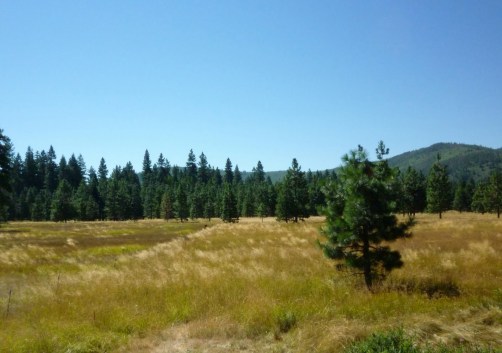
I’m back up at Pippin’s place as of last night, and this morning took Baby Scout for a walk in his jogger. It was an hour’s walk, but that doesn’t translate to much exercise when you figure in all the stops for gawking and picture-taking. On my drive up I listened to most of My Ántonia and was struck by the evocative descriptions of the prairie; here the meadows are in their late summer glory of gold tones, with runnels of pale green. My photos don’t serve nearly as well as Willa Cather’s prose in conveying a scene.

In this case there were jays scraping the air with their calls, and smells of drying grass and a dozen trees coming at me in the breeze. Scout hummed as we bumped along. The air was crisp at first, but the little currents of warm spread out to fill the morning so that it soon felt like an August day.

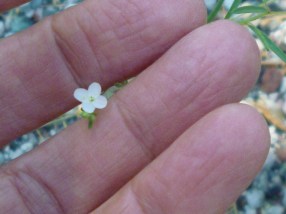
I couldn’t precisely identify any of those aromas; it made me envy the animals with their good noses –but when I do get to know a plant, I can also have the word for it, and that makes me happy. Fact is, I don’t know the word for very many of the thousands of lovely things around me. Like this tiny flower that I spied on the roadside, and a while later in Pippin’s tomato garden, volunteering along with mullein and ferns.

In the meadow I saw a place where the grass was all mashed down. Maybe the deer had rested there, maybe even the one I saw munching on tree branches by the side of the road. She gave me one look, and then refused to pay any more attention to me, even though I kept asking her to look at the camera.

I slept through the woodland noise last night, of Mama Bear tearing down bird feeders to spread the seed on the patio for her two cubs. It’s the second time this week, which pretty much means the end of watching birds close by the kitchen window. That’s about the only way I can seem to notice them, as I did last May when I took this picture. Birds are more fun to watch than bears, for many reasons, one being that you don’t have to be wakened at midnight in order to see them.

Certainly one of the warm smells on our walk was of oak trees. Oak was likely one of my first nature words, as I lived most of my childhood under a giant oak in the Central Valley. I think it was a Valley Oak. There are only nineteen Quercus native to California, I just this minute read in a tree guide, so perhaps it wouldn’t be impossible, as I have previously thought, for me to learn which are which. This one I photographed today is certainly not a Scrub, Live, Leather, Muller or Blue Oak…perhaps it is a California Black Oak. Hello, Mr. Oak; I hope to get to know you better.

Bread with Sorghum

I made some more bread this week. The bread pans and dough hook were still in hiding, but I enjoyed the kneading, and the free-form loaves do look more rustic, even if they are a bit problematic for B. when making his lunch in the mornings.

This time I used a lot less oil and sugar, and for flour I added some oat and sorghum to the mix. Sorghum? I picked up a small bag of the stuff somewhere, sometime, toward the goal of always-increasing variety in the diet. I didn’t really know where sorghum comes from, but while the dough was rising I read on the bag that it is a grain. This morning I read more about it online and find that it has been used for a long time by humans, more in other parts of the world than here in the U.S., but is gaining popularity here, too.

When it was time to put the loaves into the oven I quickly tried to think of what styles of decorative cuttings I’d seen on commercial artisan breads, but it was too late to do a good job of being creative in that department. So far, my experiment shows that the simple and traditional architecture is nicer.

I have a dear friend N. who is about my age. Neither of us gets to make bread the way we used to 20 or 30 years ago, when The Tassajara Bread Book was one of our bread bibles. Tonight I talked with her on the phone and told her about making bread twice in one week. She was surprised, and said, “You must be avoiding something you should be doing instead.”

That’s one way of seeing it, and how wonderful to have a friend who understands me! Another aspect of the phenomenon is that breadmaking is a relatively small and particular task that I know how to do. None of the little decisions about how closely to follow the recipe comes with very many options, and if the whole batch is ruined for some reason it wouldn’t have much consequence. Baking a loaf or two of bread takes only a few hours, and makes me feel homey, useful, and accomplished.

The tasks I am “avoiding,” on the other hand, consist of three whole rooms, each of which will require at least a day’s worth of work, consisting of one hard decision after another about whether to keep one item or who among my friends, or among thrift shops, might want  another one. If I keep it, how will I store it so I can find it? Etc. Everyone knows how that works.

Now how did I end up talking about sorting junk when I started with homemade bread? The subject is like the clutter itself, creeping in when you are busy doing doing good work. This next week is my chance to tackle one of those rooms, where I hope to lodge a wedding guest if I can clear off the bed. And this afternoon I found both my dough hook and my loaf pans, so it’s even possible I might be inspired to make bread again, too.

Baby Toys

It’s so much fun to watch babies as they do their scientific experiments. That’s always how I have thought of the work they do as they play. When nothing uncomfortable is distracting them they can work for long periods repeating tests on the materials in their lab to learn about the properties: how things taste or feel on the gums, what sounds they make when knocked together, and so forth.

Seventh Grandson is with us for a few days and I brought out my boughten baby toys, some homemade ones, and the usual kitchen gadgets and cardboard boxes that babies love.

This contraption made with leather and blocks might have been made by Baby C.’s own mother for her little sister many, many years ago. Or maybe for a nephew, maybe even by a different aunt. One of the children did set me straight on this but I seem to persist in holding to my Scrambled Maternal Myths.

Perhaps the project was inspired by the book, No Bored Babies. I love to give the book to older children in a family where a new baby has just arrived, providing them one more way to be involved in caring for the younger brother or sister. The author shows many ways to take inexpensive raw materials like cardboard or cloth and make toys appropriate for the increasing skills and changing interests of children in their first couple of years.

When children start playing outside by themselves they collect their own materials, the favorite being sticks. As I was getting ready to load Baby C. into his car seat, I noticed that his parents have thoughtfully already supplied him with his own First Stick, carefully chosen and sanded for safe science experiments.

Kristin Lavransdatter

Kristin Nunnally wifeThe first time I came to the end of Kristin Lavransdatter I resolved to read it again very soon. The friend of a friend reads the trilogy once a year, and certainly it could stand up to that degree of intimacy; Kristin’s world of Norway in the 14th Century is vast with well-developed characters, complicated politics, and a daily life where the pervasiveness of the church and Christian faith often shows cracks revealing the old pagan traditions as an under layer.

My own initial discovery, in the translation from Norwegian into English by Charles Archer, seemed to provide a mere introduction, partly because I was reading too fast, eager to see how the heroine’s life turned out. There were so many people involved, as I noticed midway, I started taking notes on how they were related to the protagonists, knowing that it would help me understand their significance. My plan was to take even more extensive notes from the outset on my next reading.

That was more than ten years ago, and by the time I got to my second reading this year I was willing to try the new translation by Tiina Nunnally, touted by pretty much everyone as a better one, in that it does not involve the unnecessary–and, to some people, stilted and cumbersome–older English words and syntax. I had rather appreciated the language, as a reminder that Kristin’s world was not much like my own, no matter how similar some of her womanly and just plain human concerns resembled those of people everywhere down through the ages.

This time, I was reading in bed, lying down before sleep, or at the gym on the treadmill, so my smart plan to take notes wasn’t feasible. I had to make my second tour through the novel as I’ve been admonished to travel through a foreign country, fully expecting and planning that it won’t be the last time I visit. They say that is the only way to make yourself relax enough to enjoy and retain what you do manage to see and encounter.

And I did see new and different things this time through. There are many books I truly want to read more than once, but not many novels have I actually gone back to again, so this kind of rereading was not a familiar exercise. As I came to remembered parts of the Kristin tale I was surprised to see that they didn’t take up as many pages as I thought they would need. Many sub-plots and attributes of Kristin’s family and friends were as good as new to me; evidently I missed them completely before.

As infused with a sacramental faith as the medieval world of these books is, I’m sure they influenced me on my path to Orthodoxy. Now that my own perceptions and beliefs are being forged into something more like the tradition that was Kristin’s foundation, I think I am better able to appreciate some parts of the story. The deathbed scenes were striking, for the way the Christian reverence for the body, and the repentant heart of the Christians, were displayed. I’d like to write more on how they compare with descriptions of similar scenes in the Islamic culture of The Cairo Trilogy.

For a few pages near the end of this recent reading I found myself thinking that I was getting boreSigrid Undsetd with medieval Norway, or at least, that I didn’t want to spend time on a third reading when there are so many other books still to be known. That feeling didn’t last long, because by the time I came to the last pages I knew that I still have a lot to gain from acquaintance with the themes in this amazing epic by Sigrid Undset. It’s a glory to God that one human mind can create a complex and rich world like that of Kristin, peopled with characters whose drama reflects our own struggles to love God and repent of our besetting sins. Image Journal included the novel in its list of 100 best books of the 20th century that “manifest a genuine engagement with the Judeo-Christian heritage of faith.”

The Nunnally translation has extensive notes on the history and politics of that era in Norway, and some real historical characters come into play in the fictionalized account. Wikipedia’s entry on the novel lists many of the characters; I think I’ll print it out and use it for an outline on which to build my notes, those notes that I am still hoping to make on one of my revisits. I’m eager to return again and again to a place where my faith and thankfulness are encouraged as I make friends with fellow pilgrims.