Category Archives: church

We shake the monastery olives.

The nuns at a nearby monastery needed some help with their yard work. We didn’t know anything more specific, or that there would be some sadness involved, when Mr. Glad and I signed up to be on the crew for a Saturday work session. I had gardened here one spring day a couple of years ago and was looking forward to another chance to visit, this time doing fallish tasks.

What a bright and shining day it was, too, as we drove over the hill. Recent rains had washed all the earth and air, and high winds pretty much shook them out to dry. The humidity was only 10%.

When the head gardener Sister Xenia led our team of five to the clump of olive trees we saw that they were loaded with black fruit.

Then came the bad news: All of this harvest could not be used in any way, because it was infested with Mediterranean fruit flies. The trees needed to be stripped of olives, and the fruit that had fallen on the ground must be raked and swept up, and all of it taken to the dump.

In a month or two an arborist will prune the trees and some kind of spray will be used to inhibit the growth the the flies next spring. Whether there is hope of them being controlled in one year’s time I don’t know.

The olives were no good, not even the fat and shiny ones that were hanging on these lovely silvery trees with the light shimmering through.

So the men shook the trees and brought showers of fruit down on our heads. Mr. Glad climbed on the roof of a little house to reach higher branches of one tree, and then he climbed into the tree itself.
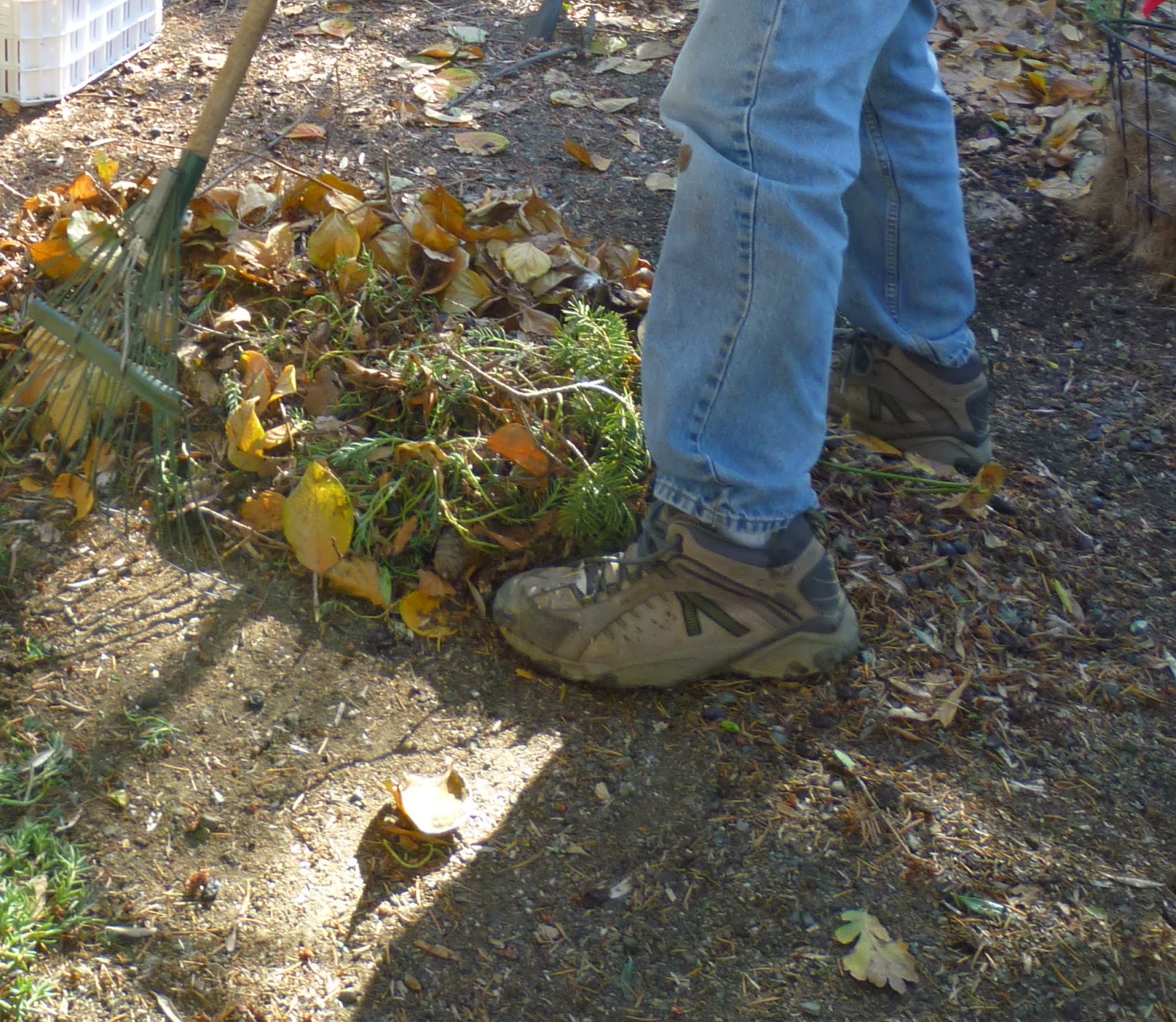
You can see olives on the ground in the shade.

Rosebushes that had grown leggy in the shade were snagging the guys when they were stretching up to shake and pick, so I ended up spending the first hour pruning the canes out of the way.

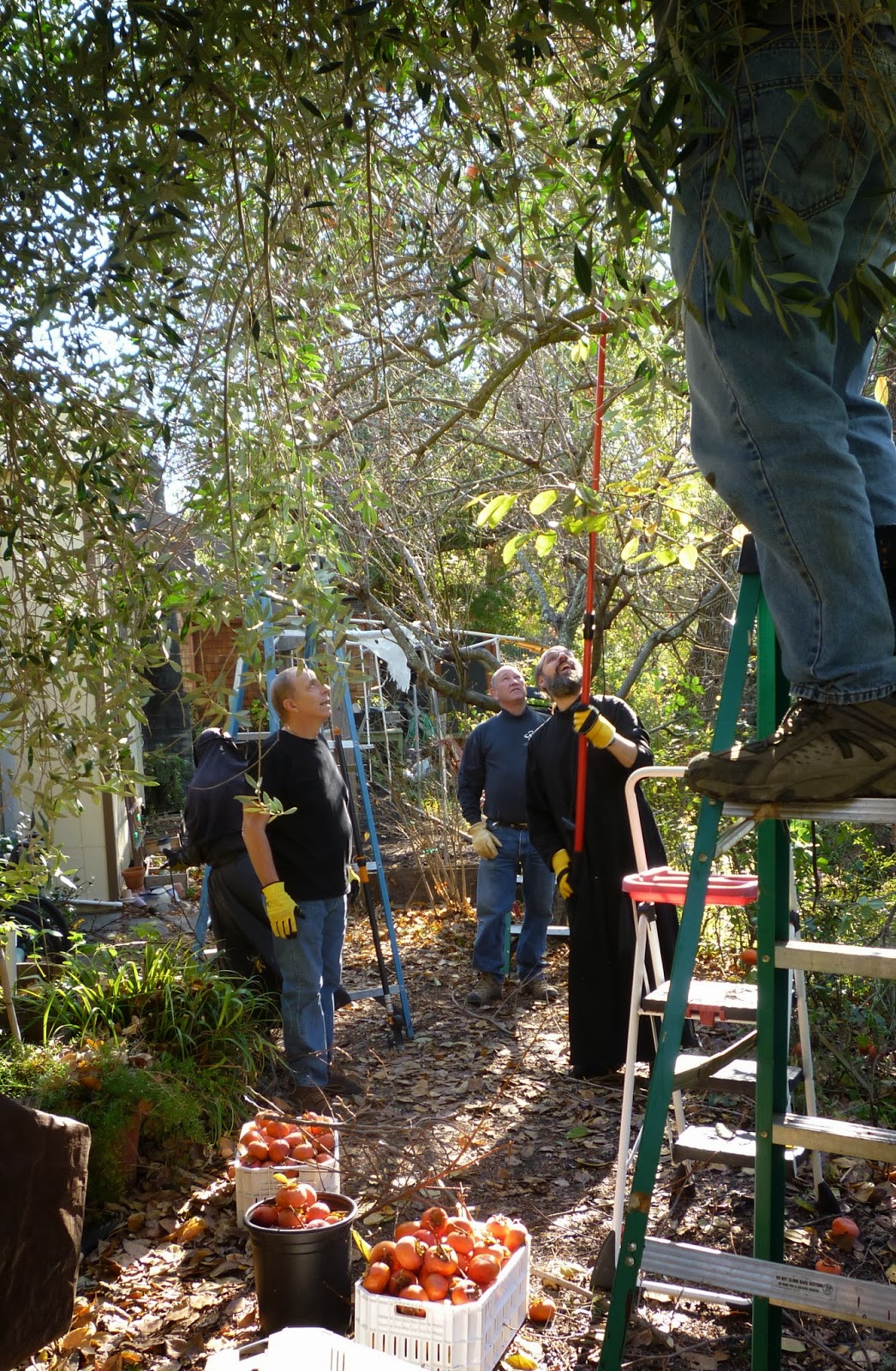
Bright orange fruit hung from the nearly bare branches of a Fuyu persimmon tree, the variety that is crunchy when ripe, and never puckery. At least this tree was healthy, and that was some consolation for the olive disaster.

We picked and pruned that tree, and Sister Xenia encouraged us to take some persimmons home, so I tucked a few into my gardening tote and am planning to use them like apples in baking.

Before we knew it, our work party was coming to an end, and we had been invited to eat the midday meal with the sisters.

Dining room all ready

But first there were prayers of the Sixth Hour, in the monastery chapel, and a few minutes of leisure for walking around the grounds.
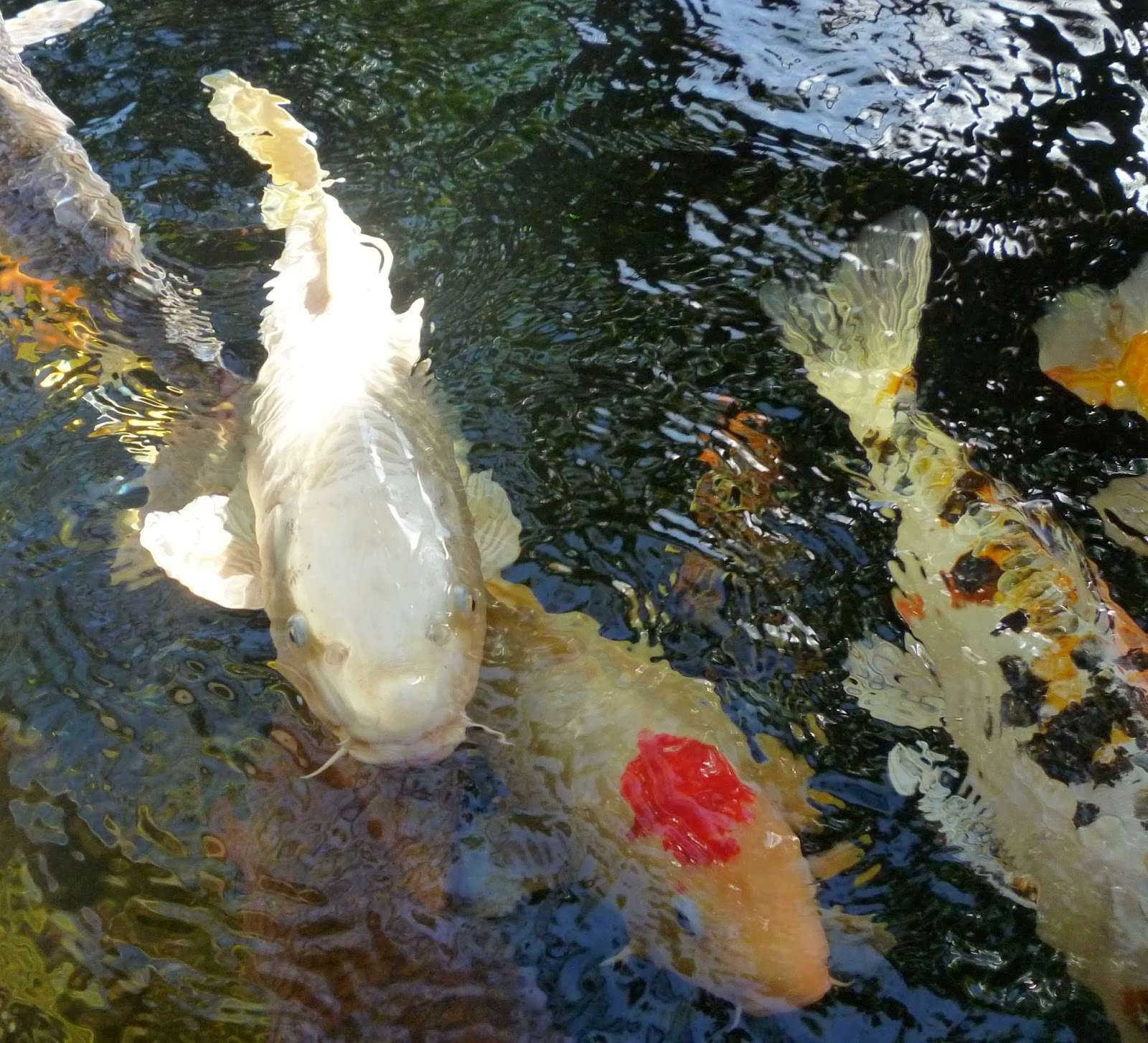
I had been anticipating seeing the elegant koi again, and they did not disappoint. We found them gliding soundlessly in their long deep pond, swimming close for a few moments when I leaned over with my camera, until they sensed they weren’t getting any food from us. A father and son were visiting them too, and happily chatting in Russian.

The monastery has a nice set of bells under a shake roof, with benches to sit on when the bells aren’t being rung. They were used to announce the hour of prayer, but for the call to dinner Sister Marguerite walked all around the property shaking a little hand bell to ring a daintier and less commanding message.

The small amount of work we did seemed a puny offering considering all that we received by spending a few hours at the monastery. We were well fed with the most delicious fasting meal I’ve ever had, and we went home with armfuls of persimmons, having soaked up quite a lot of love and peace.

Of course I want to go back soon.

Warm us up!

“Come unto Him and be enlightened, and your faces shall not be ashamed.” This line from a hymn at the close of Divine Liturgy this morning was being sung at the same time sunshine beaming through the window reflected off the floor and shined on me, blinding me for a few moments.

It was lovely to have a sunny morning for the beginning of our Nativity fast, and I was blessed to be free to participate. There weren’t many of us, so we fit easily into our little church, and the two women who were surprised to compose the whole choir did valiantly.

Our priest exhorted us to join together in zealousness, as the epistle reading from Colossians also conveyed to us the apostle’s prayer, that our hearts might “be encouraged, being knit together in love, and attaining to all riches of the full assurance of understanding, to the knowledge of the mystery of God, both of the Father and of Christ, in whom are hidden all the treasures of wisdom and knowledge.”

And he reminded us that just as the body cannot exist without the head, nor the head without the body, so Christ and His Church always go together, and in this Advent period we are helped by our joint efforts in making use of the gifts of fasting and prayer, to prepare our hearts to receive, in about 40 days, the mystery of God With Us.

I want to remember, I want to live by the reality of the light of Christ shining in my soul. When the light from the created sun is so thin that it doesn’t have much effect on my earthly body, it’s still an encouraging sight and teaches me about intangible realities. Dear God, warm us all up!

What dust can do.

St. Paul

Father Stephen writes about how we don’t often follow the Apostle Paul’s example of glorying in our weakness. The title of his blog post is “Your Weakness Saves You.” We need to pray out of our weakness and not when we are feeling strong; but Fr. Stephen observes that many of us would prefer to glory in our strength:

At some level, we believe that we are not saved through our weakness, but will be saved through our strength, and that the whole life of grace is God’s effort to make us stronger – never suspecting that God’s grace may actually be purposefully developing our weaknesses.
….
I often tell people who say they are struggling with prayer to quit trying to pray like a Pharisee and learn to pray like a Publican. We often want to pray from strength – to approach God when we at least feel spiritually alive. The Publican refuses to lift his eyes to heaven. The contradiction of his life and the goodness of God are more than he can bear. And yet he prays. And, ironically, it is he who goes down to his house justified rather than the Pharisee.

I find that the Orthodox prayer book cultivates this awareness of my weakness with its many cries of “Lord, have mercy.” Sometimes I am engaged in some activity that doesn’t allow me to give my full attention to prayer, but I am still burdened over a difficult situation or the need of a friend. I can express my helplessness to do anything by human strength, my inability to even think about what a solution might be, by praying “Lord, have mercy,” as many times as necessary to reach a place of quietness of heart.

As Psalm 103 reminds us weekly, “He remembers that we are dust.” When I pray that, I feel the love and tenderness of the Lord. He knows our weakness, and when we know it too, and pray with that understanding, we are near to Him.

The Feast of Angels

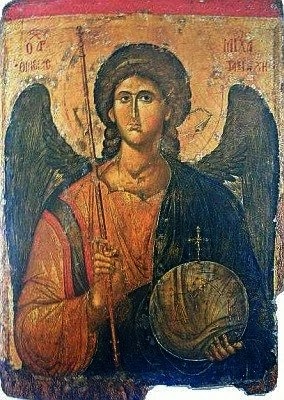
Being raised in Protestant churches, I learned little about angels. Since coming to Orthodoxy, I’ve been introduced to a large body of teaching, and some practices that help me learn experientially, too. Some lessons come through the feasts such as on November 8th (beginning with Vespers tonight, actually), when we celebrate the Feast of The Synaxis of the Chief of the Heavenly Hosts, Archangel Michael and the Other Heavenly Bodiless Powers.

I read that the commemoration was established at the beginning of the fourth century at the Council of Laodicea. It was set to be celebrated in what was at that time the ninth month of the year, because there are nine ranks of angels.

This very rich article also tells a lot about angels according to our tradition. One teaching that gets me thinking about the mysteries of God’s Kingdom is about the angels’ bodies. But aren’t they body-less, as the name of the feast calls them? On that topic and others, here are some excerpts from the blog post, passing on to us the teachings of several church fathers:

St. John of Damascus says they are creatures limited in space and time; they have their own specific external appearance. Compared to humans, they are bodiless due to the human’s “heavy body,” but compared to God they have a body. “We speak about the angels as bodiless and immaterial compared to us, but in fact everything is heavy and material compared to God, to Whom nobody can be compared, because only the Divine is non-material and bodiless.”

St. John Chrysostom says that “… every one of us has his angel;” and St. Basil the Great adds, “Beside every believer in God sits his angel, so repent.” Finally, the angel of prayer is the angel who helps us to pray. St. Clement of Alexandria says, “Even when a person prays alone, he is accompanied by angels.” Tertullian commands the Christian not to sit when he prays in respect for the angel of prayer standing beside him.

That last sentence is the kind of nugget of truth that I can hope to remember, and let it influence my everyday life. Some will say, Why not just remember that God Himself sits with you, so repent? etc. What I have concluded after debating about these things many years ago is that if God has chosen to use angels in His salvation work, why should we ignore or reject them? Why don’t we just say, Thank you, Lord! and show our appreciation by our acts?

In our parish we have many who are named for the Archangel Michael; we’ll have Divine Liturgy tomorrow morning and give thanks for the work of angels in our lives. I’d like to muse longer over more quotes from this article but I better return to my housework if I want to make it to church in the morning.