The weather is cool, I mean. And this week it’s been cloudy as well, which is nice for taking pictures of flowers. When Kim posted a picture of an unusual coneflower on her blog I was so taken with it, if I were more the sort of person who acts quickly I’d have run over to Lowe’s in hopes of getting one of my own.
But I’m not. My style of impulsiveness sent me out back with my camera to study my own basic purple coneflower.
I began to think how fun it would be to have a collection
of different sorts of coneflowers.
August is full of special feast days in my parish, and we are also getting ready for our big food fair that happens in September. On one overcast day I took a picture of the rose mallow and manzanita at church.
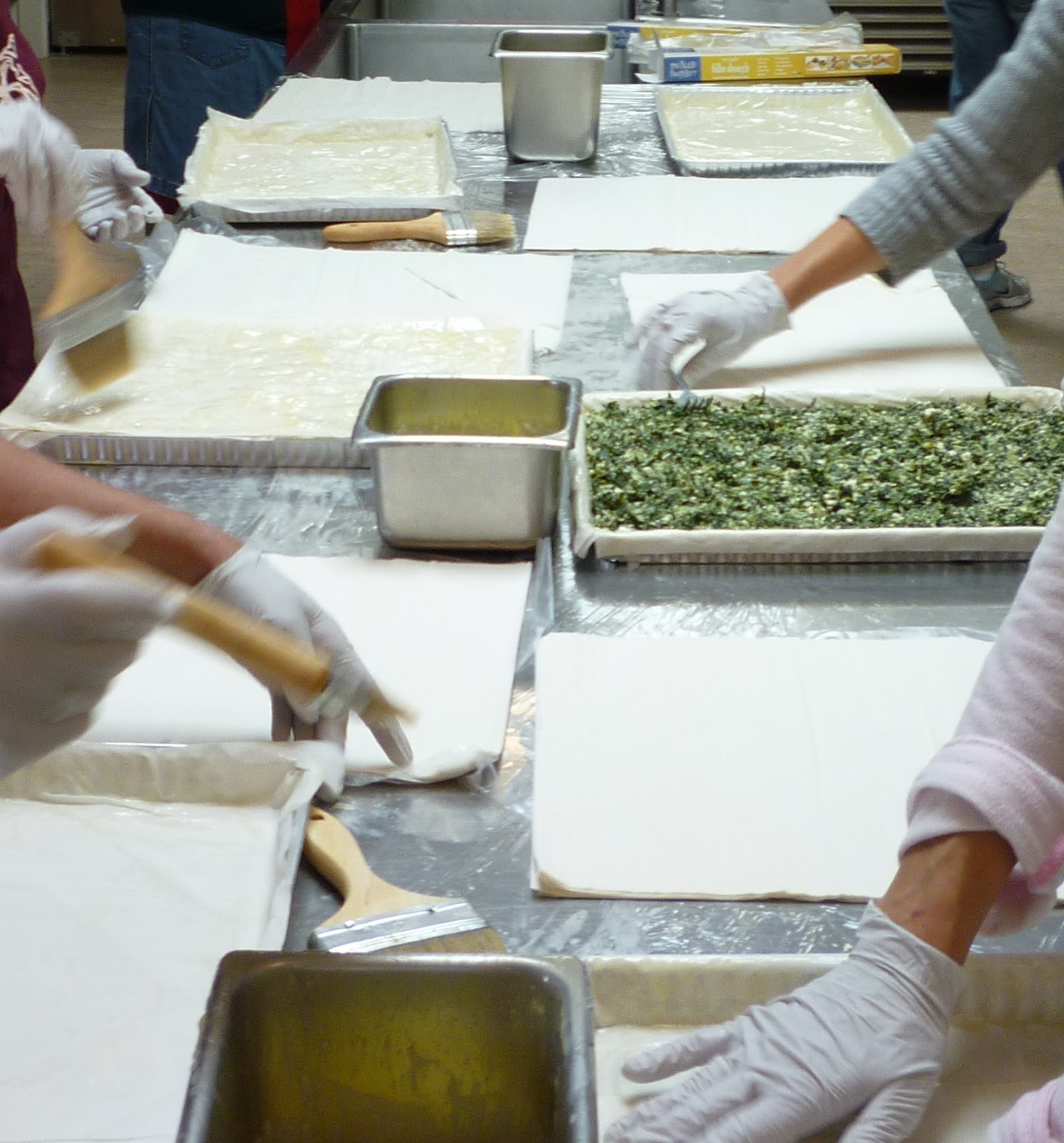
And another day I snapped this one, of a crew of us making 40+ pans of spanakopita to put in the freezer. Those are tins of butter, stacks of filo dough, and a spinach-cheese filling on our table. We will defrost the pastries the weekend of the festival and bake them to sell hot in the Greek booth.
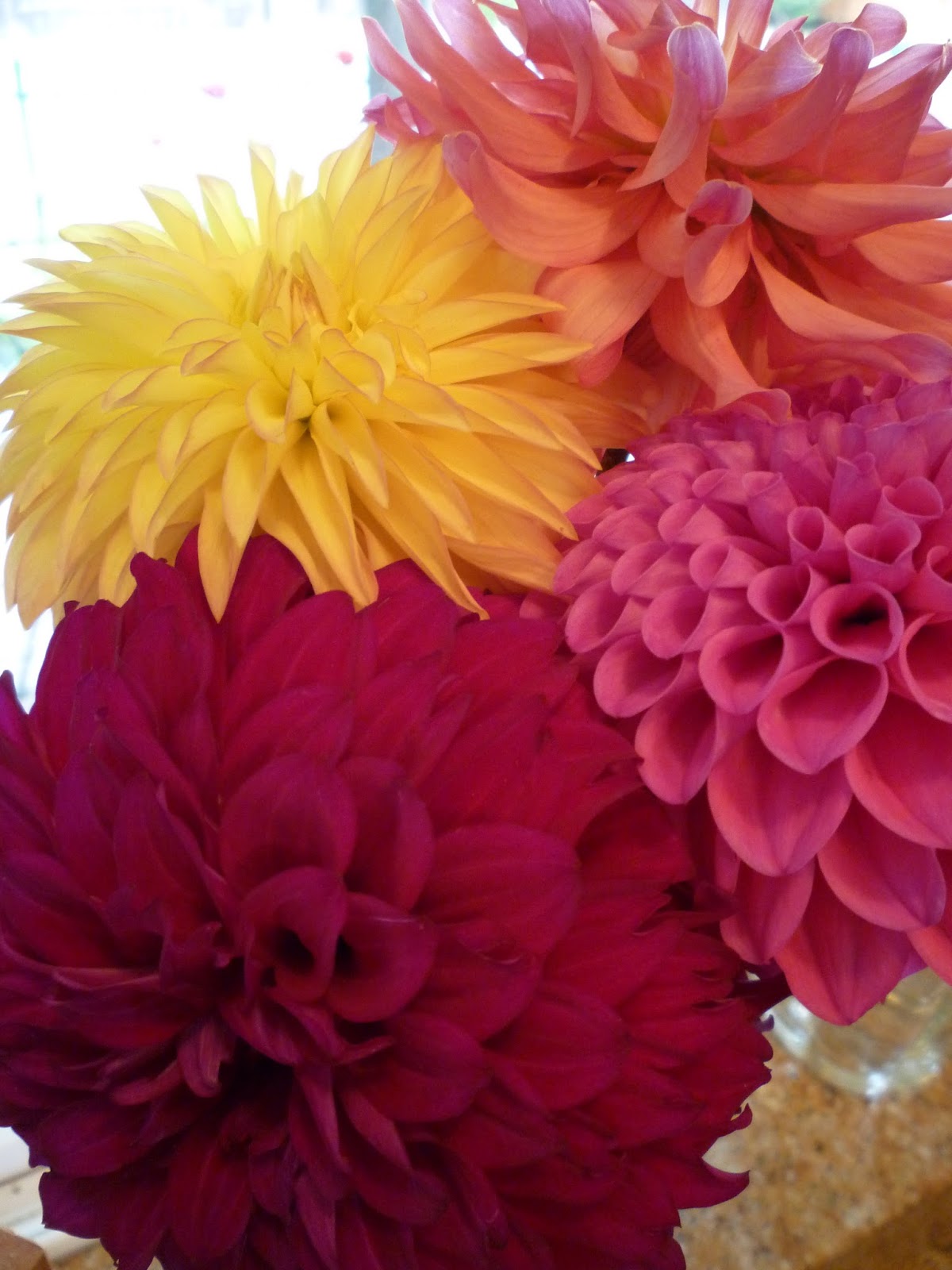
My loving man stopped on the way home from the dentist at a dahlia farm, and brought me this custom collection of big ones. Nice warm colors to make me remember it’s summertime.
And at home my one red zinnia is climbing past three feet tall, twice as high as its neighbor. I bought two plants that were supposed to be the same, but they obviously are not.
I’m glad I haven’t had only the garden variety of pretties this summer. I’ll close this random photo report with one of the sweetest flowers in my life when she was at our house, dear little Ivy.
The sun came out this afternoon, and I expect to see more of it next month, and feel heat. Then I’ll be posting some tomato pictures, too! But I hope I won’t have to wait quite that long.
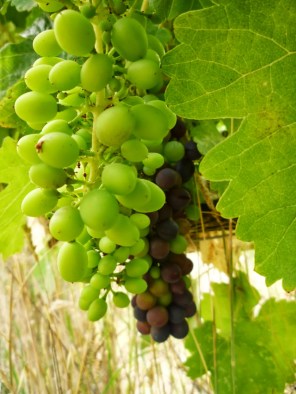
My parish is lucky enough to have our own vineyard right behind the church. This is very handy on the Feast of Transfiguration; at the end of the liturgy we can process out the doors and around the vineyard, to bless the grapes. It’s traditional to bless grapes or apples or any fruit, really, on this day.
Earlier on the feast day morning people brought into the church baskets of fruit and herbs and flowers. I carried a wooden bowl of blueberries and peaches. While we sang and communed and focused on the main event being commemorated, the fruit waited. The incense was particularly sweet that day, and I didn’t notice the smell of the beeswax candles as much as I usually do. Though I could see basil in a couple of the baskets, I didn’t catch its aroma either.
At the end of the service, with the prescribed prayers for the event, Father L. (and all of us) thanked God for all His bounty, and then he sprinkled holy water over the representative sampling.
He explained to us that this is not a superstitious rite we perform, using holy water to do magic on the fruit. When we bless anything in this way we do not make it into something other than what it is, but ask God to reveal it to be what it has always been.
Whatever created things we are talking about, they have always been meant by God to bring us into communion with Him. The service of blessing of fruit brings our thoughts back to Paradise, and the right and good use of the fruits of the earth that God has given us. We are reminded of how in the beginning God made Adam and Eve to be stewards over the Garden of Eden; human beings were called to exercise a loving and thankful dominion over the earth.
Russia
But we by our sin have instead caused destruction on the earth. Mankind more often than not has overused, abused and consumed in perverse ways the gifts of the Creator. Personally, I often gobble my food and eat without attentiveness to Him.
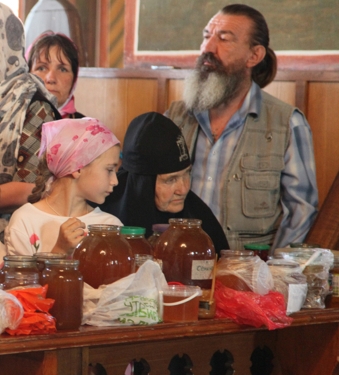
We have prayers for the blessing of bees and beehives and honey, too, usually in a separate service. Around here it’s August 1st, but I found pictures of honey blessings in Bulgaria where they do it dramatically on February 10 (see the bright cross picture down the page).
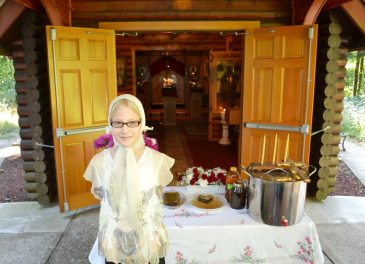
People like to take pictures of little girls and honey, I was happy to discover, and I am posting some of them here. The Russian ones are from Optina Monastery, and the Oregon photos from the Facebook page of New Martyrs of Russia Orthodox Church.
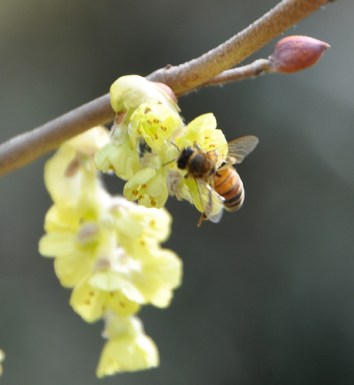
These honey and bee pictures are so enjoyable that I ended up with way more of them than of fruit. I hope you will hop over to the blog of Father Ted Bobosh where he posted a large and glorious photo collection of bees and other pollinators, such as the one I put at the very top, along with quotes about bees and Orthodox prayers for them. Just looking at the pictures will likely make you burst into prayer, too. Here is one of the prayers he posted:
From Father Ted
O God, who knows how to work benefits through human labor and irrational living things, You instructed us in your loving-kindness to employ the fruits and works of the bees for our needs. Now humbly we beseech Your majesty: Be pleased to bless the bees and increase them for the profit of the human race, preserving them and making them abundant. Let everyone hoping in Your majesty and Your boundless compassions, and laboring in the care of these living things, be counted worthy to receive abundant fruits of their labors and to be filled with heavenly blessings in Christ Jesus our Lord, to whom is due glory, honor and worship unto ages of ages. Amen.
The photo above is from my church on Transfiguration, baskets of all kinds of fruits of the earth waiting for the prayers of blessing. Some of them were inspiring in the variety and arrangement of items, but one of my favorite baskets is the big one in front, full of apples picked just that morning.I don’t eat much honey these days, but I get a whiff of it in the candles every Sunday in church, and I can imagine the heady scent emanating from these tables laden with jars and bowls and plates of honey.
Doesn’t it just tell you something about our God, how sweet He is, and how extravagantly generous, that He would give us something as intense and rich as honey? The bees, of course, are also in the business of pollinating the fruit. The whole Creation and its interconnectedness is reflected in the Church and in our salvation history, all of a piece and orchestrated in love by our dear Father God.
Fr. L blessing beehivesBlessing honey in BulgariaHoney blessing in OregonOregon honeycomb
It’s been four years since I first posted these thoughts on the Feast of the Transfiguration, and I’m finding them worth considering afresh. May He Who is the Radiance of the Father shine on and in us.
Light and Love
This quote was brought to my attention today, on the eve of the Feast of the Transfiguration.
St. Macarius of Optina:
None of your suffering has come by chance. Nothing can happen to us without our Lord’s consent; and His consent is not only wise but always dictated by His love of us. Carefully examine your conscience and your life, and I am sure you will understand what I mean. Sorrow weighs you down? Never mind. The grateful heart, humble and wise – the heart which has become grateful, humble, and wise – will be greatly consoled and blessed with serene joy.
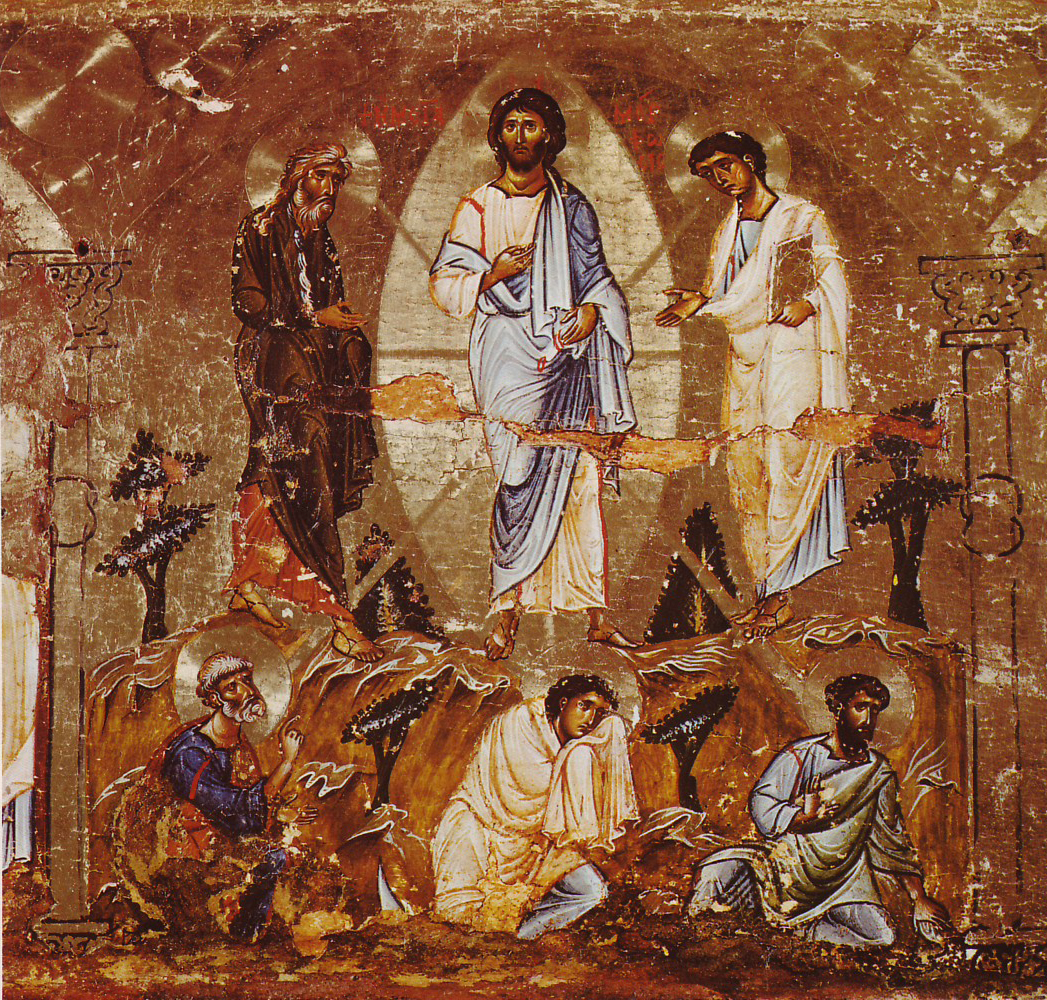
As I was looking for an icon of this feast, I ran across a phrase “transfiguration of suffering,” and I realized that–of course–these thoughts are connected. As I have heard regarding Orthodox theology from the beginning, it’s difficult to put it into a systematic theology, because “everything is connected to everything else.” God won’t be boxed into our human and finite categories.
Just as Christ was revealed in all his glory, as much as the disciples could bear, that is, so every Christian has the potential to shine with the light of the Holy Spirit. Suffering can be used as a tool to accomplish this, as we see in the lives of many of God’s people. One person who comes to mind is Father Arseny, whose life of suffering in the last century one can read in two books of firsthand accounts. Reading about him, I caught a vision of what it might mean to be truly a Christian, a “little Christ.” There is a short review of the books about him here.
I have little suffering to bear, but if I do accept it with thanksgiving and patience, it might make me more able to show forth His light and love. This is a good thing to keep in mind and heart for the Feast.
I guess I’ve had enough time and thinking power this week to read and ponder, but my activities didn’t result in anything of my own to posit or report, so I’ll just pass on some recent gleanings.
Women Priests? I love it when a reviewer is bold enough to say “This book is rubbish.” Honesty and confidence! Although, if that’s all she can say, she won’t get a hearing; I want to hear reasons for her belief. I just read this blog post titled “Merlin Stone’s book is rubbish”, and though I had never heard the author’s name before I immediately wanted to read that article.
It’s a brief review of When God Was a Woman, which the blogger first had to read in seminary years ago. She writes, “There is neither historical nor anthropological support for her thesis that the Hebrews suppressed goddess worship. She tries to prove that the Canaanites had a matriarchial and matrilineal structure. She is wrong on both counts.” Go to the blog Just Genesis to read the supporting details. The writer always has lots of fascinating historical and archeological knowledge to pass on.
Pies, pies, pies... Three women collaborated on a book, which as soon as I read about it I had to have sent as a birthday gift for my granddaughter. It may be a bit early for her, but I like to encourage little girls to start taking a creative role in the kitchen and to look to real grownups for inspiration.
The book is Pieography, written by Jo Packham, Food Styling by Anne Marie Klaske, Photography by Traci Thorson. All of these women have blogs; Jo and Traci feature photos of some pies, but I think you have to get the book if you want the recipes and stories.
I haven’t seen the book yet, but I’ve enjoyed Anne Marie’s blog in particular. The clean and elegant style is nice to surf around in and see snippets of the Klaske Family’s farm life. On Thursdays you can get inspired to bake pies!
Death of the Old Man: Father Stephen Freeman shared a link to his daughter’s blog, on St. John of the Cross and the loss of identity, or the Dark Night of the Soul, or the “death of the old man.” Actually the subtitle of the post is “The Loss and Discovery of our Identity in God” (italics mine), so it ends on a very positive note, to be sure.
She writes, “If we had always thought of the death of our old man as purely symbolic, it may come as something of a shock to think of real pain being involved. But when our turn inevitably comes to go through pain or tragedy, then we may take comfort in knowing that many have travelled down this path before us.”
Icons and Images: A book on the history of the use and theology of images in Jewish culture and in the church is the subject of this blog post on Orthodox-Reformed Bridge. Early Christian Attitudes Toward Images is written by Stephen Bigham, and a series of four blog posts is planned to review the book. This structure follows the organization of the book:
The book is divided into four chapters. Chapter 1 deals with the “hostility theory” which holds that the early Christians were hostile toward images. Chapter 2 deals with early Jewish attitudes toward images. Chapter 3 deals with the early Christian attitudes towards images, that is, the pre-Constantinian period. Chapter 4 deals with Eusebius of Caesarea who witnessed the beginning of Constantinian era.
The author is an Orthodox priest, and the blogger Robert Arakaki was Reformed in his theology before converting to Orthodoxy. I’m looking forward to reading all the reviews of what looks to be a thorough treatment of the subject.
Beethoven in Space: Lastly, here’s a music video featuring Hubble images and beautiful music. A blessed weekend to you all!



 summer. I’ll close this random photo report with one of the sweetest flowers in my life when she was at our house, dear little Ivy.







 Gladsome Lights