 I’m home from Kate’s, and instead of sleeping in a room with Raj I will be conked out all alone in my quiet space tonight. While I was still in D.C./Arlington I wanted to write a little collage-y post about my last week with their family, but I was running out of steam. I haven’t really built up steam at this point, quite the opposite, but I do want to have blog closure on this, and I need a little time to wind down this evening, so…
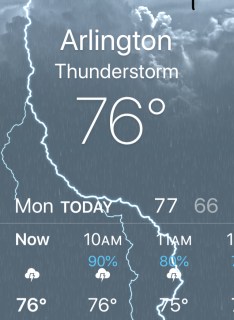
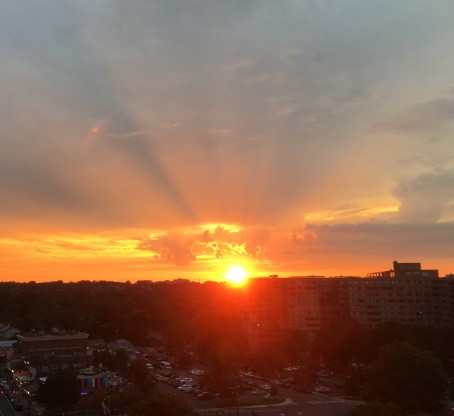
We had the 4th of July, when I stayed home with Raj who had gone to bed, but I saw the fireworks at the Capitol anyway, out our window. Only blocked a little, by a big building across the way. We had glorious thunderstorms, which were also fun to watch, with horizontal rain and dramatic electrical and sound displays — but one of them caused flash floods nearby, which I’m sure the people getting rescued didn’t feel glorious about.

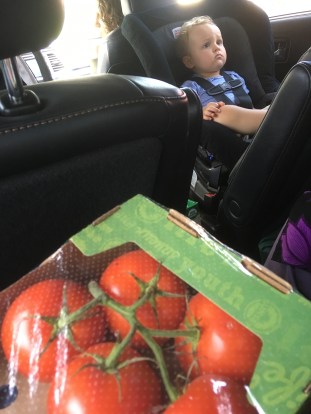
We did lots of baby-rocking and smooching, cooking and eating. Later I will try to post some recipes of what I cooked. All the cooking required shopping, so we made a fun trip to Costco to make use of me having a card. It was a happy-family sort of outing such as I don’t think I’ve ever had at Costco 🙂 . Six of us including two boys under two and the nanny Kareena — and the adults were all jolly.
On the way I told Tom that he should sing a going-to-Costco song, because he is often singing through the days. He considered this idea for only a few seconds before it came to him that the tune should be something by John Philip Sousa, and he made us all laugh with his lyrics to a rousing number that fit our mood well. Walking through the store Rigo slept peacefully in a front pack, but Raj in the cart started to get a little antsy as our explorations were prolonged. I distracted him by means of the cut flower display which he really did admire, and some Pringle samples.
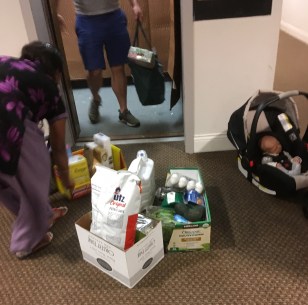
Fitting all those groceries into the not-huge SUV with all of us was a challenge; I protected the tomatoes on my lap. Getting so many boxes and bags, plus two babies, out of the car and into the elevator, then out of the elevator on our floor, was a creative logistical work; the elevator was determined to close on us, and some of our company were very scrappy in the skirmish.

Today I woke at 6:00, Eastern Time. Lately Raj had been waking me up with more babbling than crying. After a while he was ready to get up, and I started him on his morning routine of dressing, playing, breakfast, before the nanny came on duty and while his parents were catching up from nighttime with a newborn. Sometimes lying in bed with me was a changed aspect of the routine. I started this paragraph the past continuous tense and had to change it… 😦 I hope Raj will continue, though, to wake up a little later than he had been doing before I arrived.
Actual flight time from east to west was barely over five hours, but by the time I got to my house this evening I’d been traveling twelve hours. I walked around my gardens front and back, and everything looks so healthy and good! I drank my Ten Ren “Relaxing Tea,” and may God bless it to be so.
 This poem from William Blake’s 1789 Songs of Innocence is about a baby a few days younger than my grandson Rigo, but its tone of blessing and gratefulness reflects that which still reigns in our household since our newest “joy” was added to the family. I was reminded of the poem on the Interesting Literature site where I found conveniently listed
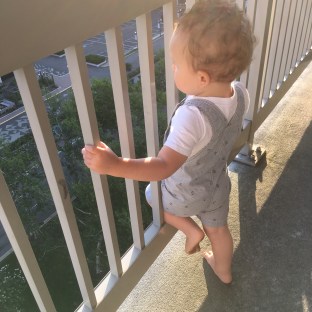
 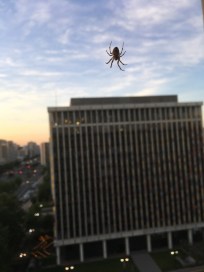 Nearly every day Raj and I spend quite a bit of time on the balcony of the 13th-floor apartment where his family lives. It’s above a major intersection with a couple dozen lanes of traffic meeting and surging with cars, trucks and buses most of the day. To the east between the high-rises we can see a slice of Ronald Reagan Washington National Airport. When my grandson sees a jet take off he squeals; a few seconds later we see it emerge from behind tall buildings to the north, and much smaller to the eye. But he is still watching it.


 Some of you knew, and others of you maybe guessed, that I had come to visit Kate this month so that I’d be present for the birth of a grandchild. He has arrived, a little brother for Raj, and has expanded our family and our hearts. I have never been more blessed to share in this kind of history-making.
 For a long time now, the births I have waited for and witnessed have all been in hospitals. These days most of them are peaceful and geared to the needs of the families more than to hospital efficiency, and sometimes I even have a rocking chair to rock in while we wait and pray, or chat quietly. Or sleep, as Kate and both of us fellow-waiters did for a while before this child decided to get on with it.
 Gladsome Lights