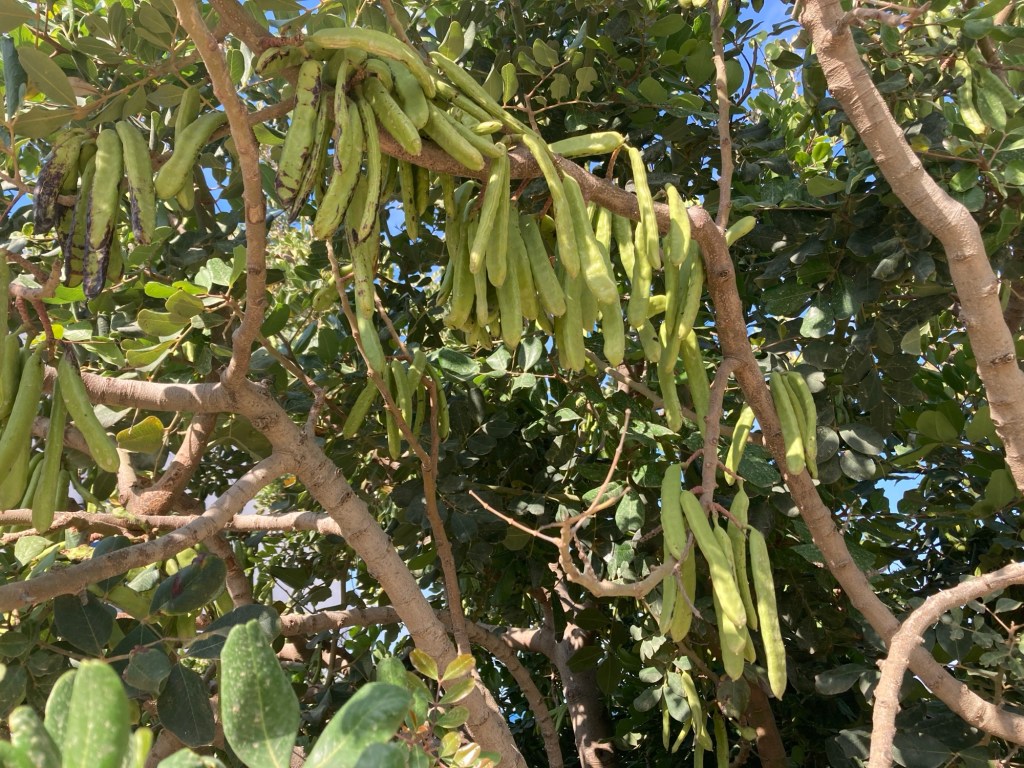
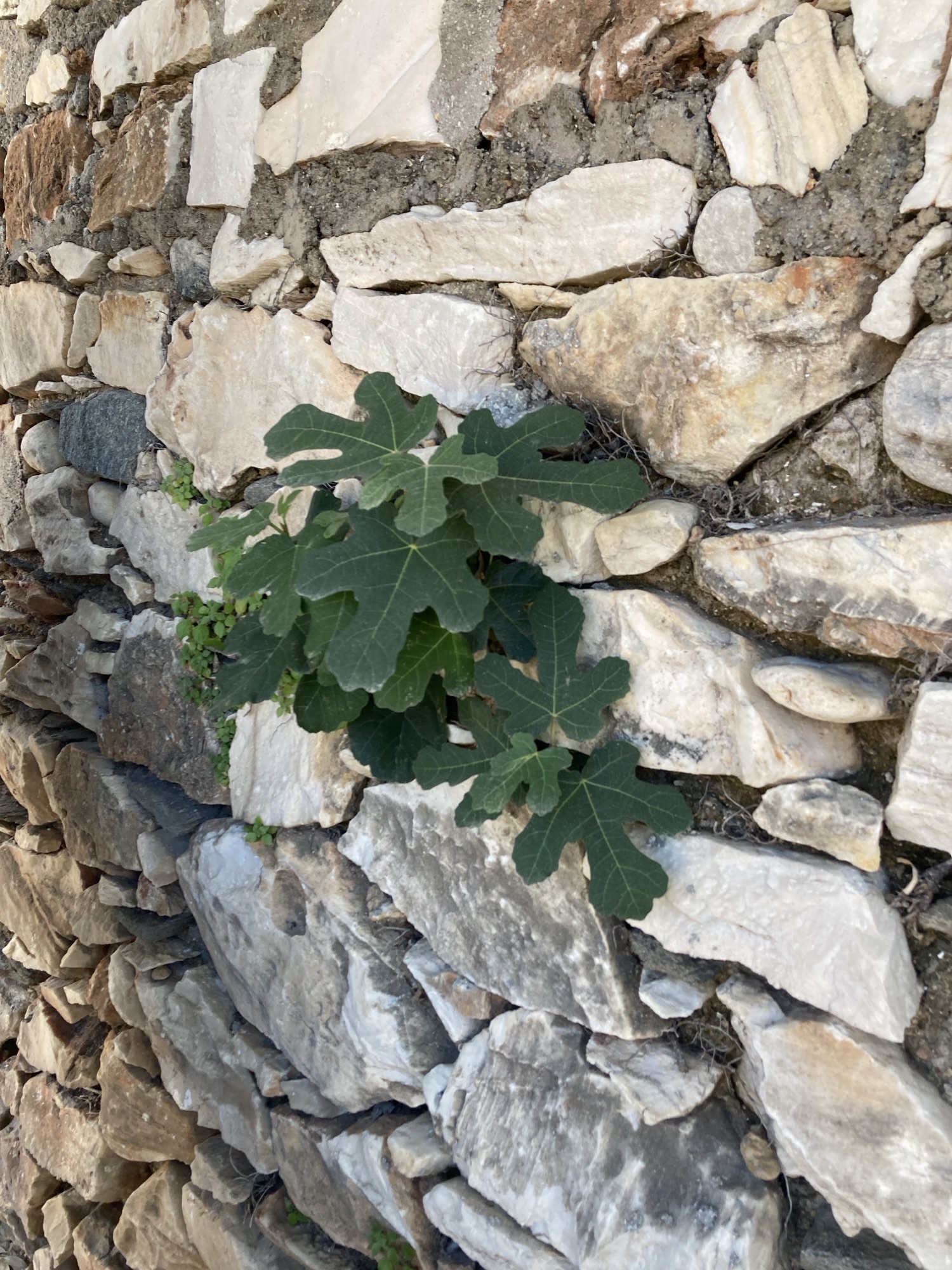
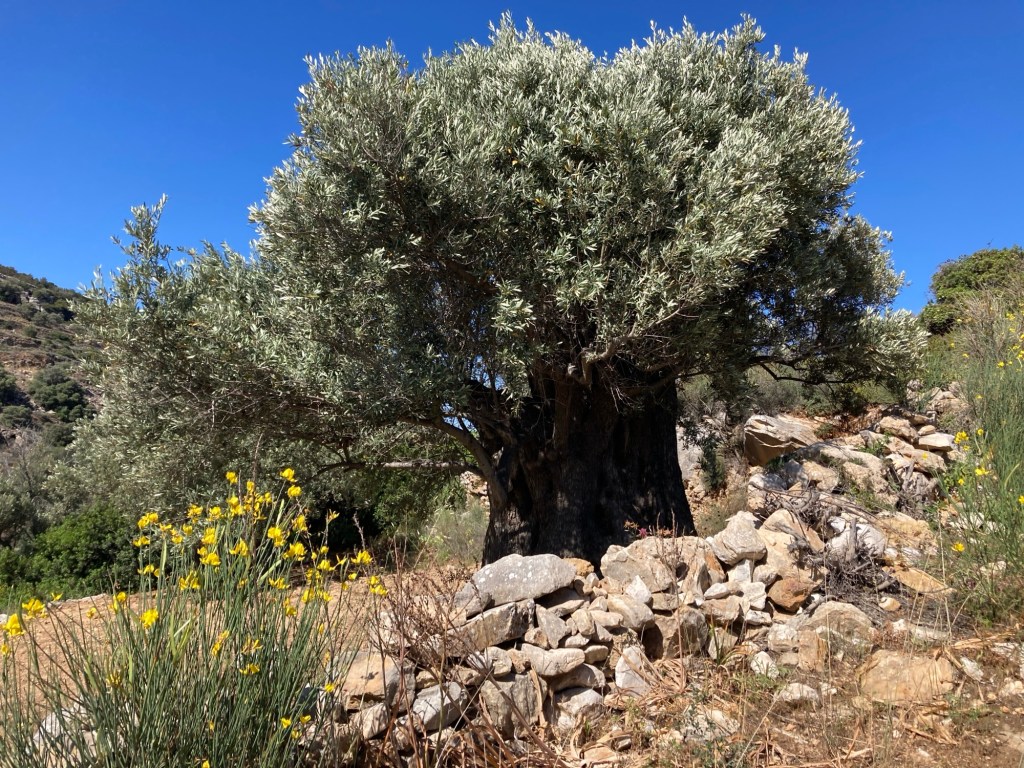
Yesterday morning Pippin went out early to explore up the hill from our house, and discovered a carob tree.
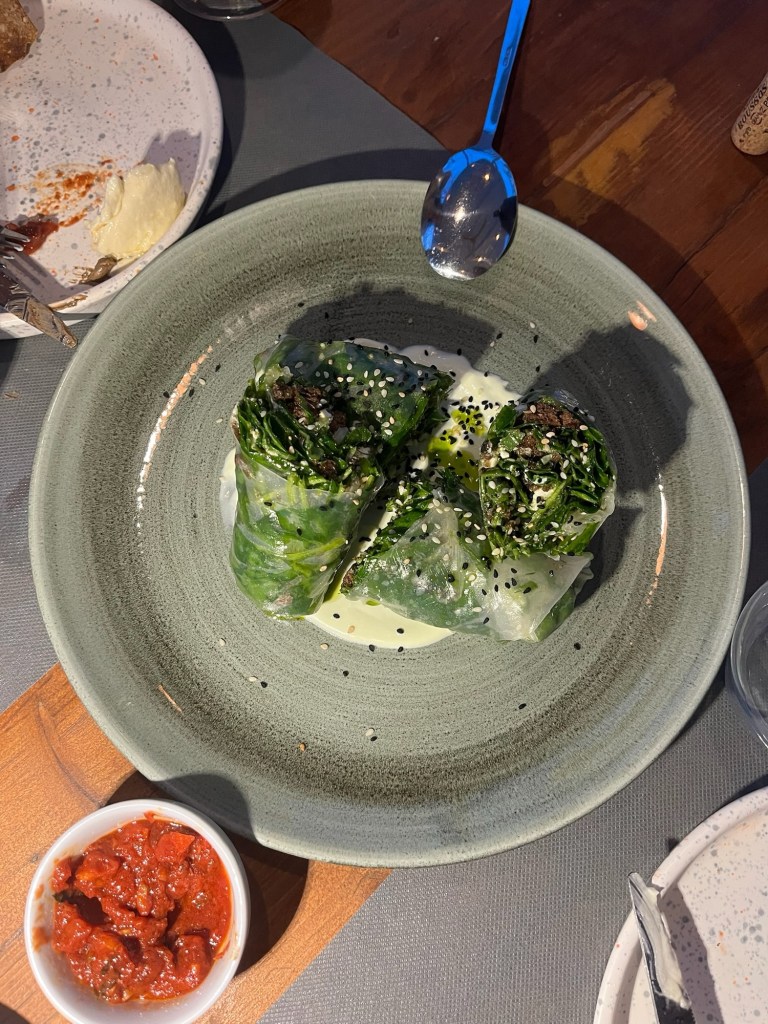
She took me back to see it, and later when everyone was up and sipping coffee on the terrace, she read to us about the uses of carob throughout history. Just the night before we had eaten spring rolls that incorporated “carob rusks” for a little crispiness in the wrap of greens and feta.
But the carob pods the tree produces have traditionally been used primarily for feeding livestock — Until the 1960’s, when some of us started using carob flour in bread and candy, and for medicinal uses. I still have carob powder in my pantry, though it’s been a while since I opened the jar. My daughters vaguely remembered the Captain Carob Bread I baked, that was featured in the Laurel’s Kitchen Bread Book.
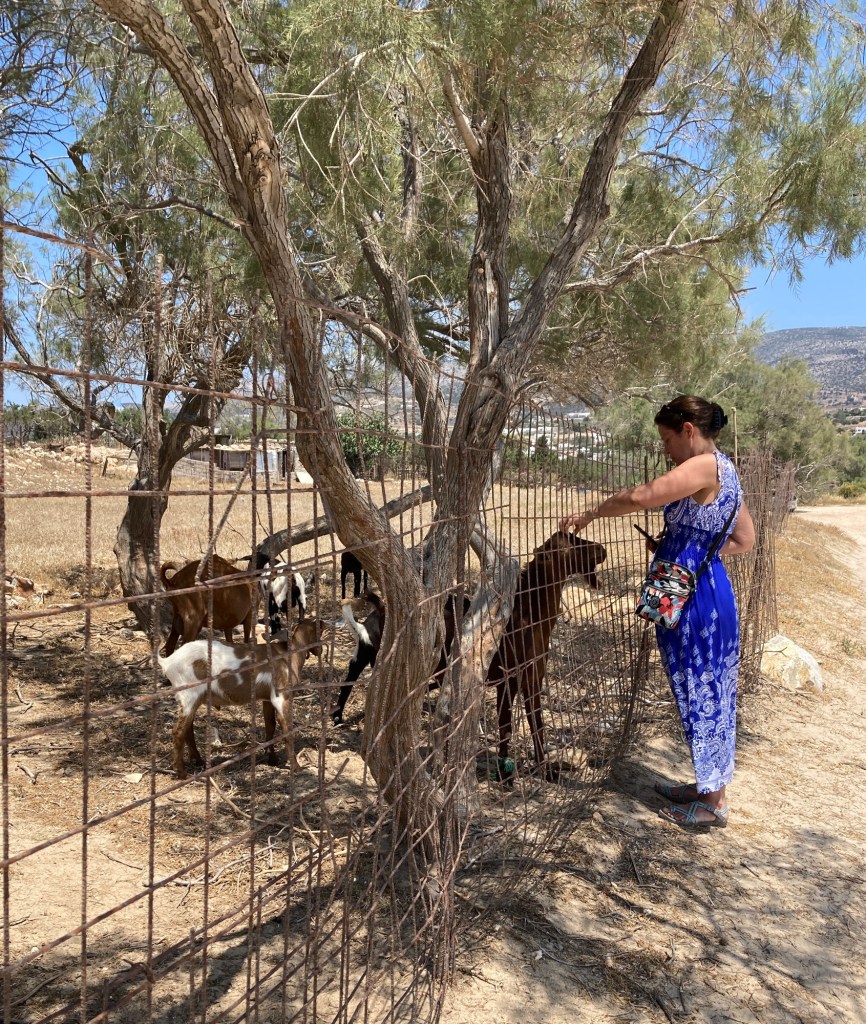
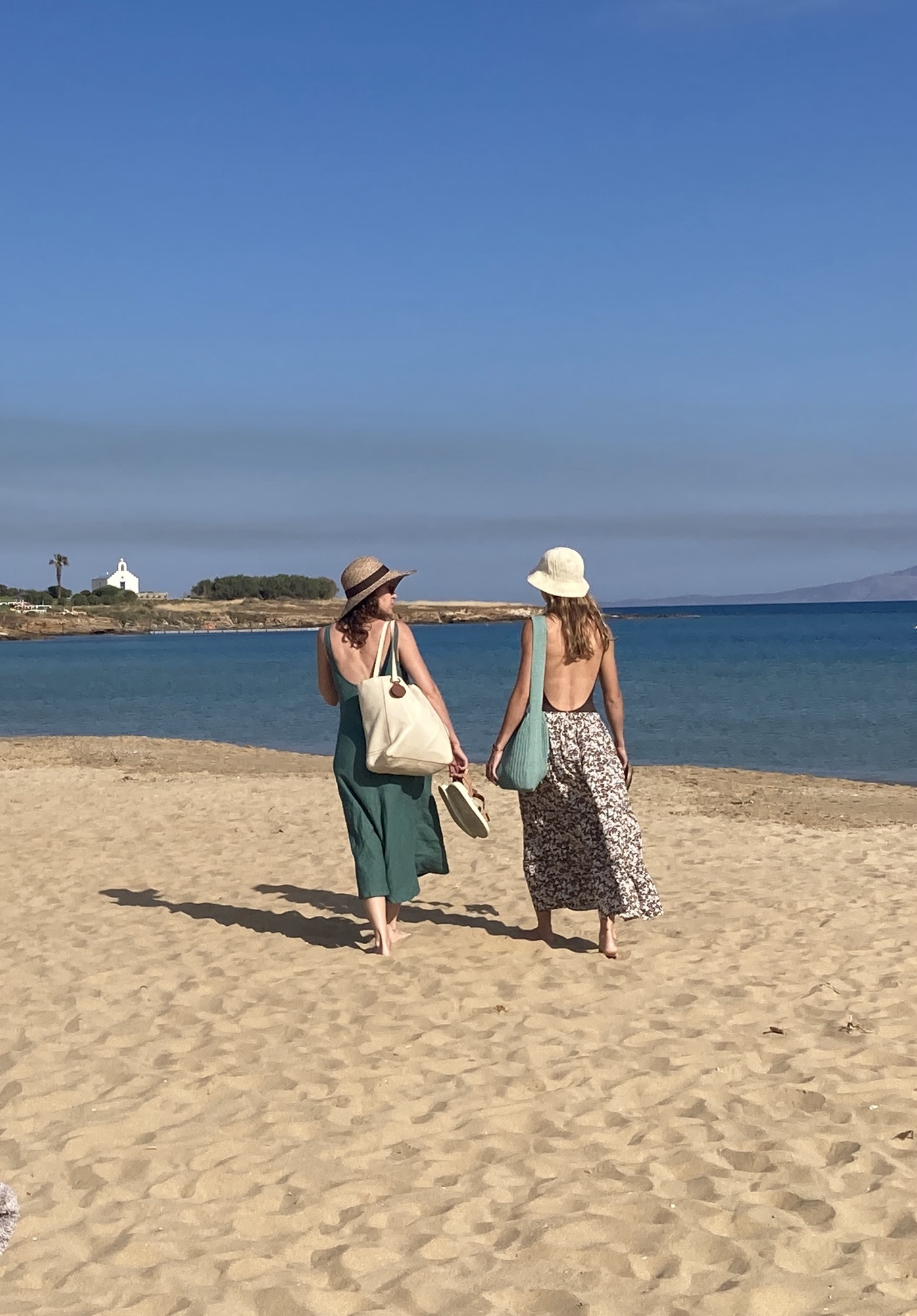
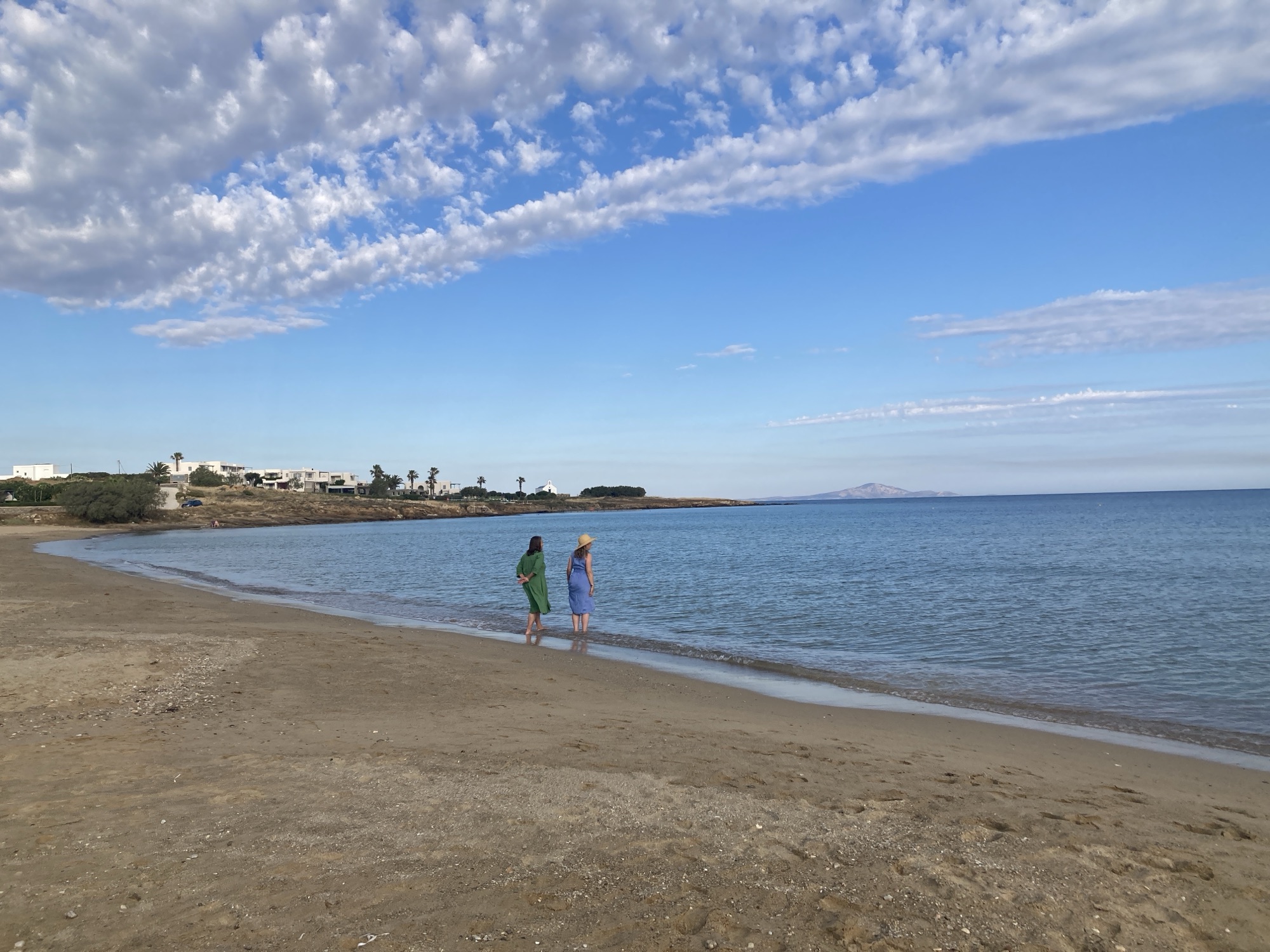
We walked to the Aliki beach for a last swim and bask in the sun. The goats that live in a dry corral came close to the fence this time and let Maggie and Pippin pet them and take their pictures.
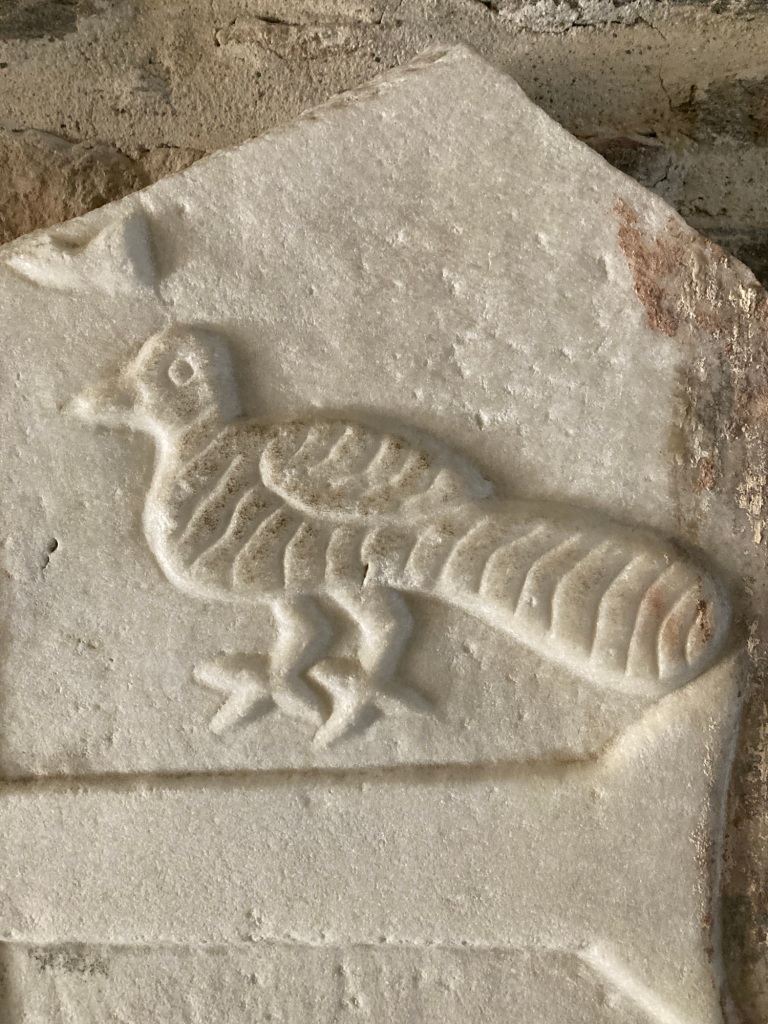
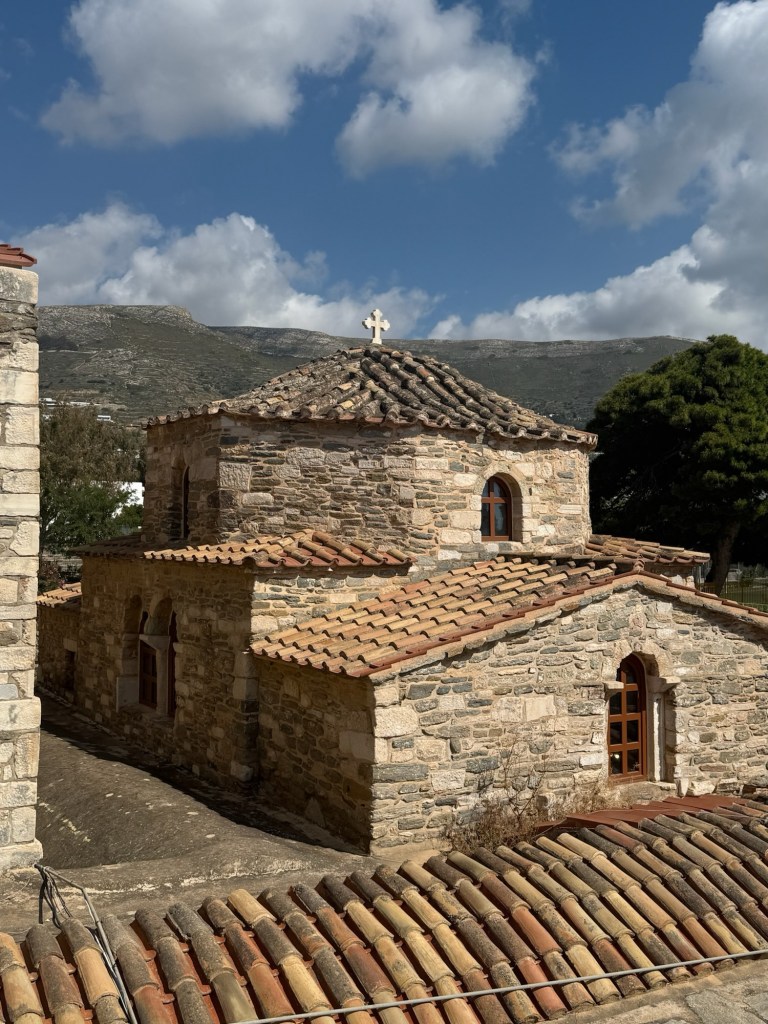
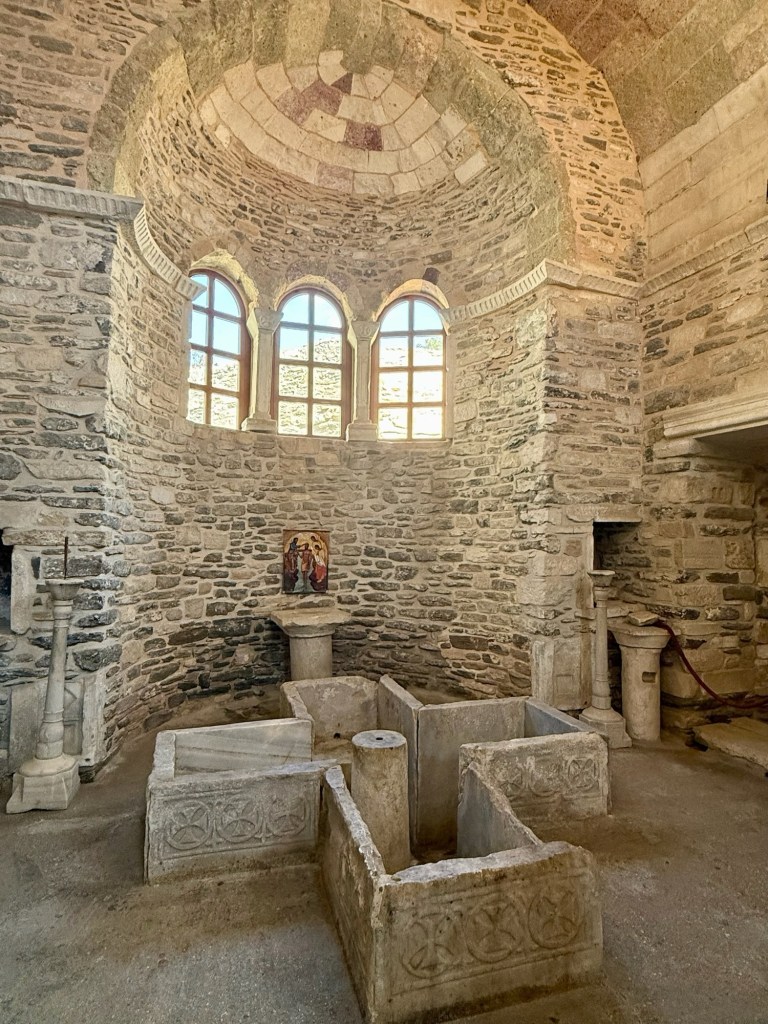
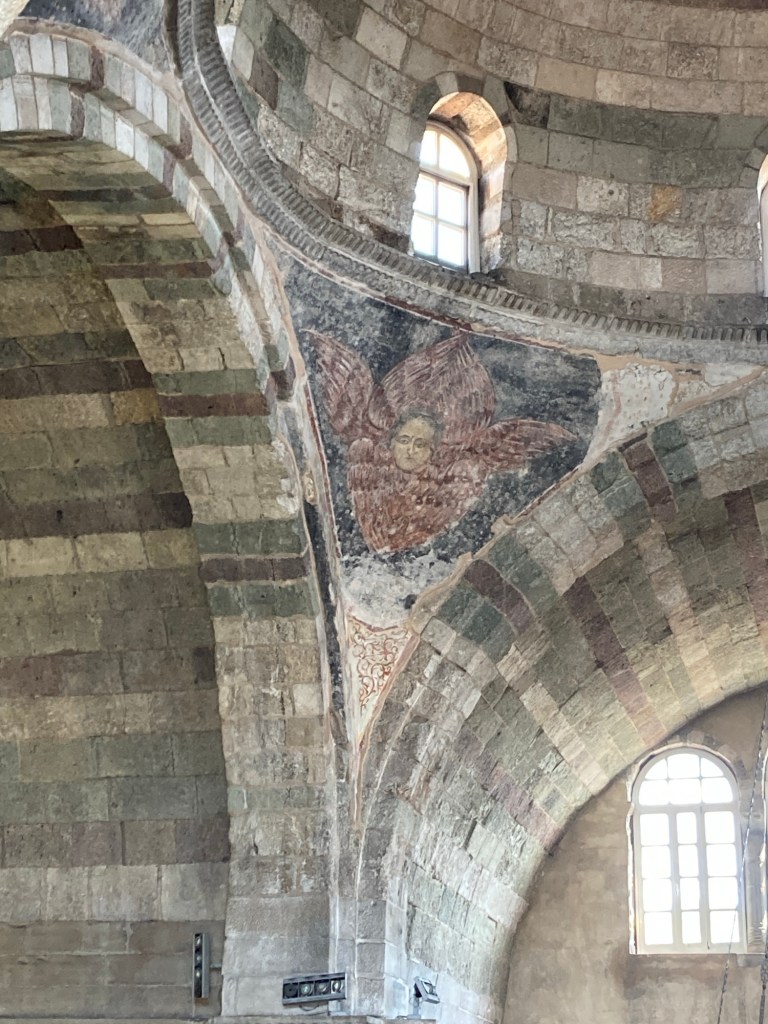
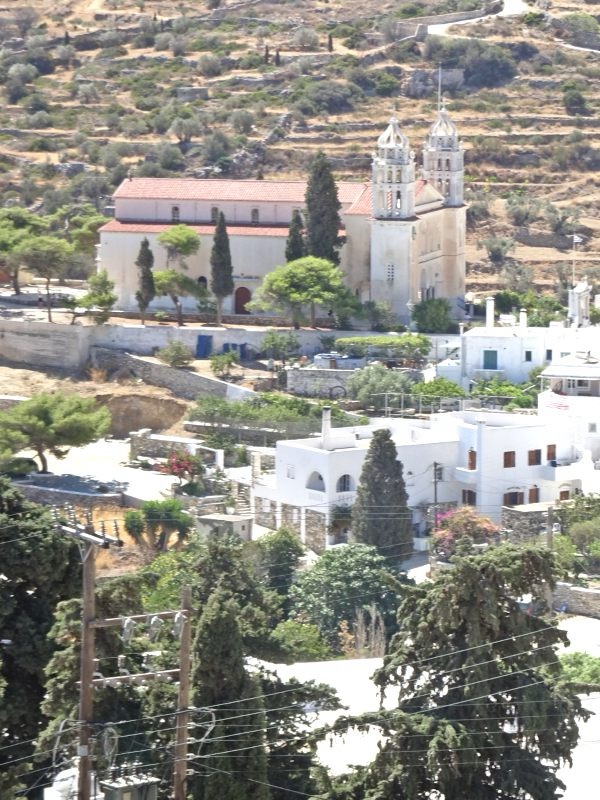
In the afternoon we drove to Parikia to see the Byzantine church of the Panagia Ekatontapiliani, where we spent an hour in wonder and wondering over the ancient architecture and marble carvings, and the way later renovations incorporated broken slabs and pieces into their also tasteful structures.
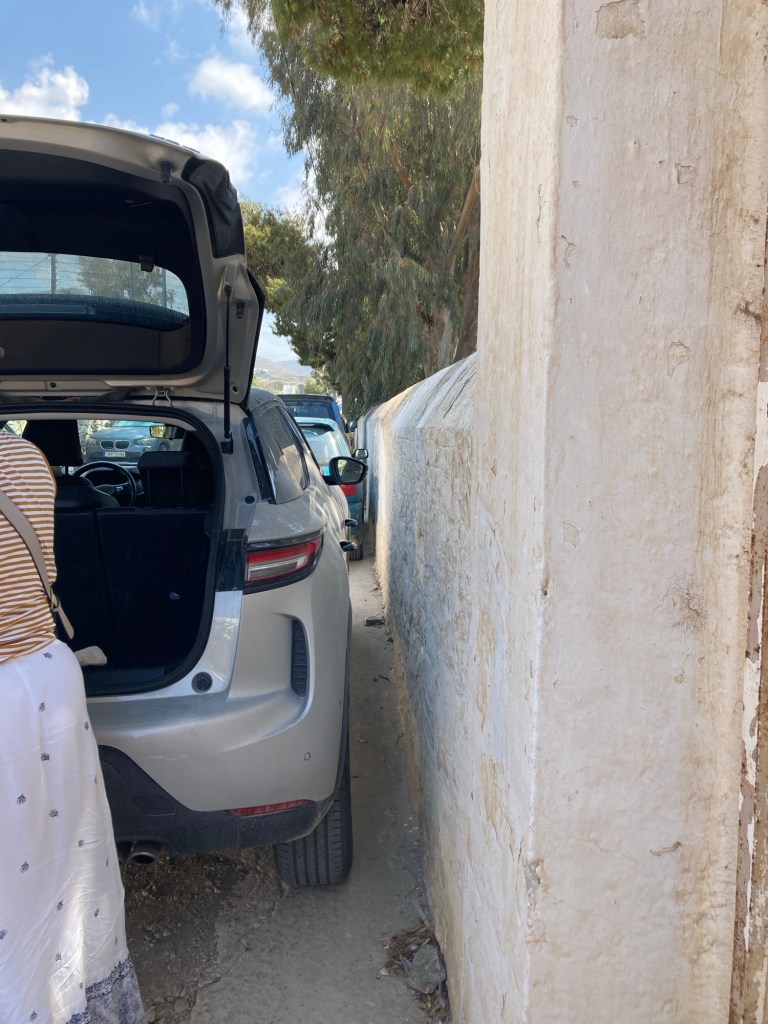
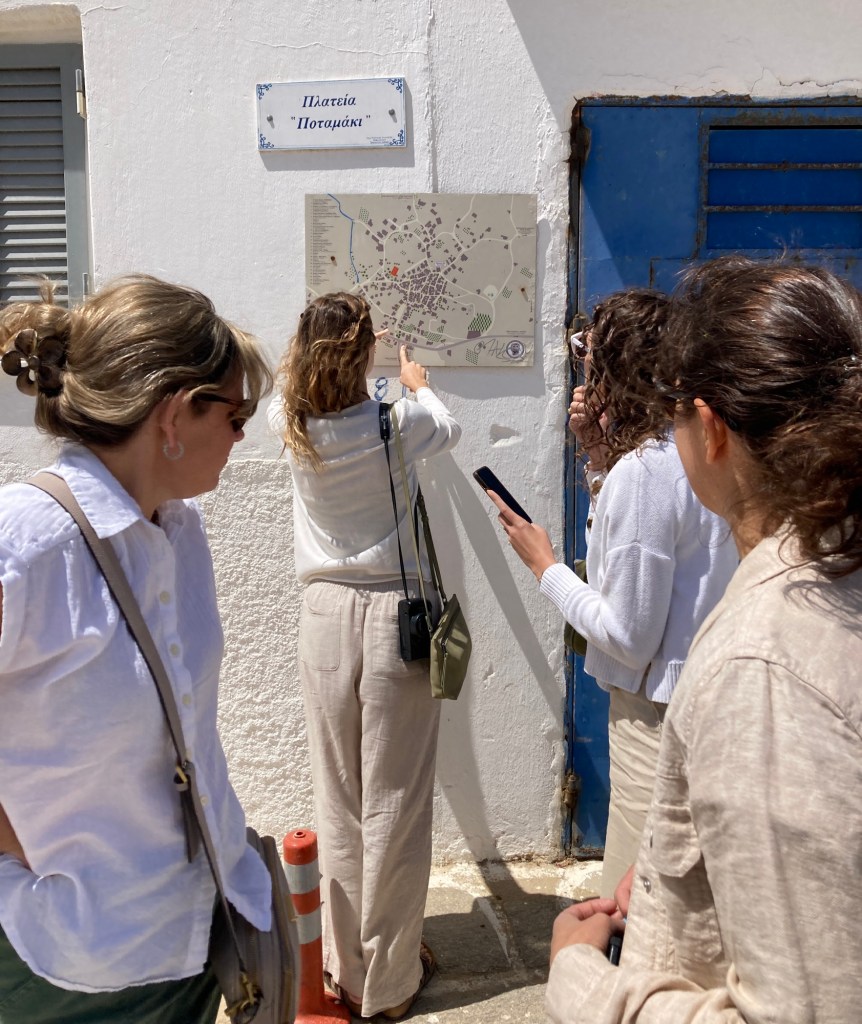
This last day provided the most challenging parking situations for Kate. In Parikia our maps app directed us to a narrow street near the church, along which she nervously and skillfully, with the aid of several more eyes among us, snugged the car against a stone wall.
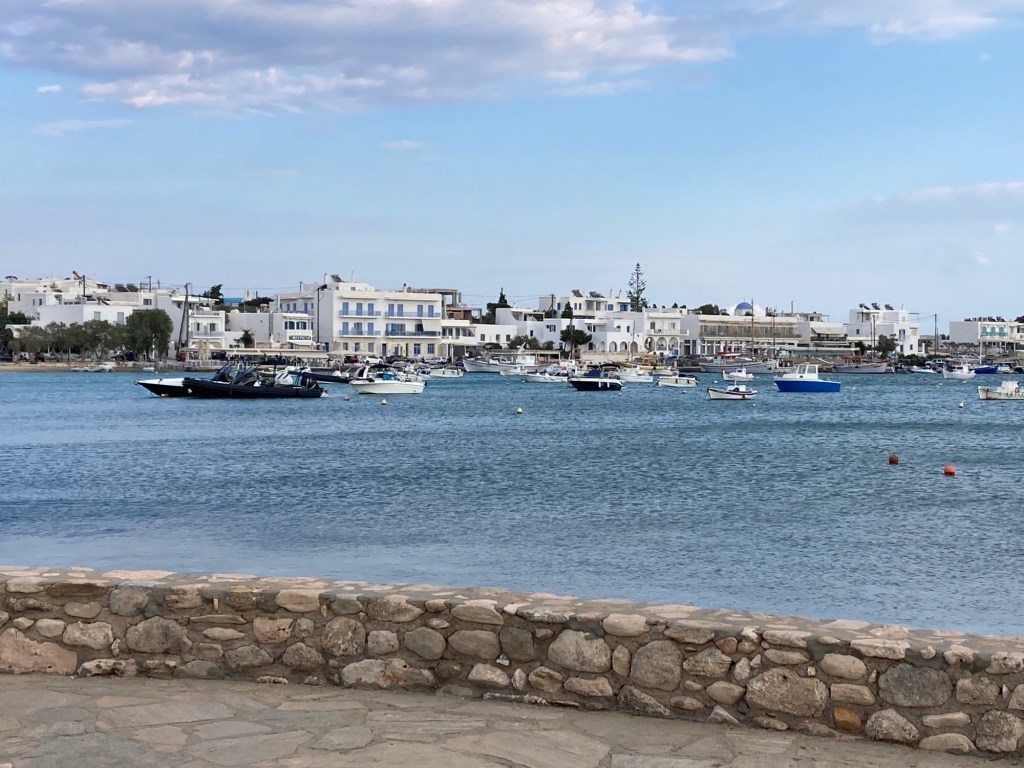
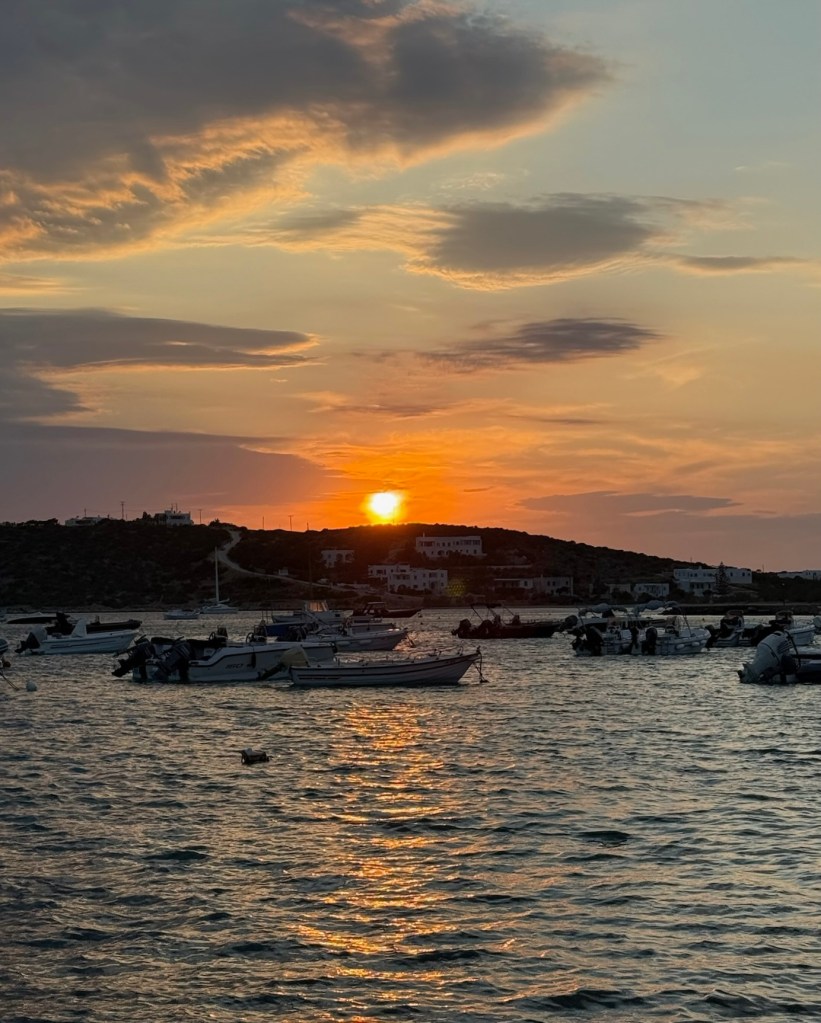
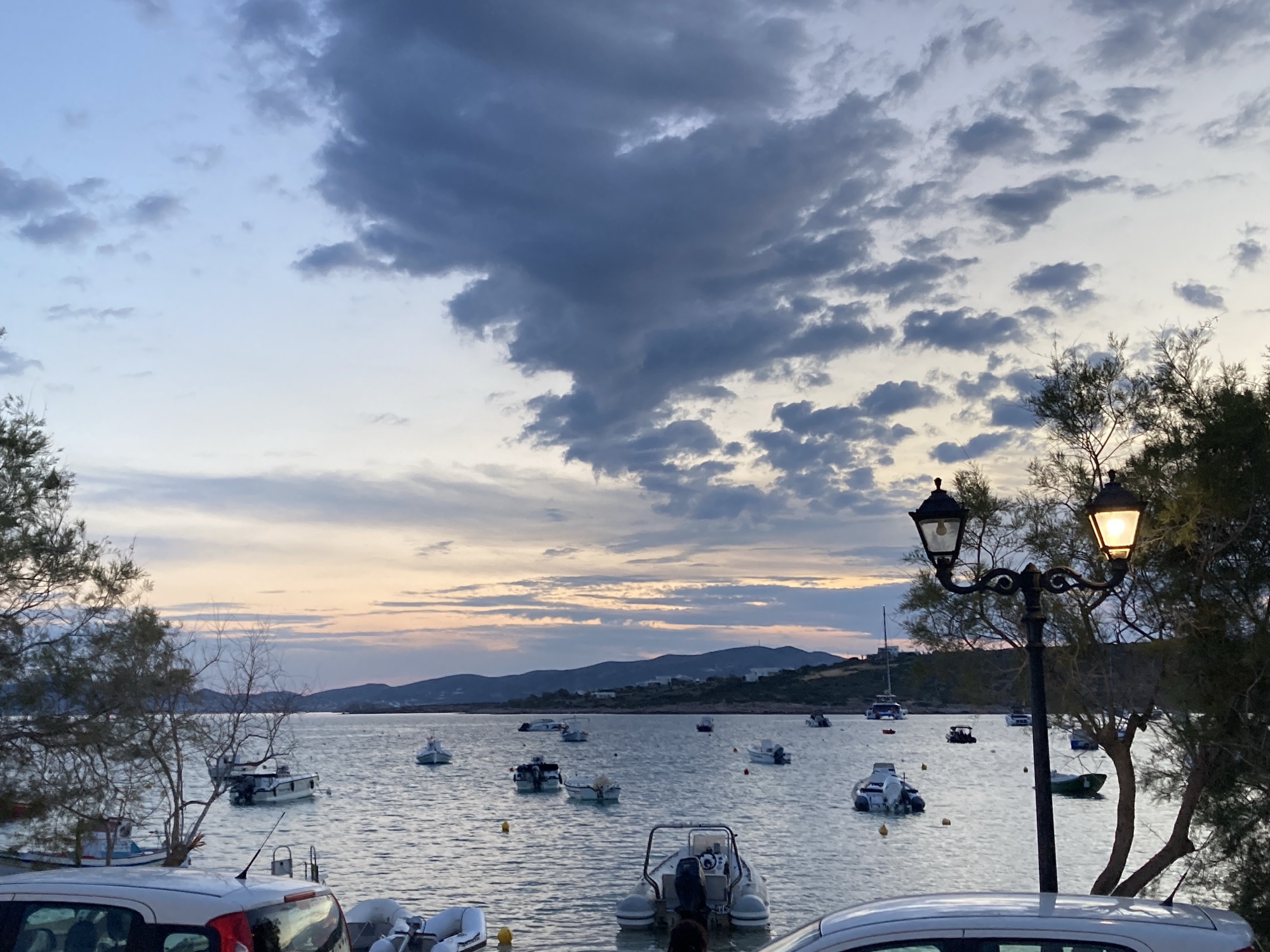
And when we returned to Aliki for dinner, we ended up parked on the other side of the bay, and walked across the stony path, which gave us new views of the neighborhood we’ve spent so much time in this week.
It was another sweet and companionable meal together, and our last for this trip.
I’m standing at the tiny Paros airport right now, the next morning, typing on my tiny phone. My daughters dropped me off before taking the ferry to Athens; they will all return home soon, but my stay in Greece is not half done.
Our days continue with the lovely relaxed feeling that comes from being just the right temperature and humidity. It’s dry here, but not harshly so.
The sun is bright, but not too bright, and the air seems constantly re-freshed by the winds, though evidently perception is not the full reality:
Our first morning here we wondered about the red dust on the car and the stone terraces. In the town many people were washing down their outdoor spaces though it had recently rained.
“It’s raining dust from Africa,” our host told us. Soon we heard from others, “It happens every May, the red dust from Chad blowing north.” Who knew?
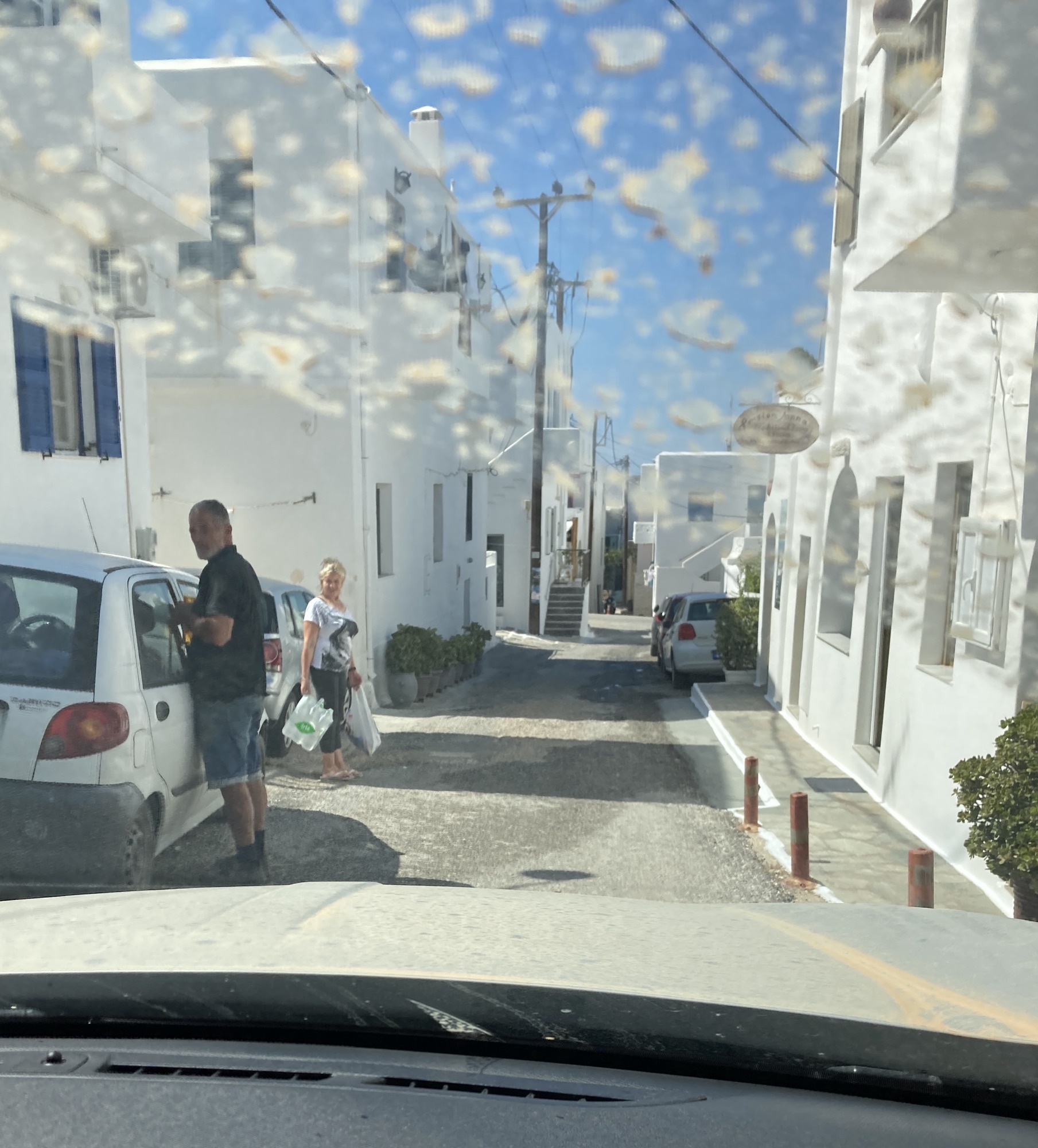
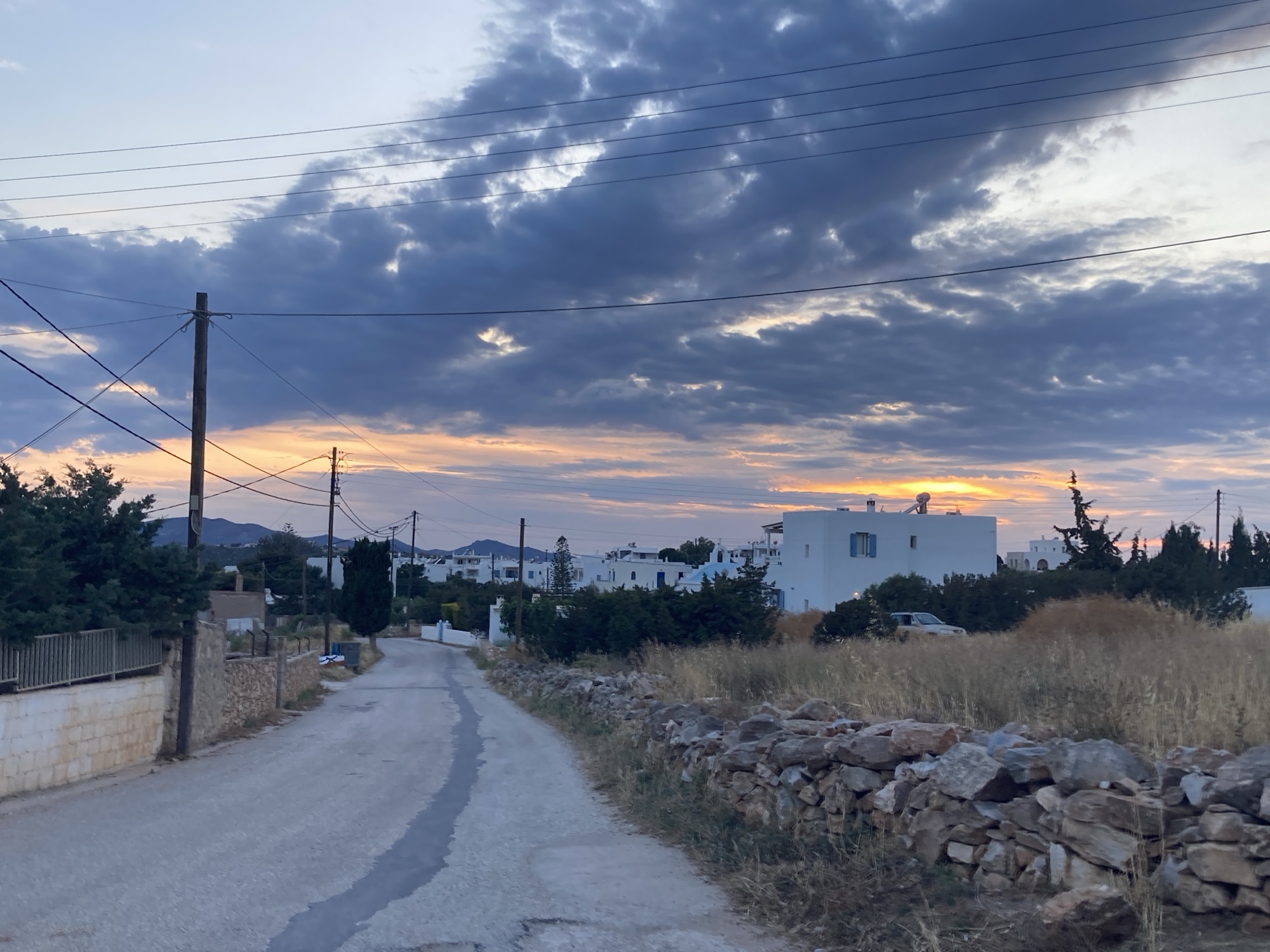
In the picture below, that I took when Kate was navigating the twists and turns of the narrow village streets, you can see the dust on the windshield, but it’s not red, so maybe we are at the end of the African dust season, and the air is now carrying the paler local dust.
One day we swam at the closest beach, Aliki. It wasn’t crowded at all. Some Greek boys were very boyishly playing with a ball in and out of the water and providing good entertainment, especially for Pippin who was catching Greek words and phrases in their shouts; she became much more comfortable with the language than I after our months of Duolingo lessons.
Kate and Maggie on Golden Beach
After I walked out through the waves up to my waist, it still took me a few minutes to finish what I had started months ago, when I told my daughters how much I was looking forward to swimming in the ocean.
I knew it wouldn’t be as perfect as the other times I’d been in the Aegean, on the Turkish coast so long ago, but without a doubt it would be much warmer than any of our northern California beaches whose currents flow direct from Alaska.
Once I did dive in, it didn’t seem too cold at all, and I swam as lazily as one can, for (what I perceived to be) a long time. That felt so good. I hadn’t swum in the ocean at all since Maui, thirteen years ago.
Another day we went to Golden Beach, in the evening, and I don’t think any of us swam, but three of us brought the others drinks from the bar, and we sat and told stories from the last years or from our childhoods and anytime in between.
Pippin and I walked slowly along the shore looking at the smooth and many colored stones, and chose our favorites.
I have a lot of favorites. One daughter asked if I were going to take sand for my collection at home, and I realized I had forgotten to bring along a bag or bottle for that. In my purse I found a pill pouch with a few Tylenol tablets in it, so I dumped those in another place temporarily and scooped a tablespoon or so of golden sand into the tiny bag.
When we returned that evening after a long day on the other side of the island, we realized we were fresh out of drinking water. Our hosts simply stated on the website, “The tap water is not drinkable.” I had drunk a pint of it before I heard that, and thought it tasted good, but we have been buying water in quart bottles from the grocery store across from the beach.
Pippin wanted to walk down there to buy more water, and I went with her. It’s about a ten minute walk, and was very pleasant in the fading light, with the village sounds changed from the daytime. People were walking their dogs, and it seemed to be the hour for dogs to bark.
The doves that fill the airwaves with their constant urgent cooing had not stopped, but fewer people were on the beach, and the beachside restaurant tables were quiet.
We browsed the store a bit and in addition to water bought linden tea and rice cakes flavored with oregano. I would not have bought them if I hadn’t learned this week that Maggie likes rice cakes. That makes two of us.
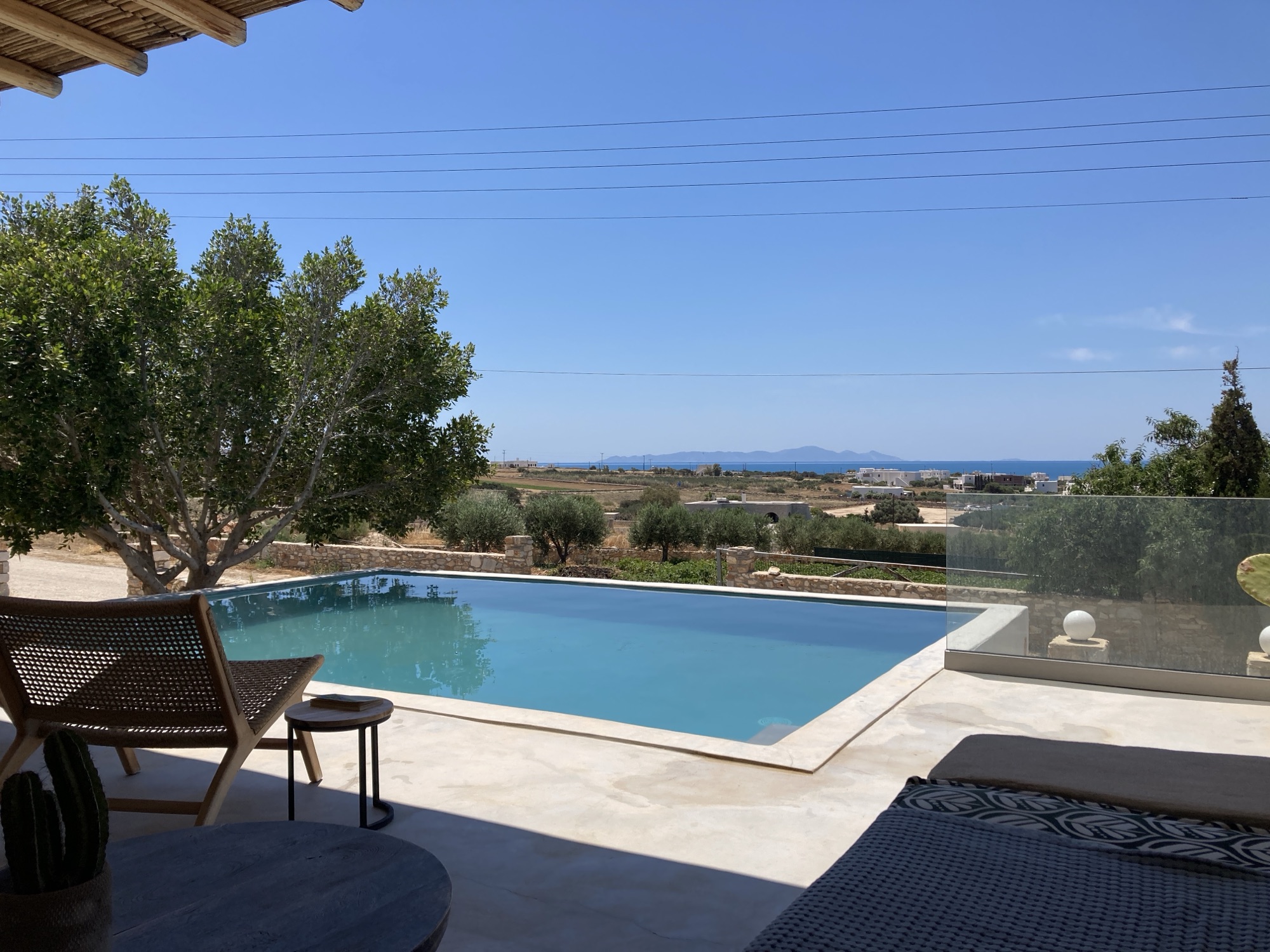
For today our group split up, three going to the nearby island of Antiparos and two of us staying here for a Home Day. I washed some laundry — it dries in a flash on the rack outside — and wrote a postcard; Maggie swam in the pool. I’m lying on a day bed on the terrace that overlooks an olive grove with the ocean just beyond:
The owner of the villa was here earlier skimming the pool, and when I came out he was in the middle of telling Maggie that at her age she should be going into Naoussa to enjoy the night life. She was reading a book, and he said only two in ten Greeks ever read a book. He doesn’t favor the quiet life such as Maggie and I were having this morning, and prefers to be busy with “business.”
But as he was leaving he said he regretted building several such villas as we are staying in, it is too much work keeping up with the hospitality and maintenance on all of them.
He also said he comes from Crete, but it is too big, he likes Paros much better, and it is a better life than Naxos, too. I’m thankful he built this house we are staying in, because it’s the best.
The skies had cleared and the wind was still blowing when we set off for the high country of Paros, on our first whole day here. In the village of Prodromos signs for Public Parking led us to a dirt lot, and the bus stop a short walk from there, where we hoped to catch a bus up to the town of Lefkes.
We could make out from the roadside sign, conveniently right outside a bakery, that our bus would not arrive for another hour and a half, so we did a little shopping —yes, including of pastries — and found a taverna where we could have an unfortunately quick lunch in the meantime.
The only other people in the restaurant were five older Greek men in a traditional and more relaxed midday gathering, for whom the five of us chatting and laughing over our menus clearly provided an interesting diversion; they couldn’t stop watching us. We petted the cat while waiting for our orders, and kept an eye on the time so we wouldn’t miss the one bus that we needed.
At every restaurant in Greece so far we’ve found that restaurant wait staff are reluctant to bring the check, which applies a gentle pressure to linger, and enjoy to the max the great food and ambiance. We felt ourselves to be rude and unappreciative of the chance to experience a village taverna complete with cat, and old men gossiping over their coffee.
We even had to leave an entire kebab untouched, but I stuffed the extra bread in my shoulder bag to take along, with breakfast toast in mind.
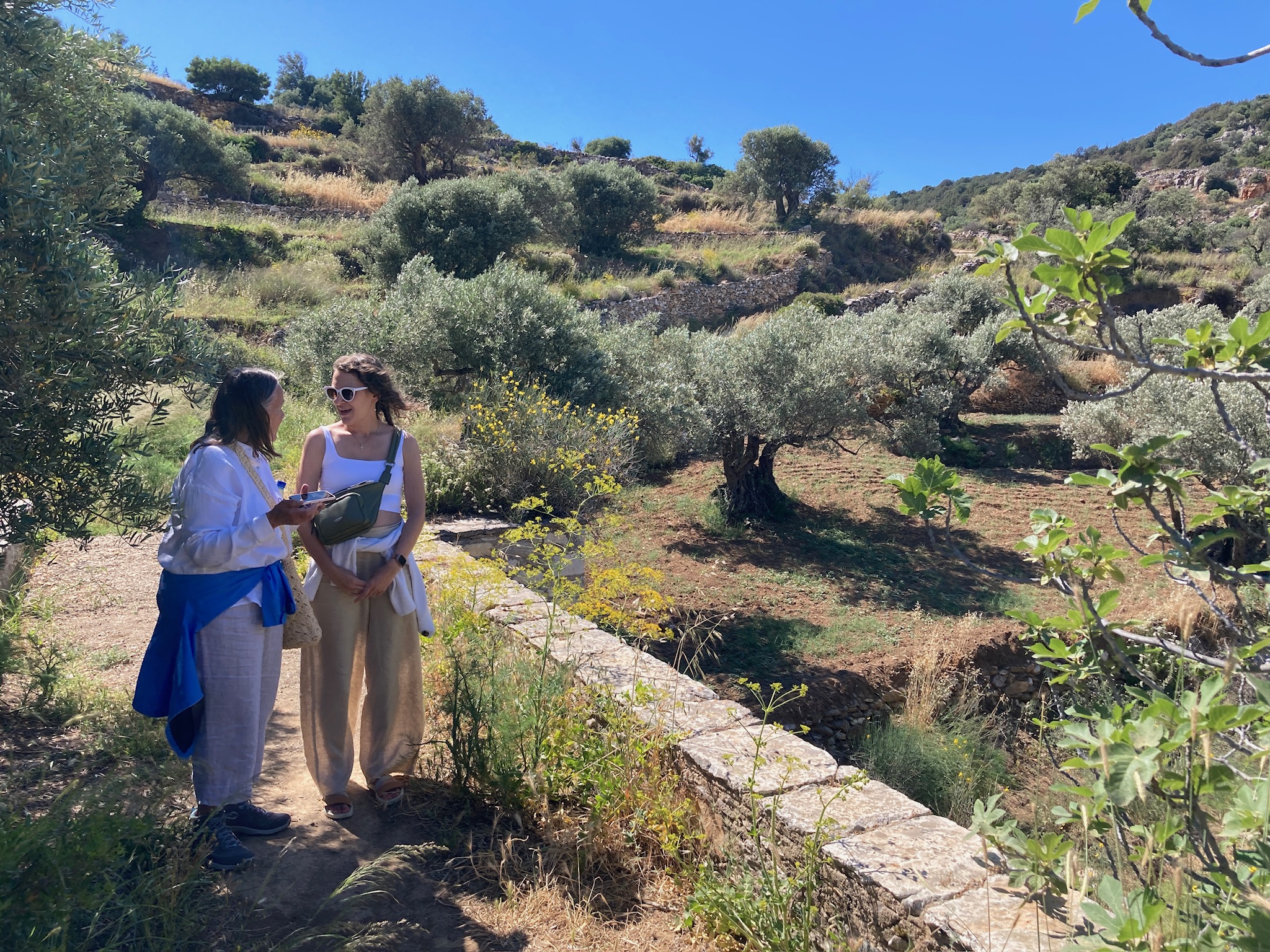
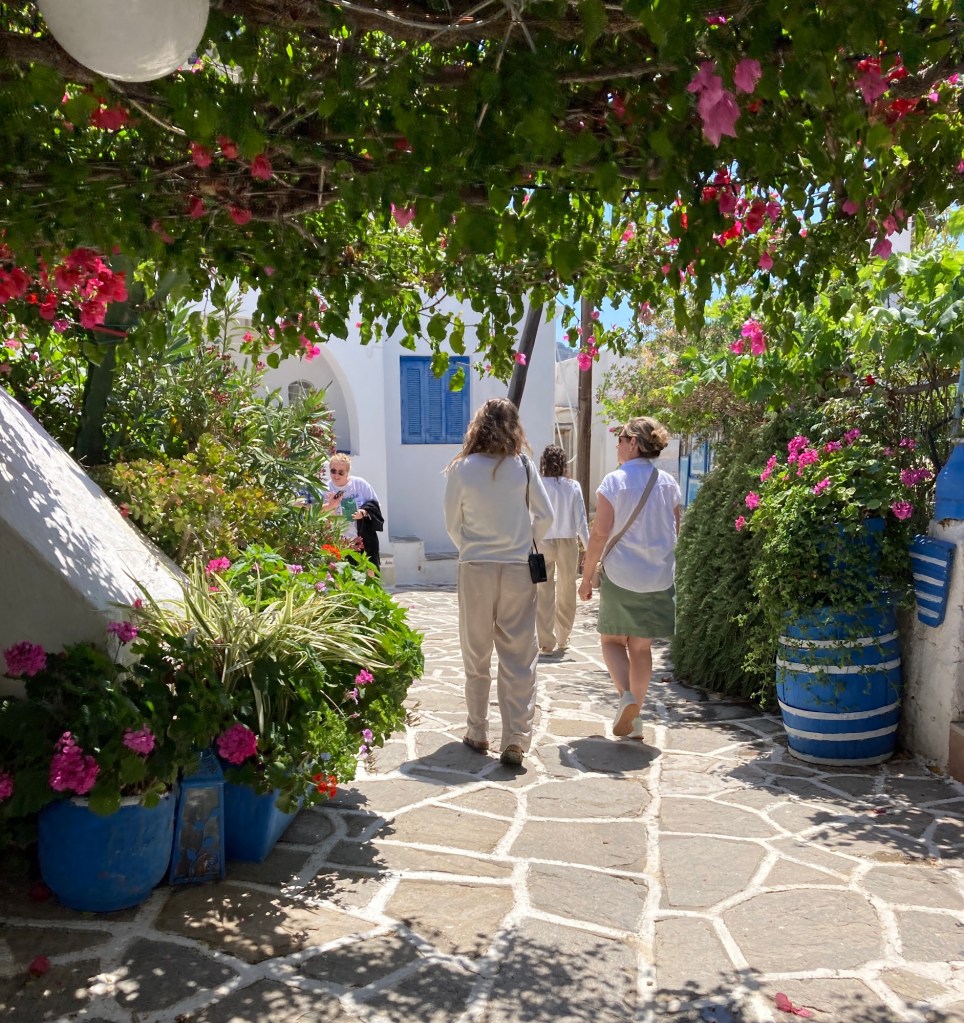
After a quick bus ride up to Lefkes, we strolled through the town, always heading gently downhill, on the Byzantine Trail, a thousand year old road that is by modern standards a path between Lefkes and Prodromos. The huge 19th century Agia Triada church that was built of local marble we found closed; reportedly services are held morning and evening every day.
Lefkes, Internet photo
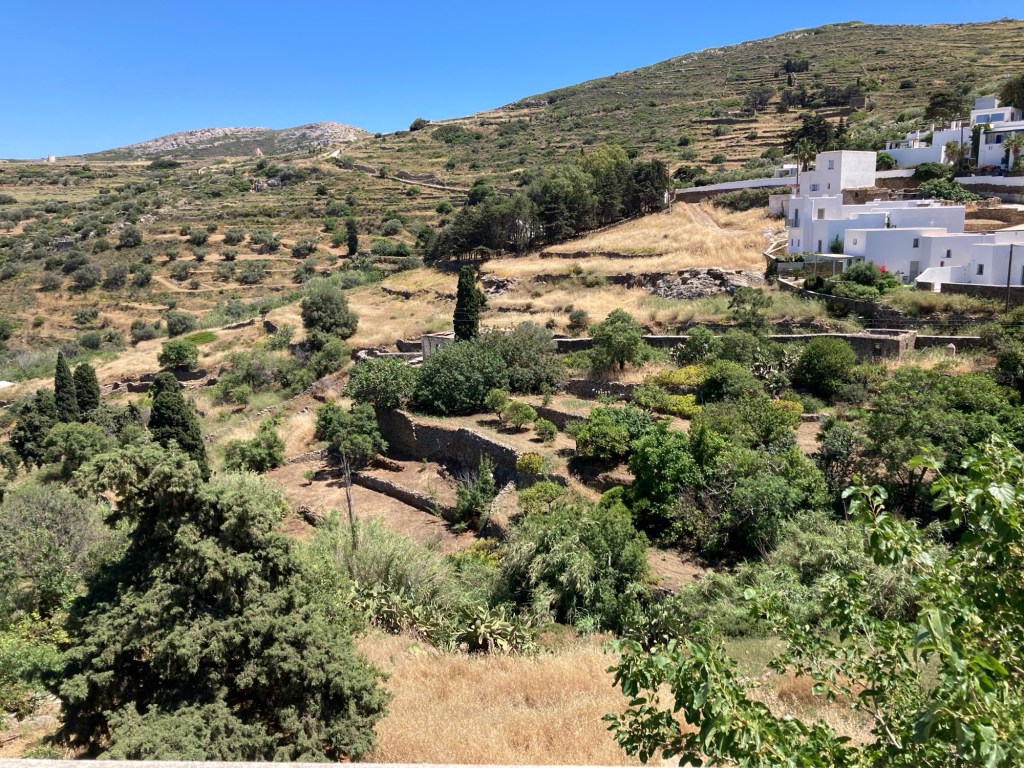
The trail soon left the town and wound on down the hill, with views on all sides of ancient terraces built of stones pulled from the earth that is rich with them, and naturally poor from the stoniness. A few of the thousands of plots are evidently being used again, though tourism has supplanted agriculture in the island economy.
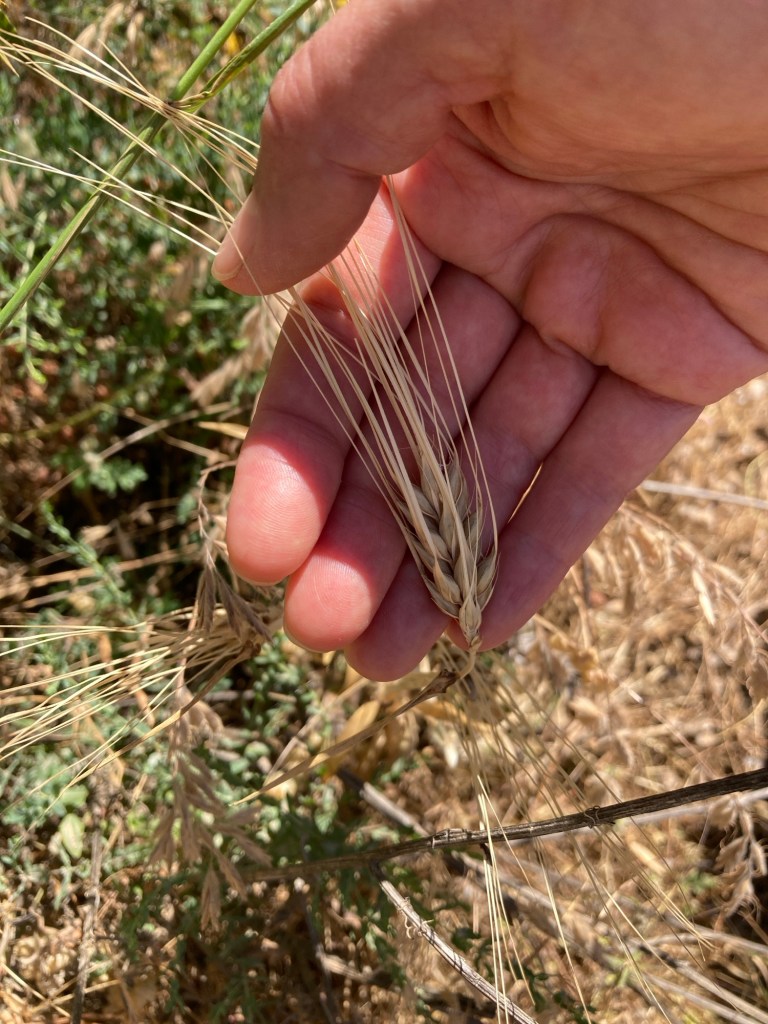
Barley
It is easy to imagine the farmers in the old days growing fava beans and keeping goats on those terraces. We did pass one old man keeping watch over his goats that very afternoon.
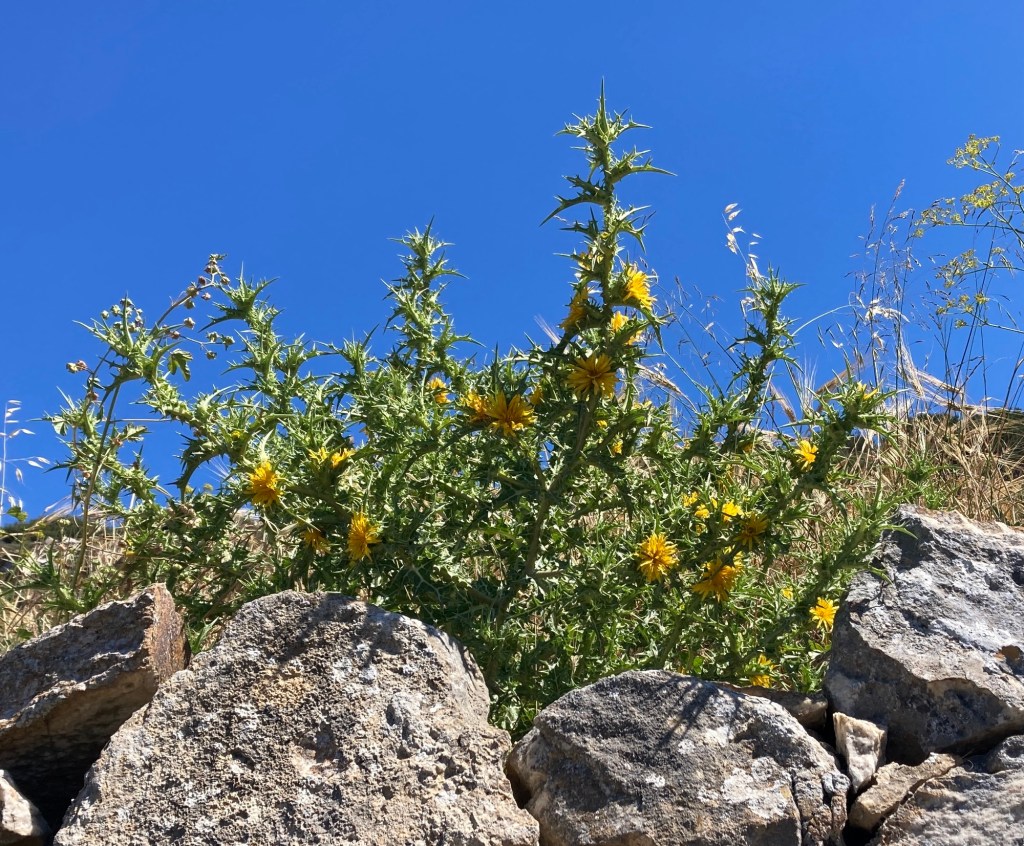
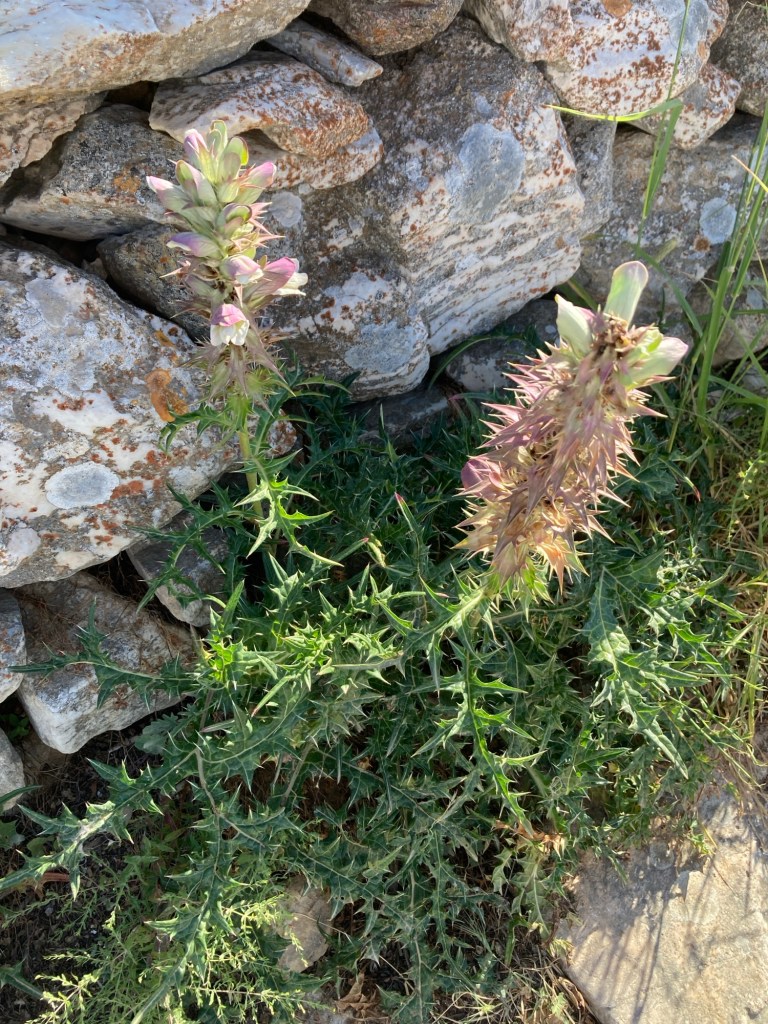
Pippin and I kept lagging behind the others to investigate all the strange or familiar plants along the path, which included at least a dozen species of prickly types.
Common Golden Thistle
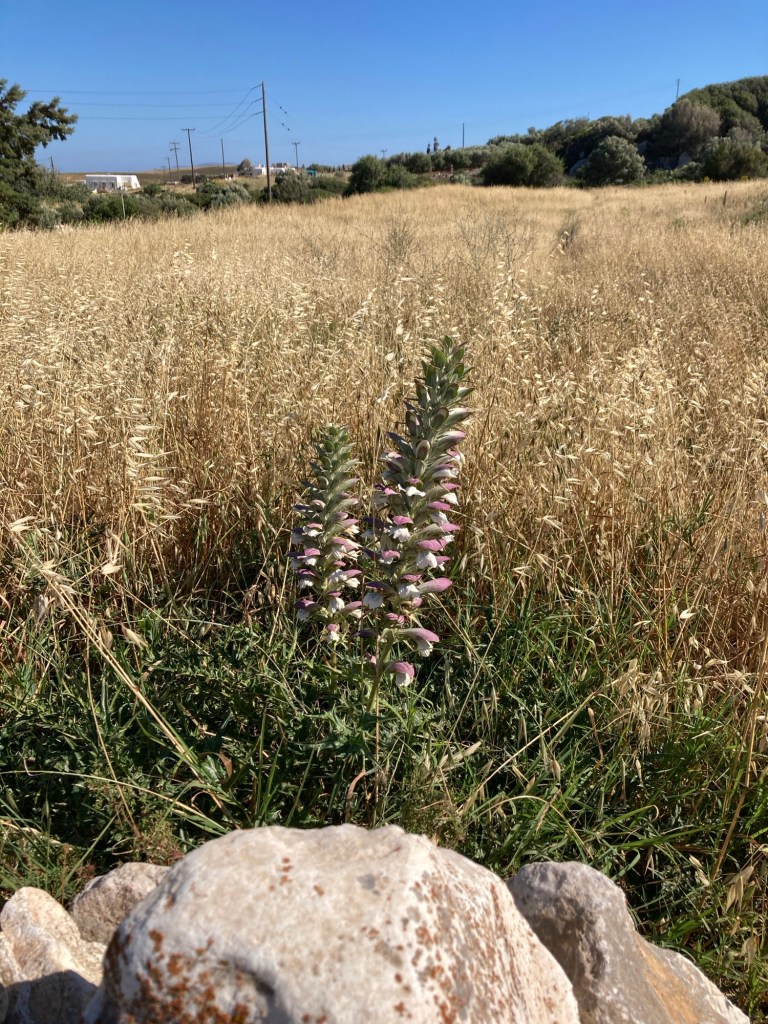
There was even a beautiful but thorny type of acanthus, which it took me a few sightings in different stages of its flowering to recognize as being related to the majestic version in its glory right now, back home in my garden.
Acanthus
I was so happy to be wearing my new hiking boots that kept me comfortable and mostly steady on the road that was sometimes dirt, sometimes roughly rocky and uneven, and often paved with wide and flat marble that had been polished smooth over the centuries.
Phoenician Juniper
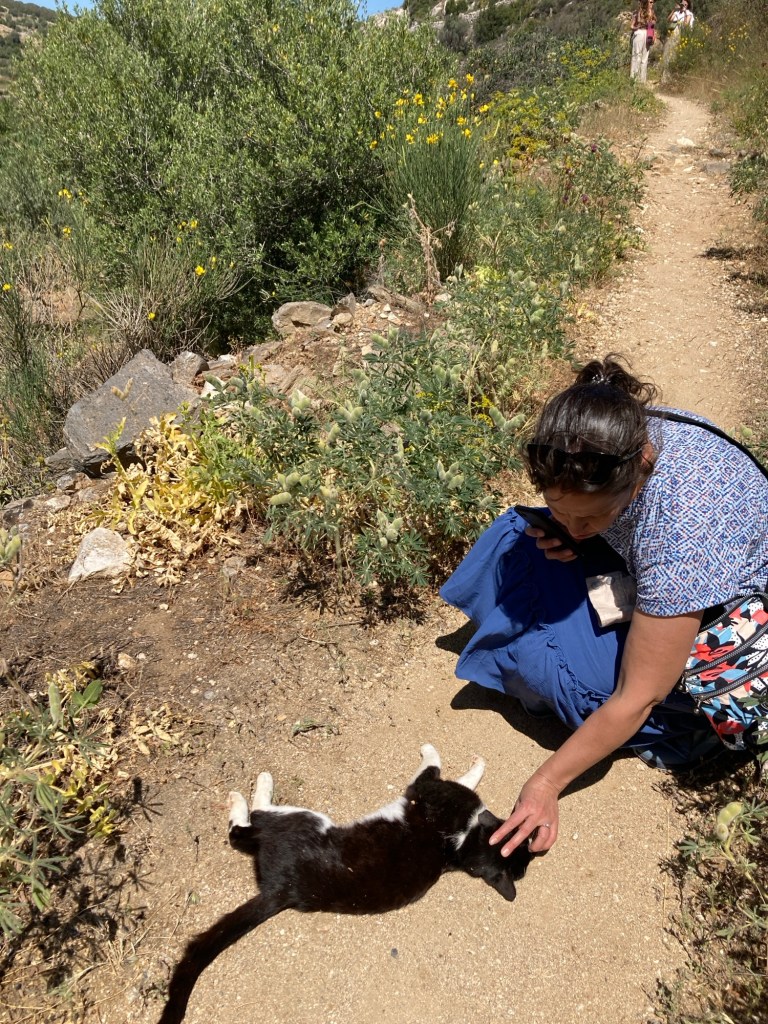
The ubiquitous cats greeted us on the Byzantine Road, begging attention, which at least a couple of us were happy to give.
I was in my element, under the warm sun, so many interesting plants to see, with my favorite botanist partner and in the company of other family favorites, getting good exercise among terraced hills — it all was so healthy and alive that I could forgive the wind that tangled my hair, and the thistles that grabbed at my legs.
Yellow Spine Thistle
I hadn’t known ahead of time just how much of a nature walk this trail was going to be, and I couldn’t get over my good fortune at being the recipient of this blessing, accomplished through the labors of my girls, from Kate who was willing to drive to Maggie who buys us pastries.
Eventually our walking trail brought us back to our car in Prodromos, and we returned to our house across the island. At the end of the day we had walked more than five miles, and we all slept very well that night under Aegean skies.
At 6 a.m., about two months after the actual event to be celebrated, our party finally assembled over a lavish hotel breakfast buffet in Rafina, the port near Athens from which we were to take the early ferry to the Island of Paros.
We came from four towns in California, Wisconsin and Argentina, about a year after we’d last all been together at a wedding, which was when the others convinced me to engage with them in this project. I’m so thankful to God for having smoothed the way to making it a reality.
We are, besides the guest of honor, my daughters Pearl, Pippin and Kate, and my granddaughter Maggie. None of us had been to Greece before, but the idea for this particular spot on the globe began with the plans my late husband and I had made to visit Greece, which we had to abandon when he became too ill to go.
Our first day on the island we walked around the town of Naoussa, including its ruined Venetian castle, and ate lunch outdoors. A storm was brewing, and suddenly a gale of wind was blowing menus and napkins all over, and the wait staff wrestled with several umbrellas to keep them from toppling.
One broke anyway, with a big crack. We were just finishing our meal so we went strolling at that point.
I was having intermittent feelings of having been recently awakened in the middle of a deep sleep, so I didn’t notice myself the several chapels and churches mixed in among the shops that we passed, but Kate pointed them out to me, and I went in and offered my sleepy prayers of thanksgiving. It did seem like a dream; were we really here?
In St. Nicholas Chapel
Checking into the house we are renting for several days, I had to accept the truth that indeed we are here, and that “villa” is not too extravagant a name for this lodging. I keep thinking of the book The Enchanted April and the Italian castle-villa the four women took holiday in.
Soon I was wishing we also had wait staff, in particular someone like Domenico — though in our case he would likely be “Niko” — because after I got into bed something outside my room kept banging and knocking in the wind, and I would have liked him to secure it as those strong Greek men did the umbrellas.
Niko is not here, so I sailed off to sleep in spite of that noise, with my windows wide open to the rolling thunder and sound of rain on the patio. I snuggled down in a white room under my white coverlet, still a little disoriented but quite content.