Category Archives: friends

About letter-writing.

by Mary Ferris Kelly

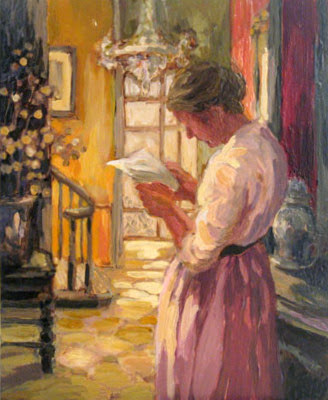
I am always trying to write more letters. So I was very pleased when our sisterhood at church organized a pen-pal match-up, for anyone who wanted to exchange letters once a month with another woman in the group. I got matched up with Gwen, and she and I were thrilled about that; we somehow rarely get a chance to talk or be together outside of church services, so letter writing is perfect for us. We have been writing back and forth now for a year, though we may have fallen off a bit lately.

Because of all this, I loved reading what Donald Hall had to say to an interviewer on the subject. I am sad that people like him seem to be a “dying breed.” Do you think there is any hope of a revival of letter-writing? Even people without smart phones often use a computer to write emails instead of paper-and-ink letters.

Last Christmas I gave all my younger grandchildren ten stamped postcards each. They were of various designs, from my huge collection of postcards that remain from when I often wrote them to the (now older) grandchildren, and was for a time sending postcards all over the world as a member of Postcrossing. I included in the Christmas packages a list of their cousins’ and my addresses, and told them that postcards are fun because you only need to write a few words to fill up the page; it’s an easy way to let people know that you think of them.

Postcard from Ogden Nash

This post would not be complete without mentioning my friend Di, who has neither a computer nor a smart phone, and writes me a letter at least twice a year. She is one of the best letter-writers I have ever known, and I should write a whole post just featuring excerpts from her witty missives to me. I doubt a letter from Donald Hall could please me as much as hers do.

INTERVIEWER:

Another subject. You’re notorious for answering letters. Is your heavy correspondence related to your art? Doesn’t it get in the way?

DONALD HALL:

Sometimes I wonder, Do I write a letter because it’s easier than writing a poem? I don’t think so. Letters take less time than parties or lunches. How do people in New York get anything done? My letters are my society. I carry on a dense correspondence with poets of my generation and younger. Letters are my café, my club, my city. I am fond of my neighbors up here, but for the most part they keep as busy as I do. We meet in church, we meet at the store, we gossip a little. We don’t stand around in a living room and chat—like the parties I used to go to in Ann Arbor. I write letters instead, and mostly I write about the work of writing.

http://www.theparisreview.org/interviews/2163/the-art-of-poetry-no-43-donald-hall
 

They carry him in.

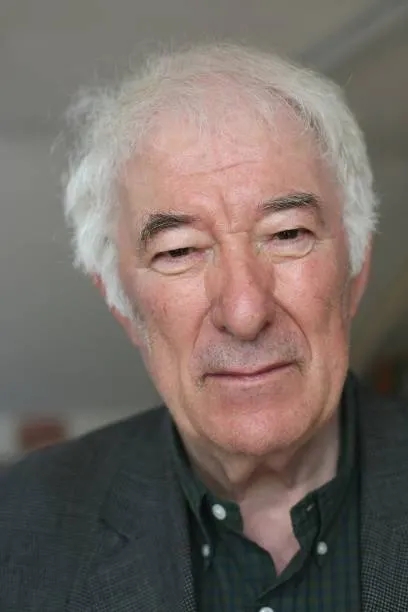
Seamus Heaney wrote this poem after he’d had a stroke and found himself being carried by his friends. That’s why he particularly highlights the friends of the paralytic in the biblical miracle of Christ, who removed roof tiles to let him down in the middle of the crowd inside the house, and thereby played a part in the healing that Christ’s accomplishes. The story is in Matthew 9:1-8, which is today’s Gospel reading in the Orthodox Church.
MIRACLE

Not the one who takes up his bed and walks
But the ones who have known him all along
And carry him in –

Their shoulders numb, the ache and stoop deeplocked
In their backs, the stretcher handles
Slippery with sweat. And no let up

Until he’s strapped on tight, made tiltable
and raised to the tiled roof, then lowered for healing.
Be mindful of them as they stand and wait

For the burn of the paid out ropes to cool,
Their slight lightheadedness and incredulity
To pass, those who had known him all along.

-Seamus Heaney

Basilica of Sant’Apollinare Nuovo


Why Thessaloniki?

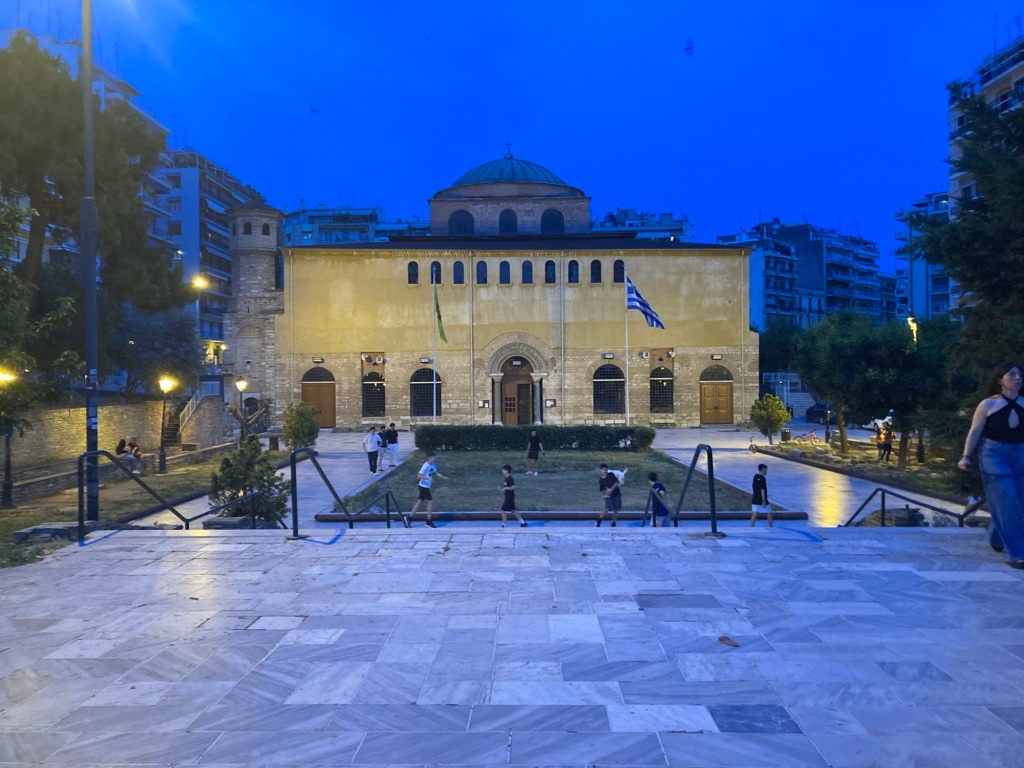
Evening play at Hagia Sophia Church

I’ve written already about how my daughters convinced me to make the trip to Greece with them. They had to limit their travel time to about ten days, but I couldn’t face the thought of returning my poor body to the U.S. after such a short period, while it would still be confused from crossing ten time zones. Besides, being shuffled between multiple airports and airplanes, and spending hours in what are at best unnatural and uncomfortable environments — I wasn’t eager to impose that affliction on myself again so soon. So, my primary motivation to extend my visit was negative.

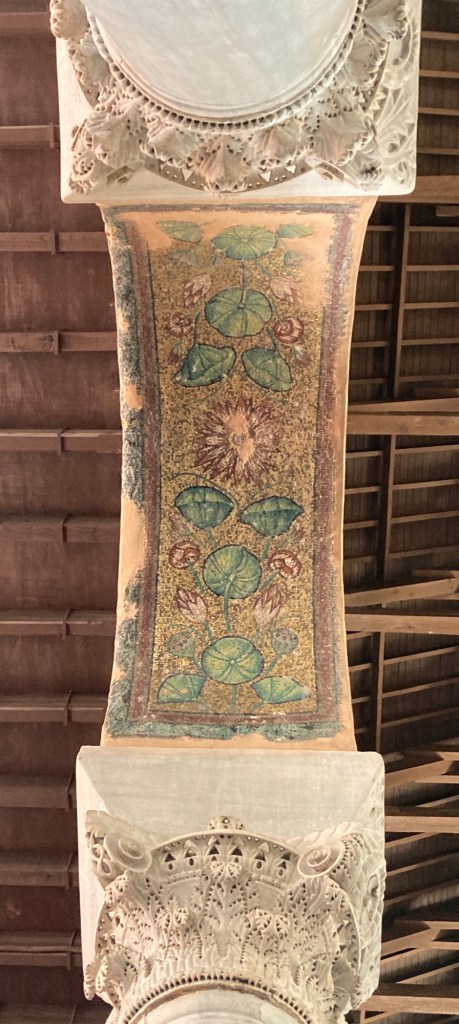
Acheiropoietos Church, underside of arch

But as soon as I began to consider the possibilities this would open up, the idea became exciting in a positive way, and also a little scary. I hadn’t traveled alone in a foreign country since I was much younger, and even then my youthful advantages didn’t prevent me getting into several problematic situations.

St. David the Tree Dweller, Monastery of St. Theodora

I knew I wouldn’t want to join a group tour, but if I could be in contact with even one helpful person in whatever strange place, that would make the adventure seem more doable.

Thessaloniki was the Greek place name that I had heard the most in the last many years. Orthodox Christians know it as a center of culture and scholarship, and a place of pilgrimage very near to that more famous destination for pilgrims, Mount Athos.

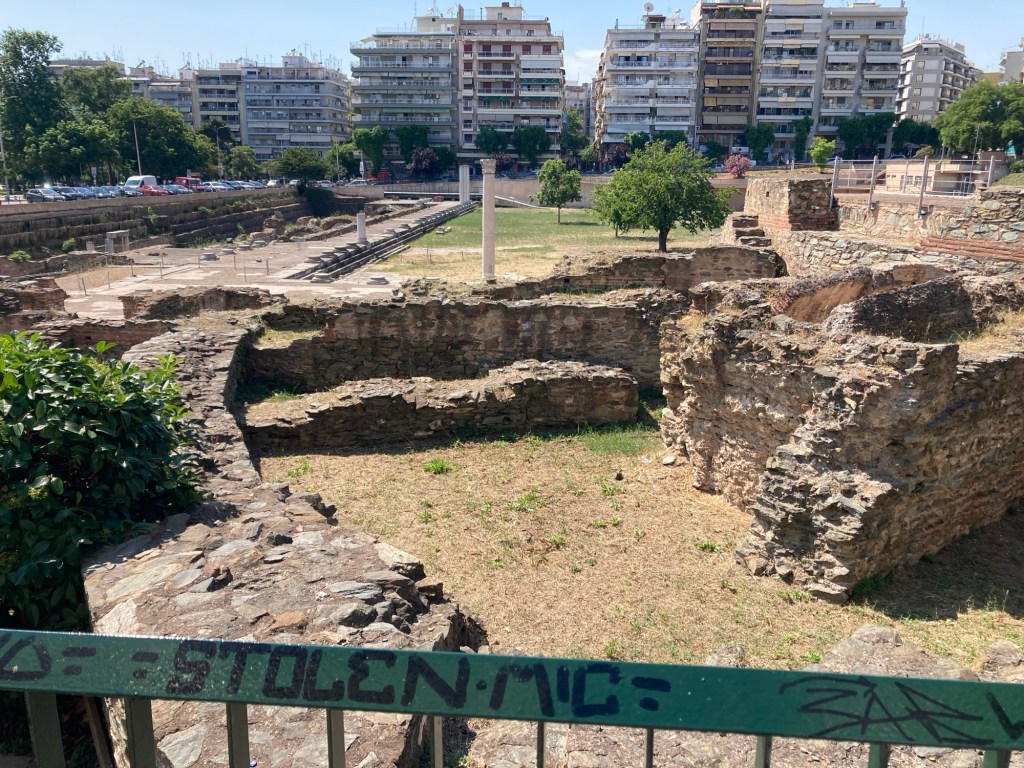
Rubble at Acheiropoietos Church

Travelers to Athos typically pass through Thessaloniki, and if a mixed group of men and women are traveling together in Greece, the women might spend time in the many women’s monasteries near Thessaloniki while the men visit the Holy Mountain, where women are not allowed.

And I had known of several people at my home parish who had visited this city for long periods or studied at Aristotle University, or for other reasons lived in the city, past or present. So, very quickly, my choice of Thessaloniki solidified.

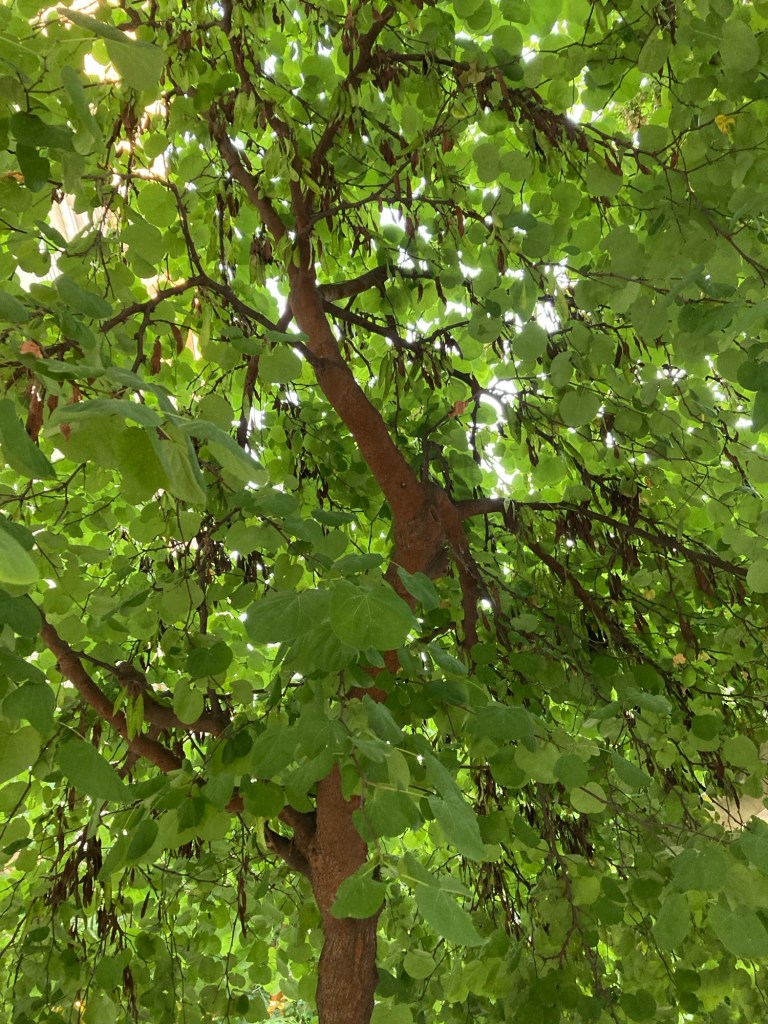
Judas Tree

One friend had encouraged me to include at least two Sundays in the span of my visit, so that I could attend Sunday Divine Liturgy in two different churches. That helped me set the parameters of length of stay.

I really knew very little about the place. The first thing I learned was that St. Demetrios is the patron saint of Thessaloniki, and his relics are here, and I began to ask the saint’s prayers for a successful trip that would bring me to his city and church.

Church of St. Demetrios

It turned out to be easier than I expected to make not just connections but new friends, and to become closer to people I hadn’t known well before. They not only answered my questions beforehand and after I arrived, but they provided hours of good conversation and explanations of Greek history and culture.

You have learned from my recent posts how much more I’ve discovered and experienced here – and I still have more to tell ❤️

Olive oil: the body.

“If the dish you are cooking doesn’t have meat, olive oil is especially needed to give body to it. Today we are making chicken with potatoes so we only need a little olive oil.”

So our teacher explained as she poured a few more generous glugs from the bottle over the raw ingredients in the pan.

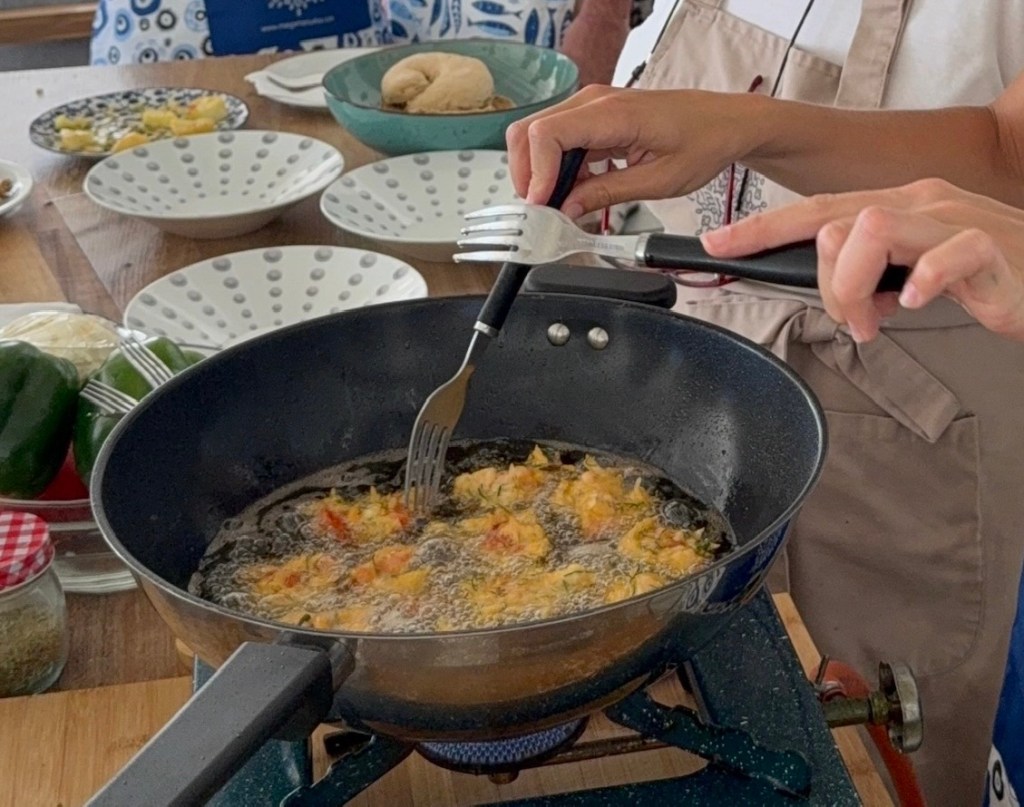
We were attending a cooking class taught by a Greek woman named Stella, and in the company of eight or so other visitors to Paros, in this case all Americans. We were to learn quite a lot, not only about olive oil but about feta cheese, baklava, the mastic tree and the local farmers. It was more enjoyable than I could have imagined, because our host and instructor was so real, and obviously liked people.

She only uses oil from olives grown on Paros Island — and she used one whole liter bottle and half of a second bottle for that one meal’s dishes. Also, according to Stella, the creamiest, tastiest feta is made on Paros — and that I can believe.

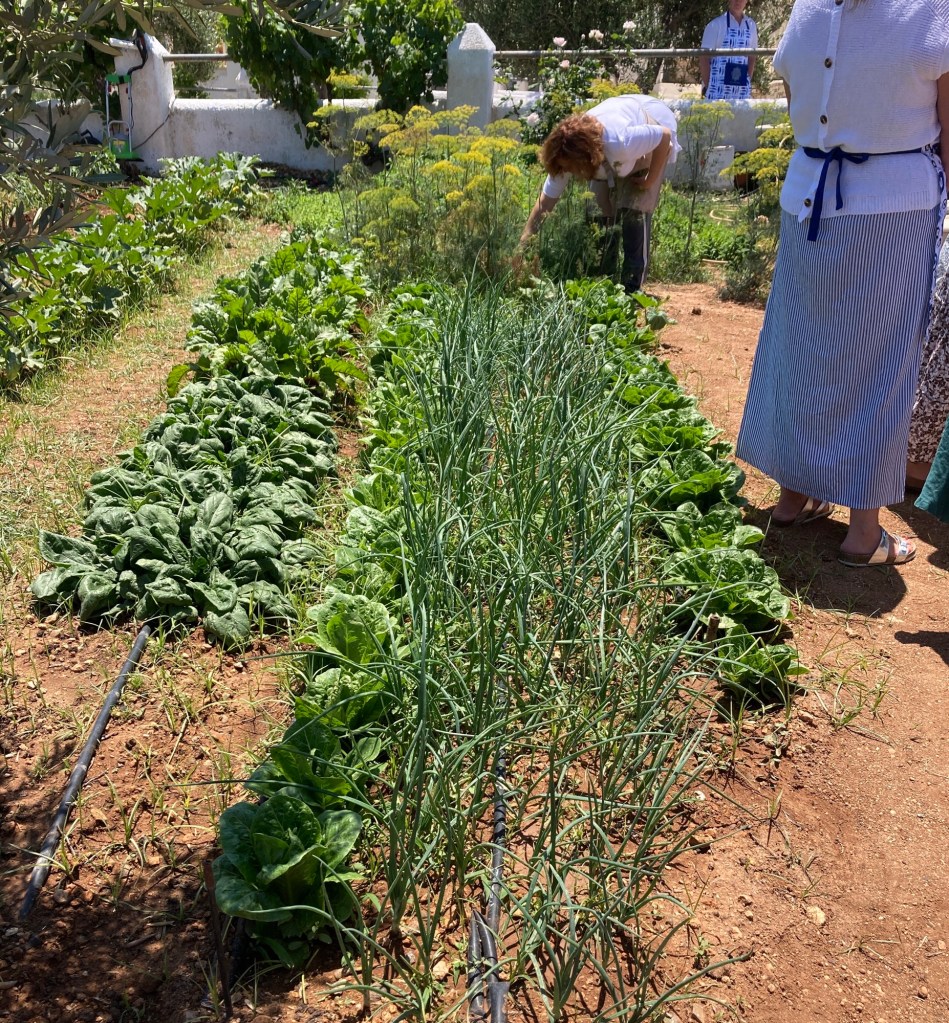
We stood around a big table wearing our blue-and-white aprons, and took turns chopping, stirring, frying and tasting. We got a tour of her garden, and at last, though all that tasting had blunted our appetites, we sat down to a feast.

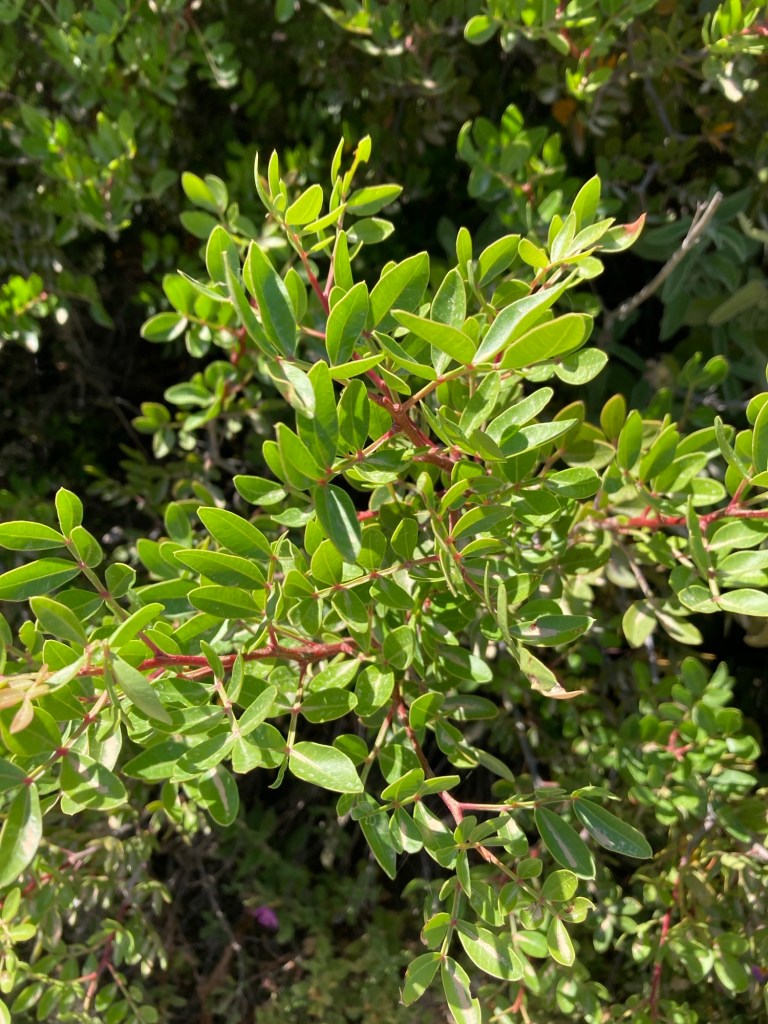
At some point as we were cooking Stella mentioned the herb mastic, and later while we were enjoying the food we’d prepared, I was pleased to tell our teacher that Pippin and I had seen mastic bushes on the Byzantine Road the day before. At least, that’s what our Seek app said it was, Pistacia lentiscus, and our research online seemed to agree…

Maybe it’s not mastic.

But Stella assured us that in Greece mastika (Μαστίχα) only grows on the island of Chios, though farmers are always trying to cultivate it elsewhere. We could tell she was a bit defensive at my proposing a conflicting story.

One thing Stella did confirm for me is that the best baklava is made mostly with sugar for sweetening, though she includes a very small amount honey in her recipe.

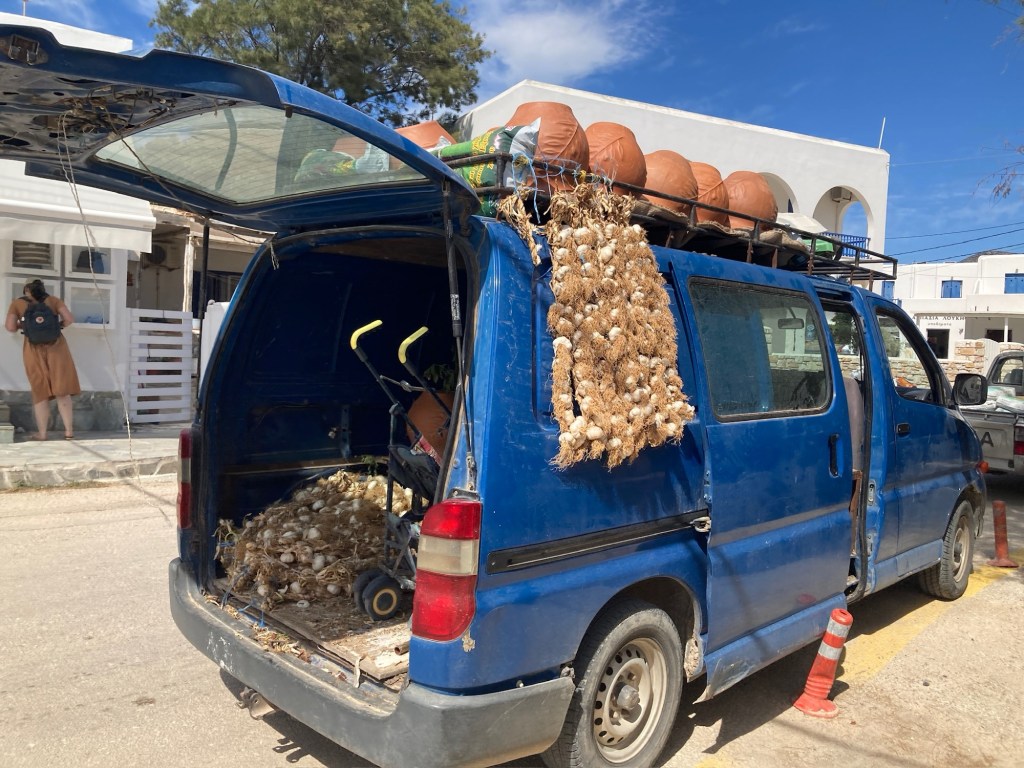
Garlic truck

In addition to the taste experiences of our class, my girls and I sampled in restaurants lots of different foods, or new presentations of familiar ones. The Greeks want very much for their guests not to miss out on any of the dishes they are proud of.

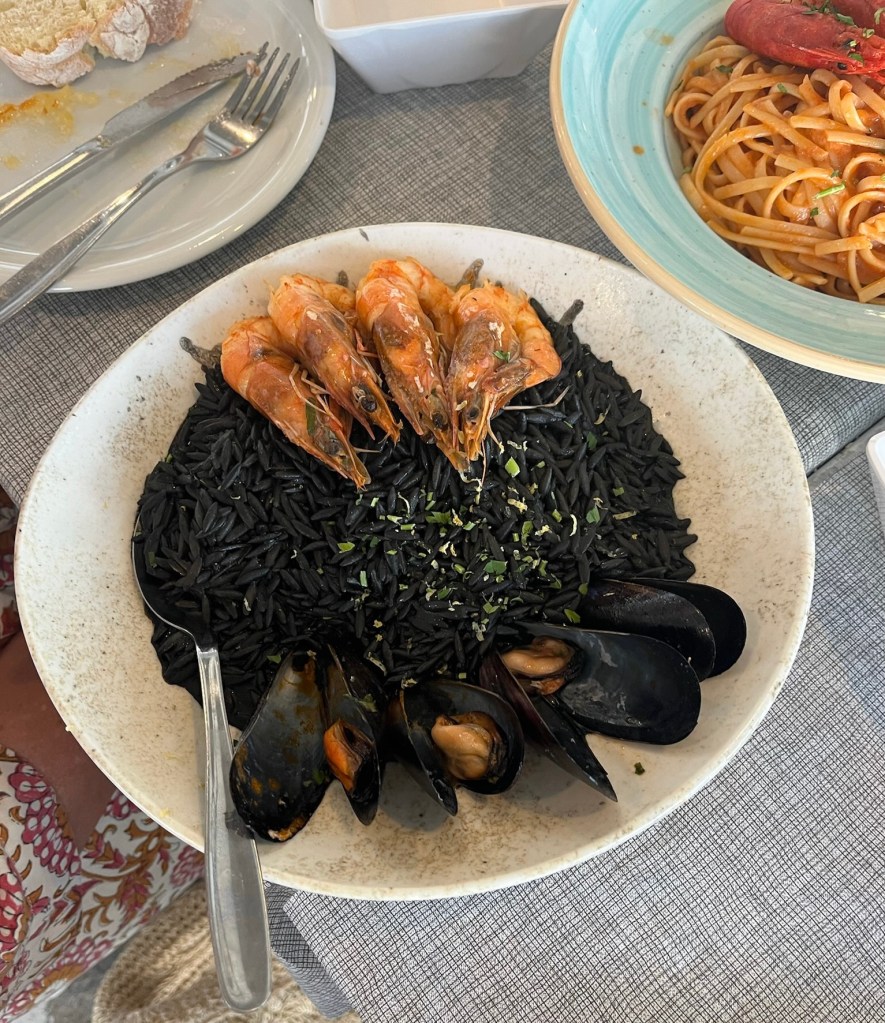
Orzo with cuttlefish ink.

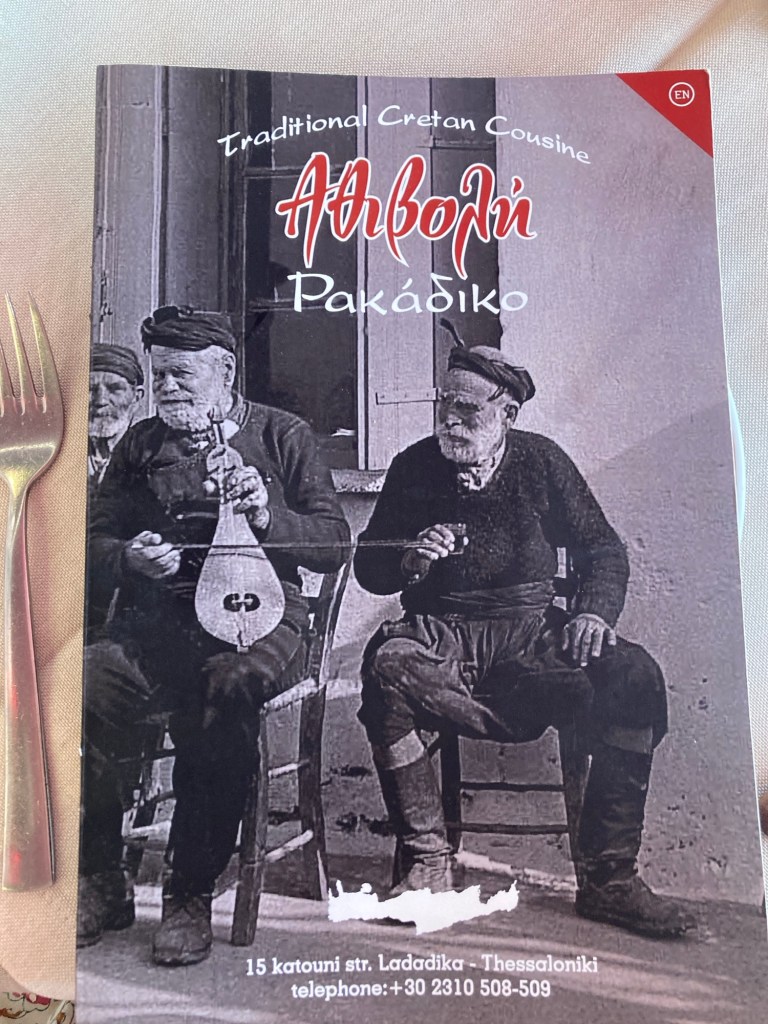
Today I met up with a Greek friend I knew from my parish in California, when she lived there for several years, and she was typically eager to feed me something I might not have tried in the last two weeks. So she took me to a Cretan restaurant.

I guess I shouldn’t have been surprised that the people of Crete have their special ways with the typical ingredients of the Mediterranean.

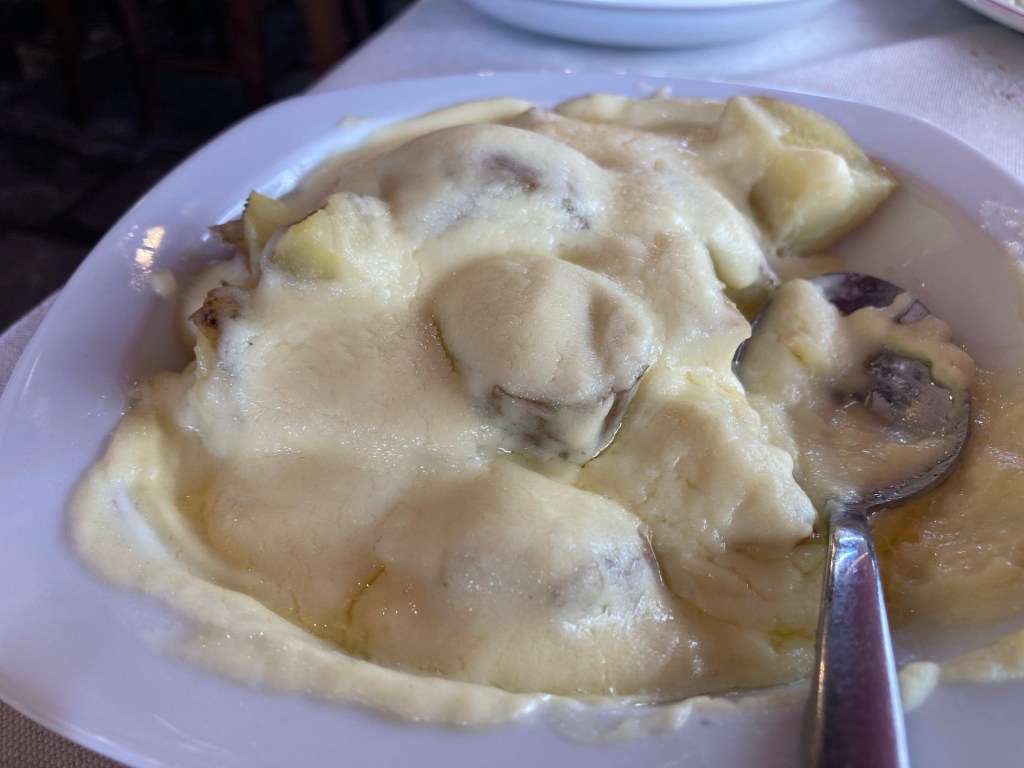
Some of the dishes I tried were: Potatoes With Goat Butter; Fennel Pie; and Rooster Baked in Wine, Served on Cretan Pasta.

Potatoes with Goat Butter

Almost always the platters of each dish are enough to serve 2-4 people, so it’s wise to agree with one’s friends on what you all like, so you can share. But so far, my dining companions are absolutely unconcerned about there being too much food on the table. Being a proper host almost requires it.

It’s a good thing I’m doing so much walking 😀