I’ve returned from my short road trip, to the land of my childhood. I stayed with my sister two nights, and then switched to my brother’s place for two nights, which is the very house we all lived in for years, years that went by in a flash. I went away to college when I was eighteen and never lived at home again. Even though my brother has changed a lot of things, the “envelope” of the house our father built remains the same, and the giant oak tree still towers over the back yard.
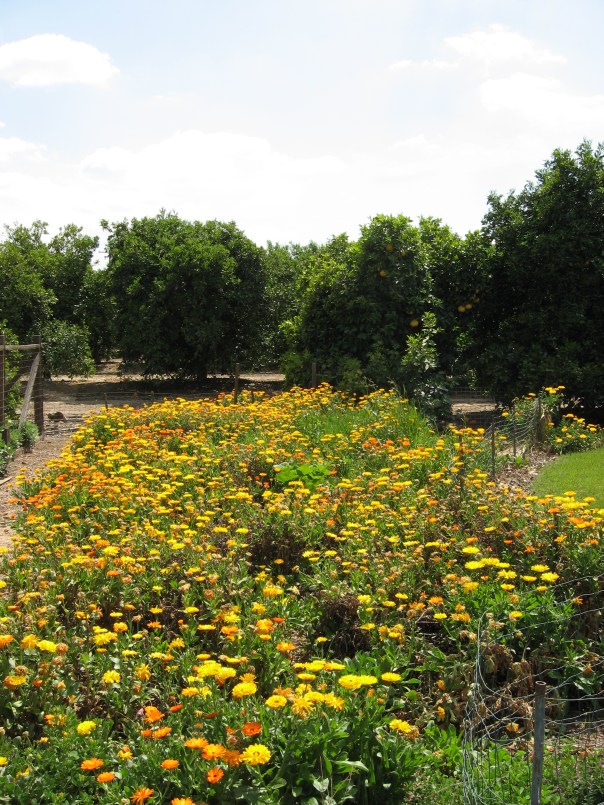
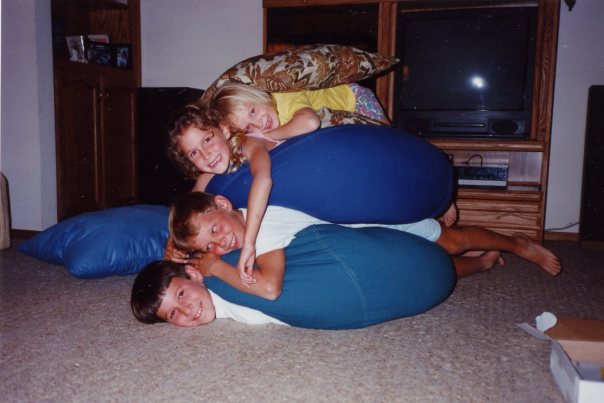
It also has been pruned recently, its canopy made much more compact, and it looks great. I wandered around the property taking in everything, but I forgot to go back with my phone later to take pictures. I was too busy focusing on the people, my people, so I have found some older images of the countryside and people that I visited, to illustrate my musings.

The day before I started out on this journey, I was glad to feel the leavinghomesickness depart and be replaced with happy anticipation at the meetings I would soon have. Just being with these dear ones and also talking about the experiences we’ve shared over the decades has filled me to the brim with thoughts and feelings I don’t think I will be able to sort out.
Nostalgia is a “sentimental longing for the past,” so it’s not that I’m feeling, but just plain wonderment at all the days and years of my life so far. I would not go back in time, and I know those times were not ideal, but looking back I am amazed at how wholesome they were. I was blessed to live through them with several people who remain, and still care about me, which is all a great gift.
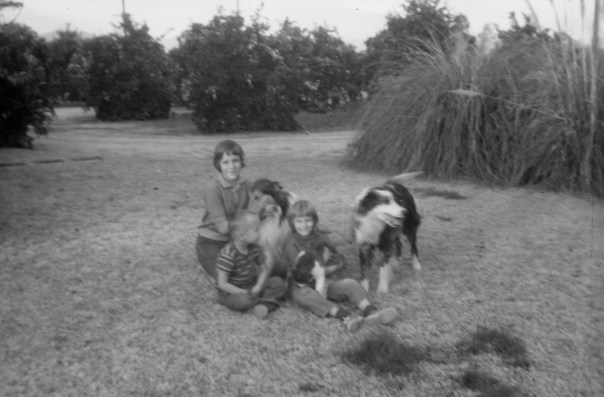
Over the course of four days, I had long visits and conversations with twenty people, counting the six little children who are my nieces and nephews; four of those children I hadn’t met before. I saw both of my sisters and my brother, and their spouses, and children’s families. Various of us told stories that others of us had never heard, from the distant past or from relatively recently.
I had lunches with three friends, one of whom I’ve known since first grade, and two since about eighth grade; between bites we fell into telling anecdotes about each other’s mothers, may God bless their memory!

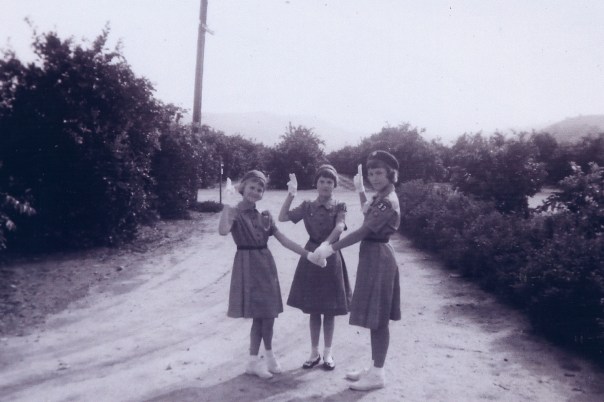
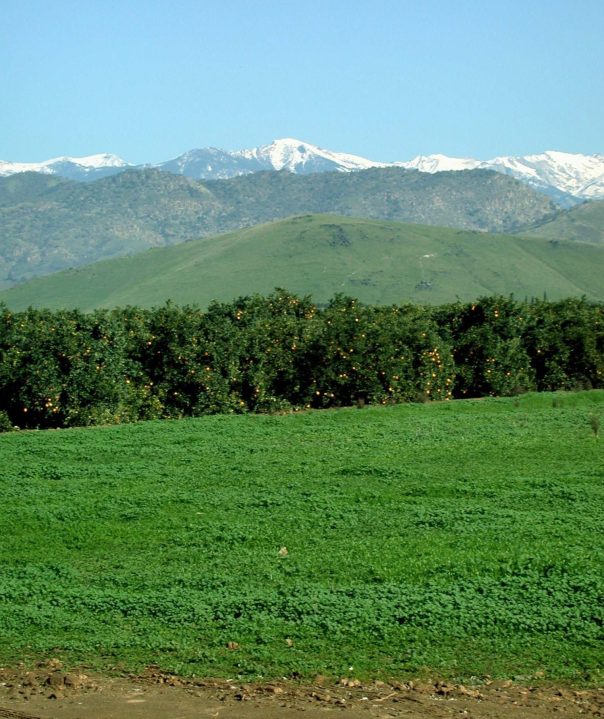
As I drove back and forth through the orange groves between town and country, I restrained myself from stopping as often as I’d have liked to, to take pictures of the hills and the orange trees. It had just rained, and the mountain peaks were dusted with snow, but the hills are still showing golden and not green. The picture below was taken by my sister Nancy some years ago, later in the season.
When rain clouds are gathering and precipitating and rearranging themselves all over again, it is like watching a huge theater screen from my private box (my car), as I’m driving down the interstate.
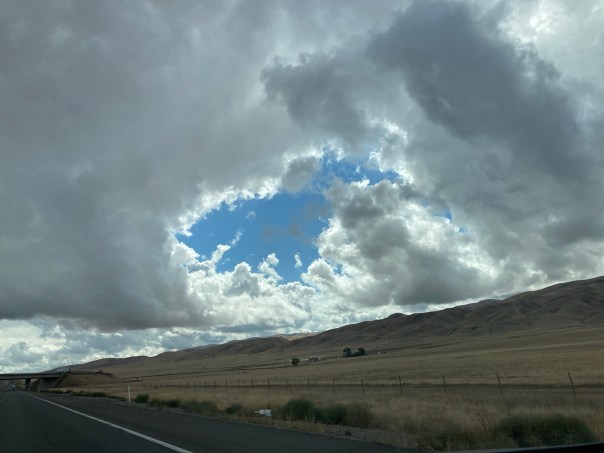
This is exactly what was happening on Tuesday, and I did take pictures of that show.

I was thrilled to see cotton on the plants in the wide fields, and I pulled over to look more closely. But I couldn’t get a good view, because mud:
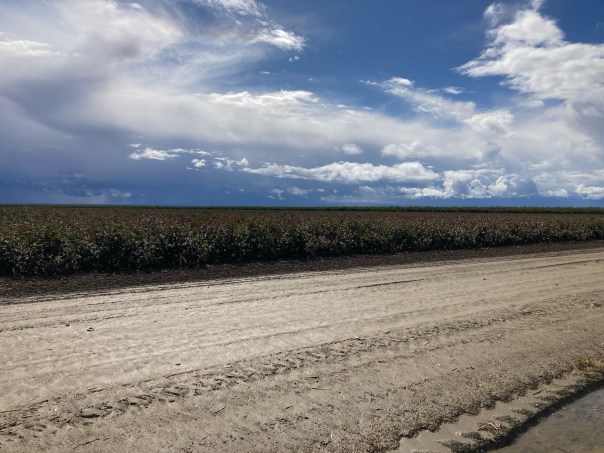
So I went along and along, and saw a rainbow pancake of light on the northern horizon, a very slim break in the clouds way beyond a field of melons.

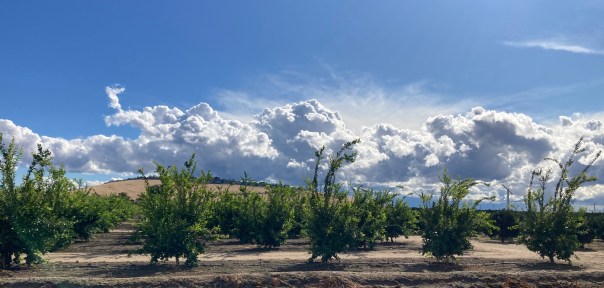
By the time I got to Nancy’s, the storm was abating,
and the dust had been washed off of all the trees.
So there, I’ve put the beginning at the end of my tale. But don’t you think it’s hard, not to get the times mixed up when one makes a trip to the past? In many ways it is still present –definitely all these people I saw still are present — and may even be future. I feel the need of a pertinent quote… and the one that pops into my mind is:
The past is not what it was.
-G.K. Chesterton