I guess I’ve had enough time and thinking power this week to read and ponder, but my activities didn’t result in anything of my own to posit or report, so I’ll just pass on some recent gleanings.
Women Priests? I love it when a reviewer is bold enough to say “This book is rubbish.” Honesty and confidence! Although, if that’s all she can say, she won’t get a hearing; I want to hear reasons for her belief. I just read this blog post titled “Merlin Stone’s book is rubbish”, and though I had never heard the author’s name before I immediately wanted to read that article.
 It’s a brief review of When God Was a Woman, which the blogger first had to read in seminary years ago. She writes, “There is neither historical nor anthropological support for her thesis that the Hebrews suppressed goddess worship. She tries to prove that the Canaanites had a matriarchial and matrilineal structure. She is wrong on both counts.” Go to the blog Just Genesis to read the supporting details. The writer always has lots of fascinating historical and archeological knowledge to pass on.
Pies, pies, pies... Three women collaborated on a book, which as soon as I read about it I had to have sent as a birthday gift for my granddaughter. It may be a bit early for her, but I like to encourage little girls to start taking a creative role in the kitchen and to look to real grownups for inspiration.
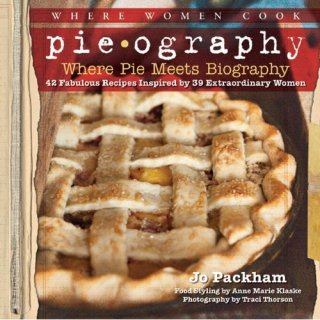 The book is Pieography, written by Jo Packham, Food Styling by Anne Marie Klaske, Photography by Traci Thorson. All of these women have blogs; Jo and Traci feature photos of some pies, but I think you have to get the book if you want the recipes and stories.
I haven’t seen the book yet, but I’ve enjoyed Anne Marie’s blog in particular. The clean and elegant style is nice to surf around in and see snippets of the Klaske Family’s farm life. On Thursdays you can get inspired to bake pies!
Death of the Old Man: Father Stephen Freeman shared a link to his daughter’s blog, on St. John of the Cross and the loss of identity, or the Dark Night of the Soul, or the “death of the old man.” Actually the subtitle of the post is “The Loss and Discovery of our Identity in God” (italics mine), so it ends on a very positive note, to be sure.
She writes, “If we had always thought of the death of our old man as purely symbolic, it may come as something of a shock to think of real pain being involved. But when our turn inevitably comes to go through pain or tragedy, then we may take comfort in knowing that many have travelled down this path before us.”
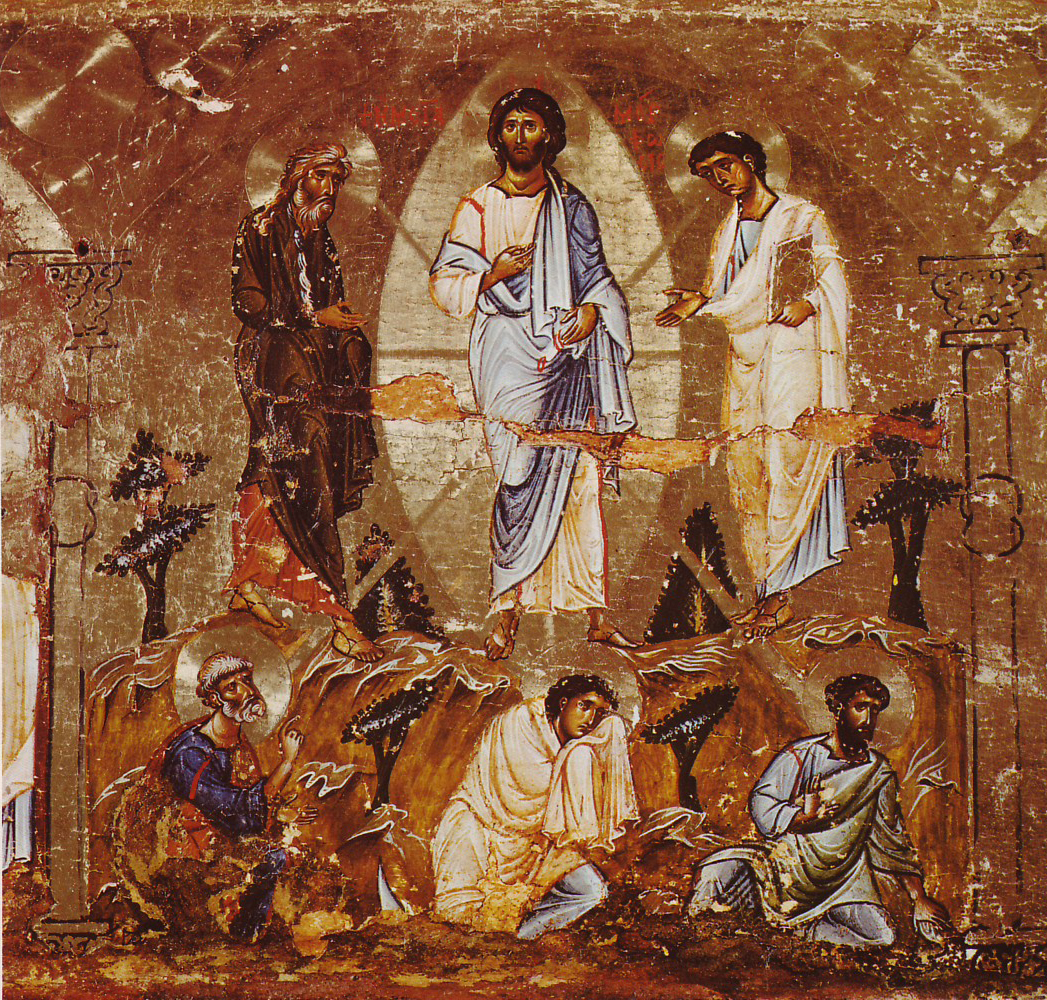
Icons and Images: A book on the history of the use and theology of images in Jewish culture and in the church is the subject of this blog post on Orthodox-Reformed Bridge. Early Christian Attitudes Toward Images is written by Stephen Bigham, and a series of four blog posts is planned to review the book. This structure follows the organization of the book:
The book is divided into four chapters. Chapter 1 deals with the “hostility theory” which holds that the early Christians were hostile toward images. Chapter 2 deals with early Jewish attitudes toward images. Chapter 3 deals with the early Christian attitudes towards images, that is, the pre-Constantinian period. Chapter 4 deals with Eusebius of Caesarea who witnessed the beginning of Constantinian era.
The author is an Orthodox priest, and the blogger Robert Arakaki was Reformed in his theology before converting to Orthodoxy. I’m looking forward to reading all the reviews of what looks to be a thorough treatment of the subject.
Beethoven in Space: Lastly, here’s a music video featuring Hubble images and beautiful music. A blessed weekend to you all!



 Gladsome Lights