Category Archives: mountains

Lakes, Waterfalls, and Sky

Eagle Creek

Before I finish the Maui Diary, I have to tell about our outing to Lake Tahoe last week. We were with Mr. and Mrs. C at their cabin, which is a true and rustic cabin with thin walls, so we wore our wool socks and flannel pajamas during the chilly mornings and nights.

Emerald Bay

But midday, on the trail to Eagle Lake, the temperature climbed to about 70° and the sun was hot. The warm air brought out the nutty scent of the cedars and other trees of the forest.

At our destination we ladies stepped into the melted snow of the little lake that is about a mile’s hike above Emerald Bay. Patches of snow were still hugging the shore of the lake all around, and the willows were barely in bud.

Eagle Creek streams out of the lake and flows over falls on its way into the bay. From a lower vantage point we looked out at the little island, the only island in the whole lake. The squarish thing at the very top is the shell of a tea house that was built there in the 1920’s. I’ve never been out to that island or on the lake in a boat.

Fannette Island

When our husbands went to the Nevada side of the lake one day for guy activities, we wives shopped for food and other supplies. Mrs. C found some blue champagne glasses at a thrift store, from which we drank wine the next evening out in the back yard. I sat in a comfy camp chair that laid my head back such that this was my view, of a pine-rimmed sky.

The mini-vacation was soon at an end, and Mr. Glad and I had to say good-bye to our friends and drive back down to the flatlands. But not so fast — we stopped to take another short hike to a place where we might get a good view of Horsetail Falls off Highway 50.

Picture of pussypaws (and lupine) by Pippin, I think

There hadn’t been wildflowers on our walk to Eagle Lake, so I didn’t feel so bad that day about not bringing my camera along. This day I left it in the car again ! and here, where we lost the trail that wandered over vast granite slabs, blooming pussypaws and purplish succulents were growing out of crevices, and red-orange pillows of moss made a splash in the shade of a downed tree. This picture is from another place and time, but I didn’t want to leave anyone wondering what the flower looks like.

We did get a good view of the falls, but my favorite part of this walk was the fields of rock, which I had missed since last summer. It was a satisfying finish to a springtime getaway.

web photo

California Mountains – How Not to Enjoy a Hike


If it weren’t for our friend Myriah, this hike would have been a huge disappointment. As it turned out, it was a shared adventure that made me thankful for my friend and for my husband.

Just thinking about the hike to Feather Falls makes me very tired, and that makes me want to write only a short list of ways Not to Enjoy a Hike. Because I did not enjoy the hike itself — only the companions. Sad to say, the short list turned into a pretty extensive one.

How Not to Enjoy a Hike

1. Pick a trail that has its descent on the way in, so that even during the first few easy miles, when you are at your freshest, you can be thinking, “What trail goes down, must rise again,” making it possible to imagine the misery you will know later when you have to hike steeply uphill the last four or five miles back to your car. Even a vague dread of the near future can ruin the present pretty effectively.

Red Ribbons – Clarkia concinna

2. Do it in July and the weather will be as hot as possible. Don’t bring too much water; you want to get dehydrated.

3. Plan to take your baking-dry and long hike just a couple of days after spending time in high places where you got used to singing rivulets of snowmelt all around you. This will encourage you to compare your lower-elevation hike unfavorably with recent ones, to keep your attitude complainy.

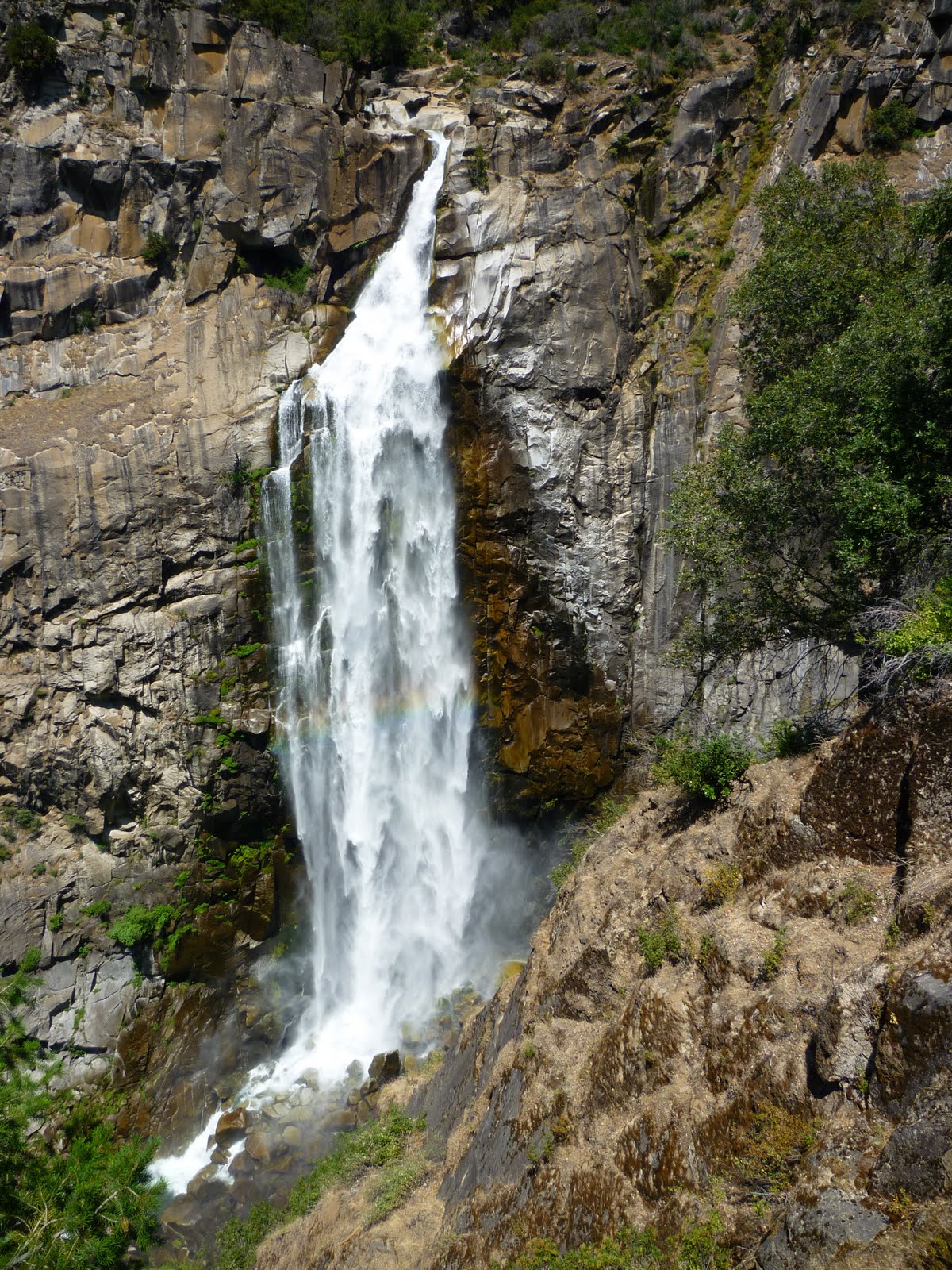
4. Hike on a trail that claims to takes you to a tall waterfall (the 2nd highest in California), so that when you are dripping sweat and collecting dust you can look forward to the cool mist that will revive you.

This way, when you discover that the end of the trail is at an overlook so far from the water you think it’s a mirage, you will have the maximum letdown.

It helps, if while looking at the waterfall with your tongue hanging out, you have to sit down in the dirt to avoid sunburn and the jostling of other hikers.

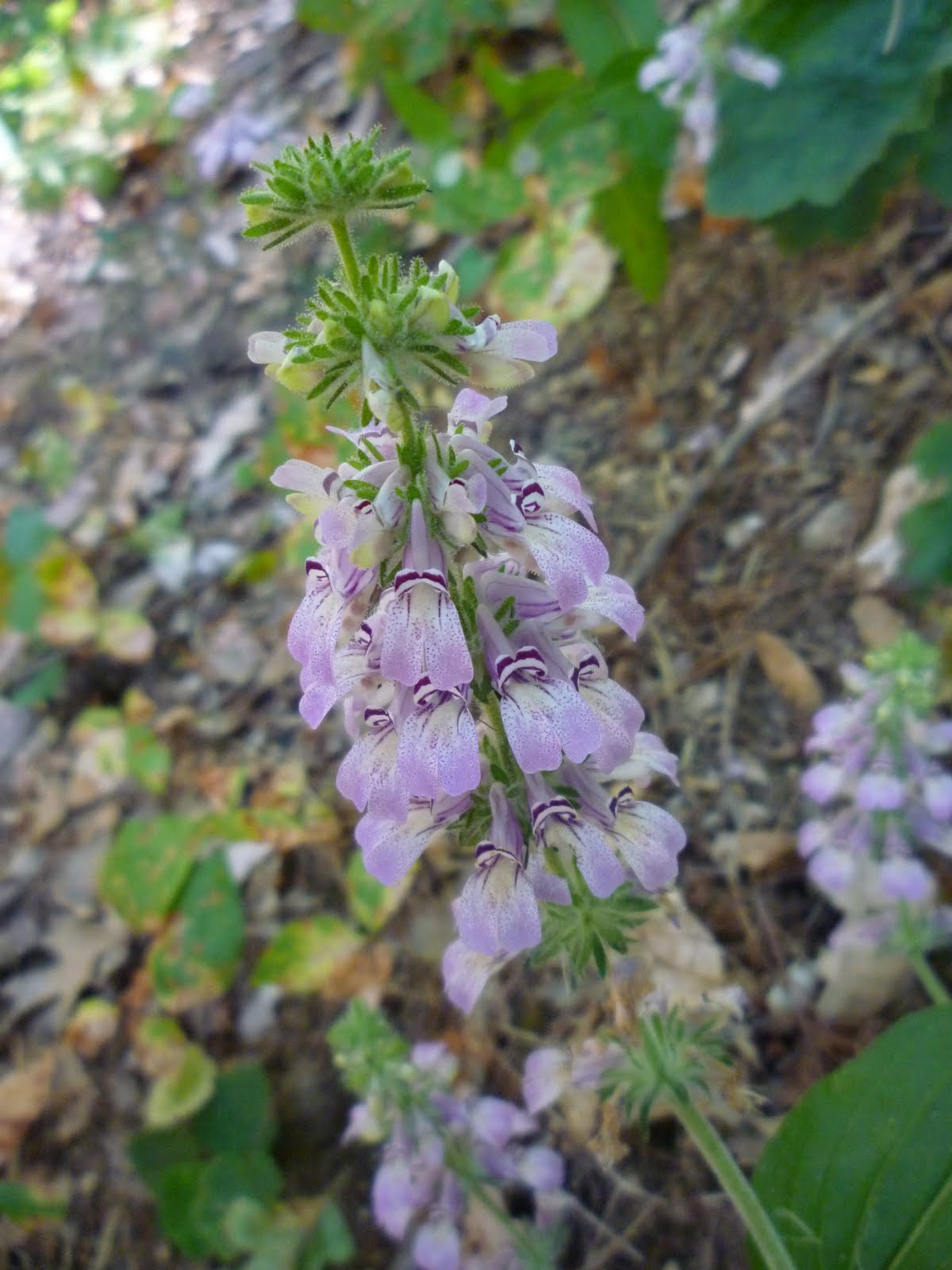
Tincture Plant – Collinsia Tinctoria

5. If there is a choice of a routes, allow only enough time for a long-legged 20-year-old to hike the shorter of the two. This way, when you get to the trailhead and find that the short route is closed, your heart can sink right away.

6. Be sure to have a dinner engagement to be late for, or some other reason to hurry through your lunch and doggedly hike your legs off, with your heart doing double-time, on that last long ascent.

Now, the things that kept me from being a total ingrate:

1. The loss of two pounds in an afternoon (even if it was 80% water).

2. Flowers to take pictures of, many conveniently in the shade of the trees, and few enough so as not to be overwhelming.

3. My dear and faithful companions, who joked with me and gave me water and snacks, and carried the knapsack.

This outing was a sort of add-on to our Sierra Nevada summer vacation. We came home for a night and then drove north to pick up Myriah before going on to our trailhead in the foothills of the northern Sierras, in the Plumas National Forest.

While trudging up those last few miles back to the car we talked about how we’d like to hike more together in the future, say, in April or October. I know that any hike in the foothills would be more pleasant during those months, but I’ll vote for going anywhere but Feather Falls.

Monkeyflower – Mimulus

California Mountains – Tiny Finds and Large Views

My husband called to me as I was lagging behind on the loop trail, “Why do you keep looking at the ground?! Look up at the mountains, and the trees!”

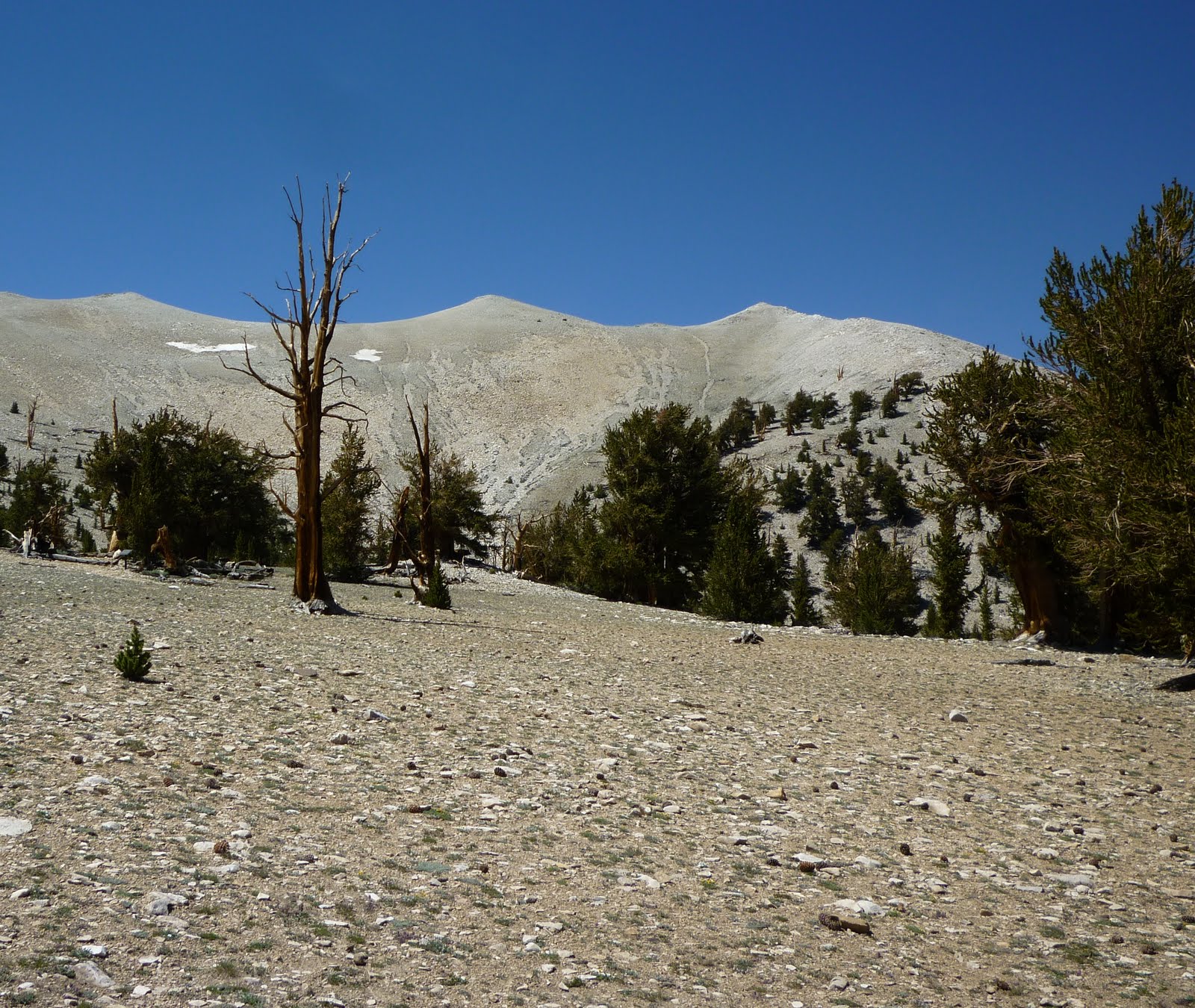
We were in the Patriarch Grove of the Bristlecone Pines, at 11,000 feet, in the White Mountains, with dolomite rock as far as the eye could see, as in the photo above. One might well wonder why I would look down at it.

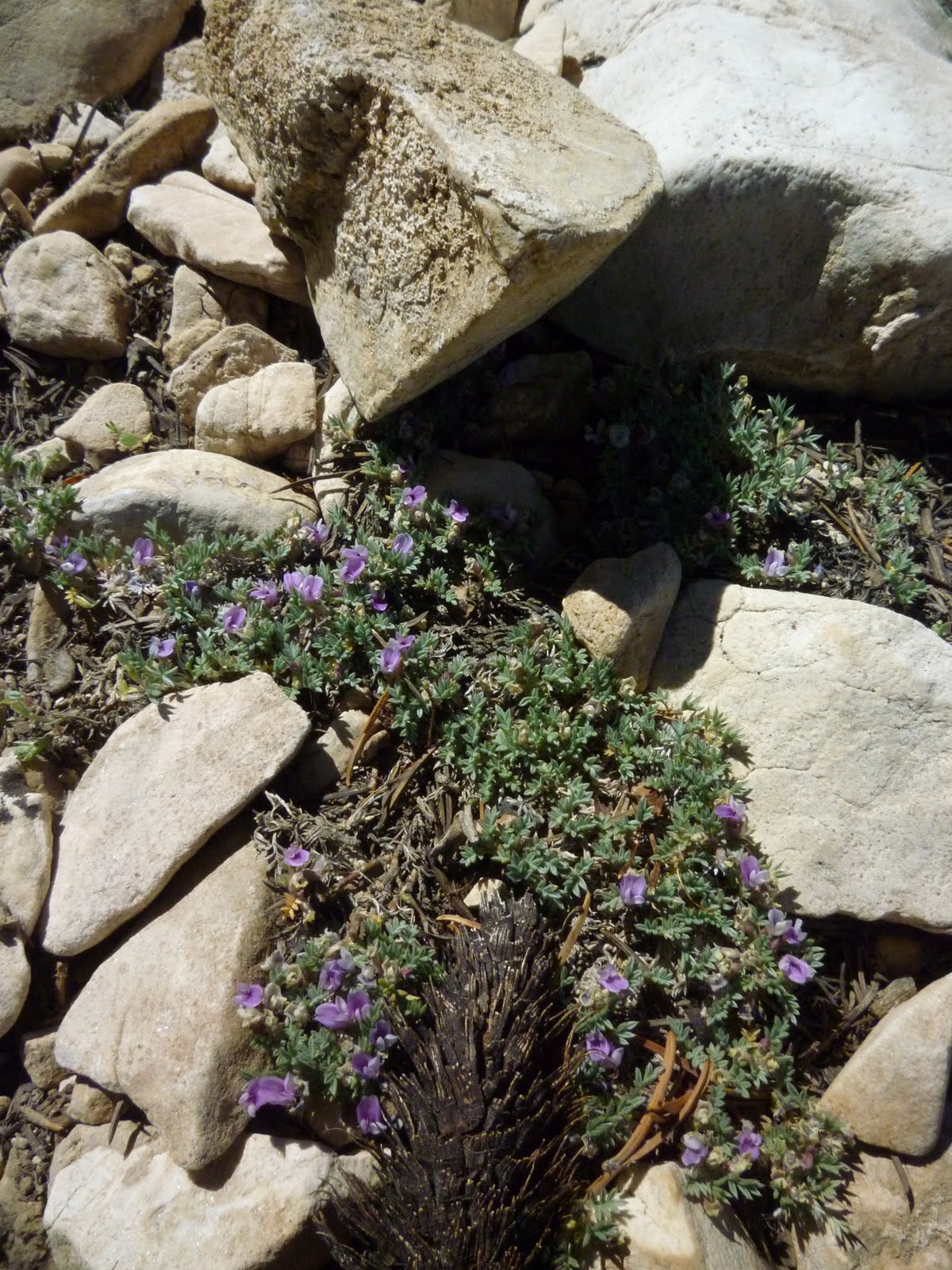
But if you click on that photo to enlarge it you will see that there are vague greenish splotches all over the place. Those are clumps of wildflowers, hugging the ground in mats barely taller than my living room carpet.

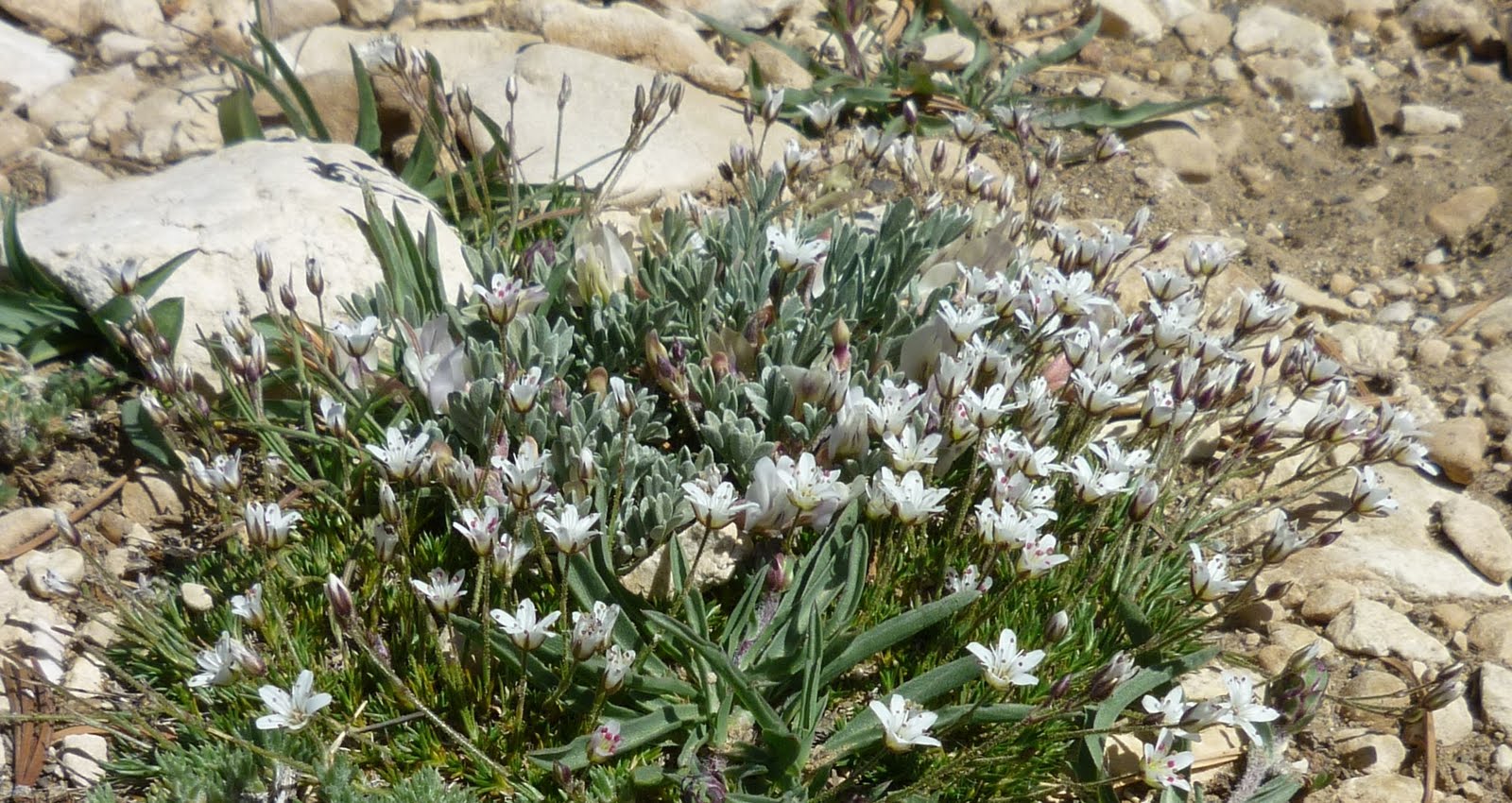
I was finding whole worlds of flower gardens tucked under rocks, where several species of the most diminutive blooms would pack themselves together in a jumble. I noticed them, but the sun was so bright, and they were so little, that I couldn’t actually see them very well, or know if my photo was decent.

And I didn’t want to make us too late for dinner in Lee Vining that night, a few hours’ drive down the mountain and up the highway. But now I wish I had taken more pictures.

Lewisia, I think…

I’m home, and the photos are uploaded to the computer where I can zoom in on them and reveal more details, but usually I find that they are overexposed and/or a bit blurry from the wind, and identification is hard. The plants seem to be stunted variations of more common forms, likely resulting from living where there is so much sun and wind, but little warmth and moisture. In this high place the temperature rarely gets above 70° even in midsummer, and frost can happen any night of the year.

milkvetch and an old cone

The purple milkvetch pictured (in the Astragalus family), for example, is a shy and minimalist version of other forms that grow above treeline; technically, we are not above treeline or alpine here, because the Bristlecones are of course trees, but all the wildflowers in this area are listed in the Alpine section of my guide, and the conditions are similar to those in the Sierras above 11, 500 feet.

Pippin sent me to a link from an area in Utah where more Bristlecones grow, and to the Table Cliff Milkvetch that looks pretty similar. But from my poor photo, I’m not confident to claim a perfect match.

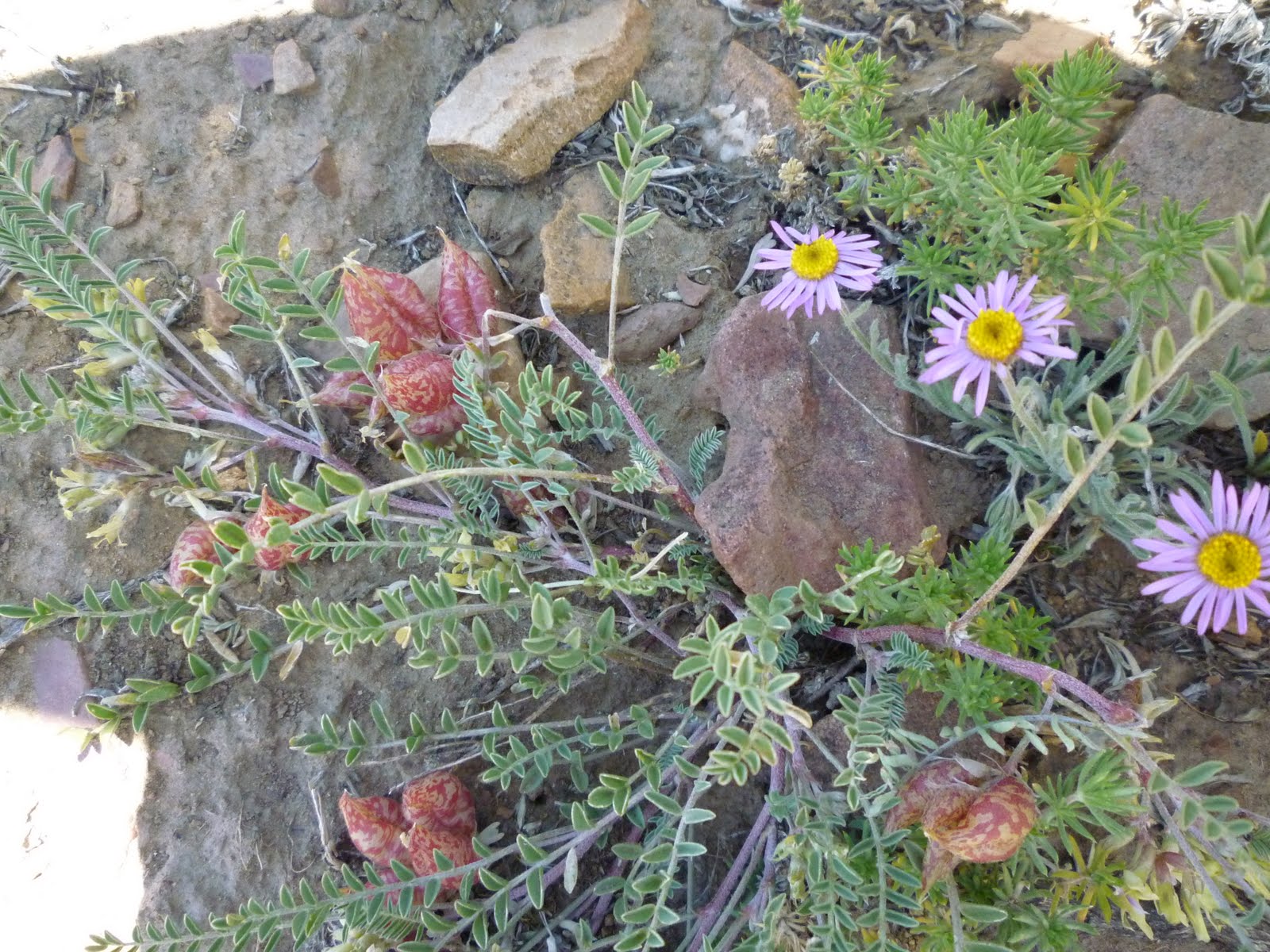
Maybe it’s even a version of the Whitney’s Locoweed (Astragalus whitneyi) I saw in the lower grove. That one (below) was past flowering and was showing its crazily colorful pods, and this one 1,000 feet higher doesn’t have any pods yet.

Whitney’s Locoweed and Dwarf Alpine Daisy

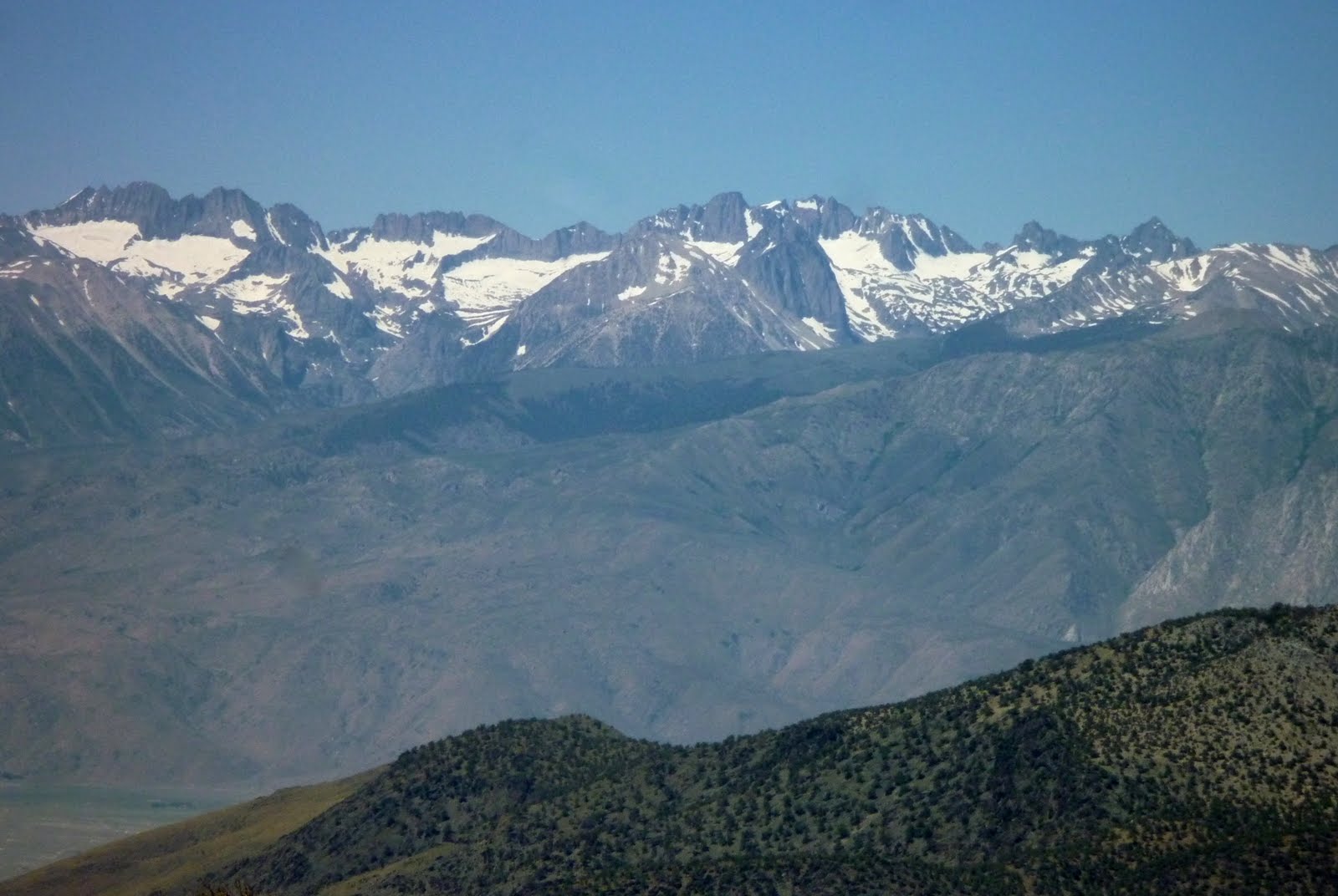
Mr. Glad was trying to figure out which White Mountain peaks were which; on the way up to the Bristlecones we’d done a lot of that kind of thing when we stopped at Sierra View Point. Here is a movie I found online, showing what we saw across the Owens Valley: the eastern escarpment of the Sierra Nevada. We had been over there somewhere as little hiker specks just the day before.

The starting image of the movie looks similar to the still shot Mr. G took, but not quite as nice, so I posted his version at the bottom of this post.

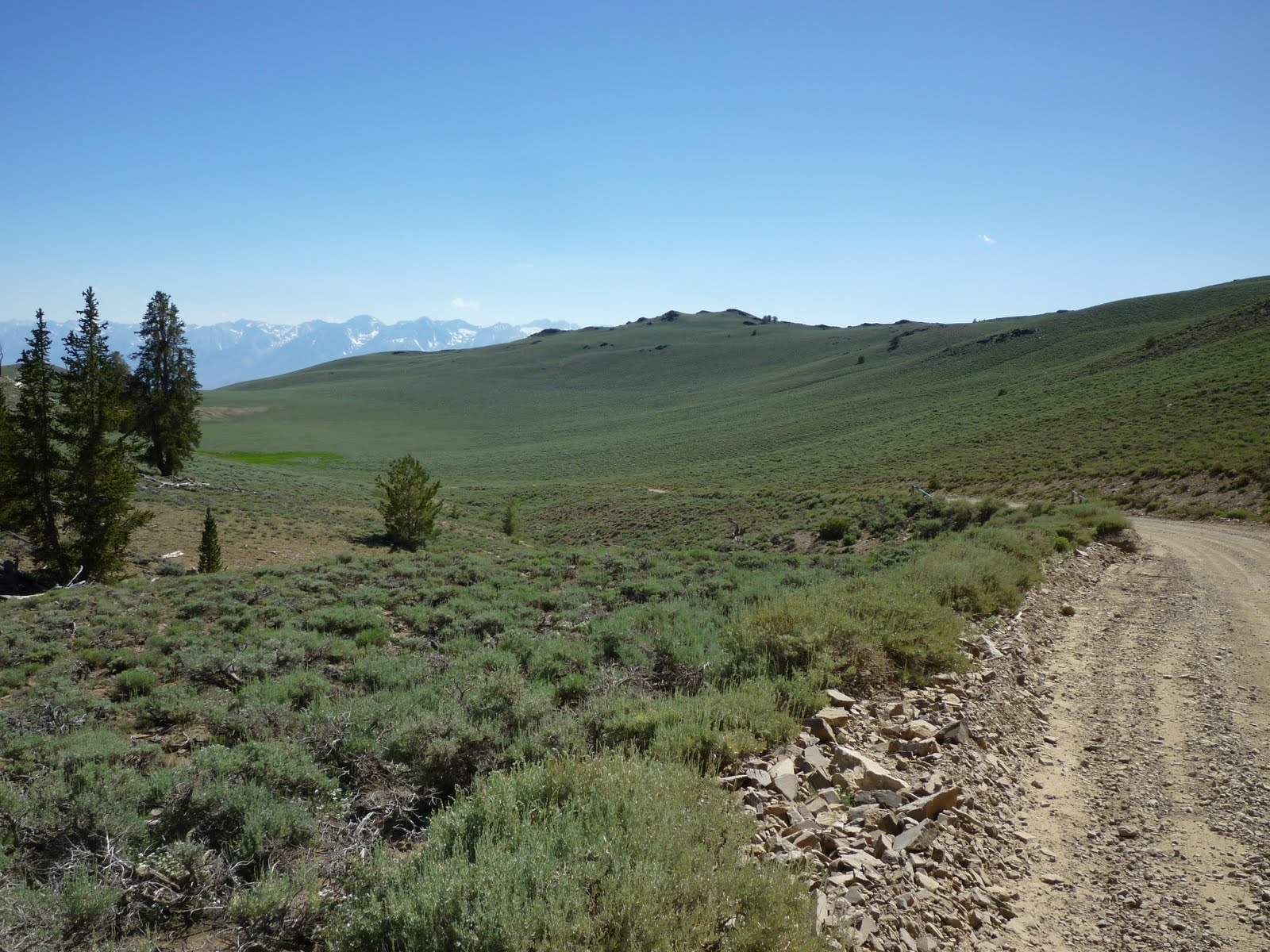
Another view that was a quiet and calming feast for the eyes was of these sagebrush-covered slopes, as we traveled that gravel road. The total effect was so much more green and lively-looking than what we saw going west up from Bishop. Maybe it’s a different species of sagebrush?

After this day with the Bristlecones and their tiny ground-hugging companions, we went back over the mountains and then north for the last hilly adventure of our July vacation.

View of Sierras from White Mountains

California Mountains – Gnarly Patriarchs

(6th in the “California Mountains” diary of our July 2011 vacation)

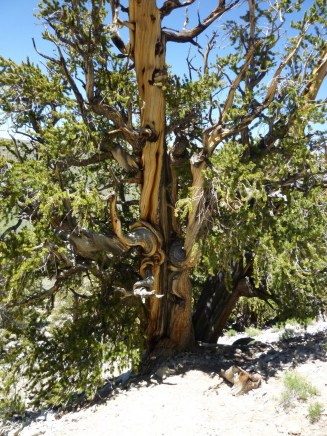
If the Bristlecone Pines were humans, I’m pretty sure they would be ascetic saints like Father Seraphim of Sarov or Mary of Egypt, people who lived in the wilderness and had “meat to eat that we know not of.”
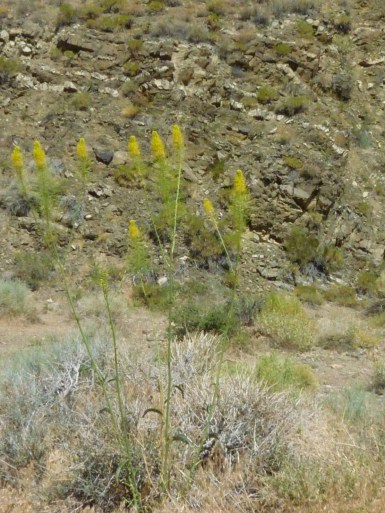
Stanleya pinnata; Desert Plume

It was to visit these inspiring creatures that Mr. Glad and I drove up into the White Mountains that rise up east of the Sierra Nevada on the other side of the Owens Valley. The climbing part was a repeat of the previous day’s experience of a quick uphill, and this time it took just 24 miles for us to traverse zones of desert and sagebrush steppe, and come to a land where alpine wildflowers live stunted lives.

Mormon Tea

On the way up through the forbiddingly dry and rugged desert region, waving yellow plumes were the first vegetation to get my attention. Now I know where Dr. Seuss got the images for some of his crazy drawings.
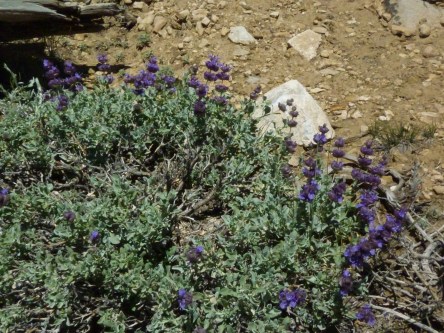
Purple Sage; Salvia dorri

Another drought-tolerant plant we ran across is called Mormon Tea, though it has other common names that aren’t as folksy. It’s a member of the Ephedra family of plants, perhaps milder — and safer? — than the Chinese herb. I didn’t collect any.

The uglier plants passed from view as we entered the steppe zone, and we began to get our eye-fill of gorgeous purple sage, the very flower referred to in the five movie versions of Zane Grey’s novel Riders of the Purple Sage; I haven’t seen the the movies or read the book, but just now learned that there is a Mormon element to that story. This area is geographically part of the Great Basin Desert that covers much of the state of Nevada, and of which Utah’s Great Salt Lake Desert is a part, so the Mormon connection to the natural history makes sense.

Bristlecone Pines grow in other areas of the Great Basin, too, and maybe on less steep roads. The ones in California aren’t on the way to anywhere, but they are well worth the worry of hearing your car’s engine groan a bit on the sharp inclines.

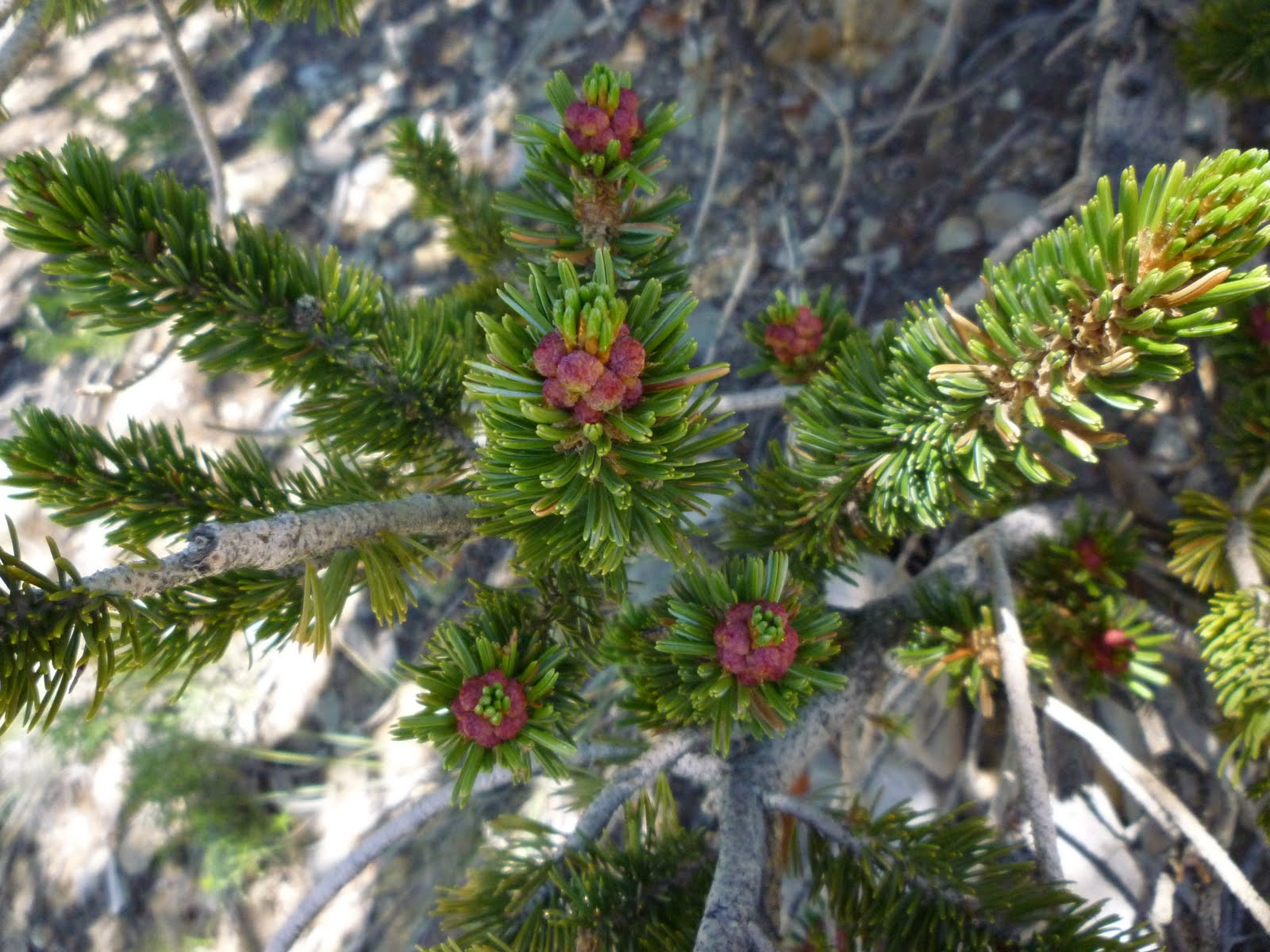
The longevity of these trees is the primary fact one learns right off. Except for cloning plants, the Bristlecones are the oldest living plants. The current oldest one is known to be 4,788 years old, and as many as 19 of them are over 4,000 years old.

Not only are they of great age, but they keep their vitality. While other trees show changes in their DNA or produce fewer cones, the Bristlecones are just as healthy and fruitful at 4,000 years as they were at 1,000.

They have ways of dealing with the severe climate, and with seasons that are harder than usual. How to determine what is a particularly hard year in their habitat seems to me difficult, seeing how they always have to do with very little water, and with freezing temperatures much of the year, and soil that is poor. Some of the oldest trees grow in “soil” that is a form of limestone called dolomite, shallow and infertile white rock. The sun is relentless in summer, and the winds are often brutal.
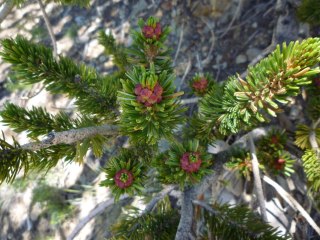
Clearly their youth is renewed not by superfoods and a friendly environment but by a meager diet and suffering — and yes, by their genetic predisposition to “behaviors” that conserve nutrients and strength. For example, instead of dropping needles and replacing them every year or two, they hold their needles for up to 45 years, and it requires less energy to renew the old ones than to grow completely new ones.

If they suffer unusually severe drought or stress, they put some limbs into dormancy so that they can keep producing the maximum number of cones. If we compare them to humans, they are fertile even longer than the biblical patriarchs, or our mother in the faith, Sarah.

The white rock actually reflects some of the sun so that more moisture is retained in the soil, and the trees tend to live relatively far apart from each other in their forests, so they don’t have to compete for light and food. In this way they are the opposite of redwood trees, which need the moisture that collects between trees in the grove if they are going to be their healthiest.

These trees make me think of Bible verses about youth being renewed, but also the ones about hoary heads and the dignity of age. The old and weather-worn patriarchs have a beauty of a sort we don’t see in young upstarts or in overfed and coddled 20-somethings. Even in death the wood is so dense that it remains for centuries and doesn’t decay, much as some saints’ bodies remain incorrupt.

I so love the Bristlecones! I can’t figure out all that they are telling me, but I know it’s something about God and the Christian life. Maybe if I grow really old I will understand more.

The main grove is at 10,000 ft. elevation. After walking the loop trail there we decided to get in the car again and crunch over gravel up another 1,000 feet in a cloud of dust to the Patriarch Grove. It’s only twelve miles, but takes at least 45 minutes. The next installment of this series will tell what I saw there.