Christ is Born! Glorify Him!
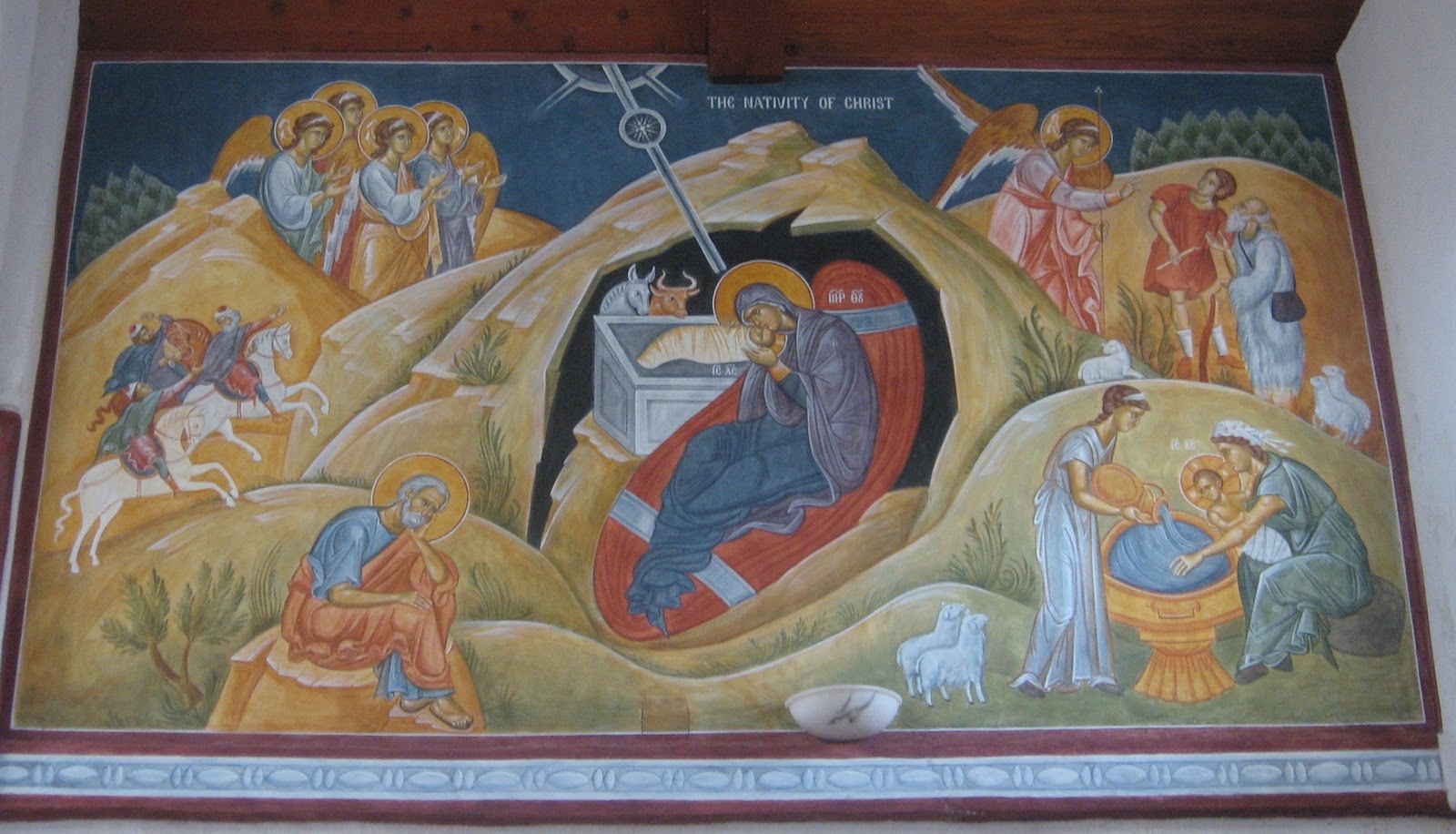
Seeing as how I was determined to bask restfully in the light of Christmas for another week or so, attending the local monastery for a midweek communion service seemed the perfect sort of activity. The Body and Blood of the Savior is the best food, one of the limitless Holy Mysteries God has given for our life and salvation.
At the monastery they are on the Old Calendar, so the Nativity Feast is still more than a week in the future. But our parish church, to which they are attached, is New Calendar, and we are all used to the differing dates for these feasts and commemorations. The nuns are happy to greet us general parish folk with “Christ is born!” even though they are waiting a bit longer to say it among themselves. And we are happy to step back thirteen days and be with them in the Lord who is timeless.
My godmother sent me an online Advent calendar, which I opened on December 24th or so. She said the Nativity is timeless. And I got that feeling during my visit among the mixed calendarists. As Father Stephen says here, “He is the Feast of Feasts,” and the substance of our faith, no matter what age we live in. I’m glad I happened to see Fr. Stephen’s blog before publishing my little report on the monastery visit, because he says so many things clearly that I barely grasp with my mind, but am experiencing in the Church.
Like this:
To speak of ourselves as living “in-between” [the Resurrection and the Second Coming] is to place history in the primary position, relegating the Kingdom of God to a lower status. It is the essence of secularism. The Kingdom of God is not denied – it is simply placed beyond our reach (as we are placed beyond its reach). The Kingdom, like God Himself, is reduced to an idea.
Living “in-between” is part of the loneliness and alienation of the modern Christian. Things are merely things, time is inexorable and impenetrable. There is an anxiety that accompanies all of this that is marked by doubt, argument and opinion. Faith is directed towards things past or things that have not yet happened.
….
In earlier postings on faith, I have noted that faith is more than an intellectual or volitional exercise. It is an actual participation (koinonia) with the object (or subject) of faith.
In the Eucharist we all were partaking of Him Who is our Faith, and were experiencing in Him the Nativity, the Cross, the Resurrection, the Second Coming — our whole salvation history — even as we know that at the level of earthly time, the Second Coming is still ahead. That is definitely a Mystery.
 After the service many of us pilgrims stayed for a lenten lunch. I remarked about some bright orange squash on the sideboard and the nuns told me how it volunteered itself in service to them last summer. Ordinarily they like to have a big garden, but not many young women live there and it is increasingly hard for the community to do the physical work; this year they didn’t get much planted, though they have plenty of space.
Behold, a squash plant sprouted and spread its vines vast and wide, bearing several giant fruits, which we agreed look like a cross between a Hubbard and a Butternut. For the meal they cooked part of one, and then split another open to send pieces home with several of us. I started this blog post mostly to tell about the amazing squash, but I got carried away as is common.
 Last week Kate made a wonderful Curried Butternut Squash Bisque the day after she flew in for the holidays. I might cook it again with this blessed squash — it was very tasty served plain — and if I do, I’ll post the recipe.
Christ is born!
The only thing I don’t like about the modern Christmas tree custom is paying a lot of money for the tree. If it weren’t for that, I’d want one in every room of the house. One time I did have two trees; I put a tiny one that my sister sent me in the kitchen and hung only bird and pine cone ornaments on it.
What follows about Christmas trees in Orthodox tradition comes from the St. Tikhon’s Seminary bulletin, I understand, but I read it on Svetlana’s blog. I added paragraphs to make it more readable online. The theology in this short article demonstrates how in Orthodox thinking and practice everything is related to everything else in God’s creation. Thank you, God, for Christmas trees!
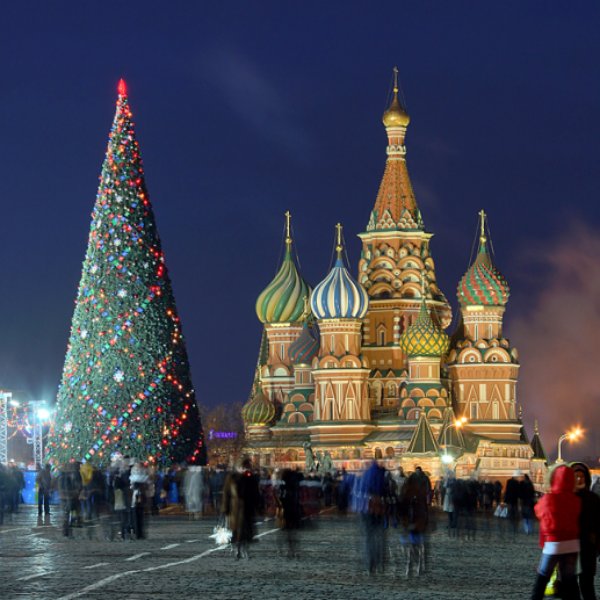
“I suspect that the custom of decorating a tree at Christmas time is not simply a custom which came to us from the West and which we should replace with other more Orthodox customs. To be sure, I have not gone into the history of the Christmas tree and where it originated, but I think that it is connected with the Christmas feast and its true meaning.
“First, it is not unrelated to the prophecy of the Prophet Isaiah: ‘There shall come forth a Rod from the stem of Jesse, and a Branch shall grow out of his roots’ (Is. 11:1). St. Cosmas the poet had this prophecy in mind when he wrote of Christ as the blossom which rose up out of the Virgin stem from the stump of Jesse. The root is Jesse, David’s father, the rod is King David, the flower which came from the root and the rod is Theotokos. And the fruit which came forth from the flower of the Panagia is Christ. Holy Scripture presents this wonderfully.
“Thus the Christmas tree can remind us of the genealogical tree of Christ as Man, the love of God, but also the successive purifications of the Forefathers of Christ. At the top is the star which is the God-Man (Theanthropos) Christ. Then, the Christmas tree reminds us of the tree of knowledge as well as the tree of life, but especially the latter. It underlines clearly the truth that Christ is the tree of life and that we cannot live or fulfill the purpose of our existence unless we taste of this tree, ‘the producer of life.’
“Christmas cannot be conceived without Holy Communion. And of course as for Holy Communion it is not possible to partake of deification in Christ without having conquered the devil when we found ourselves faced with temptation relative to the tree of the knowledge of good and evil, where our freedom is tried. We rejoice and celebrate, because ‘the tree of life blossomed from the Virgin in the cave.’”
Excerpt from: “The Feasts of the Lord: An Introduction to the 12 Feasts and Orthodox Christology” by Metropolitan of Nafpatkos Hierotheos Vlachos – November 1993 .
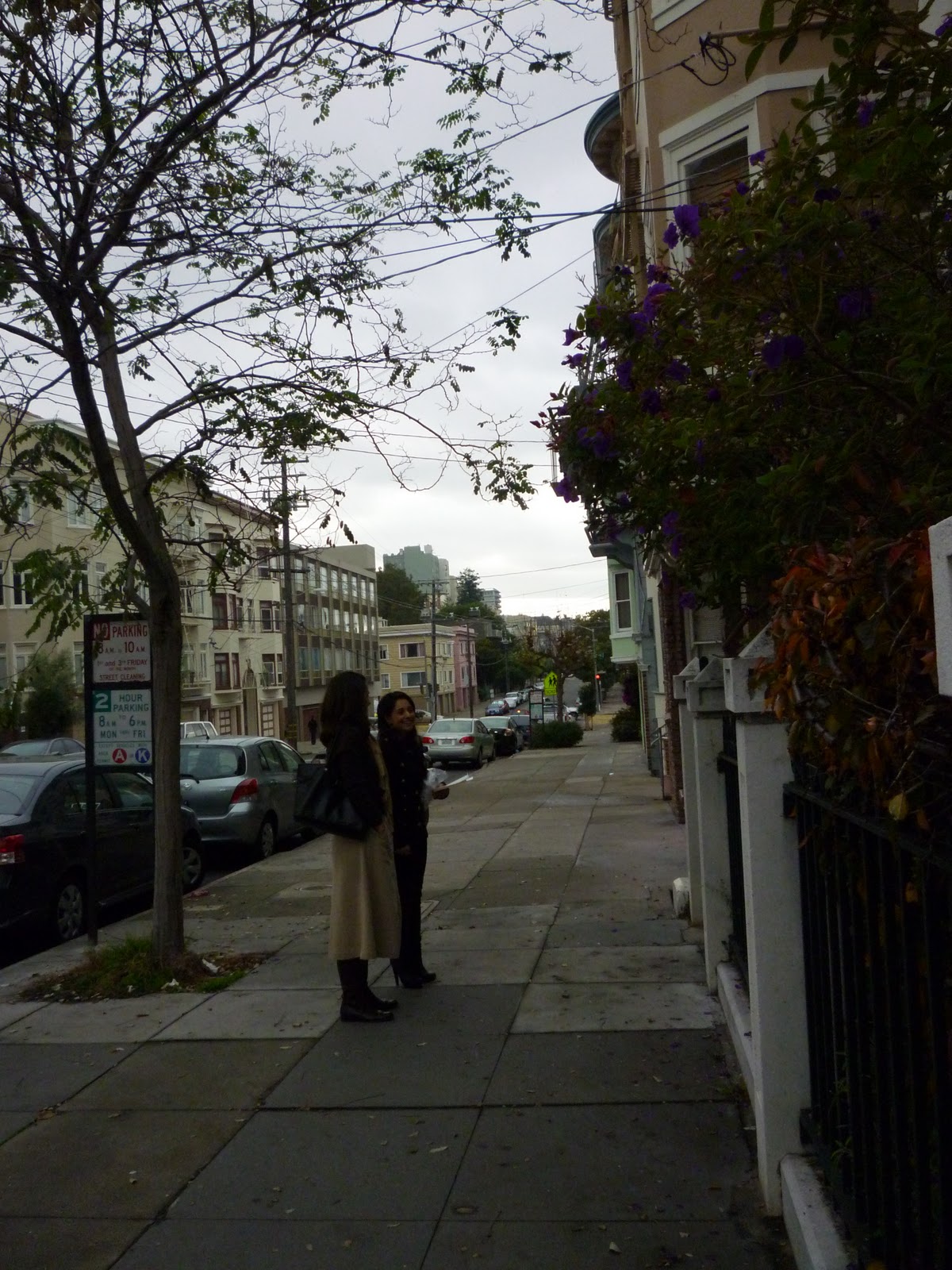
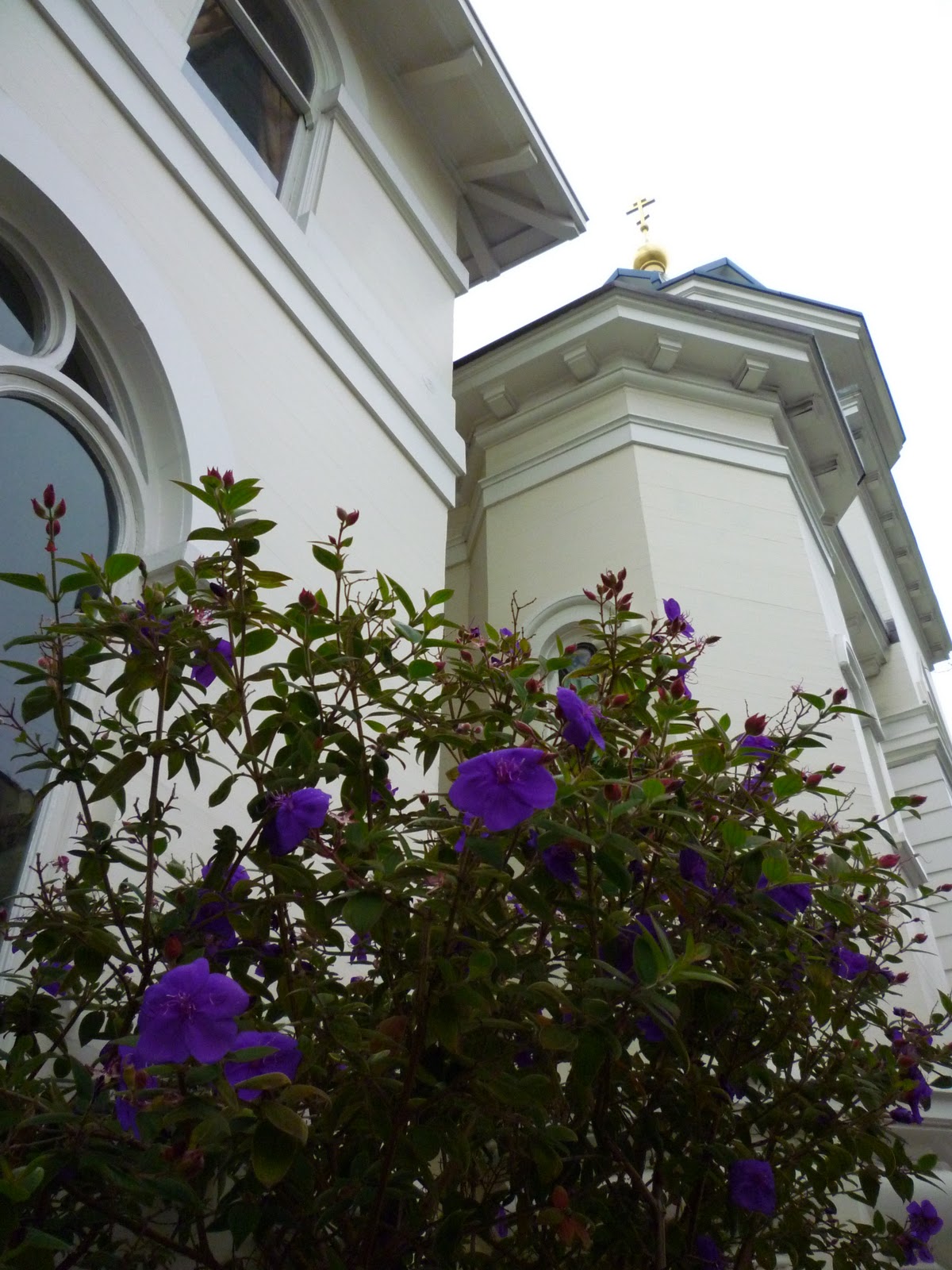
The skies were gray above, the asphalt and sidewalks dark and wet below, but colors jumped out at me as we were leaving Holy Trinity Cathedral in San Francisco this afternoon.
 Two of us had traveled to attend lectures by Father Alexander Golitzin on “The Advent of the Christ.” Father Alexander is Professor of Patristics at Marquette University, and the lectures were rich with references to ancient Judaic texts, little-known Persian Christians in the 4th Century, the Dead Sea Scrolls, New Testament scriptures and the beloved liturgical hymns that tie our salvation history together into a whole.


My heart and mind didn’t want Fr. Alexander to stop, even though I had the feeling as of a voice saying, “Whoa — that is a bit much to feed me all at once.” I left the cathedral worn out and happy, holding my notebook full of scrawls that I hope to meditate on further.


 Gladsome Lights