Category Archives: nature

RFC considers blood and sacrifice.

I owe you something more, however — something darker — on the subject of meat: The minor leads inexorably to the monumental. Lamb has set our feet in a large room indeed. Man not only dines: he also kills and sacrifices. The room in which he relishes the animal orders lies between slaughterhouse and temple. There are death’s heads at each end of the table of the world.

In The Supper of the Lamb: A Culinary Reflection Robert Farrar Capon introduces what is perhaps the most poetic chapter with this paragraph. He explores our human proclivity to hunting and butchering and the Jewish temple sacrifices in a long poem that I mostly didn’t have the patience for, though I liked its division into sections named for the categories of the car game:

Animal, Vegetable, Mineral;
Testing the textures of creation,
savoring the styles of its coinherence.

After describing the neat and clean Mineral parts of our world, he moves on to the Vegetable, “the kingdom of seed, birth, life….And for the first time,/ the reek of death.” But

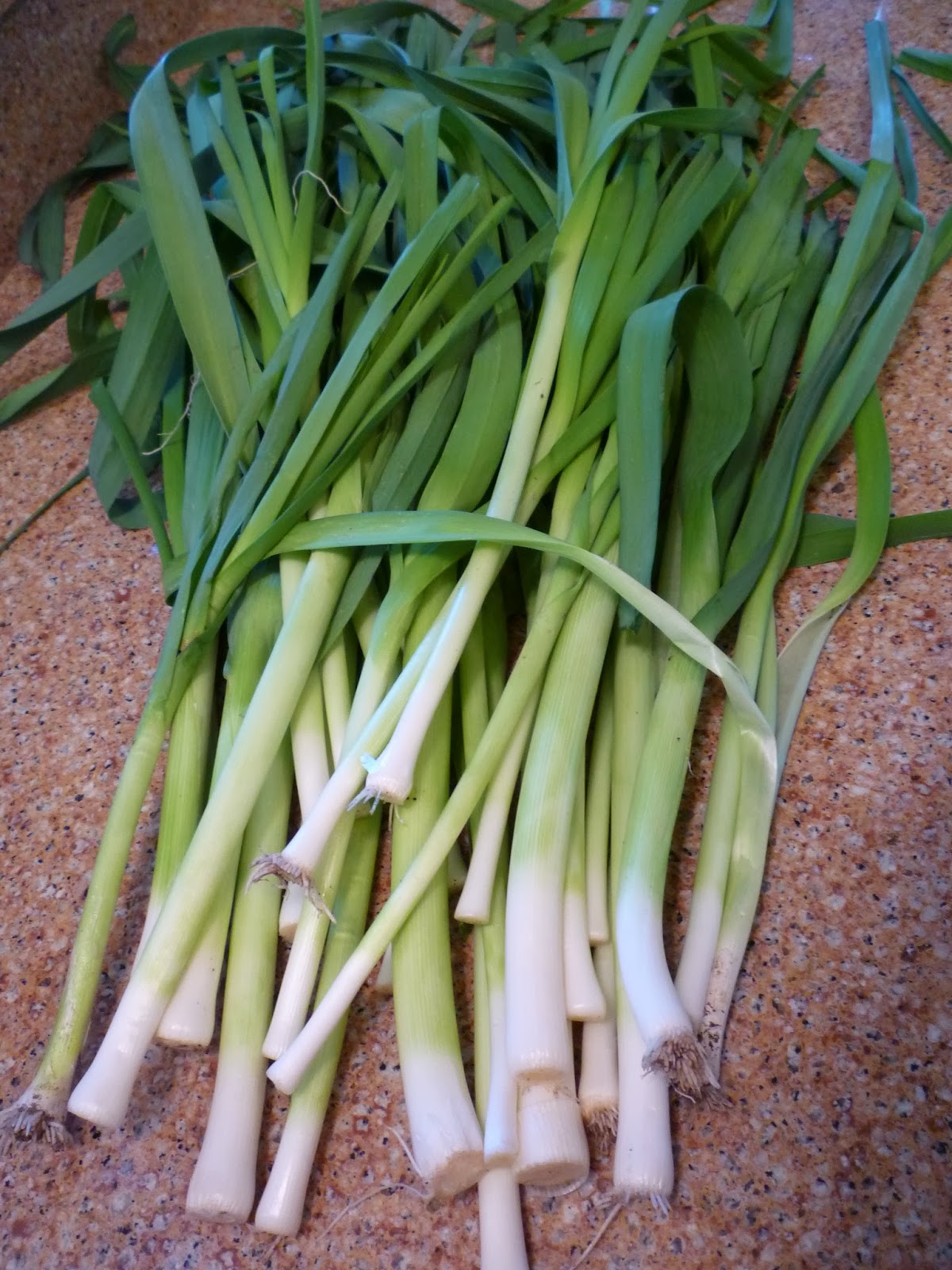
Onions die quietly,
Cabbages shed no blood;
All plants forgive:
By the waters that comprise them
They wash man’s hands
And let him walk away.

Eating vegetables is so innocent. But Capon doesn’t want to ignore the reality of our place as carnivores, so he unapologetically moves on to the Animal kingdom

each man owning the honest interchange by which he steals his livelihood; each woman’s hand intimate with the crack of wrung neck and severed spine….

It is not possible or even desirable to distill the writer’s poem into a fully satisfying theology, but I wanted my readers to know that he does satisfy himself with the mysteries of God’s plan of salvation, of which the temple sacrifices were a foreshadowing of Christ’s sacrifice on the cross.

The world awaits
The unimaginable union
By which the Lion lifts Himself Lamb slain
And, Priest and Victim,
Brings
The City
Home.

Other posts in this series are:
RFC is the man we need.
RFC begins with the meat.

wintertime loves

We in the arid parts of the West have been exulting in rain the last week or so. It’s so comforting and even glorious to wake in the night and hear the rain still coming down. Then to wake in the morning and see it is still falling. We had puddles in the back yard! Thank you, Lord!

Mr. Glad and I do live in northern California, but daughter Pippin lives even farther north in the state, and we drove there early this week for a short visit. Often February is a very snowy month at her place, but this year they’ve had more dry weather and rain than snow, and even the rain stopped while we were there, so we could get outdoors easily for work and recreation.

One day we made a family project out of pruning old apple trees that Pippin and The Professor are trying to revive from years of neglect. I floated back and forth between lopping branches and swinging the kids.

I would get Scout and Ivy going and then run over
to take a picture of the adults on ladders.

Another day we took a short trip to Castle Crags State Park and walked a trail alongside the Sacramento River. Considering the dryness of this year, I was amazed at the thick moss and ferns.

 A pale green, almost white lichen grew on rocks and tree stumps.

yew trees on the riverbank

Everything was wet from the recent rains, and many times our feet slipped on the invisible mosses — or was it algae? — growing on wooden bridges or river rocks.Ivy practiced throwing pebbles into the river, and once she got the hang of it she did not want to do anything else. The supply of rocks was endless.We went to the confluence of Castle Creek (in the foreground below) and the Sacramento River, from which you can get great views of the jagged rocks above, called the Castle Crags. They are high enough that the recent precipitation there was in the form of snow, and some was still unmelted and visible.


My dear husband showed me this large and artsy rock, which you can also see in the photo at the very top of this post, in its original setting. I wanted to take it home. It was a little too heavy for me to carry, so The Professor hauled it back to the car. It came with us on our journey home and is now living by our house. Mr. Glad classified it as a confluitic rock. 🙂

Winter days are short enough that at the end of our busy days there was plenty of time for cozy gatherings in the kitchen or by the wood stove. I read many books to the children. Scout’s current favorite, which I read about on a blog before Christmas and gave to him, is Bumblebee at Apple Tree Lane, and we read it several times.

Ivy likes The Little Fur Family best right now. We danced to the children’s favorite recordings, and also listened to bird calls on the Stokes Field Guide to Bird Songs CD. After ten minutes of loons and other waterfowl, Ivy must have deduced that those bird songs were some kind of dance music, too, and she started twisting and prancing around.

Hot soup is what you need on a winter’s night, so Pippin and I learned how to make French Onion Soup, using the recipe in The New Best Recipe: All-New Edition by Cook’s Illustrated Magazine. The secret that the Cook’s testers learned is that red onions give the best flavor. Our result was sooo good.

And cookies! Pippin had some dough left in the freezer from her Christmas Peppernuts, the recipe that I concocted a long time ago but haven’t made for years. We like our nuts to be nut-sized, so we always cut the frozen dough into little cubes and bake them long enough that they come out crispy. Next Christmas I’ll give the recipe.But for now, since I do love cookies, they make a good ending to my story of a wintry family visit that was warm and sweet.

peppernuts 13-14

There He is!

Until I read the article below, I didn’t know that anyone considered the Bethlehem star to be something other than a “dead astronomical body.” I copied here a rich kind of Advent food, from our recent church bulletin, a meditation on light and stars.

One of the pictures I found was of a “variable star,” which I had also not heard of before. That name got me thinking about how constant our Light of the World is by contrast, and never waning.

Though the stars we see in our skies are only dead shadows of the living realities, they too have their glory, which is only faintly conveyed by these pictures, though they do decorate this post nicely. We often hear that God is the True Light; this is not theoretical or a mere intellectual fact. Fr. Artemy exhorts us to know a taste of that Reality even in this life, in prayer:

The closer we come to the end of the [Nativity] fast, the brighter the wondrous Bethlehem star is enkindled above our heads, proclaiming to the Magi the time of the Infant’s birth, and the place where He lay…The rays of this rational star (according to the holy fathers, this star was actually an angelic power, and not a dead astronomical body) illumine with their incorruptible, unfading light the twilight in the Cave — the rib cage encasing each of our hearts…

The rays of this star bring the soul, which has but scarcely touched it, to inexplicable trembling and joy, the likes of which we shall not find here on this sinful world with its sensuous, quickly passing pleasures, disappearing like smoke.

I am…the bright and morning star (Rev. 22:16), testifies the Lord. And he that overcometh, and keepeth my works unto the end, to him will I give…the morning star. He that hath an ear to hear, let him hear what the Spirit saith unto the churches (Revelations 2:26, 28-29). 


Ye do well, repeats the Apostle Peter, that ye take heed, as unto a light that shineth in a dark place, until the day dawn, and the day star arise in your hearts (2 Peter 1:19). The morning star is hidden prayer of the heart! It is made not with lips or fingers, but with the mind and heart; it turns all of man’s existence to the Lord, and places the disciple before the most radiant face of his Teacher…

Illumined by the unwaning light of the Nativity star, let us pass…under the canopy of the very cave in Bethlehem…There He is, the Angel of Great Counsel, the King of the world, the Father of the age to come, as the “Old Testament Evangelist,” the Holy Prophet Isaiah, exclaimed in prophetic, sober inebriation. There He is, the Yearning of the nations, the Expectation of all peoples, the Great Light that has come into the world to enlighten those sitting in darkness! Already celebrating the Forefeast of the Nativity night that is bright as day, let us sing…with the whole Church, “Christ is born, give ye glory…Christ is on earth, let us be exalted. Sing unto the Lord all the earth…” [Nativity hymn].

–Father Artemy Vladimirov

variable star

We long for the cool change.

Many times in the last week, when Mr. Glad and I have put on our jackets and gone out the front door for a neighborhood walk, we have been confused by the pleasant springtime air, the sun shining down on us. Briefly pleased, then remembering that it all means drought. It’s a year when I can appreciate this Christmas poem.

ADVENT

And there was already light:
A stainless steel glare breaking through the eucalypts;
The sky enamel, cobalt-washed, lapis lazuli blue.

The north wind blew in from the desert:
Drowning in the hot scent of mock orange and ripe mango
We longed for the cool change and the sea breeze.

It was already the longest day:
Why should I await the Light of the World
When I already have a surfeit?

Into the crowded starry midnight,
The neon and electric city festival,
Into the early dawn jangling with birdsong,

Into my summer:
Then came the Christ Child into the brightness
And he was more than the sun.

— Katherine Firth


Thanks to Anna of Peacocks and Sunflowers for this poem that can be read with notes on the author’s site.