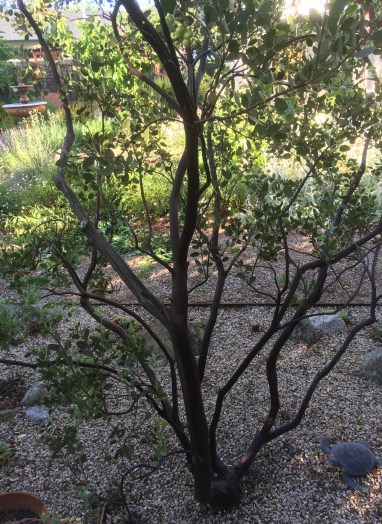
My particular manzanita tree is not bushy, and only briefly ever was, in its youth. It’s always difficult to get a picture of the whole plant; because of its airy form, whatever is growing behind it shows through and you can’t see how beautiful the tree itself is. As I did yesterday, I typically just show parts of it here on my blog. Here is one view from the past:
And here are several other specimens I saw growing in the southern Sierra Nevada:

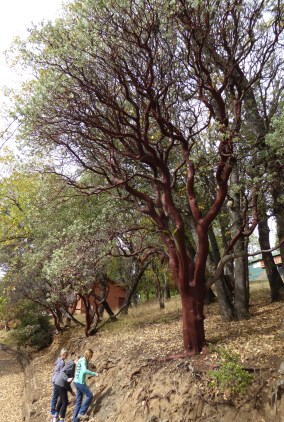
As Wikipedia tells us: Manzanita grows in “the chaparral biome of western North America, where they occur from Southern British Columbia and Washington to Oregon, California, Utah, Arizona, New Mexico, and Texas in the United States, and throughout Mexico. Manzanitas can live in places with poor soil and little water.”
 Back in the 80’s when I lived in another town, my horticulturist neighbor took the lawn out of her front yard and planted sixteen manzanita bushes there next to the driveway. I was mightily impressed. The last time I drove by, they were still looking beautiful, at least to my eye, which is accustomed to those twisty, even artsy lines. I know that some of you will remember when I went to a lot of trouble to get a branch of manzanita installed in a corner of my living room.
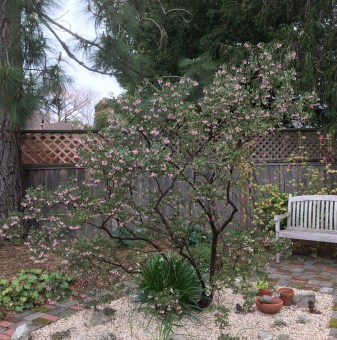
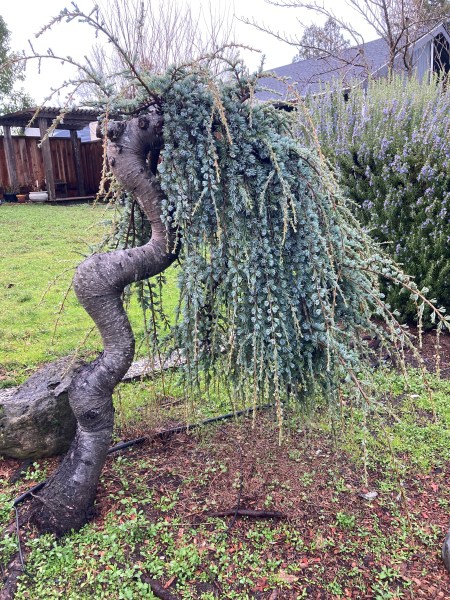
Yesterday when I briefly referred to my own beloved tree, and then posted two pictures from my neighborhood walk of a dramatically different sort of tree I don’t much care for (Atlas Cedar), I didn’t realize how I was making it easy for my readers to get the wrong idea, and when it relates to my favorite, (whom I named “Margarita”) I could not let it go. My late husband and I planted this tree twenty years ago, and you can see a picture of us working on a path just before installing it in my post Changing Views, which tells its history, and shows many images over the years, including of its unusual peeling bark.
Because of the preference of the 105 species and subspecies of Arctostaphylos for dry summers, I have only gravel and succulents under my tree, and hope that she continues to like it here. I tried again to take pictures this morning, and I will finish off with one. (Those are needles of the Canary Island Pine which continually descend to decorate the manzanita like Christmas ornaments.) I’m thankful to have had an excuse to review Margarita’s history for a while this morning, and to tell you once again about my long time friend.



 “They all cook up in that gravy,” was my friend’s only response when I sent him this article on:
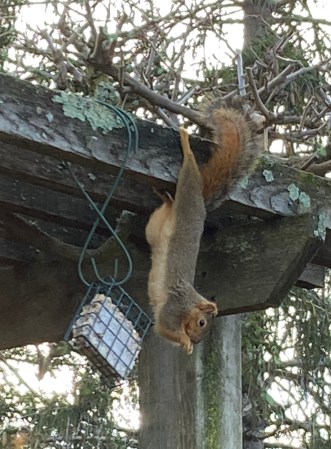
 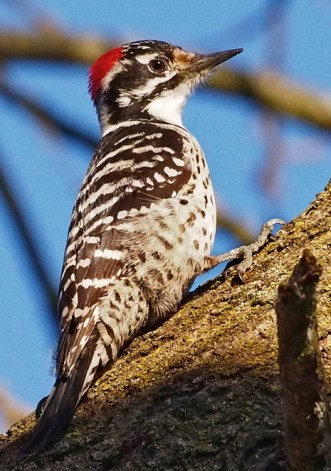 I’m happy to report that lots of birds come, too, to the suet feeders, the fountain, to the thousand plants in the garden, and to the tiny insects that live on the plants and in the trees. It’s funny to see the hummingbirds check out the pomegranate bushes, which in this season have nothing for them to drink; it must be the fading red of the rotting fruit that draws their attention. As soon as the flowers come, the hummingbirds (and the carpenter bees) will be there.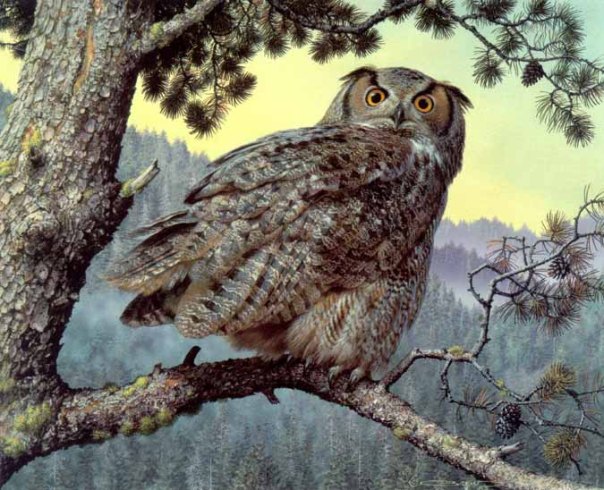


 Gladsome Lights