Category Archives: poetry

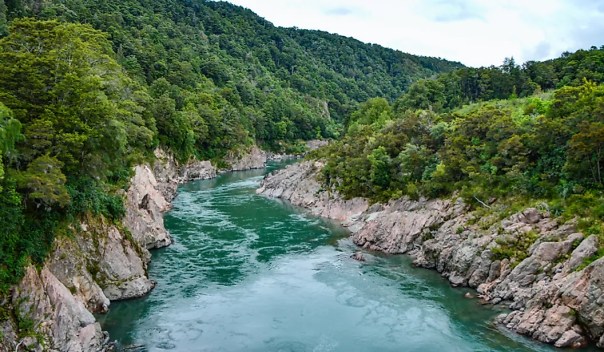
The wide and luminous eye.

IN POSITION

I want to tell you about time, how strangely
it behaves when you haven’t got much of it left:
after 60 say, or 70, when you’d think it would

find itself squeezed so hard that like melting
ice it would surely begin to shrink, each day
looking smaller and smaller – well, it’s not so.

The rules change, a single hour can grow huge
and quiet, full of reflections like an old river,
its slow-turning eddies and whirls showing you

every face of your life in a fluid design –
your children for instance, how you see them
deepened and changed, not merely by age, but by

time itself, its wide and luminous eye; and you
realise at last that your every gift to them – love,
your very life, should they need it – will not

and cannot come back; it wasn’t a gift at all
but a borrowing, a baton for them to pass on in
their turn. Look, there they are in this

shimmering distance, rushing through their kind
of time, moving faster than you yet not catching up.
You’re alone. And slowly you begin to discern

the queer outline of what’s to come: the bend in
the river beyond which, moving steadily, head up
(you hope), you will simply vanish from sight.

-Lauris Dorothy Edmond (1924 – 2000)
New Zealand

Waikato River, New Zealand

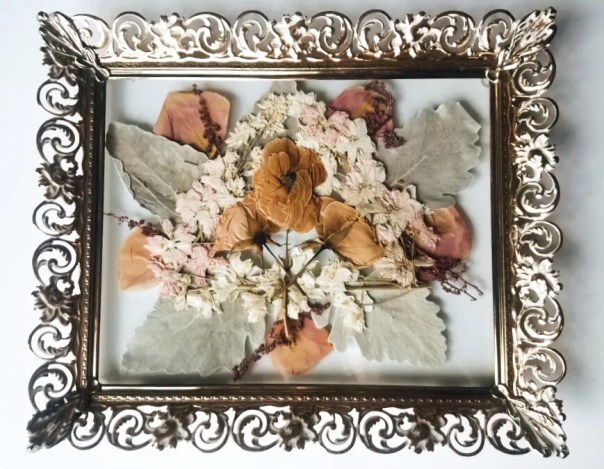
Did they also fade away?

FLOWER

A withered flower lies forgotten
Inside a book, before my eyes:
My soul awakes, all of the sudden,
And I begin to fantasize:

Where did it grow? Among which plants?
How long ago? And picked by whom,
By foreign or familiar hands?
Did it already start to bloom?

Placed here in tribute to a date,
Or to a fateful separation?
Or to a stroll under the shade,
Alone, without a destination?

Is he or she alive today?
Where did they find their hidden nook?
Or did they also fade away,
Just like this flower in the book?

-Alexander Pushkin
     Translated by Andrey Kneller


photo source

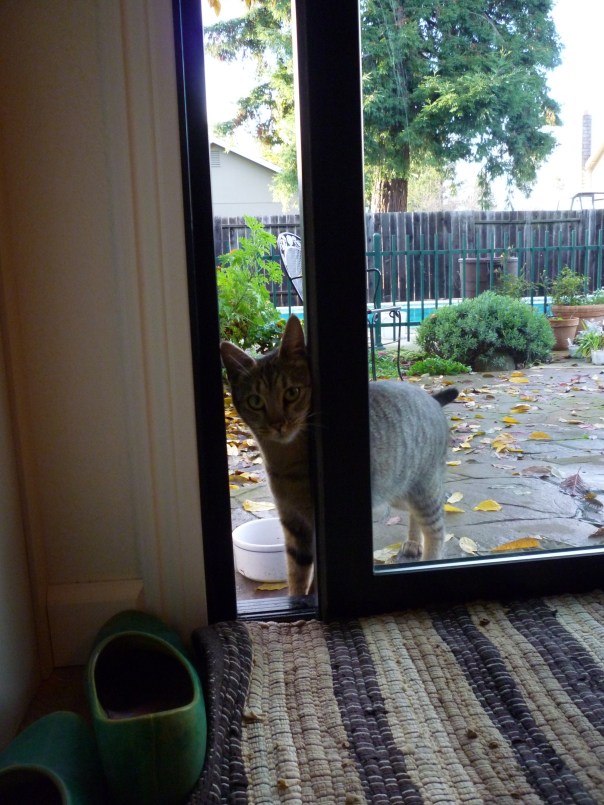
A cat-sized hole.

A SMALL-SIZED MYSTERY

Leave a door open long enough,
a cat will enter.
Leave food, it will stay.
Soon, on cold nights,
you’ll be saying “Excuse me”
if you want to get out of your chair.
But one thing you’ll never hear from a cat
is “Excuse me.”
Nor Einstein’s famous theorem.
Nor “The quality of mercy is not strained.”
In the dictionary of Cat, mercy is missing.
In this world where much is missing,
a cat fills only a cat-sized hole.
Yet your whole body turns toward it
again and again because it is there.

-Jane Hirshfield


The picture is from some time back,
when I welcomed the many stray-ish cats in the neighborhood,
and fed them what cat food was left over after our cat died.
This one was particularly bold, but not friendly at all.

The mother and daughters of acorns.

When I drove up into the mountains this month, it was through the area burned by the Creek Fire in 2020. The year following that devastation I’d also passed that way and shared a picture or two here. This time, four years later, I mostly noticed a couple of the plants that are thriving in the changed landscape. Along the road scores of milkweeds were lined up, and lots of young oak trees. I didn’t manage to take a picture of a little oak, but I got close enough to the milkweeds to see two kinds of bright insects on them.

The oaks in this case were the daughters of acorns that sprouted soon after the tall canopy above them had burned off. I read that “…fire directly promotes the establishment of oak seedlings by reducing competing understory vegetation, releasing needed soil nutrients and reducing numerous pathogens.” source

I think the ones I saw might be black oaks, Quercus kelloggii; the photos I found online.

EPIGRAM 9.312

Refrain, sirrah, from cutting the oak,
the mother of acorns;
refrain,
and lay low the old stone-pine,
or the sea-pine,
or this rhamnus with many stems,
or the holly-oak,
or the dry arbutus.
Only keep thy axe far from the oak,
for our grannies tell us that
oaks were the first mothers.

-Diodorus Zonas, 1st century BC, Italy

Translated by William R. Paton, The Greek anthology, Vol III

Oak, by Ivan Shishkin, 1865

In The Odyssey Homer refers to a legend that men were sprung from oaks or rocks,
e.g. “But tell me of your family, since you did not spring
from a tree or a stone as in the ancient tales.”
Homer’s Odyssey XIX.