Category Archives: poetry

The morning quality of yes.

YES

I love the word
And hear its long struggle with no
Even in the bird’s throat and budging crocus.
Some winter’s night
I see it flood the faces
Of my friends, ripen their laughter
And plant early flowers in
Their conversation.

You will understand when I say
It is for me a morning word
Though it is older than the sea
And hisses in a way
That may have given
An example
To the serpent itself.
It is this ageless incipience
Whose influence is found
In the first and last pages of books,
In the grim skin of the affirmative battler
And in the voices of women
That constitutes the morning quality
Of yes.

We have all
Thought what it must be like
Never to grow old,
The dreams of our elders have mythic endurance
Though their hearts are stilled
But the only agelessness
Is yes.
I am always beginning to appreciate
The agony from which it is born.
Clues from here and there
Suggest such agony is hard to bear
But it is the shaping God
Of the word that we
Sometimes hear, and struggle to be.

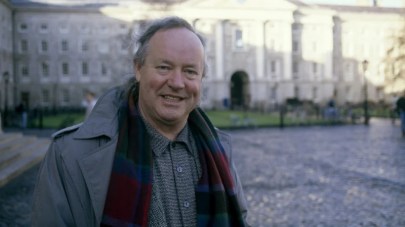
-Brendan Kennelly
 

Who more can crave?

A HYMN TO GOD THE FATHER

Hear me, O God!
A broken heart
Is my best part.
Use still thy rod,
That I may prove
Therein thy Love.

If thou hadst not
Been stern to me,
But left me free,
I had forgot
Myself and thee.

For sin’s so sweet,
As minds ill-bent
Rarely repent,
Until they meet
Their punishment.

Who more can crave
Than thou hast done?
That gav’st a Son,
To free a slave,
First made of nought;
With all since bought.

Sin, Death, and Hell
His glorious name
Quite overcame,
Yet I rebel
And slight the same.

But I’ll come in
Before my loss
Me farther toss,
As sure to win
Under His cross.

-Ben Jonson (1572 – 1637)

Greedy among the flowers — and fruit.

WHO CAN EXPLAIN WHY WE  LOVE IT (PICKING MULBERRIES)

Who can explain why we love it—West Lake is good.
The beautiful scene is without time,
Flying canopies chase each other,
Greedy to be among the flowers, drunk, with a jade cup.

Who can know I’m idle here, leaning on the rail.
Fragrant grass in slanting rays,
Fine mist on distant water,
One white egret flying from the Immortal Isle.

-Ouyang Xiu,  (1007 – 1072) China

I get the impression that this outing to West Lake is primarily a chance to get away from work. The poet enjoys being idle, and maybe he and his friends just happen to find mulberries to pick while they are enjoying their drink and exulting in the beauty of the day.

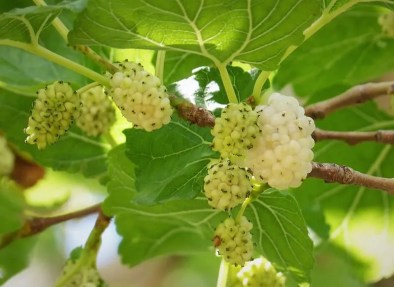
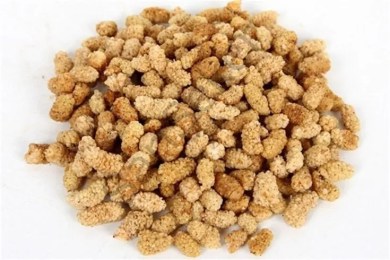
In any case, even the title of the poem is not about eating the mulberries — but the fruit itself is on my mind since I recently discovered dried white mulberries in the market, from Turkey. They are unlike any dried fruit I’ve ever eaten. Their extreme sweetness leads people to say that the flavor is honey-like; the chewiness of them is what I love most.

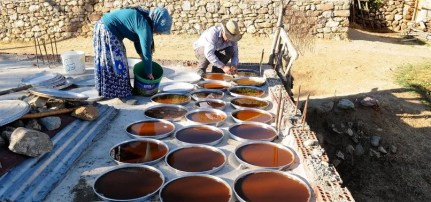
I read that nearly every village in Anatolia grows them, and the growers also make mulberry syrup, which I’d like to try as well. So I offer some photos that I found online. I also ran across a post, “White Mulberries,” from a  Turkish blog, and it contains the kind of information that is most interesting to me.

The site Tropical Fruit Trees shows photos of several varieties of Mulberry, by which I was able to see that the ones I’ve eaten dried are the “Persian White” type. They are the most cold hardy and grow in USDA zones 3b through 9. If I had twice as much land as I do, I would surely want to plant one of these trees. They attract birds, and produce lots of fruit, which means, plenty to dry. The leaves are not only the best food for silkworms, but make good livestock feed as well. Maybe one of my readers will be inspired to plant a Persian White!

Tomorrow we will open.

TOMORROW

LORD, what am I, that with unceasing care
Thou did’st seek after me, that Thou did’st wait
Wet with unhealthy dews before my gate,
And pass the gloomy nights of winter there?
Oh, strange delusion, that I did not greet
Thy blest approach, and oh, to heaven how lost
If my ingratitude’s unkindly frost
Has chilled the bleeding wounds upon Thy feet.

How oft my guardian angel gently cried,
“Soul, from thy casement look, and thou shalt see
How He persists to knock and wait for thee!”
And oh, how often to that Voice of sorrow,
“Tomorrow we will open,” I replied,
And when the morrow came I answered still “Tomorrow.”

-Lope Félix de Vega Carpio (1562 – 1635) Spain
Translation by Henry Wadsworth Longfellow

Source: Hispanic Anthology Poems Translated From The Spanish By English And North American Poets by Thomas Walsh, G.P. Putnams, 1930